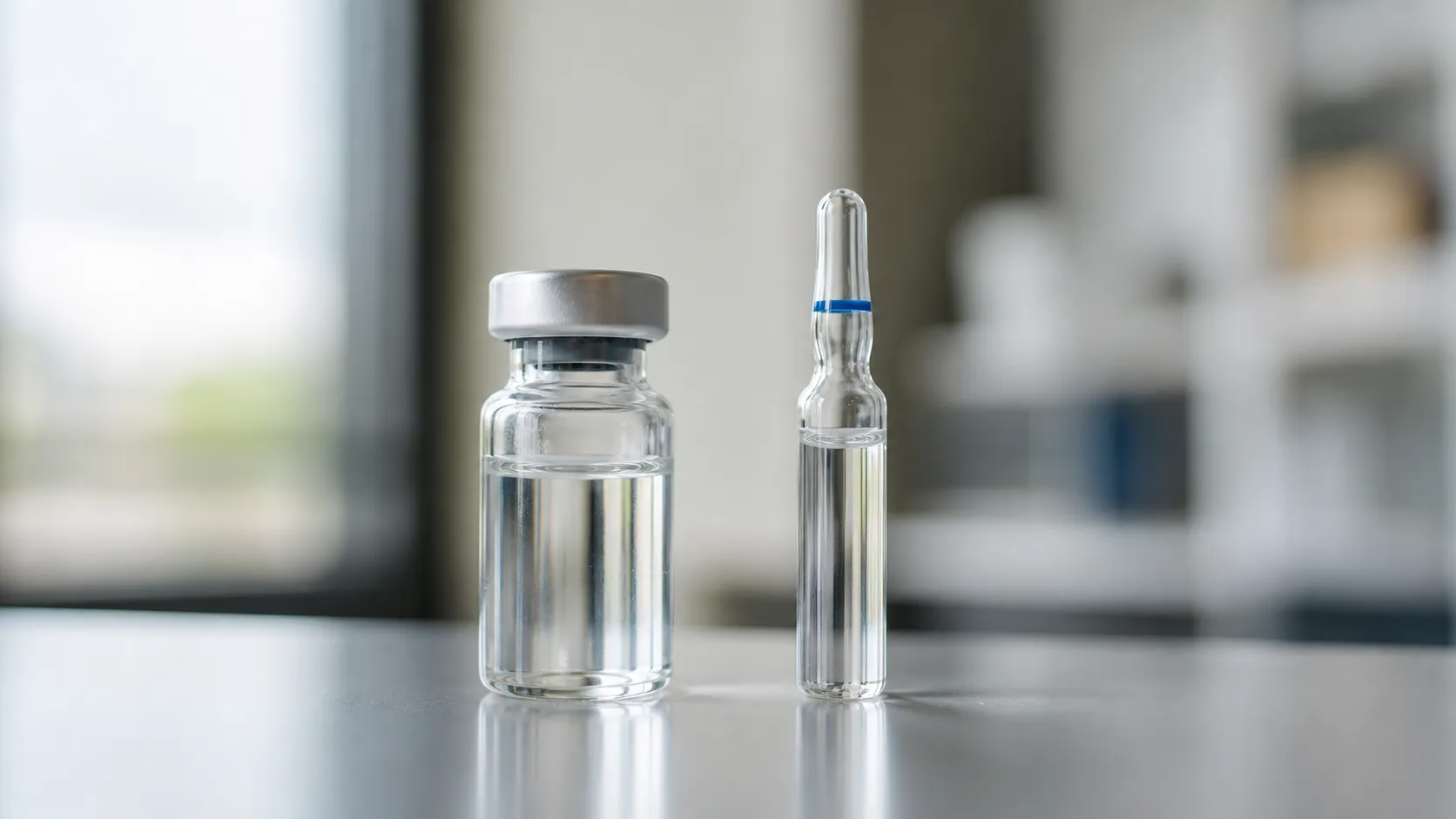
Trying to decide between an ampoule vs vial for your product? Selecting the wrong packaging format can ruin chemical stability, compromise sterility, and lead to costly product degradation.
Whether you are formulating pharmaceuticals, managing a lab, or launching a premium skincare line, picking the right container is critical for both patient safety and shelf life.
In this guide, you'll learn the key differences between hermetically sealed glass ampoules and reusable, rubber-stoppered vials—from opening safety and oxidation risks to practical usage and production costs.
Let's dive right in.
At-a-Glance Comparison: Ampoule vs. Vial
Choosing the right pharmaceutical primary packaging directly impacts drug stability, patient safety, and product shelf life. Whether you are packaging sensitive liquid biologics, lyophilized powder storage products, or cosmetic active serum packaging, understanding the core differences between an ampoule vs vial is essential.
Here is a quick breakdown comparing material, closure mechanisms, usage parameters, and safety considerations:
| Feature | Glass Ampoule | Pharmaceutical Vial |
|---|---|---|
| Material | Borosilicate glass tubing (Type I) | Type I/II glass or high-grade polymers |
| Closure Mechanism | Hermetic glass seal (All-glass, flame-sealed) | Rubber septum stopper with aluminum crimp seal |
| Dosing Capability | Strictly single-dose | Single-dose or multi-dose |
| Airtightness | 100% leak-proof, zero gas permeation | Dependent on stopper integrity after puncture |
| Contamination Risk | Glass particulate contamination upon opening | Rubber coring and microbial risk on re-entry |
| Access Tool | Requires snapping neck; filter needle protocol advised | Standard hypodermic needle penetration |
| Recloseable | No | Yes (Self-sealing elastomeric stopper) |
Key Takeaways
- Ampoules offer an absolute sterile barrier system with zero risk of gas exchange, making them ideal for oxidation-sensitive, single-use active ingredients.
- Vials provide high operational flexibility with self-sealing closures, allowing multiple withdrawals or reconstitution of dry powders while maintaining container integrity.
Deep Dive: What is a Medical Ampoule?
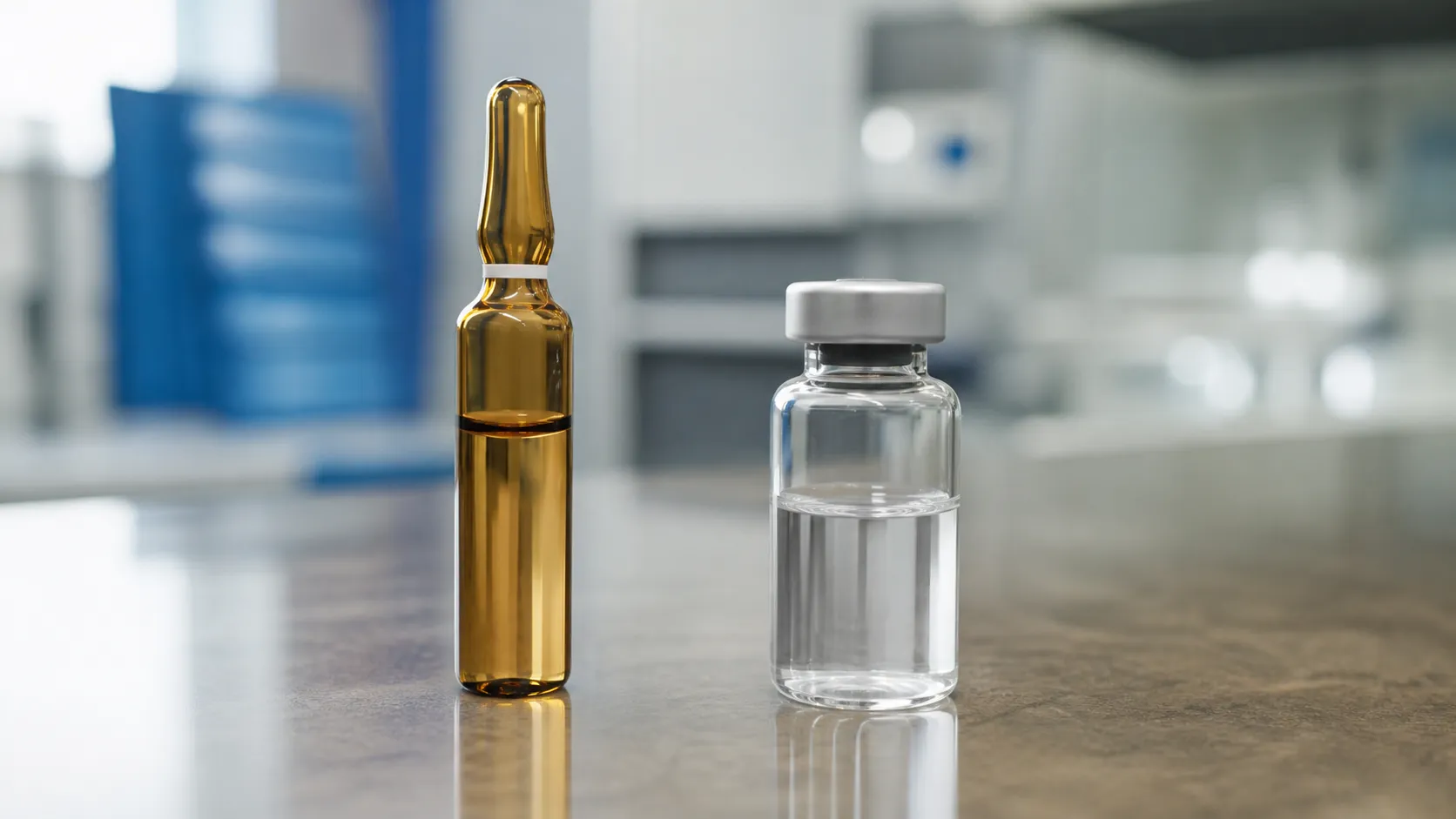
When evaluating ampoule vs vial options for sensitive formulations, medical ampoules represent the ultimate standard in single-dose primary container security. A medical ampoule is a closed glass container formed from high-quality tubular borosilicate glass, designed to protect injectables and high-potency active pharmaceutical ingredients (APIs) from degradation.
Structural Design & Glass Manufacturing
Ampoules are crafted directly from high-grade borosilicate glass tubing using high-heat flame shaping. The process creates a continuous, single-body structure featuring:
Base & Body: Holds the exact liquid volume.
Constricted Neck: Provides a pre-scoring point for quick snapping.
Stem: The top section flame-sealed closed during liquid filling operations.
Hermetic Sealing & Air-Tight Preservation
Unlike stoppers that rely on mechanical pressure, ampoules feature a 100% hermetic glass seal. The top glass stem is melted shut under an open flame right after filling, creating a continuous, seamless glass barrier.
This flame-sealed design offers critical advantages:
Zero gas permeability or micro-leakage risks over long shelf storage.
Absolute protection against moisture and atmospheric oxygen for delicate, oxidation-sensitive drugs.
Elimination of extractables and leachables common with rubber stoppers.
Engineered Opening Mechanisms
Modern glass ampoules skip the old filing stone requirement in favor of precision pre-scored opening systems:
- One Point Cut (OPC): Features a small, laser-cut score mark at the neck with a painted dot above it. Applying light pressure backward with your thumb right on the dot snaps the stem cleanly.
- Color Break Ring (CBR): Uses a continuous, pre-stressed ceramic ring baked around the narrow neck. Applying force snaps the top off uniformly around the entire circumference.
Core Drawbacks & Filter Needle Protocols
Despite superior barrier properties, glass ampoules carry two primary functional trade-offs:
- Micro-Glass Particulate Shedding: Snapping open a glass neck unavoidably generates invisible glass micro-particles, some of which fall directly into the liquid payload.
- Mandatory Filter Needle Usage: Standard clinical safety standards mandate drawing up ampoule contents through a 5-micron filter needle before changing to a standard hypodermic needle for patient administration.
- Single-Use Limit: Once snapped open, an ampoule cannot be reclosed or resealed. Unused product must be discarded immediately.
Deep Dive: What is a Pharmaceutical Vial?
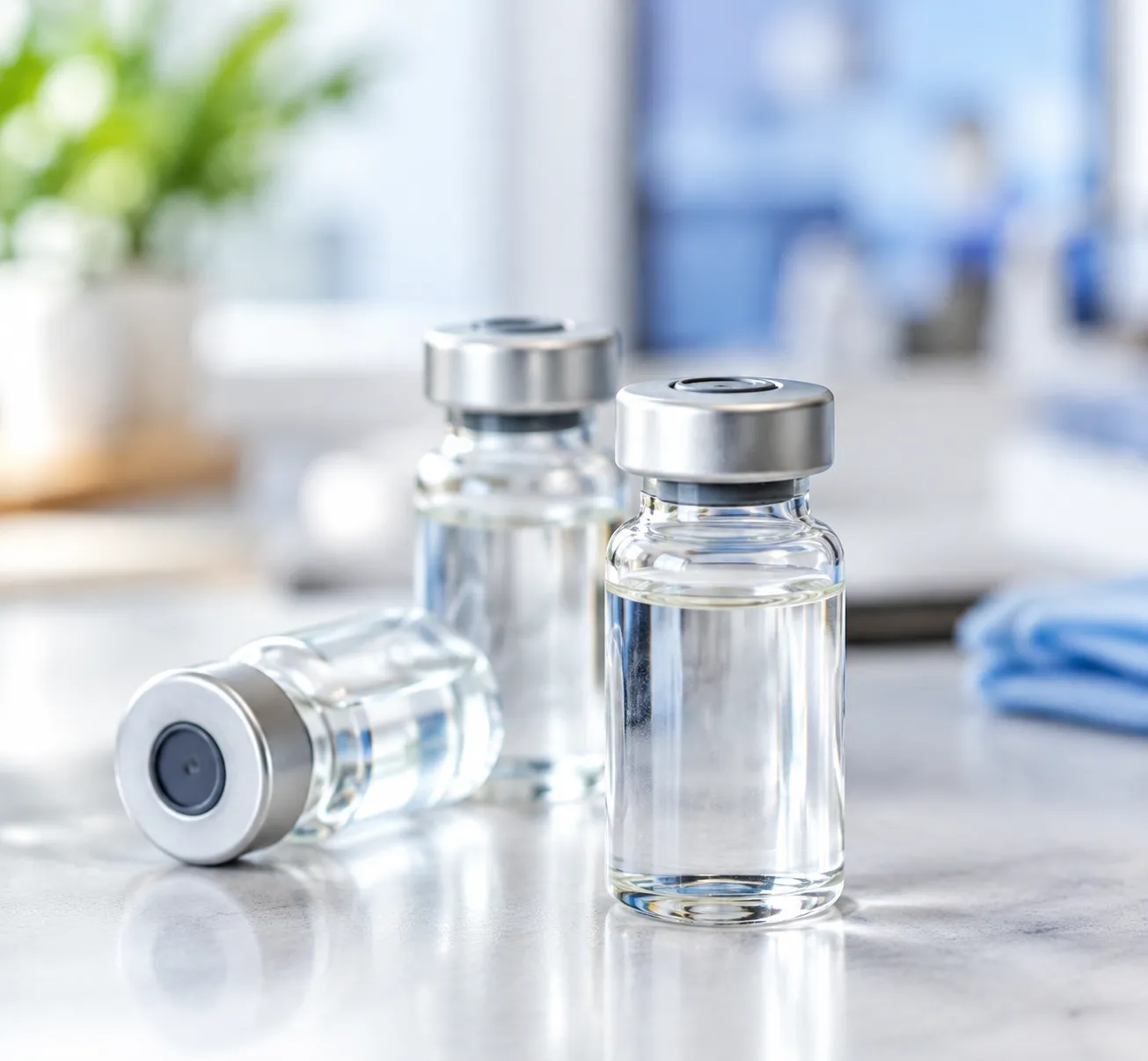
A pharmaceutical vial is a small glass or plastic vessel designed to hold liquids, powders, or solid active ingredients. Unlike single-use glass containers, vials offer flexible dosing options and easy access via hypodermic needles. They form the backbone of modern drug delivery, clinical sampling, and specialty packaging across global markets.
Structural Design, Neck Finishes, and Rubber Stoppers
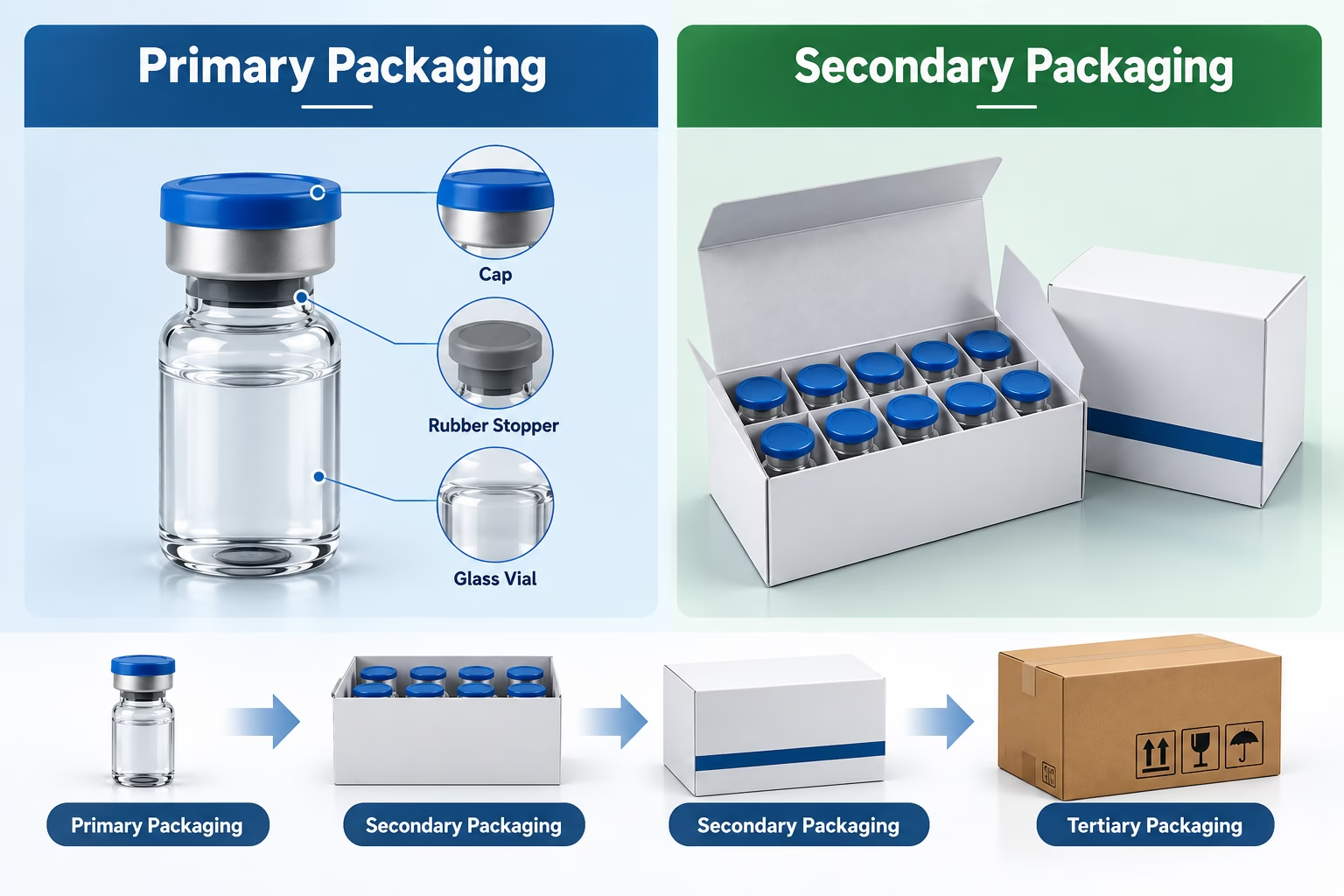
The functionality of a vial depends on its multi-component closure system:
- Tubular or Molded Glass: Typically manufactured from Type I borosilicate glass tubing to ensure high chemical durability and minimal leachables.
- Precision Neck Finishes: Designed with specific rim profiles—such as crimp neck or screw neck—to create an airtight seal under pressure.
- Elastomeric Rubber Stoppers: A synthetic rubber plug inserts into the neck, providing a sterile barrier system that tolerates repeated punctures.
- Aluminum Crimp Seals: An aluminum cap secures the rubber stopper in place. Many feature a plastic flip-off button for tamper-evident protection and easy access.
For streamlined fill-finish processing and safe storage, exploring specialized vial packaging solutions helps maintain product integrity throughout distribution.
+-------------------------------------------------+
| Plastic Flip-Off Cap |
+-------------------------------------------------+
| Aluminum Crimp Collar |
+-------------------------------------------------+
| Elastomeric Rubber Stopper |
+-------------------------------------------------+
| Glass Vial Body (Type I) |
+-------------------------------------------------+
Multi-Dose Flexibility and Self-Sealing Septum Mechanics
The core advantage of a vial is its ability to support multi-dose administration. When a needle pierces the rubber septum stopper, the elastomeric material expands around the cannula to maintain a tight seal.
Once you withdraw the needle, the stopper's self-sealing mechanics close the entry point. This prevents ambient air contamination and liquid leakage, allowing healthcare providers to draw multiple precise doses over time when paired with appropriate preservatives.
Common Vial Variants
Vials come in distinct formats tailored to specific drug formulations:
- Injection Vials: Standard liquid containers used for liquid vaccines, local anesthetics, and biological products.
- Lyophilization Vials: Feature a blowback neck finish and specialized two-leg stoppers. These allow moisture to escape during vacuum freeze-drying before final seating.
- Screw-Cap Vials: Utilize a threaded neck and screw closure, widely used for analytical reagents, oral solutions, and cosmetic active serums.
Primary Drawbacks: Rubber Coring and Air Exposure
While highly versatile, vials introduce specific operational risks:
- Coring Risks: Repeated needle punctures can shear off tiny rubber fragments (coring) into the solution, requiring strict technique and blunt-fill needles.
- Long-Term Air Exposure: Each needle insertion forces a small volume of ambient air into the head space. For oxygen-sensitive formulations, this gradual exposure speeds up oxidation over time compared to a fully fused glass ampoule.
Head-to-Head Technical Evaluation: Ampoule vs. Vial
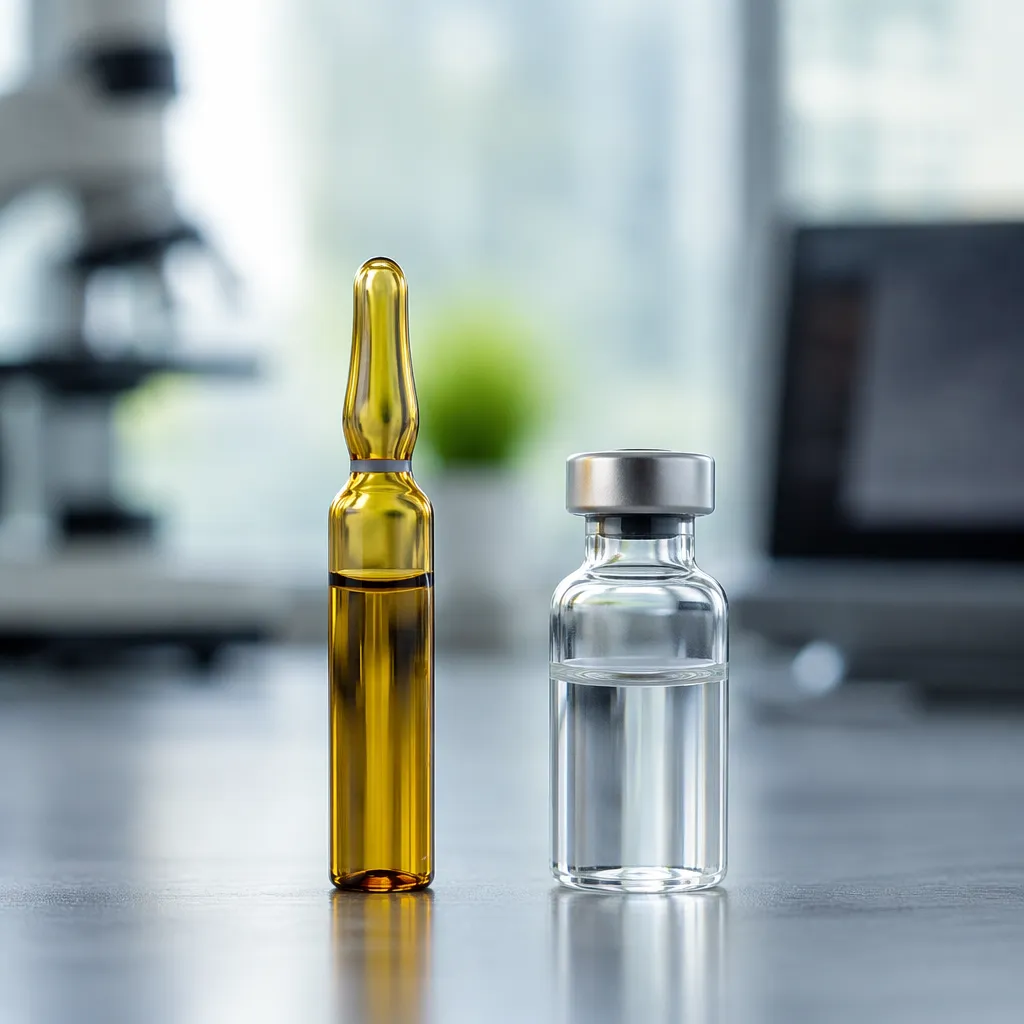
When choosing between an ampoule vs. vial for primary pharmaceutical packaging, we evaluate three critical operational pillars: sterility maintenance, handling safety, and line production costs.
PRIMARY PACKAGING COMPARISON
┌───────────────────────────────┐ ┌───────────────────────────────┐
│ GLASS AMPOULE │ │ RUBBER-STOPPER VIAL │
│ │ │ │
│ ┌─────────────────────────┐ │ │ ┌─────────────────────────┐ │
│ │ Glass-to-Glass Fusion │ │ │ │ Elastomeric Stopper │ │
│ │ (Flame Sealed) │ │ │ │ + Aluminum Crimp │ │
│ └────────────┬────────────┘ │ │ └────────────┬────────────┘ │
│ │ │ │ │ │
│ ▼ │ │ ▼ │
│ • 100% Hermetic Barrier │ │ • Self-Sealing Septum │
│ • Zero Gas/Moisture Ingress │ │ • Requires Preservatives │
│ • Single-Dose Only │ │ • Multi-Dose Capable │
└───────────────────────────────┘ └───────────────────────────────┘
Sterility Assurance & Shelf Life
- Ampoules: Feature a 100% hermetic glass seal created through flame fusion. This glass-to-glass barrier eliminates cap-leakage risks, preventing oxygen and moisture ingress entirely. It provides maximum shelf life for delicate, oxidation-sensitive formulations without added preservatives.
- Vials: Depend on an elastomeric rubber stopper compressed by an aluminum crimp cap. While highly reliable, elastomers allow micro-degree gas permeation over extended timelines. Multi-dose vials rely on chemical preservatives to maintain sterility after repeated hypodermic needle punctures.
User Safety & Handling Efficiency
| Technical Metric | Glass Ampoule | Rubber-Stopper Vial |
|---|---|---|
| Closure Mechanism | Flame-sealed glass neck | Rubber septum + aluminum crimp |
| Opening Process | Manual snapping at score line | Flip-off cap removal + needle puncture |
| Particulate Risk | Micro-glass shedding (requires filter needle) | Rubber coring from repeated punctures |
| Dosing Capability | Strictly single-dose | Flexible (single-dose or multi-dose) |
| Handling Safety | Risk of sharp glass cuts | High protection against sharp-edge injuries |
Production & Packaging Costs
PRODUCTION LINE COST & COMPLEXITY
AMPoules ──► [ Single Glass Body ] ──► [ Fill & Flame Seal ] ──► Low Component Cost
High Processing Precision
VIALS ──► [ Glass Vial Body ]
[ Rubber Stopper ] ──► [ Fill & Assembly ] ──► High Component Sourcing
[ Aluminum Crimp ] Streamlined Cleanrooms
- Ampoule Fill Lines: Require lower individual component purchasing costs since only the glass body is sourced. However, flame-sealing fill lines demand high operational precision, strict thermal controls, and specialized particulate monitoring.
- Vial Processing Systems: Involve higher primary component costs due to sourcing vials, stoppers, and crimp seals separately. Modern operations streamline this workflow using high-efficiency RTU packaging solutions, which significantly reduce cleanroom processing overhead and processing steps.
Industry Applications: When to Use Which?
Choosing between an ampoule vs vial isn't just a packaging decision—it directly impacts product stability, dosage accuracy, and end-user safety. Here is how we match primary packaging formats to specific real-world demands across medicine and aesthetics.
Pharmaceutical & Clinical Medicine
PRIMARY CLINICAL USES
│
┌───────────────────────┴───────────────────────┐
▼ ▼
MEDICAL AMPOULES PHARMACEUTICAL VIALS
• High-Potency Injectables • Multi-Dose Vaccines
• Single-Dose Anesthetics • Daily-Dose Insulin
• Oxygen-Sensitive Drugs • Lyophilized Powders
- Medical Ampoules: Best suited for high-potency, single-dose injectables where absolute sterility and zero oxygen exposure are mandatory. Because they offer a 100% airtight hermetic glass seal, we rely on ampoules for sensitive emergency medications, concentrated cardiac drugs, and anesthetics that degrade quickly when exposed to air.
- Pharmaceutical Vials: The preferred standard for multi-dose applications like vaccines and insulin, as well as lyophilized powders requiring reconstitution. The self-sealing rubber septum allows healthcare providers to draw multiple precise doses safely without exposing the remaining contents to ambient air or contaminants.
To ensure patient safety in medical environments, explore our range of primary packaging for healthcare applications.
Skincare & Cosmeceuticals
[Cosmetic Ampoule] --> Ultra-concentrated, single-use active serums (Vitamin C, Retinol)
[Cosmetic Vial] --> Multi-use mesotherapy solutions & professional salon treatments
- Single-Dose Cosmetic Ampoules: Ideal for preservative-free, highly concentrated active serums containing pure Vitamin C, Retinol, or fragile peptides. These active ingredients oxidize rapidly when opened. Packaging them in single-use glass ampoules guarantees maximum potency and fresh delivery with every application.
- Cosmeceutical Vials: Tailored for salon-grade mesotherapy solutions, skin boosters, and multi-session aesthetic treatments. Crimp neck vials with elastomeric stoppers allow practitioners to extract exact quantities using sterile syringes over multiple client visits while preserving the remaining serum's integrity.
Decision Guide: Selecting the Optimal Container with Jiahua
Choosing between an ampoule vs vial comes down to three operational variables: active ingredient sensitivity, target dosage volume, and the end-user environment. Evaluating these technical needs early prevents product degradation and streamlines fill-finish manufacturing.
Oxidation Sensitivity and Fill Volume
- Oxidation-Sensitive APIs: Choose flame-sealed glass ampoules for high-potency formulations (such as pure Vitamin C, Retinol, or oxygen-reactive active pharmaceutical ingredients) that require zero gas permeability.
- Large Volumes & Multi-Dose Needs: Select crimp-neck or screw-cap vials for liquid volumes exceeding 10 mL or formulations requiring repeated needle withdrawals over time.
Target End-User Mechanics
| Target User | Recommended Container | Key Design Advantage |
|---|---|---|
| Clinical Staff | OPC Glass Ampoules | Rapid one-point snap opening for single-use emergency injectables |
| Self-Administering Patients | Rubber Septum Vials | Safe hypodermic needle access without glass breakage risks |
| Cosmetic Consumers | Break-Ring Ampoules or Dropper Vials | Precise, single-application dosing for high-potency serums |
Precision Packaging Solutions from Jiahua
At Jiahua, we manufacture high-purity Type I borosilicate glass tubing engineered to withstand thermal stress and chemical leaching. Our custom manufacturing standards ensure total chemical compatibility between your drug or cosmetic formulation and its container closure system. Explore our comprehensive range of pharmaceutical primary packaging products to find the ideal containment solution for your brand, or review our technical packaging selection guides to verify regulatory compliance and container closure integrity before scaling production.
Frequently Asked Questions (FAQs)
Can You Reclose an Open Glass Ampoule?
No, you cannot safely reclose an open glass ampoule. Once you snap the neck, the hermetic glass seal breaks permanently. It creates an open container with raw glass edges, exposing the contents to ambient air, contaminants, and oxidation. Any unused liquid must be discarded immediately unless drawn into a sterile syringe for instant administration. If your formulation requires repeated access over time, choosing a crimp neck vial with a rubber stopper is the proper path.
Are Vials Always Multi-Dose Containers?
No. While vials are famous for multi-dose flexibility, many single-dose injectables use vials as well.
- Single-Dose Vials: Lack chemical preservatives. Once you pierce the rubber septum stopper, you must use or discard the entire contents immediately.
- Multi-Dose Vials: Formulated with antimicrobial preservatives, allowing clinicians to draw multiple doses over a specified timeframe safely.
Why Is a Filter Needle Necessary When Drawing Liquid From an Ampoule?
Snapping a glass break-ring ampoule creates micro-glass particulate shedding. These microscopic glass fragments can fall directly into the liquid inside. Drawing the medication through a 5-micron filter needle catches these tiny shards, preventing glass contamination from entering a patient's bloodstream or skin tissue. Once drawn, you swap the filter needle for a standard hypodermic needle before injection.
How Do Jiahua Glass Containers Ensure Product Chemical Compatibility?
At Jiahua, we manufacture our primary packaging using high-grade Type I borosilicate glass tubing. This material provides exceptional chemical inertness and low extractable levels, ensuring your active ingredients will not react with or leach compounds from the glass.
- Hydrolytic Resistance: High thermal and chemical resistance shields delicate APIs and cosmetic active serums from pH shifts.
- Delamination Protection: Rigorous manufacturing controls reduce surface degradation risks for sensitive liquid formulations.
- Custom Testing: We conduct precise compatibility and seal integrity tests to guarantee your product maintains maximum shelf life and total sterility.