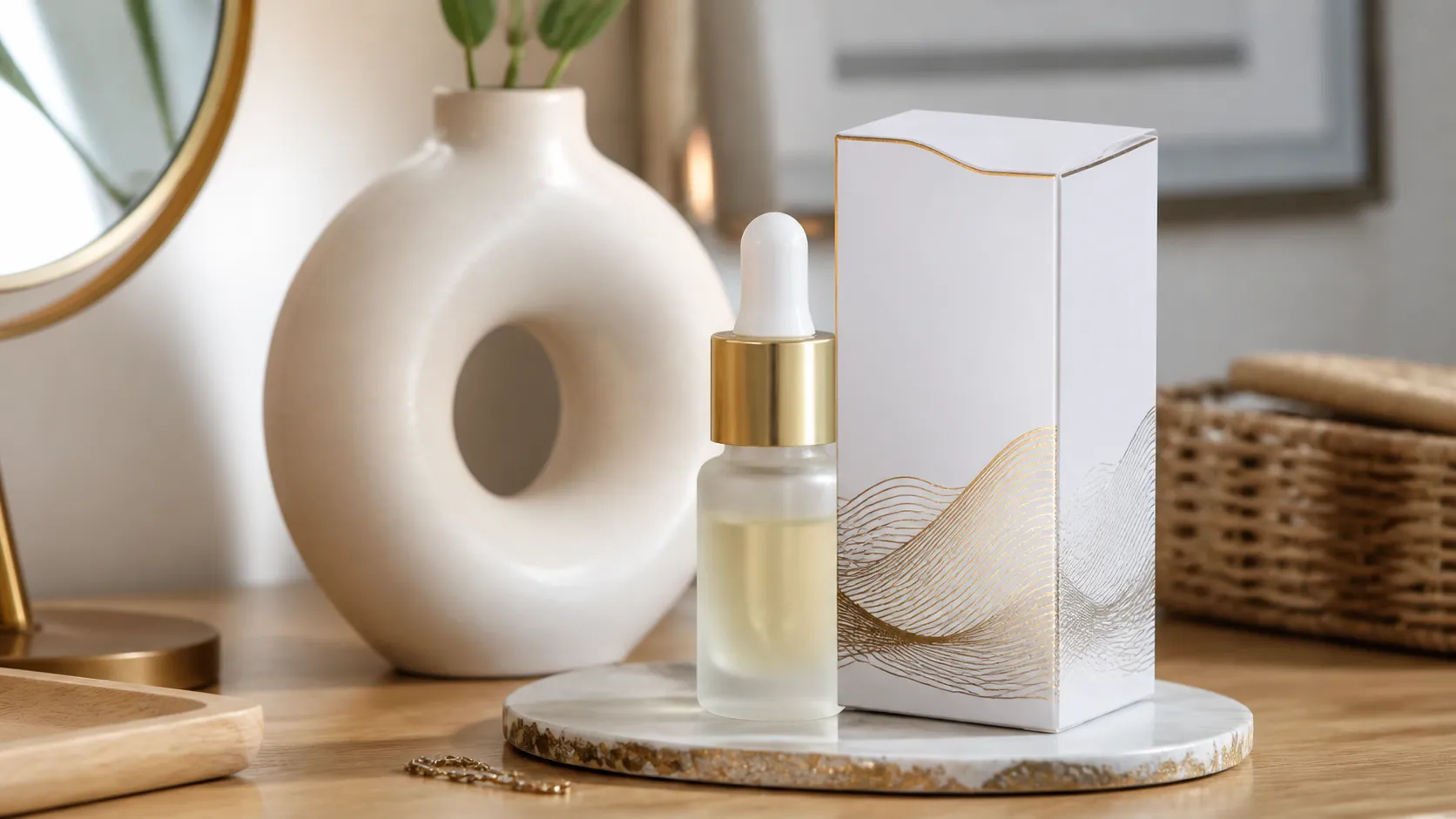
Formula details
Product Details
Overview
Product Category Architecture & Structural Options
Medical-Grade Plastic Vial Trays
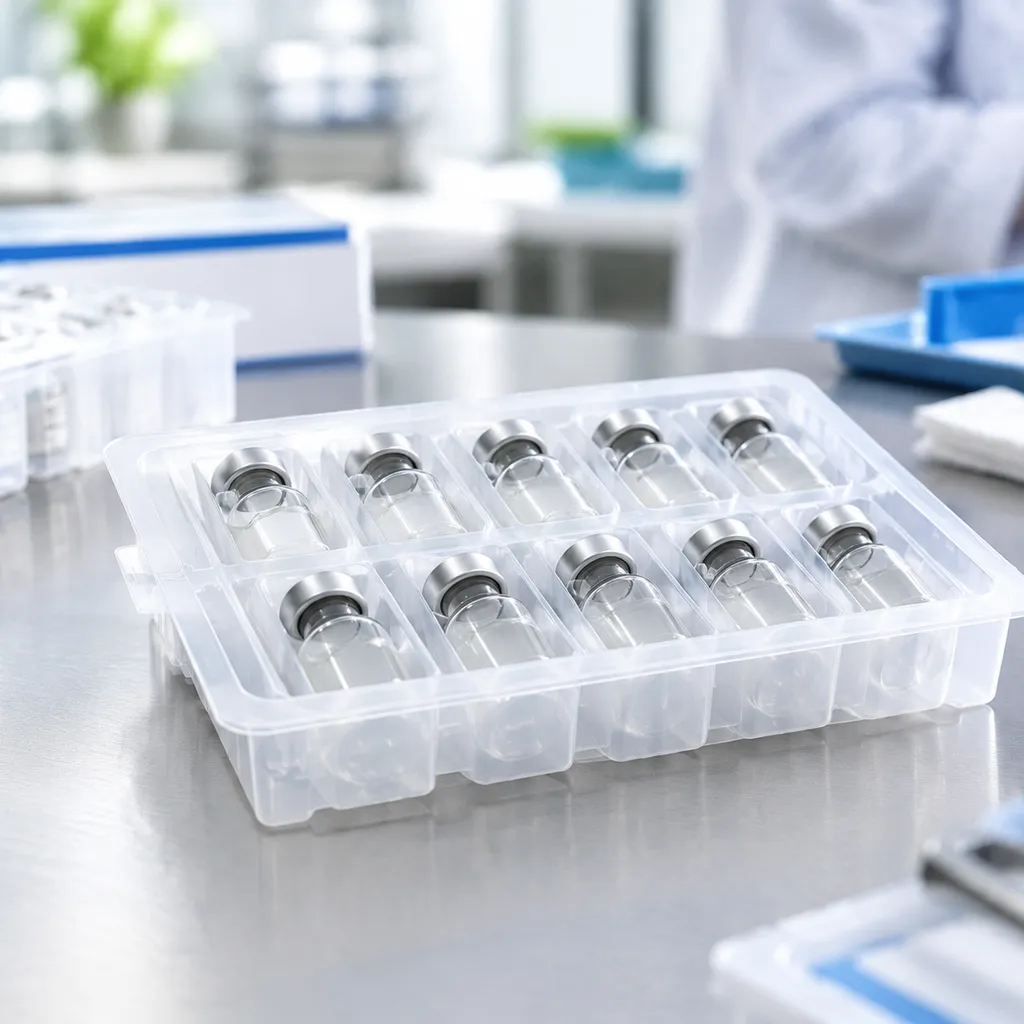
Our medical-grade plastic vial trays provide structural integrity and shock absorption for sensitive biologics and therapeutics.
- Precision Cavity Pockets: Custom-molded pockets support 2mL to 50mL vials, preventing glass-to-glass contact and surface abrasion.
- Anti-Nesting Edge Geometries: Engineered stackable edges prevent tray interlocking, enabling flawless automated robotic denesting.
- Shock-Absorbent Engineering: Rigid yet flexible polymer matrices cushion delicate container closures against extreme impact during freight.
Ready-To-Use (RTU) Nest & Tub Systems
Designed for sterile processing environments, our Ready-To-Use (RTU) nest and tub configurations eliminate upfront washing and depyrogenation steps.
- Suspended Vial Positioning: Vials remain suspended by the neck, preventing base friction and facilitating uniform heat distribution during lyophilization.
- Aseptic Cover Compatibility: Sealed with porous Tyvek covers optimized for EtO, Gamma, and Autoclave sterilization cycles.
- Protective Header Bags: Double-bagged barrier systems preserve sterility up to the point of filling-line insertion.
Protective Plastic Vial Boxes & Storage Cartons
For secure secondary storage, transport, and clinical distribution, our multi-compartment outer boxes offer extreme durability.
- Cold-Chain Tolerance: Material formulations withstand ultra-low temperature storage down to -80°C without cracking or embrittlement.
- Secure Enclosures: Precision-molded hinged lids and snap-fit closures maintain latch integrity through repeated access cycles.
- Light-Blocking Protection: Offered in optical-clear options or specialized amber and opaque UV-blocking materials for light-sensitive compounds.
Structural Packaging Overview
| Packaging Type | Vial Compatibility | Thermal Tolerance | Sterilization Method | Key Advantage |
|---|---|---|---|---|
| Precision Vial Trays | 2mL – 50mL | -40°C to 121°C | EtO, Gamma | High-density transport & anti-nesting |
| RTU Nest & Tub Systems | 2mL – 30mL | -80°C to 121°C | EtO, Gamma, Autoclave | Direct integration into aseptic filling |
| Storage Cartons & Boxes | Custom Layouts | -80°C to 90°C | Surface Disinfection | Secure cold-chain secondary packaging |
Material Options & Chemical Compatibility
Selecting the right resin eliminates extractables, leachables, and protein adsorption in sensitive drug formulations. Explore our technical breakdown of packaging materials for glass and plastic to match your exact product contact requirements.
| Polymer | Key Material Traits | Barrier Features | Best-Fit Applications |
|---|---|---|---|
| COP / COC | High clarity, ultra-low extractables, non-shatter | Superior moisture barrier, high chemical stability | High-barrier COP/COC vial packaging for biologics & proteins |
| Polypropylene (PP) | High durability, autoclavable (121°C), low density | Excellent moisture barrier, chemical resistance | Cold-chain storage, liquid reagents, standard trays |
| PETG | Exceptional impact strength, rigid structure, high clarity | Moderate gas and moisture barrier | Aesthetic serum trays, diagnostic kit housings |
| Polyethylene (PE) | High flexibility, chemical inertness, impact toughness | Strong moisture resistance | Protective buffers, secondary liners, closure components |
| Polystyrene (PS) | Rigid, crystal clear, economical processing | Basic moisture barrier | Non-sterile storage, disposable laboratory racks |
Regulatory Standards & Quality Management
- USP Class VI & FDA 21 CFR Compliant: All resins pass rigorous biological reactivity testing for safe use with USP Class VI serum containers.
- European Pharmacopoeia (EP) Adherence: Fully aligned with European directives for chemical purity and extractables control.
- ISO 9001 & ISO 13485 Certified: Operated under certified Quality Management Systems dedicated to medical devices and pharmaceutical components. Review our complete quality certifications for compliance verification.
- CoA Batch Traceability: Every shipment includes a detailed Certificate of Analysis (CoA) verifying dimensional tolerances, resin lot numbers, bioburden levels, and full raw material lineage.
Engineering Capabilities & Cleanroom Manufacturing
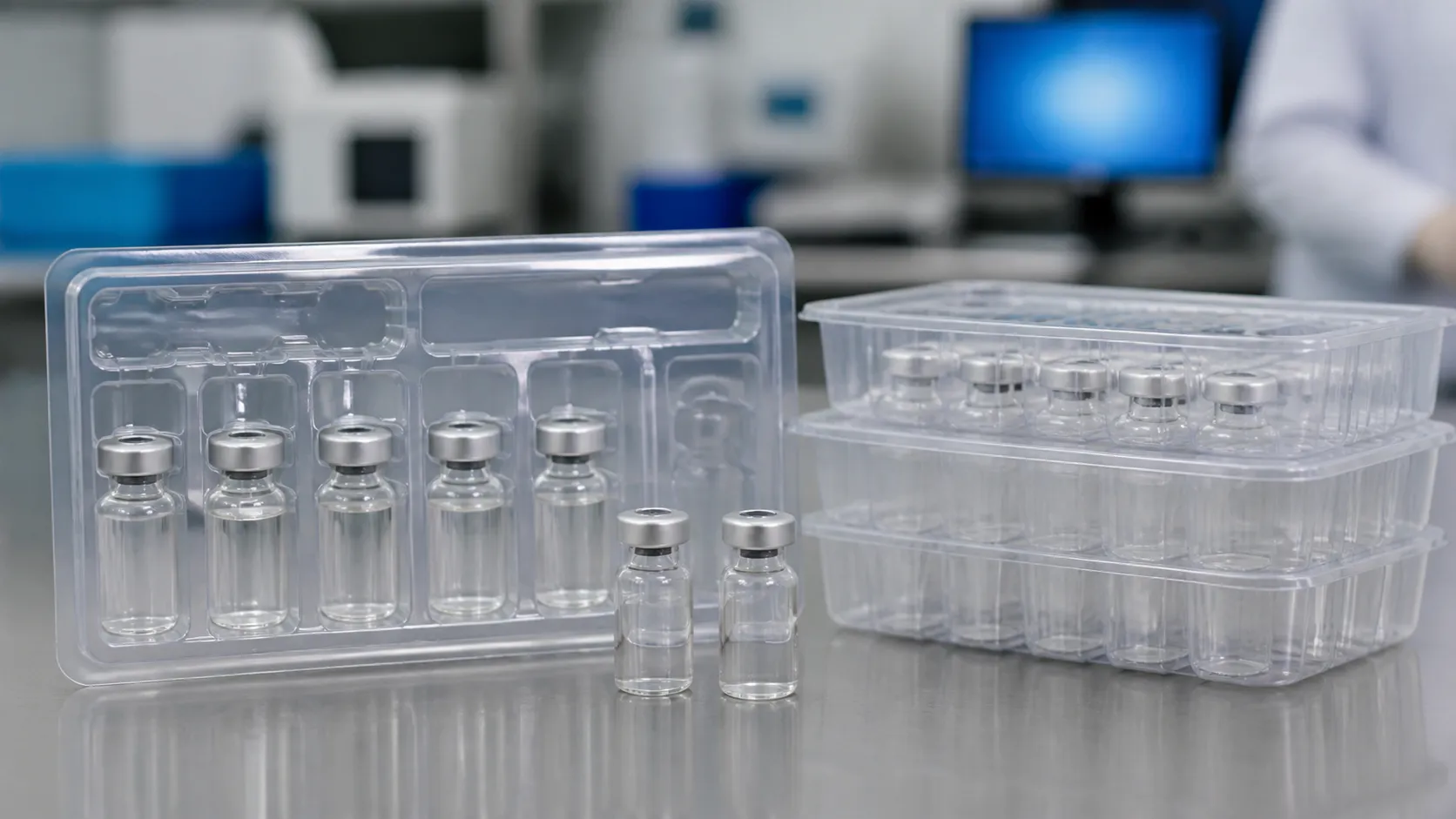
Controlled Cleanroom Environment
- Particulate Monitoring: Continuous real-time airborne particle counting systems systematically track environmental air purity to satisfy international sterile packaging standards.
- Bioburden Control: Stringent sanitation protocols and routine microbial sampling keep bioburden levels well below regulatory thresholds.
- Controlled Production: We utilize automated climate control and differential pressure systems across our cleanroom manufacturing facilities to deliver pristine components ready for downstream processing.
High-Precision Injection Molding Technology
- Tight Tolerances: We execute tight dimensional tolerances down to ±0.02 mm, ensuring smooth integration with high-speed automated filling lines and standard vial handling equipment.
- Automated Vision Inspection: Integrated 360-degree optical scanning cameras automatically identify surface flaws, flash, or warping, instantly rejecting non-compliant components.
- Robotic Handling: Fully automated robotic pick-and-place systems eliminate direct operator contact during molding and tray transfer, preserving cleanroom purity throughout the manufacturing run.
Custom OEM/ODM Engineering Workflow for Serum Vial Packaging
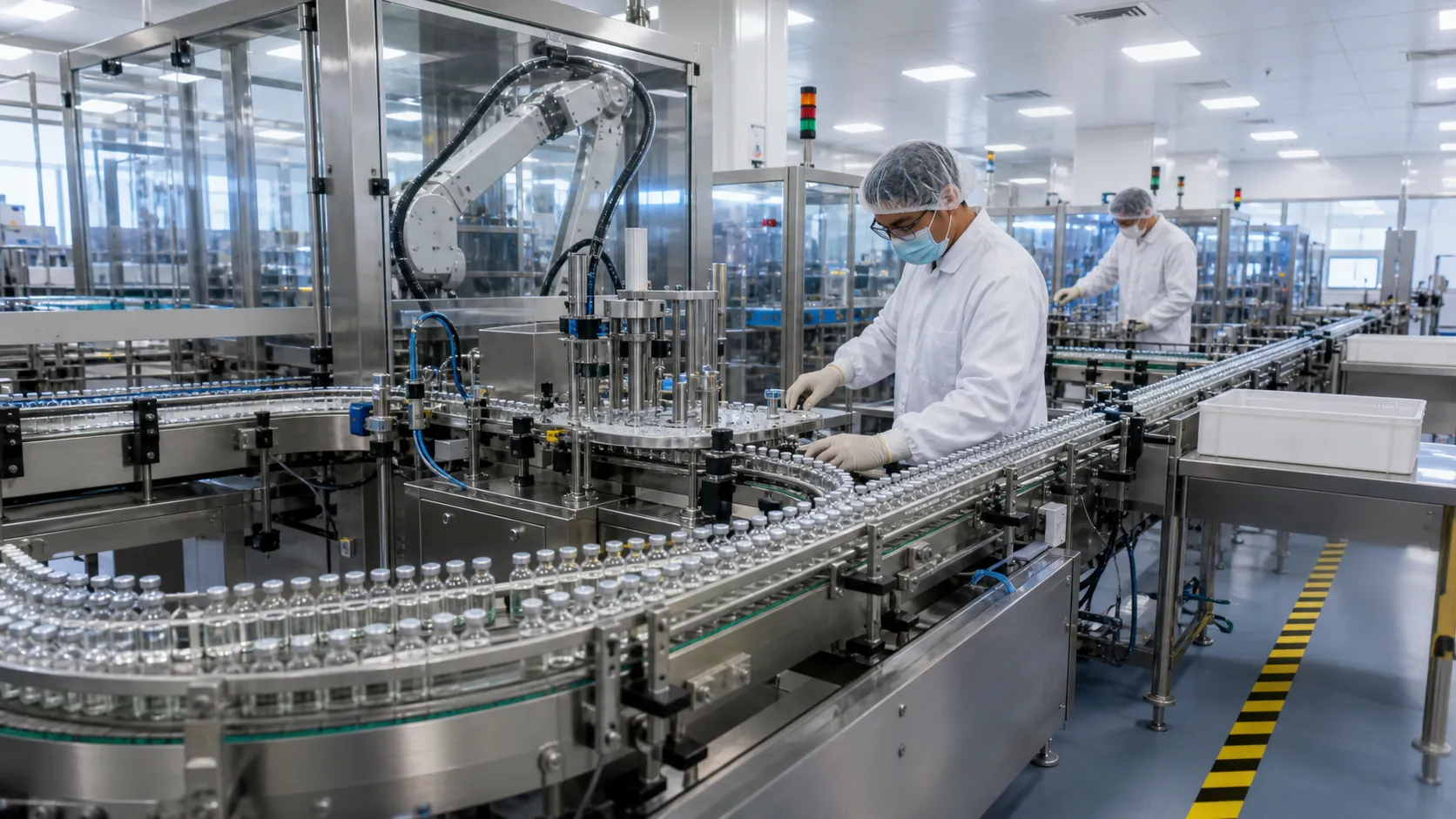
Phase 01: Engineering Consultation & Specification Mapping
We begin by mapping out your exact physical and regulatory constraints to eliminate design risks early.
- Vial Geometry: Custom sizing for standard or proprietary 2mL–50mL vials.
- Line Automation: Pocket pitch, depth, and pickup clearance tailored to your automated fill-finish lines.
- Thermal Constraints: Material selection engineered for cryogenic storage down to -80°C and autoclave cycles.
Phase 02: CAD Modeling & Mold Tooling Design
Our tooling engineers transform specifications into high-precision 3D models. Through dedicated mold development, we run Moldflow Analysis to prevent sink marks, warping, and structural weak points before cutting steel.
- 3D Parametric Modeling: Custom pocketing for exact vial retention and shock absorption.
- Optimized Cavitation: Single or multi-cavity designs balanced for high-throughput manufacturing.
- Tooling Precision: Premium steel molds built to tolerances up to ±0.02 mm.
Phase 03: Rapid Prototyping & Sampling Validation
We validate form, fit, and function quickly using our fast sampling services so you can test physical prototypes on your actual filling and packaging equipment.
- Standard Sampling: Functional prototypes delivered in 7–10 days.
- Custom Mold Tooling: Full production tooling completed in 2–4 weeks.
- Mechanical Validation: Drop testing, stackability loading, and cold-chain stress tests.
Phase 04: Scalable Mass Production & Supply Chain Integration
Once sampling is approved, we move your design straight into automated cleanroom manufacturing.
- Cleanroom Production: ISO Class 7 and Class 8 injection molding with automated optical defect scanning.
- IP Protection: Exclusive mold IP ownership guaranteed for your proprietary designs.
- Supply Chain Continuity: Scheduled releases and buffer stock management for uninterrupted operation.
Technical Specifications Comparison
To streamline your secondary packaging evaluation, explore our full range of vial packaging boxes or compact options such as our 2mL vial box for lab storage and serum packaging.
Serum Vial Packaging System Specifications
| Specification Parameter | Precision Vial Trays | RTU Nest & Tub Systems | Plastic Vial Storage Boxes |
|---|---|---|---|
| Primary Material | Medical-Grade PP, PETG, PS | High-Barrier COP/COC, PP with Tyvek cover | Polycarbonate (PC), Medical PP |
| Vial Compatibility | 2mL – 50mL standard & custom vials | ISO 2R – 30R standard glass & plastic vials | 2mL – 10mL laboratory & serum vials |
| Cleanroom Manufacturing | ISO Class 8 (Class 7 optional) | ISO Class 5 / Class 7 double-bagged | ISO Class 8 |
| Sterilization Compatibility | Gamma Irradiation, EtO | Pre-sterilized (EtO, Autoclave, Gamma) | Autoclave (121°C), Gamma |
| Thermal Tolerance | -20°C to +80°C | -40°C to +121°C | Ultra-low -80°C to +121°C |
| Dimensional Tolerance | ±0.05 mm | ±0.02 mm (High Precision) | ±0.10 mm |
| Automation Level | Semi-automated handling | Fully automated aseptic fill-finish lines | Manual & standard lab automation |
Core Selection Takeaways
- Sterile Vial Nest & Tub Systems: Best choice for direct integration into high-speed aseptic filling lines requiring zero glass-to-glass contact and strict dimensional accuracy (±0.02 mm).
- Medical-Grade Plastic Vial Trays: Ideal for safe inter-plant transport, kit assembly, and stable batch handling across diverse vial diameters.
- Custom Plastic Vial Boxes: Engineered for harsh cold-chain environments, offering secure locking lids and structural stability down to -80°C for long-term sample preservation.
Primary Industry Applications for Serum Vial Packaging
Pharmaceutical & Biopharmaceutical
Injectable biologics, vaccines, lyophilized powders, and liquid therapeutics demand total structural protection and zero contamination risks.
Thermal & Physical Defense: Shock-absorbent cavity geometries lock glass and polymer vials in place, preventing glass-to-glass collision during freezing, freeze-drying, and transit.
Aseptic Line Integration: Our nest and tub systems fit directly into high-speed automated filling lines, minimizing particle generation and manual handling.
Compounding & Sterile Preparation
Compounding pharmacies and central fill operations need ready-to-use, pre-sterilized packaging formats to move fast without compromising safety.
Pre-Sterilized Readiness: Ready-To-Use (RTU) tray formats streamline workflow in ISO Class 5 clean environments.
Batch Flexibility: Multi-cavity trays support smaller, custom compound batches while maintaining complete batch traceability.
Diagnostics & Life Sciences
Accurate diagnostic assay manufacturing relies on stable reagent storage and automated kit packaging.
Automation-Friendly Formats: Rigid, dimensionally precise trays allow smooth pickup and placement by automated robotic arms and kit assembly machinery.
Kit Assembly & Transport: Custom tray layouts keep reagent vials organized alongside our specialized ampoule and vial box solutions for field-ready diagnostic kits.
Medical Aesthetics & Cosmeceuticals
Sterile skin-repair serums, hyaluronic acid treatments, and mesotherapy solutions require medical-grade cleanliness paired with professional visual presentation.
Formulation Protection: Light-blocking and UV-resistant polymer enclosures protect photosensitive aesthetic compounds from degradation.
Secure Delivery: Custom-molded trays prevent seal displacement and cap damage, ensuring sterile mesotherapy vials arrive ready for clinical application.
Serum Vial Packaging FAQ
Can Jiahua Package customize serum vial trays to fit non-standard or proprietary vial shapes?
Yes. We specialize in custom OEM/ODM engineering to accommodate proprietary container profiles. Our engineering team crafts tailored serum vial trays featuring precision-molded cavity geometries, shock-absorbent contours, and anti-nesting edges designed specifically around your unique vial dimensions.
What documentation accompanies each shipment of serum vial packaging?
To satisfy strict pharmaceutical regulatory standards, every shipment of our serum vial packaging includes a comprehensive compliance package:
Certificate of Analysis (CoA) and Certificate of Conformance (CoC)
USP Class VI and FDA 21 CFR material compliance verification
ISO 9001 and ISO 13485 manufacturing documentation
Sterilization Certificates (Gamma, EtO, or Autoclave validation) for RTU systems
Full batch traceability logs
Are your nest and tub systems compatible with standard high-speed automated filling lines?
Yes. Our Ready-To-Use (RTU) nest and tub systems are engineered strictly to standard industry footprints. They work seamlessly with major high-speed automated aseptic filling machinery, ensuring reliable denesting, zero line jams, and precise vial positioning under sterile filling conditions.
What is the typical lead time for custom OEM mold tooling and sample production?
Our standard prototyping and production timelines are:
Rapid Prototyping & Sampling: 7–10 days for initial samples and design validation.
Custom Mold Tooling: 2–4 weeks from finalized 3D CAD design to completed production tooling.
Mass Production: Flexible scheduling based on volume, supported across our primary vial packaging solutions.