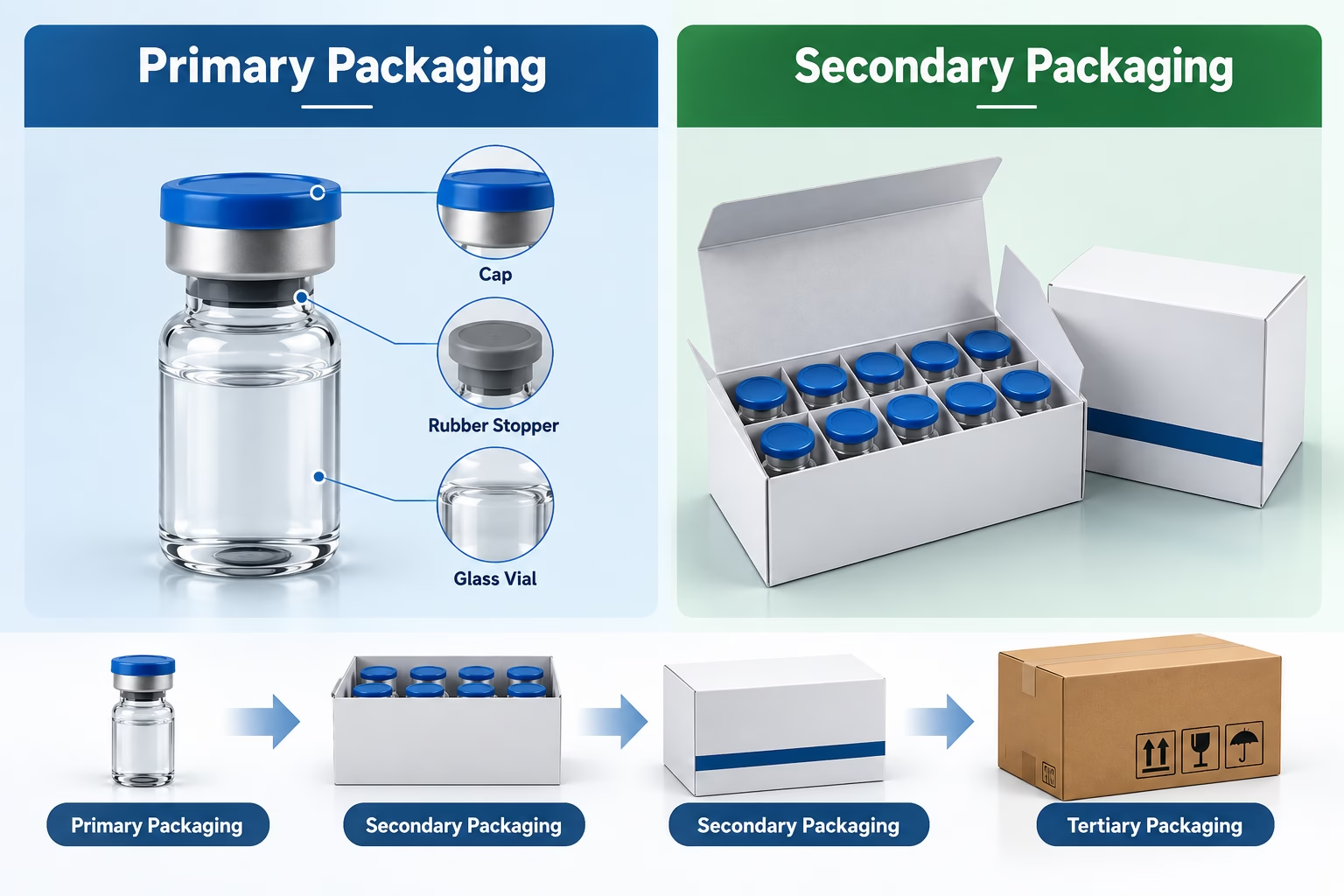
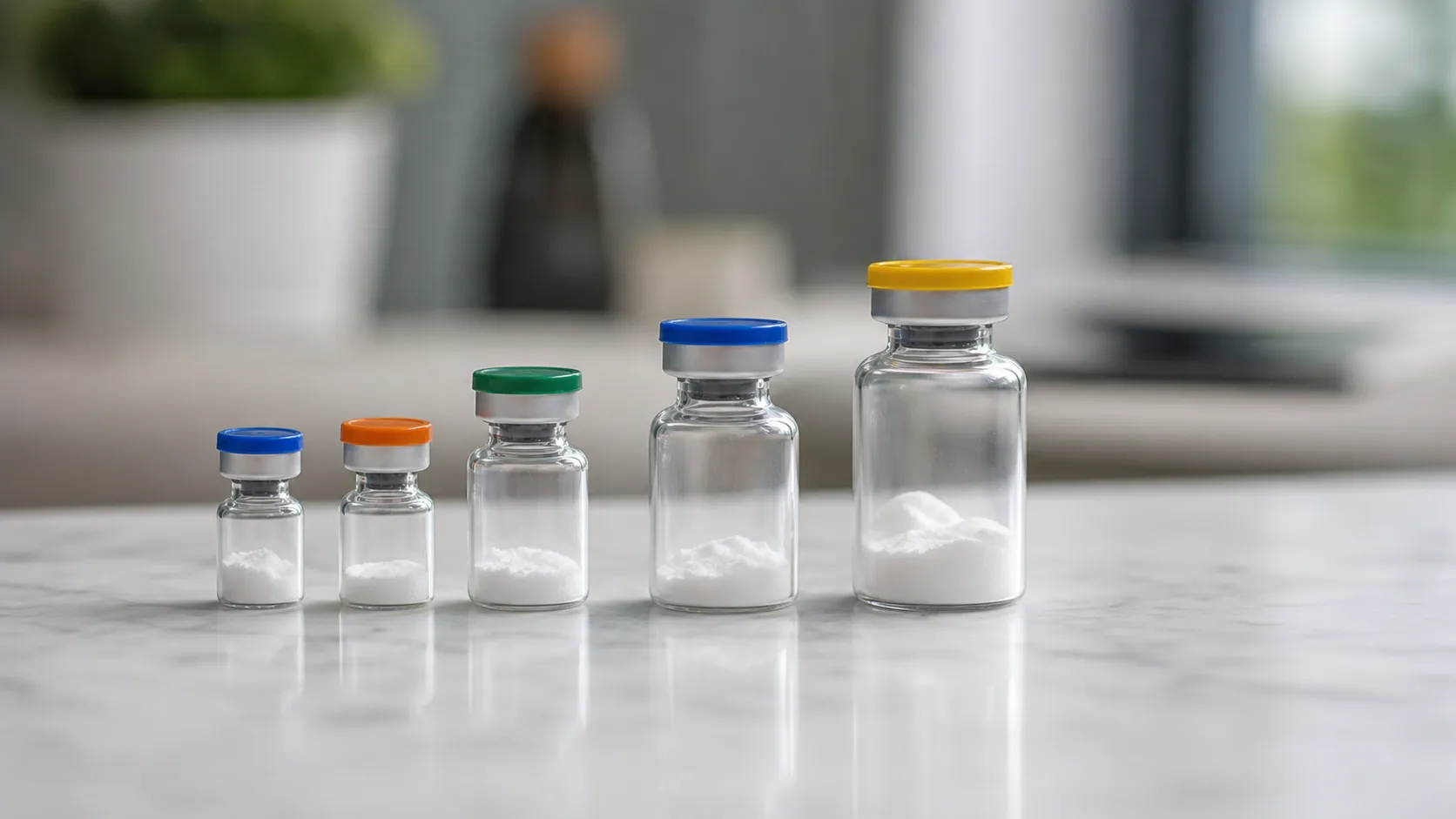
Standard Peptide Vial Sizes & Technical Dimensional Matrix
Physical Attributes Across Common Formats
| Vial Size | Working Volume | Brim Capacity | Neck Finish | Primary Application |
|---|---|---|---|---|
| 2 mL | 1.5 mL–1.8 mL | 2.4 mL | 13 mm | Single-dose or low-volume peptides |
| 3 mL | 2.5 mL–3.0 mL | 3.8 mL | 13 mm | Industry gold standard for multi-dose peptide reconstitution |
| 5 mL | 4.5 mL–5.0 mL | 6.2 mL | 13 mm or 20 mm | Bulk powder or high-diluent applications |
| 10 mL | 9.0 mL–10.0 mL | 12.0 mL | 20 mm | Large-scale compounding or multi-patient supply |
- Headspace Management: Operating within the recommended working volume ensures adequate headspace, preventing dangerous vacuum pressure buildup during solvent injection.
- Component Matching: The 13 mm and 20 mm neck finishes require exact dimensional pairing with rubber stoppers and aluminum flip-off caps to guarantee a sterile, leak-proof seal.
Reconstitution Math: Matching Vial Size to Diluent Volume
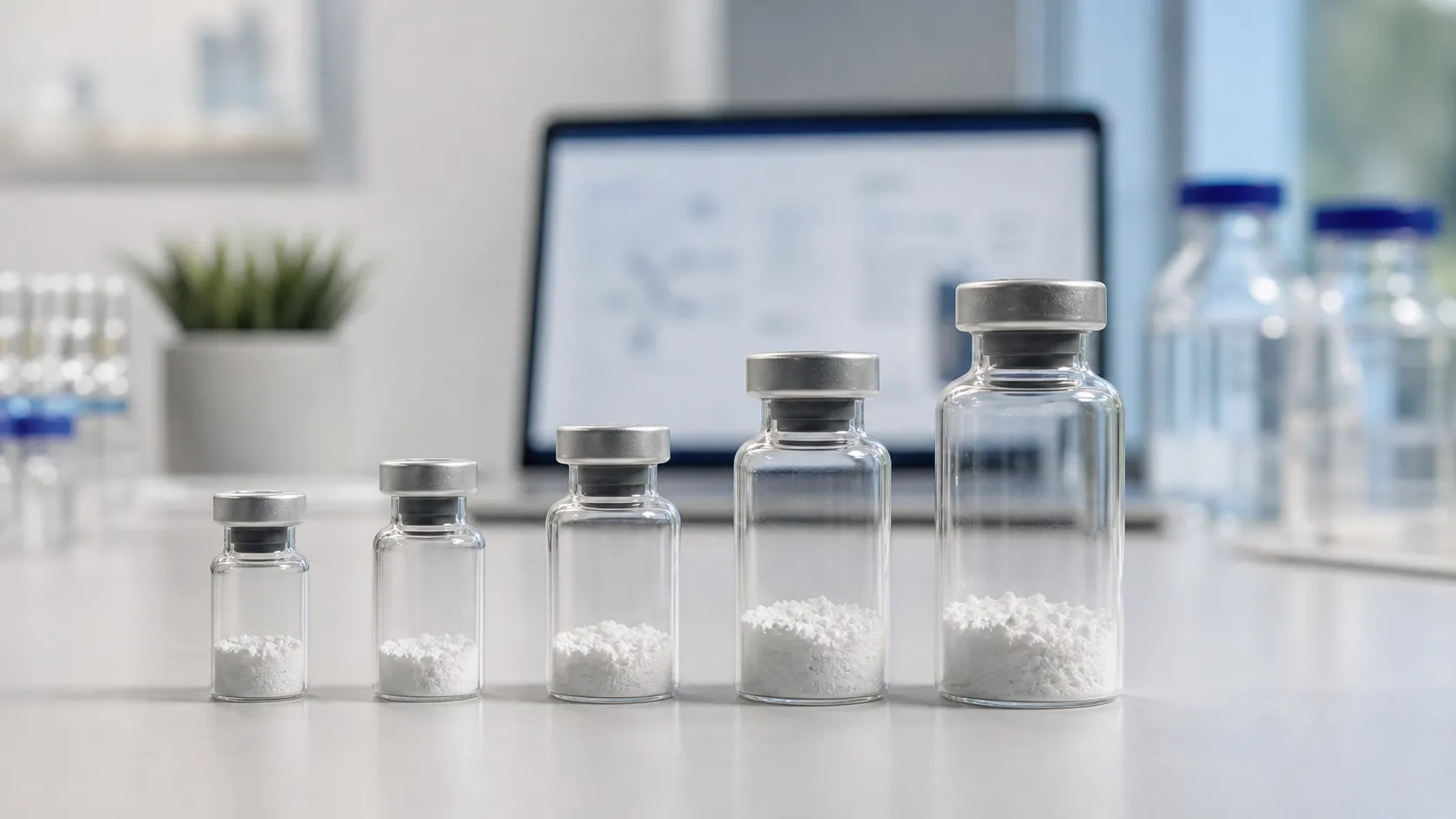
Matching peptide vial sizes to the exact liquid diluent volume prevents vacuum failure, stopper displacement, and product loss.
Safe Diluent Limits & Reconstitution Volume Capacity
| Vial Size | Working Volume | Brim Capacity | Safe BAC Water Diluent |
|---|---|---|---|
| 2 mL | 1.5 mL – 1.8 mL | 2.4 mL | 1.0 mL – 1.5 mL |
| 3 mL | 2.5 mL – 3.0 mL | 3.8 mL | 2.0 mL – 2.5 mL |
| 5 mL | 4.5 mL – 5.0 mL | 6.2 mL | 3.0 mL – 4.5 mL |
| 10 mL | 9.0 mL – 10.0 mL | 12.0 mL | 5.0 mL – 9.0 mL |
Key Reconstitution Variables
- Lyophilized Powder Displacement: Freeze-dried mass takes up physical space. A standard 10 mg peptide cake displaces roughly 0.05 mL to 0.10 mL of solvent once dissolved into your bacteriostatic water diluent ratio.
- Brim Capacity vs Working Volume: Brim capacity represents absolute liquid capacity to the top lip. Exceeding working volume leaves insufficient air gap, causing top-rim spillage or fluid blowback during needle withdrawal.
- Pressure Management: Adding liquid into a sealed container increases interior pressure. Sealed reconstitution vials rely on headspace gas compression to balance pressure, unlike open formats detailed in our ampoule vs vial comparison.
- Benchtop Handling: Keeping vials upright during solvent addition and compounding requires stability accessories like heavy-duty vial holders to prevent accidental tipping and needle slips.
Physical Specifications for Labels, Storage, and Equipment Compatibility
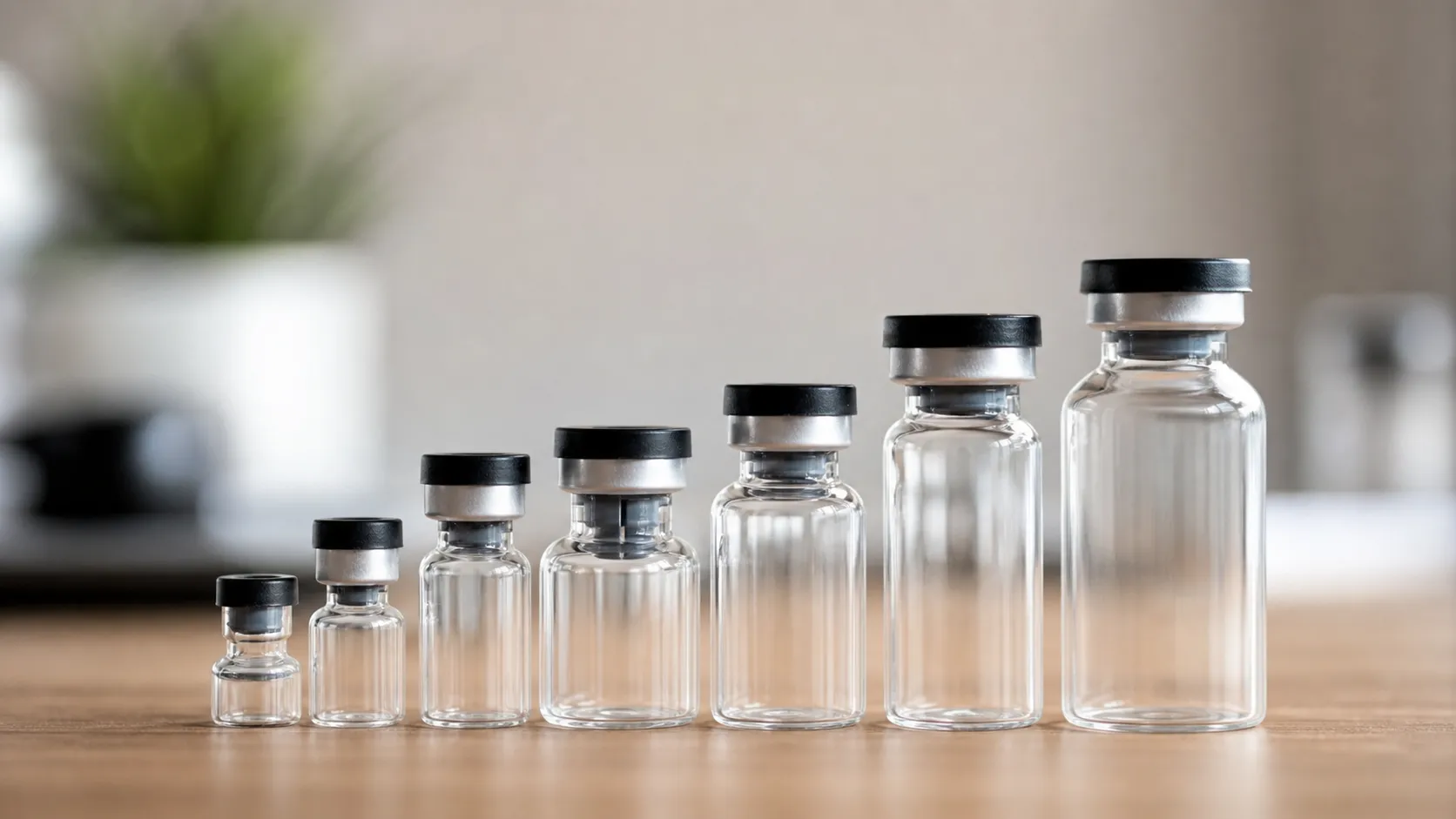
Technical Dimensional Matrix
| Vial Size | Outer Diameter (OD) | Total Height | Neck Finish | Custom Labeling Area (H x Circumference) |
|---|---|---|---|---|
| 2 mL | 16.0 mm | 35.0 mm | 13 mm | 18.0 mm x 50.2 mm |
| 3 mL | 16.0 mm | 45.0 mm | 13 mm | 26.0 mm x 50.2 mm |
| 5 mL | 22.0 mm | 40.0 mm | 13 mm / 20 mm | 22.0 mm x 69.1 mm |
| 10 mL | 24.0 mm | 50.0 mm | 20 mm | 28.0 mm x 75.4 mm |
Key Compatibility Factors
- Neck Finish & Crimp Seals: Matching the correct neck finish (13 mm vs. 20 mm) with paired chlorobutyl/bromobutyl rubber stoppers and aluminum or plastic flip-off caps ensures a hermetic seal, protecting compound integrity.
- Precision Label Surface Area: Designing custom labels according to exact height and outer circumference specifications prevents edge lifting and guarantees seamless barcode scannability on automated labeling equipment.
- Storage & Machinery Fitment: Accurate outer diameter and total height specs are required when building 3D-printed storage cases, cold-chain organizers, automated filling machinery, or custom vial box packaging with inserts.
- Engineering Assistance: For specialized filling line calibrations or custom tray fitment, we provide direct technical support to match exact equipment requirements.
Advanced Packaging Solutions for Peptide Vials
Choosing the right primary container material is the first step in preserving freeze-dried peptide integrity. We evaluate two main packaging materials for chemical resistance and cold-chain stability:
- Type I Borosilicate Glass: The global benchmark for thermal shock resistance and chemical inertness. It prevents alkali leaching during deep-freeze storage and the harsh temperature swings of lyophilization.
- Cyclic Olefin Polymer (COP/COC): A break-resistant plastic alternative offering glass-like clarity, zero metal ion leaching, and superior durability for extreme cold-chain transport.
Precision Transport Fitment & Custom Jiahua Packaging
Exact peptide vial sizes directly dictate secondary packaging safety. Generic trays leave dimensional gaps that cause glass-on-glass friction, rattling, and micro-fractures during transit.
At Jiahua Package, we manufacture high-precision plastic vial trays and Ready-to-Use (RTU) nest and tub systems engineered directly to your vial's outer diameter and total height.
- ±0.02 mm Tolerances: Our high-precision injection molding maintains strict ±0.02 mm dimensional tolerances, locking each vial into an anti-vibration cavity to completely eliminate transit breakage.
- Cleanroom Production: Molded in certified ISO Class 7 and Class 8 cleanrooms, our packaging prevents particulate contamination prior to filling operations.
- Scalable Formats: Fully customized fitments tailored for 2 mL glass vials, 3 mL peptide vials, 5 mL formats, 10 mL containers, and non-standard custom vial geometries.
Peptide Vial Sizes FAQ
| Question | Core Verdict | Key Specification |
|---|---|---|
| 10 mg Powder in 3 mL Vial? | Yes. Powder mass occupies negligible physical volume. | Solvent volume dictates vial selection. |
| 13 mm vs. 20 mm Neck Finish? | Refers to the outer diameter of the vial neck and seal. | 2 mL/3 mL use 13 mm; 5 mL/10 mL use 13 mm or 20 mm. |
| Cold-Chain Transit Safety? | High-precision trays lock outer diameters in place. | Anti-vibration cavities with ±0.02 mm tolerance. |
Can a 10 mg peptide powder fit in a 3 mL vial?
Yes. Lyophilized peptide weight (such as 5 mg or 10 mg) takes up virtually zero physical volume inside 2 mL or 3 mL glass vials. Your choice of peptide vial sizes depends entirely on your target reconstitution volume capacity—meaning the total volume of liquid diluent (such as bacteriostatic water) required to dissolve the freeze-dried powder safely without overfilling.
What is the difference between a 13 mm and 20 mm peptide vial seal?
The measurement specifies the outer diameter of the vial neck finish and its matching crimp top seal.
- 13 mm Neck Finish: Standard choice for 2 mL and 3 mL peptide vials.
- 20 mm Neck Finish: Standard choice for 5 mL and 10 mL bulk compounding vials.
Selecting the precise neck size ensures a leak-proof, sterile crimp seal with standard rubber stoppers and flip-off aluminum caps.
How do custom packaging trays protect delicate glass vials in transit?
Custom-molded trays prevent glass-on-glass friction and micro-fractures by holding the outer diameter and total height within strict ±0.02 mm tolerances. We engineer high-precision vial packaging and protective custom peptide vial boxes to keep delicate glass containers firmly locked in place, eliminating movement and thermal stress throughout automated packaging lines and cold-chain shipping networks.
Related Sources
- https://www.dedecke-gmbh.de/en/freeze-drying-stoppers-lyo-stoppers
- https://www.corning.com/jp/jp/products/pharmaceutical-technologies/resources/pharmaglass-insights/pharma-packaging-101-intro-to-glass-vials.html
- https://www.dedecke-gmbh.de/
- https://www.corning.com/jp/jp/products/pharmaceutical-technologies/resources/
- https://www.westpharma.com/products/vial-containment-solutions/v