Vial Packaging Design Formats
Breakage, line jams, and cold-chain failures destroy pharmaceutical value fast. When we engineer a vial packaging design, our primary goal is absolute structural integrity from the filling line to the clinic.
Custom Plastic Vial Trays & Holders
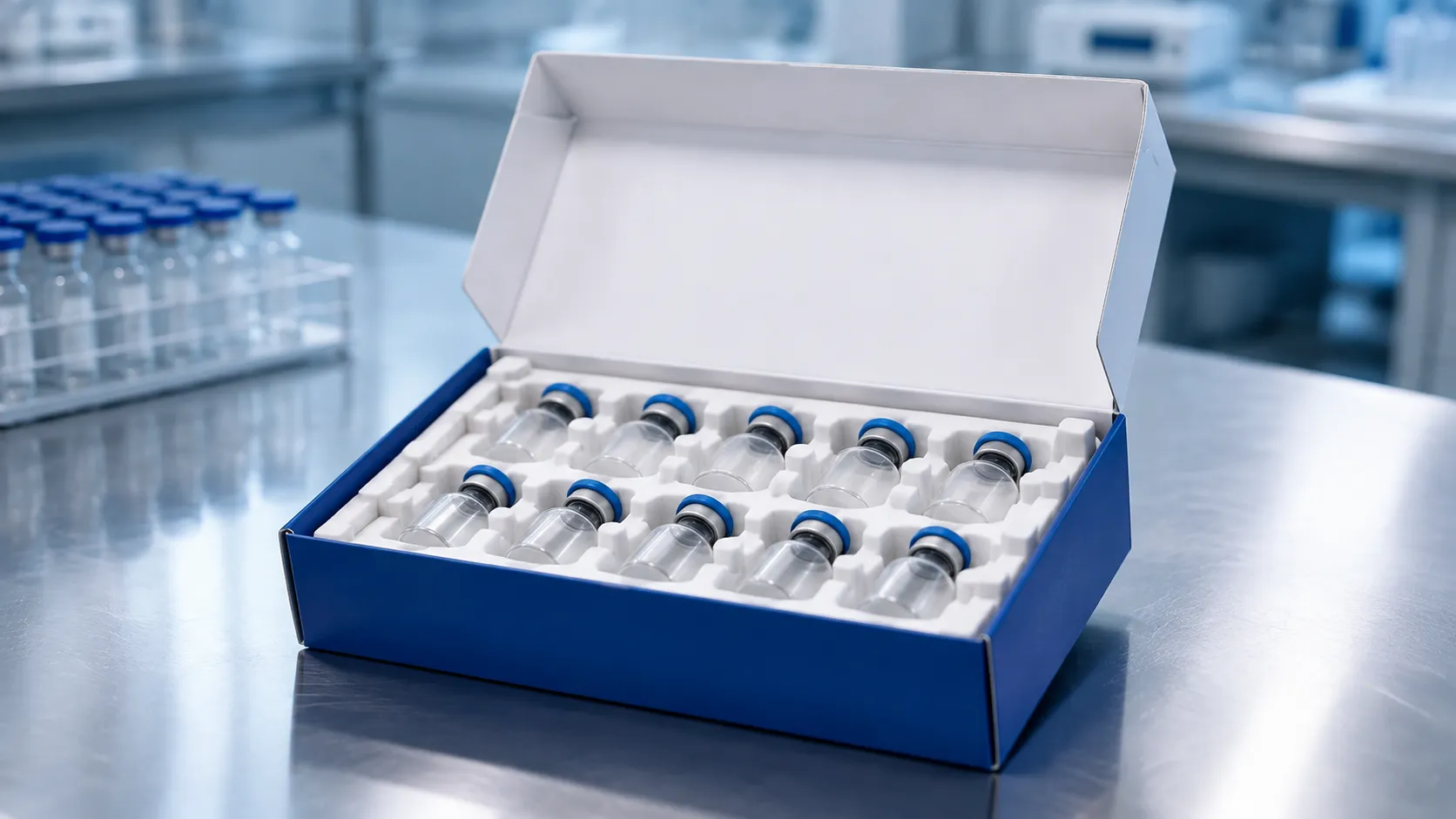
- Glass-to-Glass Prevention: Form-fitted cavities isolate each vial, eliminating movement and contact friction.
- Flexible Capacity: Layouts accommodate 2 mL to 50 mL vials in single-dose diagnostic setups or high-density multi-dose matrixes.
- Ergonomic Retaining Clips: Precision-designed snap features hold vials securely during inverted handling without hindering manual removal.
Nest and Tub System Integration
For high-speed, sterile-ready operations, the nest and tub system is the industry standard.
- Standardized matrix footprints aligned with international processing standards.
- Engineered denesting clearance to eliminate vacuum locks and robotic picker jams.
- High-precision cavity pitch to ensure zero misalignment during high-speed needle insertion.
Injection-Molded Inserts vs. Thermoformed Trays
| Feature | Custom Thermoformed Inserts | Injection-Molded Vial Holders |
|---|---|---|
| Primary Advantage | Cost-effective, lightweight | Extreme structural rigidity, micro-tolerances |
| Wall Thickness | Thin-walled, uniform draft | Variable wall thickness, rib reinforcement |
| Best Used For | High-volume shipping, diagnostic kits | Reusable processing nests, heavy glass multi-dose |
| Tooling Cost | Lower initial tooling investment | Higher tooling investment, long lifespan |
Rigid Secondary Packaging for Transit
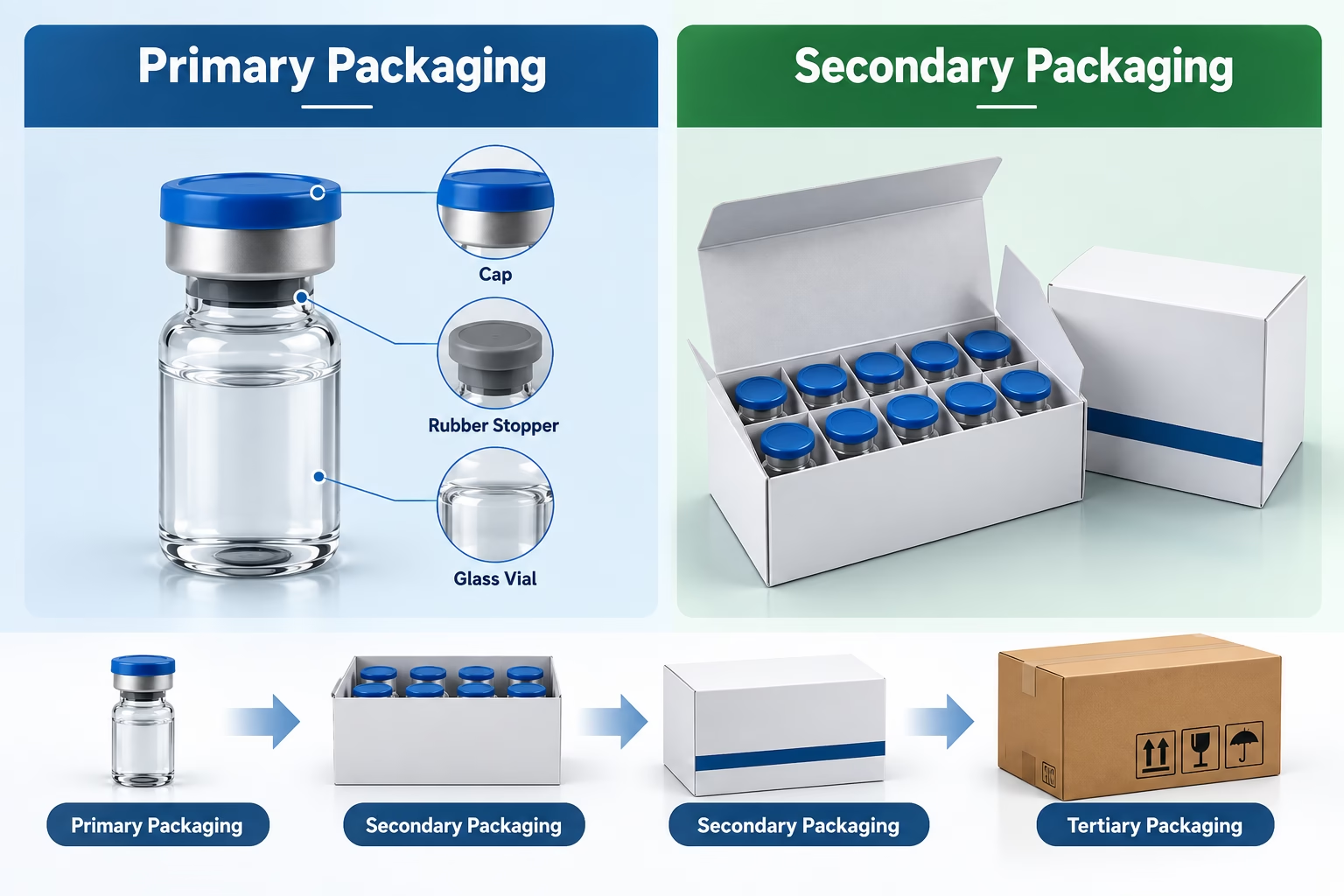
Primary packaging needs reliable secondary protection to survive international freight and deep-freeze logistics. We design rigid outer boxes engineered specifically as anti-breakage transport packaging.
- Cold Chain Stability: Materials resist thermal shock and brittleness down to -80°C.
- Vibration Dampening: Wall geometry absorbs transport shocks across road, air, and ocean routes.
- Stacking Strength: Reinforced corners prevent box collapse during palletized transit.
Material Selection for Vial Packaging
Selecting the right medical-grade polymers is a foundational step in robust vial packaging design. The chosen resin dictates physical protection, chemical stability, optical clarity, and regulatory acceptance across global supply chains.
Impact Resistance and Cost Control: PP and PE
Polypropylene (PP) and Polyethylene (PE) form the backbone of cost-effective, high-impact secondary packaging. We design custom plastic vial trays using PP and PE to absorb drop energy and cushion fragile glass or plastic containers during transport.
- Polypropylene (PP): Provides high structural rigidity, excellent fatigue resistance for living hinges, and reliable performance during low-temperature cold chain storage.
- Polyethylene (PE): Delivers superior impact strength and flexibility, preventing crack propagation during transit shock.
When evaluating sterile packaging materials for glass and plastic containers, PP and PE offer the ideal balance of chemical inertness, physical cushioning, and unit cost control.
Clarity, Barrier Strength, and Low Protein Binding: COP and COC
For high-value biologics, gene therapies, and sensitive diagnostic reagents, Cyclic Olefin Polymer (COP) and Cyclic Olefin Copolymer (COC) set the industry standard.
| Feature | Performance Benefit | Application Focus |
|---|---|---|
| Glass-like Clarity | Enables optical inspection & vision automated sorting | High-value liquid formulations |
| Low Protein Binding | Minimizes drug adsorption onto packaging surfaces | Biologics and protein therapeutics |
| Moisture Barrier | Prevents degradation from humidity and evaporative loss | Lyophilized powders and aqueous drugs |
Stable Diagnostic Tray Layouts: PETG and PS
Polyethylene Terephthalate Glycol (PETG) and Polystyrene (PS) deliver exceptional dimensional stability for precise diagnostic kit tray layout configurations.
PETG offers high toughness, chemical resistance, and clarity, making it ideal for deep-draw thermoformed protective packaging inserts. PS provides a cost-effective, rigid platform for structured multi-component kit layouts, ensuring each vial, ampoule, and diluent stays locked in place during transport. These materials integrate smoothly into compact storage formats, including specialized 2ml vial packaging layouts for clinical kits.
USP Class VI Medical Plastics and Material Traceability
We use strictly certified USP Class VI medical plastics to satisfy international healthcare standards and eliminate extractables or leachable risks.
- Biocompatibility: Complies with USP Class VI and ISO 10993 requirements for non-cytotoxicity and biological safety.
- Full Traceability: Every batch includes raw material lot traceability, resin certs, and certificate of analysis (CoA).
- Sterilization Ready: Formulated to withstand Gamma radiation, Ethylene Oxide (EtO), and electron-beam (E-beam) processing without yellowing or embrittlement.
Cleanroom and Regulatory Requirements
Cleanroom Manufacturing Standards
| Cleanroom Grade | Packaging Application | Environmental Focus |
|---|---|---|
| ISO Class 7 | Injection molding & nest assembly | Strict airborne particle and bioburden suppression |
| ISO Class 8 | Thermoformed tray molding & secondary packing | Controlled dust, temperature, and humidity management |
Bioburden and Particulate Contamination Control
Particulate or microbial contamination leads to drug instability. Our process mitigates these risks at the source:
- Particulate Contamination Control: HEPA-filtered laminar airflow eliminates foreign particulate buildup in tray cavities.
- Bioburden Control: Automated handling and strict hygiene protocols keep microbial counts within validated limits.
- Pyrogen Control: Cleanroom washing and automated packing maintain endotoxin-free surfaces for sensitive biopharmaceutical fills.
Sterile-Ready RTU Packaging Expectations
To cut downtime, pharmaceutical lines increasingly depend on pre-sterilized sterile-ready RTU packaging. Our ready-to-use nest and tub configurations arrive gamma-sterilized or ETO-processed, feeding directly into aseptic isolators without additional washing or processing steps.
Quality Documentation and Compliance Validation
Every batch includes comprehensive compliance documentation for seamless regulatory submission and audit support:
- Full Traceability: Raw materials mapped to specific polymer lots and mold cavity IDs.
- Regulatory Compliance: Complete data packages including Certificate of Analysis (CoA), USP Class VI compliance, and ISO 13485 validation reports.
Automated Filling Line Compatibility
Precision Tolerance Control
To prevent jams and misfeeds, we enforce strict dimensional stability across every cavity:
Dimensional Consistency: We hold tight pocket-to-pocket tolerances (typically within ±0.1 mm) so vacuum grippers and robotic arms extract and seat vials with pinpoint accuracy.
Component Uniformity: Whether handling standard glass vials or custom pharmaceutical cartridges for injectable drugs, exact pocket pitch prevents mechanical collisions during high-speed processing.
Mechanical Features for Denesting
Trays that stick together shut down high-throughput production lines. We integrate precise structural features into our nest and tub system layouts to keep lines moving:
Lead-in Chamfers: Tapered pocket entries guide vials into position smoothly, accommodating subtle robotic misalignment.
Stack Stops: Molded corner lugs and standoff ribs prevent nested trays from wedging tightly during transit and storage.
Denesting Clearance: Defined rim geometry gives automated denesting equipment clean engagement points to separate trays without mechanical binding.
Anti-Static and Surface Optimization
| Feature | Engineering Implementation | Line Benefit |
|---|---|---|
| Anti-Static Dissipation | Surface treatments or anti-stat resin additives | Eliminates static cling and prevents particulate contamination |
| Low-Friction Finish | Micro-textured contact surfaces | Smooths tray separation and reduces friction during slide transfers |
| Vacuum Relief Channels | Integrated air gaps between nested layers | Prevents suction locking during high-speed robotic pickup |
Achieving true automated filling line compatibility requires balancing tight denesting clearance with robust material rigidity, protecting your product while eliminating costly line downtime.
Cold Chain and Transit Protection
Low-Temperature Storage Performance
Refrigerated and frozen distribution routes expose packaging to severe thermal shocks. Standard plastics embrittle at sub-zero temperatures, leading to stress cracking during handling.
- Sub-Zero Polymer Selection: We utilize specialized polypropylenes (PP) and medical-grade PETG designed to retain impact strength at deep-freeze (-20°C to -80°C) and cryogenic conditions.
- Dimensional Stability: Low thermal expansion coefficients prevent tray warping and loss of vial clamping force during rapid freezing cycles.
Shock Absorption and Anti-Breakage Design
Glass-on-glass contact remains the leading cause of vial breakage during distribution. Our structural layouts eliminate direct glass contact while isolating each container from external impact forces.
- Engineered Cavity Wall Buffers: Dynamic wall flex and perimeter bumpers absorb drop impacts before energy reaches the glass wall.
- Vibration Damping: Precision-molded vial trays lock neck finishes into place, dampening structural resonance caused by truck engines and aircraft transport.
- Glass Surface Protection: Anti-friction cavity finishes eliminate surface abrasion that compromises structural glass strength over long transit routes.
Freight Density and Cold Chain Efficiency
| Performance Metric | Design Implementation | Operational Benefit |
|---|---|---|
| Volumetric Efficiency | Stackable nest-and-tub geometries | Reduces refrigerated shipping footprint by up to 30% |
| Transit Protection | Interlocking alignment tabs | Prevents tray shifting inside outer shippers |
| Secondary Containment | Reinforced vial boxes | Shields primary packaging from crushing under heavy freight stacks |
OEM and ODM Development Workflow
1. Specification Mapping
We establish exact physical and operational requirements before design begins:
Vial Geometry: Outer diameter, overall height, fill volume, and neck finish.
Process Integration: Manual packaging steps vs. high-speed automated filling lines.
Environmental Needs: Storage temperature ranges, cold chain limits, and freight hazards.
2. CAD Modeling & Simulation
Using 3D CAD modeling, we engineer custom cavity profiles, lead-in chamfers, stack stops, and denesting clearances. Digital structural simulations test stress distribution, shock absorption, and stack stability under load prior to tooling.
3. Precision Mold Tooling & Prototyping
We transition from digital models to physical samples using rapid packaging prototyping. Through custom precision mold tooling, we fabricate functional prototypes for drop testing, automated line trials, and exact fit verification.
4. Quality Inspection & Batch Release
Every production batch undergoes strict quality validation to ensure continuous dimensional stability and zero-defect delivery:
| Quality Gate | Primary Inspection Criteria |
|---|---|
| Tooling Audit | Cavity-to-cavity consistency, surface finish, anti-static performance |
| Physical Fit | Denesting clearance, vial lock security, stack stability |
| Release Testing | Dimensional verification, particulate limits, bioburden compliance |
This controlled development approach delivers reliable protective packaging tailored precisely to your production machinery and transport needs.
Packaging Design Checklist for Procurement Teams
1. Primary Container Specs & Cavity Layout
- Vial Dimensions: Map the exact outer diameter (OD), total height, neck finish, and flange geometry.
- Formulation Type: Identify whether the vial holds sensitive biologics, lyophilized powder, or liquid diagnostics.
- Cavity Spacing: Define the tray grid layout to ensure proper protective packaging inserts and sufficient clearance for robotic grippers.
2. Environmental & Logistics Conditions
- Storage Temperature: Specify whether the tray must withstand deep-freeze storage (-80°C) or standard refrigerated cold chains (2°C to 8°C).
- Shipping Route: Plan for air, sea, or ground transit vibration, integrating shock absorption features to protect fragile glass.
- Handling Method: Account for localized manual handling versus automated cold chain logistics packaging workflows.
3. Production & Line Integration
- Assembly Workflow: Choose between standard manual assembly trays or high-density nest and tub systems designed for high-speed denesting.
- Line Compatibility: Target tight dimensional tolerances to prevent jam-ups and guarantee seamless automated filling line compatibility.
4. Tooling Volume & Development Timelines
- Prototyping Needs: Utilize rapid packaging prototyping to validate container fit, denesting clearance, and drop resistance before mass production.
- Tooling Capacity: Determine single-cavity versus multi-cavity precision mold tooling based on projected annual production runs.
- Lead Times: Align polymer sourcing, USP Class VI validation, and manufacturing schedules with your market release targets.
Leveraging specialized custom packaging solutions early in the development phase accelerates rapid sampling while keeping unit costs optimized across our full range of pharmaceutical packaging products.
FAQs About Vial Packaging Design
What is the best packaging format for fragile glass vials?
Custom thermoformed trays or injection-molded inserts paired with rigid secondary boxes offer the highest level of shock absorption. We design these formats to eliminate glass-to-glass contact during transit, while nest and tub systems keep vials securely suspended for automated processing.
How do I choose between PP, PETG, COP, and COC?
Material selection depends on clarity requirements, temperature resistance, and formulation sensitivity. Reviewing our guide on pharmaceutical material selection helps clarify specific polymer specs:
| Material | Key Strengths | Best Application |
|---|---|---|
| PP | Impact resistance, low cost, cold-chain stability | Standard trays and rigid secondary boxes |
| PETG | Exceptional clarity, high toughness, rigidity | Diagnostic kit tray layout and retail packs |
| COP / COC | Glass-like transparency, low protein binding, high moisture barrier | High-value biologics and sensitive APIs |
What cleanroom class is needed for sterile vial packaging?
Sterile-ready RTU packaging requires production in ISO Class 7 or ISO Class 8 cleanroom environments. Manufacturing within these controlled spaces limits bioburden, pyrogen levels, and particulate contamination to ensure compliance with medical standards.
How tight should mold tolerances be for automated lines?
To guarantee automated filling line compatibility, mold dimensions must hold tolerances within ±0.05 mm to ±0.1 mm. Strict tolerance control prevents equipment jams during high-speed denesting and robotic pick-and-place routines. You can reach out to our engineering technical support team for custom tooling calculations.
Can vial packaging support high-speed RTU systems?
Yes. Engineered nest and tub systems feature lead-in chamfers, anti-static surface treatments, and precise denesting clearance. These structural details allow high-speed robotic systems to handle trays seamlessly without misfeeds or line stoppages.
How long does custom vial packaging prototyping take?
Rapid packaging prototyping usually takes 1 to 3 weeks. This timeframe includes 3D CAD modeling, structural simulation, and physical sample production using rapid tooling before committing to high-volume mold manufacturing.