
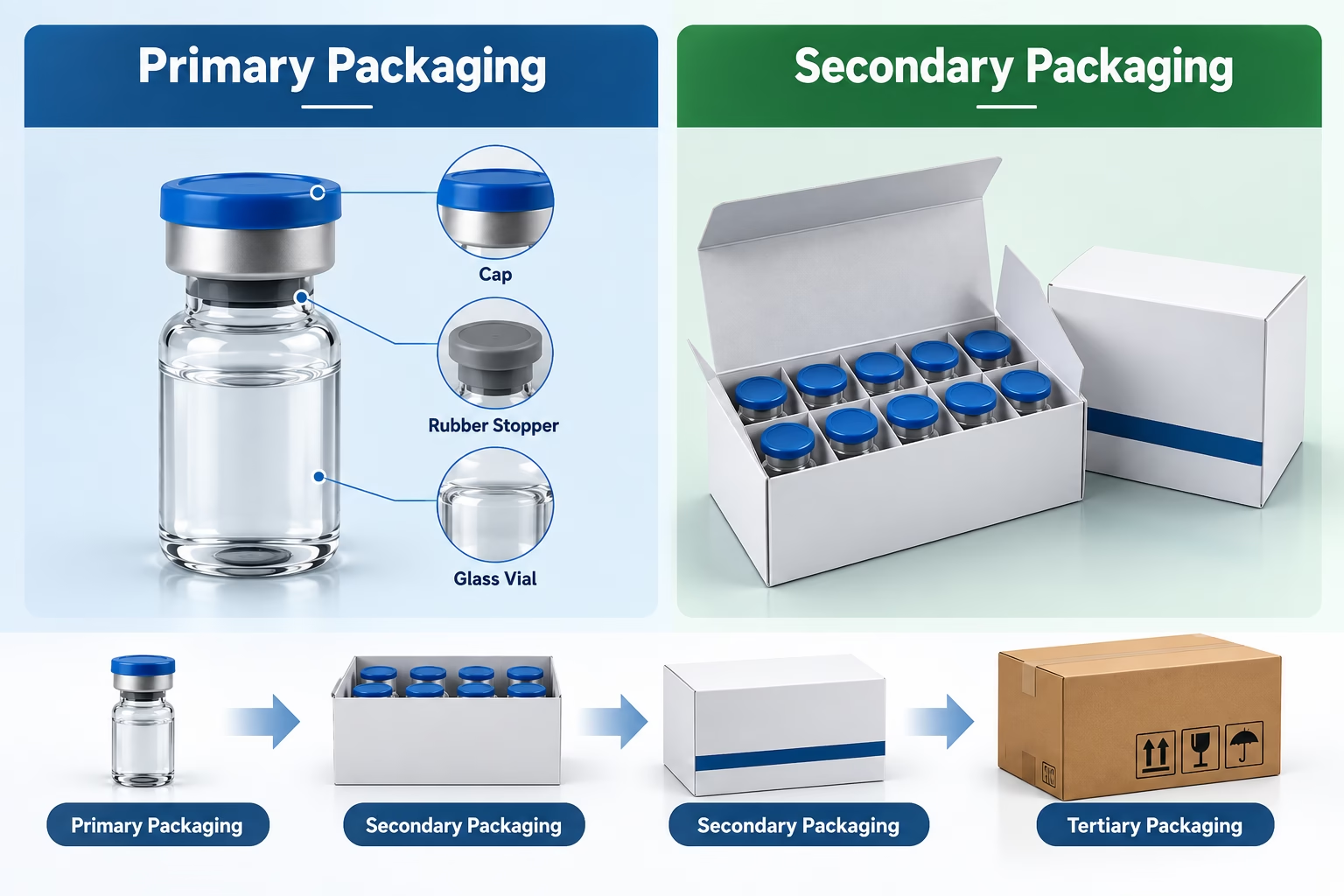
Are you unsure about the critical differences between primary vs secondary packaging for vials?
Getting this choice right isn't just about container design—it's vital for maintaining sterility, ensuring drug stability, and meeting strict regulatory compliance.
In this guide, you'll discover the exact roles of primary and secondary packaging for vials, the key materials you need to know, and how to optimize both layers to protect your product from lab to patient.
Let's dive right in.
Quick Comparison Matrix: Primary vs Secondary Packaging for Vials
Selecting the right packaging ecosystem requires a clear understanding of where product stability ends and transit security begins. While primary packaging for vials serves as the direct physicochemical barrier holding the drug formulation, secondary packaging for vials manages physical containment, shock resistance, and supply chain compliance.
| Feature / Dimension | Primary Packaging for Vials | Secondary Packaging for Vials |
|---|---|---|
| Contact Level | Direct formulation contact (wetted surface) | Zero direct contact; encloses primary container |
| Primary Materials | Type I borosilicate glass, COP/COC, elastomeric rubber stoppers, aluminum crimp seals | Solid Bleached Sulfate (SBS) paperboard, custom inserts, corrugated cartons, thermoformed blister trays |
| Critical Function | Container closure integrity (CCIT), sterility preservation, barrier to gas/moisture | Transit shock absorption, drop protection, UV light shielding, anti-counterfeiting |
| Regulatory Scope | USP <660>, USP <381>, EP 3.2.1, 21 CFR Part 211, ISO 8362 | DSCSA, EU FMD, GS1 DataMatrix serialization, ISO 780, ISTA transit testing |
| Failure Risk Impact | Drug contamination, loss of potency, particulate generation, patient safety hazard | Broken glass, aesthetic damage, shipping rejection, Track & Trace non-compliance |
Direct Contact vs. Outer Protection
- Primary Layer: Interacts continuously with the liquid or lyophilized drug product. It must prevent extractables and leachables (E&L) from migrating into the formula while maintaining an absolute hermetic seal.
- Secondary Layer: Shields the fragile primary container from external mechanical forces, distribution drops, and ambient exposure during storage and transit.
Core Materials: Inert High-Barrier vs. Structural Rigid Substrates
- Primary Materials: Engineered for maximum chemical inertness and thermal stability. We utilize Type I borosilicate glass vials (clear and amber), medical-grade elastomeric formulations (halobutyl rubber), and precision aluminum flip-off caps.
- Secondary Materials: Engineered for structural rigidity, printability, and impact dissipation. Common substrates include high-caliper SBS paperboard, rigid greyboard, engineered foam inserts, and folding cartons.
Sterility and Barrier Functions vs. Shock Absorption and Tamper Evidence
- Sterility & Barrier: Primary systems maintain sterility up to the moment of administration, resisting oxygen ingress, moisture vapor transmission, and chemical degradation.
- Shock & Tamper Resistance: Secondary systems absorb transit vibration, isolate vials with precision partitions to prevent glass-to-glass contact, and incorporate tamper-evident fiber-tear glue or security void seals.
Regulatory Frameworks: Pharmacopeial Compliance vs. Supply Chain Traceability
- Primary Compliance: Heavily governed by strict pharmacopeial testing for surface delamination, particulate matter, elastomeric functional testing, and container closure integrity (CCIT).
- Secondary Compliance: Governed by global serialization mandates (such as US DSCSA and EU FMD) requiring high-contrast GS1 2D DataMatrix printing, aggregation labeling, and human-readable product identification.
Deconstructing Primary Packaging for Vials: The Direct Product Defense Layer
Core Components of a Complete Vial Closure System
A validated primary closure system depends on the precise mechanical and chemical harmony of three core parts:
- Borosilicate Glass and High-Performance Polymer Vials: We utilize Type I borosilicate glass—tubular or molded—to ensure high hydrolytic resistance and thermal shock stability. For break-resistant or pH-sensitive biologics, cyclic olefin polymers (COP/COC) offer ultra-low protein binding. High-volume filling operations rely heavily on pre-sterilized RTU vials and modular vial systems to eliminate on-site washing and depyrogenation overhead.
- Elastomeric Rubber Stoppers: Chlorobutyl and bromobutyl formulations provide resealing capabilities and low gas permeability. FluroTec-coated or siliconized options prevent drug-elastomer binding and reduce particulate shedding.
- Flip-Off Aluminum Crimp Seals: Precision-engineered aluminum skirts provide constant mechanical compression on the stopper flange to maintain hermetic security, topped with tamper-evident plastic buttons.
Functional Responsibilities of Primary Vial Systems
The primary layer acts as an active chemical and physical barrier:
- Chemical Inertness & Low E&L: Eliminates extractables and leachables (E&L) that could alter active pharmaceutical ingredients (APIs), cause toxic impurities, or alter product pH.
- Container Closure Integrity (CCIT): Delivers a gas-tight, microbial-impermeable seal verified through high-voltage leak detection (HVLD) or helium mass spectrometry.
- Thermal & Moisture Protection: Withstands sub-zero storage (down to -80°C and cryogenic conditions) and moisture penetration, protecting lyophilized cakes and aqueous solutions alike.
Regulatory and Quality Benchmarks
We engineer our primary packaging components to satisfy strict global pharmacopeia standards:
- USP <660> / EP 3.2.1: Hydrolytic resistance testing to prevent glass delamination and particulate formation.
- USP <381> / EP 3.2.9: Comprehensive functionality, fragmentation, and extractable screening for elastomeric closures.
- ISO 8362 Compliance: Strict dimensional tolerance matching across vial necks, stopper crowns, and crimp skirts.
- cGMP Cleanroom Processing: Component manufacturing, washing, and packaging conducted within ISO Class 5 to Class 7 cleanrooms to guarantee minimal bioburden and low endotoxin levels.
Deconstructing Secondary Packaging for Vials: Structural Integrity and Communication
Common Secondary Packaging Formats for Vials
Choosing the right format depends on distribution channels, unit counts, and handling automation.
| Secondary Packaging Format | Key Structural Materials | Primary Application & Fit |
|---|---|---|
| Folding Unit Cartons | SBS paperboard, CCNB (250–400 gsm) | Single-vial commercial retail, clinical trial unit doses |
| Partitioned Multi-Pack Boxes | Rigid chipboard, corrugated, SBS dividers | Bulk transport (e.g., 5-pack, 10-pack, 100-pack vaccine trays) |
| Thermoformed Blister Trays | Medical-grade PET, PVC, or RPET | High-precision immobilization for vials with diluents/syringes |
| Custom Foam & Paper Inserts | High-density EVA, EPE foam, molded pulp | Fragile high-value biologics, premium aesthetics sets |
Engineering a robust custom vial packaging design with inserts ensures that zero glass-to-glass contact occurs during rough transit, eliminating micro-fissures and breakages before the product reaches the clinic.
Functional Responsibilities: Protection Beyond the Seal
Secondary packaging acts as a physical buffer, an environmental shield, and a security checkpoint:
- Transit Shock Cushioning: Absorbs dynamic drop, vibration, and compression loads across standard parcel and palletized logistics.
- UV and Photodegradation Shielding: Opaque paperboards block ambient UV and visible light wavelengths (290–700 nm), shielding light-sensitive molecules without requiring costly specialized amber glass.
- Tamper Evidence: Integrated glue closures, perforations, void-detecting labels, or security tear-strips provide immediate visual proof of package tampering before administration.
- Thermal Insulation: Corrugated structural fluting and dense interior partitions add a boundary layer that minimizes rapid temperature spikes during cold chain transfers.
Traceability, Serialization, and Regulatory Requirements
Compliance at the secondary level focuses on tracking, consumer safety, and information flow. Deploying compliant secondary packaging for vials ensures your supply chain adheres to international mandates without disrupting high-speed cartoning lines:
- 2D Serialization (DSCSA & EU FMD): Printing unique GS1 DataMatrix barcodes containing the Global Trade Item Number (GTIN), batch number, expiration date, and serialized identification codes.
- High-Contrast Print Windows: Dedicated, smudge-resistant coating-free zones ensure high read rates for automated camera verification scanners.
- Integrated IFU Leaflets: Precision carton geometry accommodates folded Instructions for Use (IFU) leaflets, outserts, or booklet tabs within tight tolerances to prevent automated packaging line jams.
Critical Differences: Analyzing Primary vs. Secondary Packaging Across Key Dimensions
Understanding the division between primary and secondary packaging is essential for building an efficient, compliant supply chain. While both layers must function in unison, they solve entirely different technical problems.
| Dimension | Primary Packaging for Vials | Secondary Packaging for Vials |
|---|---|---|
| Core Objective | Direct chemical barrier and sterility maintenance | Physical protection, branding, and regulatory compliance |
| Material Base | Type I borosilicate glass, elastomeric stoppers, aluminum seals | SBS paperboard, corrugated fiberboard, rigid box stock |
| Primary Risk Mitigated | Extractables and leachables (E&L), loss of CCIT, contamination | Shock, vibration, drop damage, tampering, misidentification |
| Cost Drivers | Cleanroom molding, washing, siliconization, and sterilization | Die-cut tooling, high-speed automated folding, specialty printing |
| Regulatory Focus | USP <660>, USP <381>, EP 3.2.1, ISO 8362 | GS1 serialization, DSCSA/EU FMD compliance, ISO 780 |
Material Selection and Engineering Constraints: Impermeability vs. Structural Rigidity
In our production workflows, material selection for primary packaging centers purely on chemical inertness and thermal tolerance. We engineer glass vials and elastomeric closures to withstand extreme conditions, from cryogenic storage (-196°C) to autoclaving (121°C), without shedding particulates or altering the formulation's pH.
Secondary packaging, by contrast, prioritizes structural rigidity, shock absorption, and print surface quality. We utilize high-density solid bleached sulfate (SBS) paperboard and corrugated stocks designed to withstand top-load compression during pallet stacking. These substrates must also provide clean surfaces for high-resolution 2D DataMatrix printing and anti-counterfeiting varnishes.
Cost Structure and Budget Allocation: Cleanroom Tooling vs. Automated Converting
The financial footprint of primary vial packaging is heavily weighted toward cleanroom operations, precise dimensional validation, and sterilization. Upfront capital is directed into ISO Class 5 processing, washing, depyrogenation tunnels, and 100% automated optical inspection for cosmetic and dimensional defects.
Secondary packaging costs scale around converting efficiency, custom tooling, and packaging line automation. Budget allocation here targets custom die-cutting dies, plate setup for multi-color offset runs, and precision scoring to ensure flat-packed cartons feed into high-speed cartoning machines without jamming. Pairing precision-cut dividers in a custom vial box with inserts ensures the outer packaging delivers maximum defense without inflating secondary assembly costs.
Supply Chain and Transit Dynamics: Chemical Integrity vs. Physical Asset Protection
Primary packaging defends the molecular stability of the liquid or lyophilized drug. It prevents container closure integrity (CCIT) failures, blocks gas permeation, and guards against hydrolytic attack at the solution interface.
Secondary packaging bears the brunt of the external logistical environment. It absorbs physical impacts, eliminates glass-to-glass contact during transport, prevents light degradation, and provides outer tamper evidence. While the primary container keeps the medicine safe from the environment, the secondary structure keeps the primary container intact through warehousing, palletization, and parcel distribution.
Integration and Synergy: How Primary and Secondary Packaging Work as a Cohesive System
Precision Dimension Matching: Eliminating Headspace Movement and Glass-to-Glass Friction
Loose tolerances inside outer packaging create micro-impacts that damage glass containers during freight handling:
- Zero-Tolerance Cavities: We engineer custom paperboard inserts and thermoformed cavities to lock the vial neck and base in place, eliminating axial headspace movement.
- Eliminating Glass-to-Glass Contact: Direct contact between borosilicate glass vials leads to surface micro-fissures. Using partitioned secondary dividers or specialized plastic vial trays for pharma lab storage and transport prevents friction scuffing and impact breakage.
- Flange & Cap Clearance: Secondary cavities must account for the specific diameter and crimp height of flip-off aluminum caps, preventing accidental de-crimping during insertion or removal.
Automated Packaging Line Optimization: Sizing Cartons for High-Speed Machinery
Mismatches between the primary container profile and secondary carton dimensions cause equipment downtime. High-speed cartoning lines require consistent mechanical tolerances to operate smoothly:
- Robotic Pick-and-Place Precision: Standardized outer carton openings allow vacuum cups and mechanical grippers to seat primary units without edge collisions.
- Continuous Tube Feeds: Using a synchronized vial nest and tub system for RTU aseptic fill-finish allows automated depackaging and repacking lines to transfer dozens of vials directly into secondary cartons without manual intervention.
- Carton Score Line Precision: Pre-broken folding carton creases prevent box bowing, ensuring secondary cartons feed reliably through high-speed gluing and tuck-in machines at speeds exceeding 300 units per minute.
Cold Chain Synergy: Maintaining Seal Integrity Across -20°C to -80°C Freeze-Thaw Cycles
Deep-freeze transit places extreme physical stress on both packaging layers simultaneously:
| Component Layer | Low-Temperature Vulnerability | Cohesive Engineering Solution |
|---|---|---|
| Primary System | Elastomeric stoppers lose elasticity below glass transition temperature ($T_g$), risking container closure integrity (CCIT). | Stopper formulations maintain seal compression while crimp seals maintain constant radial force under cryogenic contraction. |
| Secondary System | Standard paperboard absorbs condensation during thaw cycles, softening and collapsing under pallet weight. | High-caliper, moisture-resistant barrier coatings on folding cartons and foam inserts preserve structural rigidity during humidity shifts. |
| Integrated System | Expansion during liquid freezing increases interior pressure against the carton walls. | Precision cavity sizing leaves controlled expansion relief zones without loosening outer grip. |
Application Scenarios: Sector-Specific Packaging Requirements

Different industries demand specialized configurations when balancing the direct barrier role of primary containers against the physical protection of outer cartons. Here is how we engineer primary vs secondary packaging for vials across distinct sectors.
| Industry Sector | Primary Packaging Demands | Secondary Packaging Demands |
|---|---|---|
| Biopharma & Injectables | Type I borosilicate glass, low-leachable rubber stoppers, CCIT integrity | 2D DataMatrix serialization, tamper-evident seals, cold-chain insulation |
| Cosmeceuticals & Aesthetics | Precise-fill mini vials, specialty snap caps, dropper fitments | Premium rigid gift boxes, thermoformed blister inserts, luxury finishing |
| Diagnostic Reagents | Amber UV-blocking glass, inert closures, freeze-thaw resilience | Multi-pack partitioning, barcode-coded unit boxes, moisture barriers |
Pharmaceutical and Biologics Sector: High-Purity Injectables, Lyos, and Cell Therapies
For parenteral biologics, peptide formulations, and freeze-dried powders, primary packaging must withstand extreme chemical and thermal stress. We select Type I borosilicate glass vials matched with specialized bromobutyl stoppers for high-vacuum freeze-drying. When planning sterile fills across varying product volumes, selecting the right capacity from standard peptide vial sizes ensures consistent headspace control.
The secondary packaging must provide:
Shock-absorbing partitions: Preventing direct glass-to-glass contact during transport.
Light exclusion: Shielding photo-sensitive active pharmaceutical ingredients (APIs).
Full regulatory compliance: Integrated serialization windows for EU FMD and US DSCSA track-and-trace protocols.
Cosmeceutical and Aesthetics Sector: Hyaluronic Acid Serums and Meso-Cocktails
Aesthetics brands require a balance of pharmaceutical-grade sterility and shelf appeal. Liquid serums, meso-cocktails, and concentrated booster treatments rely on sterile primary vials paired with flip-off aluminum seals.
The outer secondary presentation must deliver:
Custom thermoformed trays or high-density foam inserts: Securing multiple vials alongside applicators or mixing syringes.
Rigid setup boxes: High-end unboxing presentation using foil stamping, soft-touch coatings, and secure magnetic closures to support premium brand positioning.
Diagnostic and Laboratory Reagents: Sensitive Enzyme Solutions and Controls
Diagnostic controls, enzymes, and reference standards frequently undergo repeated freeze-thaw cycles between -20°C and -80°C. Primary glass and polymer vials require low thermal expansion rates to prevent micro-fractures and closure loosening.
Secondary packaging for laboratory environments emphasizes:
Partitioned multi-pack cartons: Grouping related reagent sets for streamlined lab workflow.
High-contrast labeling areas: Clear placement for GS1 barcodes, lot numbers, and detailed handling instructions.
Sourcing Considerations & Best Practices with Jiahua Package
Managing primary vs secondary packaging for vials across separate vendors frequently leads to fitment mismatches, damaged glass, and delayed packing lines. When glass tolerances, elastomeric seals, and outer cartons are developed in isolation, even a 0.5 mm variance can cause bottle-to-bottle clashing or automated feeder jams. We eliminate these friction points by synchronizing primary container dimensions with tailored secondary protection under one roof.
Overcoming the Single-Source Challenge: Synchronizing Fitment
Sourcing primary glass containers and outer protective packaging from disparate suppliers introduces unnecessary supply chain complexity. We streamline the entire procurement workflow by engineering exact-fit pairings—matching borosilicate glass profiles directly with structural carton engineering.
- Zero-Rattle Precision: Custom-engineered cavities secure each vial neck and base, completely eliminating glass-to-glass friction during transit.
- Turnkey Compatibility: Whether you deploy automated cartoning lines or manual packing, our custom 10ml vial box packaging with inserts ensures seamless dimensional integration.
- Cost Efficiency: Consolidating fitment validation under a unified workflow significantly reduces your overall vial packaging cost for custom wholesale boxes by cutting tooling iterations and tooling scrap.
Quality Assurance Workflows: Drop Testing, Burst Strength, and Tolerances
To guarantee safe delivery across domestic and international cold-chain routes, we subject every packaging combination to rigorous physical and structural validation:
- Dimensional Tolerance Checks: High-precision die-cutting held to strict tolerances (within ±0.5 mm) prevents stopper movement and friction against the folding carton walls.
- Mullen Burst Testing: We verify the burst strength of SBS boxboards and corrugated mailers to resist high stacking pressures in warehousing environments.
- ISTA Drop & Vibration Testing: Multi-angle drop simulations confirm that our partitioned paperboard and high-density inserts absorb severe transit shocks without compromising glass integrity.
Sustainable Advancements: FSC Boards, Recyclable Coatings, and Lightweight Glass
Modern pharmaceutical, diagnostic, and cosmetic brands require sustainable packaging solutions that meet strict regulatory and environmental mandates:
- FSC-Certified Paperboards: We utilize responsibly harvested SBS, CCNB, and recycled kraft stocks that maintain structural stiffness while supporting circular economy goals.
- Aqueous & Recyclable Coatings: Replacing heavy plastic films with water-based varnishes and barrier coats allows folding unit cartons to enter standard municipal recycling streams.
- Lightweight Glass Formats: Optimized vial wall geometry reduces overall shipping weight and carbon emissions without sacrificing hydrolytic resistance or seal integrity.
Frequently Asked Questions: Primary vs Secondary Packaging for Vials
Is the flip-off cap considered primary or secondary packaging?
The flip-off aluminum cap is classified as a critical component of the primary packaging system. Even though the plastic button does not make direct contact with the liquid formulation, the crimped aluminum skirt applies continuous mechanical pressure on the elastomeric stopper. This compression creates the hermetic seal required for container closure integrity (CCIT), keeping the sterile drug pathway intact until the point of administration.
Can secondary packaging substitute for an amber vial’s UV protection?
Secondary packaging provides substantial light-blocking protection during warehousing and transit, but it cannot fully replace amber Type I borosilicate glass vials for photosensitive formulations. Once a healthcare provider removes the vial from its folding carton for preparation, inspection, or staged administration, ambient UV and fluorescent light will degrade unprotected active ingredients. We engineer high-density paperboard cartons to serve as an outer light barrier, but photosensitive APIs still require amber glass as the direct contact defense.
What testing is mandatory for primary vial packaging before commercial release?
Regulatory authorities enforce strict validation testing on primary vial packaging to ensure patient safety and chemical stability:
- Container Closure Integrity Testing (CCIT): High-voltage leak detection (HVLD), vacuum decay, or helium mass spectrometry according to USP <1207>.
- Extractables and Leachables (E&L): Profiling volatile and semi-volatile compounds migrating from rubber stoppers into liquid media via USP <1663> and USP <1664>.
- Hydrolytic Resistance: Glass surface durability and delamination propensity evaluations under USP <660> and EP 3.2.1.
- Elastomeric Functional Testing: Fragmentation, self-sealing capacity, and penetrability checks under USP <381>.
How do automated cartoning tolerances affect secondary box design?
High-speed packaging machinery leaves zero room for dimensional variance. Automated pick-and-place lines require strict die-cutting tolerances (typically within ±0.5 mm), consistent paperboard grain direction, and pre-broken creases between 90° and 180° to prevent carton jamming and line downtime.
When configuring production setups, exploring our vial packaging process guide for pharmaceutical lines ensures your automated equipment runs at peak efficiency. We design rigid, high-precision compact vial packaging boxes for secure sample storage that match the exact physical profiles of your glass vials, stopping glass-to-glass contact and eliminating transit friction.