Formula details
Product Details
Overview
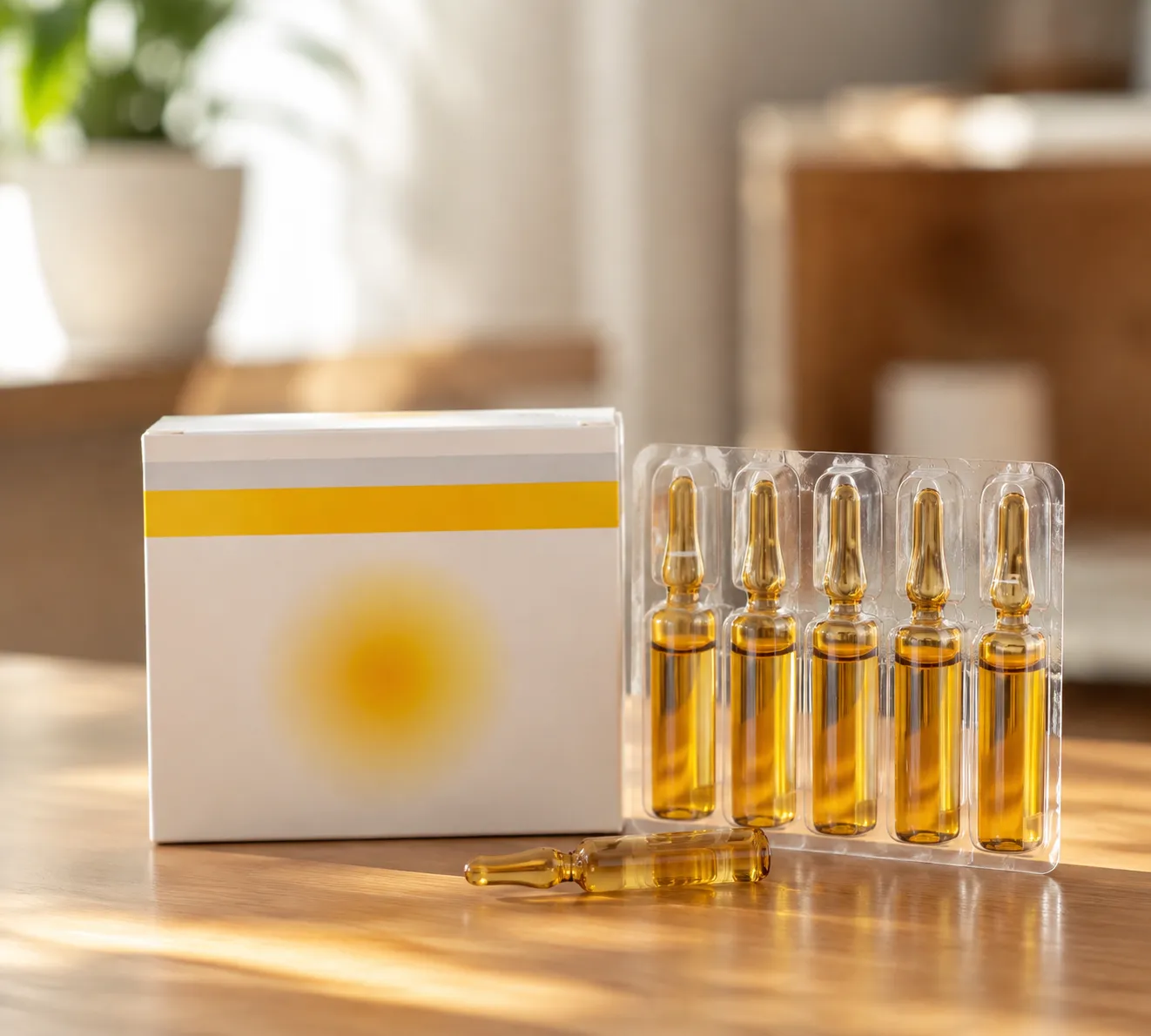
Light-Sensitive Vitamin D Ampoule Packaging
Vitamin D3 Cholecalciferol Degradation Drivers
Vitamin D3 (cholecalciferol) is exceptionally sensitive to atmospheric exposure. Without targeted barriers, active pharmaceutical ingredients (API) degrade rapidly:
- Ultraviolet (UV) Light: Photolytic reaction breaks down cholecalciferol, drastically reducing bioactivity.
- Atmospheric Oxygen: Oxidation generates inactive degradation byproducts and shortens product shelf life.
- Ambient Moisture: Hydrolytic exposure compromises formulation purity over extended storage cycles.
Integrated Packaging Architecture
| Packaging Layer | Material & Technology | Protective Function |
|---|---|---|
| Primary Container | Hermetically Sealed Amber Borosilicate Glass | 100% gas/moisture barrier; filters UV wavelengths below 400 nm |
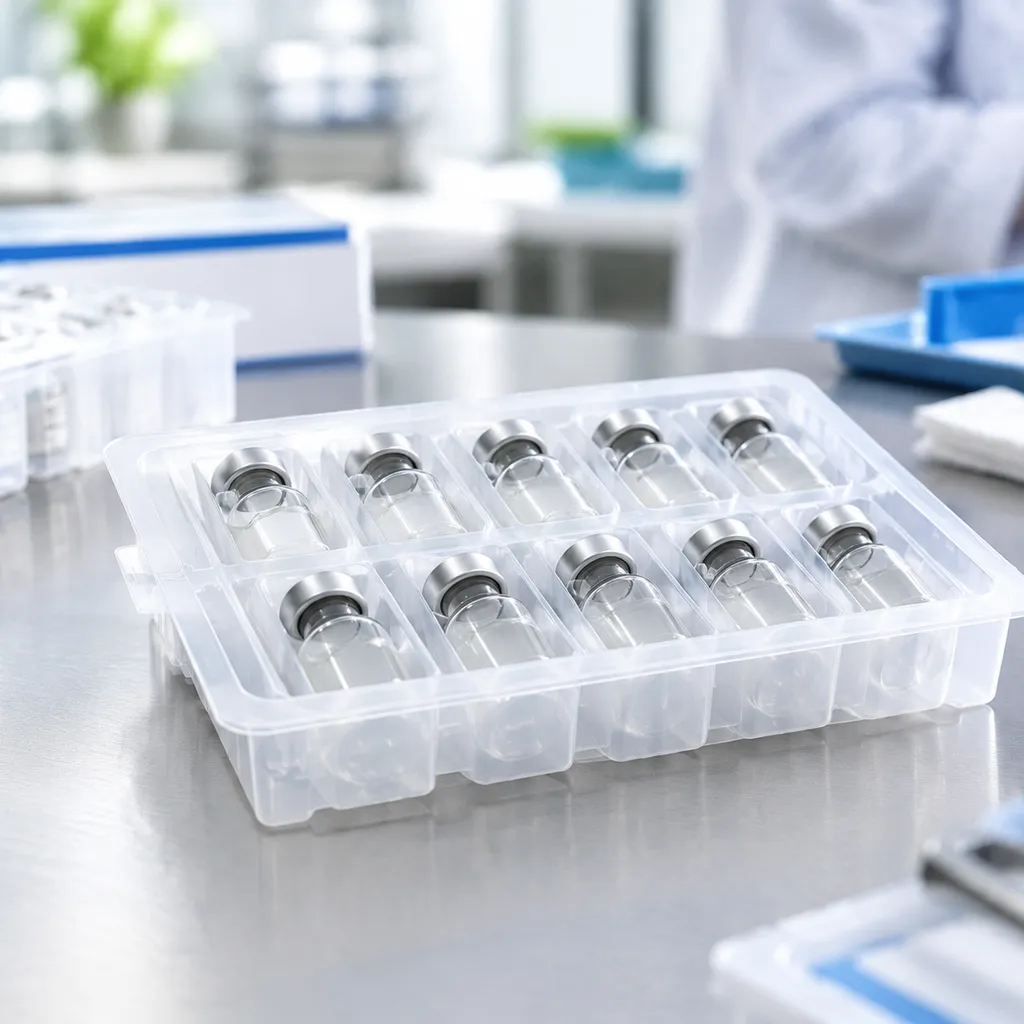
| Secondary Support | Rigid Custom-Molded Plastic Insert Trays | Maintains vertical alignment; isolates individual unit stress points |
We combine high-barrier amber glass ampoules with precision-engineered plastic insert trays to ensure full chemical stability and total structural shielding.
Zero-Breakage Structural Engineering
Bulk shipping subjects liquid products to vibration, drop shock, and stack-pressure stress. Our tray cavities feature proprietary geometry engineered to prevent transit fractures:
- Zero Glass-to-Glass Contact: Individual recessed pockets prevent ampoules from clashing.
- Friction-Free Contours: Snug sidewall retention eliminates micro-abrasions and mechanical displacement.
- Impact-Absorbing Ribs: Engineered flex zones absorb kinetic force during transport drops and automated handling.
Technical Specifications for Vitamin D Ampoule Packaging
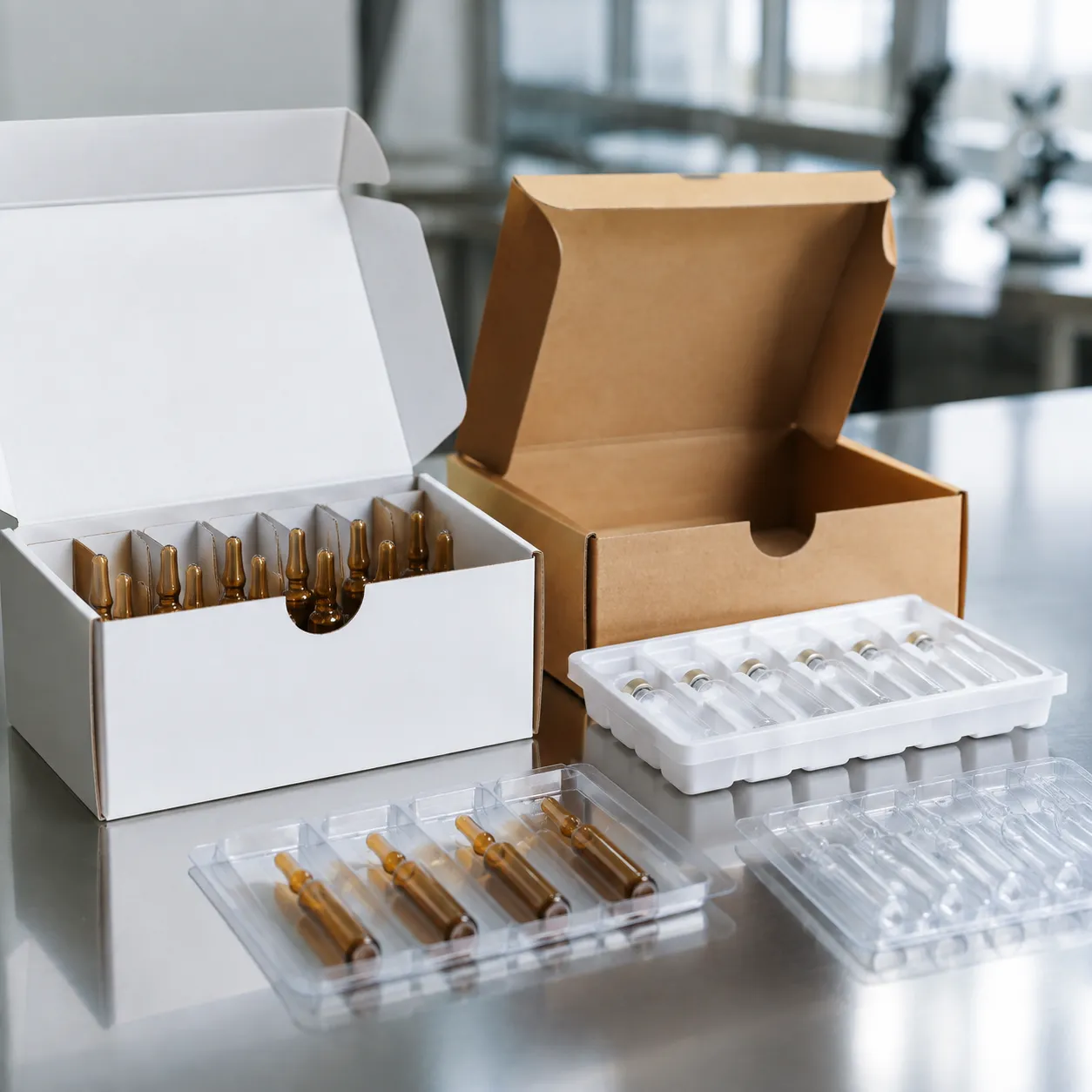
We select USP Class VI compliant polymers engineered for physical stability and strict bioburden control. Choosing the right ampoule packaging materials for glass, plastic, and sterility ensures your primary containers stay secure throughout processing and distribution.
Medical-Grade Material Selection
- Polypropylene (PP) & Polyethylene (PE): Provide high chemical resistance and cost-effective rigidity for standard liquid vitamin D ampoule packaging setups.
- PETG & Polystyrene (PS): Offer high impact resistance, crystal-clear optics, and thermoforming stability—ideal for custom medical-grade PETG packaging trays.
- COP & COC (Cyclic Olefin Copolymers): Deliver a premium moisture barrier with zero extractables and leachables, tailored for high-potency clinical formulations.
Precision Tolerances for Automated Lines
Packaging line jam-ups stall production and damage fragile glass. We manufacture our precision injection molded trays to tight engineering tolerances of ±0.02 mm. This micro-level accuracy guarantees seamless picking, placement, and denesting on high-speed automated packaging lines.
Specification Matrix
| Parameter | Technical Standard & Capability |
|---|---|
| Available Materials | Medical-Grade PP, PE, PETG, PS, COP, COC |
| Cleanroom Rating | ISO Class 7 (Class 10,000) & ISO Class 8 (Class 100,000) |
| Dimensional Tolerance | Up to ±0.02 mm |
| Thermal Range | -80°C to +121°C |
| Sterilization Compatibility | Gamma Irradiation, Ethylene Oxide (EtO), Autoclave |
| Production Lead Time | 7–10 Days (Samples) / 2–4 Weeks (Mass Tooling) |
ISO Cleanroom Manufacturing for Vitamin D Ampoule Packaging
Certified Production Environments
To meet international pharmaceutical and high-purity nutraceutical standards, our manufacturing footprint utilizes controlled cleanroom facilities:
ISO Class 7 (Class 10,000) & Class 8 (Class 100,000): Equipped with continuous HEPA filtration to maintain ultra-low particulate counts and prevent environmental cross-contamination.
Bioburden Reduction: Automated molding processes minimize human touchpoints, ensuring microbial control across all batch runs.
Aseptic Compatibility: Fully compatible with sterile secondary packaging protocols, working seamlessly alongside our sterile RTU tray kits for pharmaceutical packaging.
Automated Line Integration
Our specialized Nest & Tub system architecture is built specifically for high-speed automated manufacturing lines:
Robotic Pick-and-Place: Precision-molded pocket spacing allows high-speed robotic grippers to load and unload ampoules without friction or jamming.
Filling & Cartoning Efficiency: Rigid tray geometry guarantees accurate alignment for automatic liquid filling, seal verification, and secondary cartoning.
Operational Stability: Uniform thermoforming prevents line stoppages and reduces total packaging cycle times.
Quality Assurance Protocols
| QA Parameter | Testing Protocol | Engineering Target |
|---|---|---|
| Batch Traceability | Raw material lot logging & digital batch tracking | 100% full-process traceability |
| Dimensional Precision | Automated inline optical inspection | Tolerances down to ±0.02 mm |
| Surface Cleanliness | Microscopic particulate analysis & bioburden testing | USP compliant cleanroom standards |
| Documentation | Certificate of Analysis (CoA) provided per batch | Complete regulatory compliance packages |
Custom OEM/ODM Engineering Workflow
We engineer precision vitamin d ampoule packaging tailored strictly to your product's chemical and mechanical requirements. Our structured 4-step OEM/ODM engineering process transitions your concepts from initial CAD blueprints to mass cleanroom production with full regulatory compliance.
4-Step Precision Engineering Process
- Consultation & Technical Briefing
We analyze your exact packaging parameters, reviewing ampoule capacities (1 mL, 2 mL, and 5 mL), formulation viscosity, light-shielding requirements, and secondary carton dimensions. Access our dedicated technical support to evaluate custom fitments and barrier options early in development. - Prototyping & Precision Tooling
Our engineers generate custom 3D CAD models optimized for protective plastic packaging inserts. We design and build single- and multi-cavity injection molds engineered to absorb shock and eliminate glass-to-glass contact during transport. - Validation & Sampling
We execute physical trial fits and ship functional prototype samples within 7 to 10 working days. Complete CAD-to-mold validation, structural stress testing, and line-compatibility checks are finalized in 2 to 4 weeks. - Mass Production & Delivery
Upon final approval, we scale production using automated ISO cleanroom injection molding. We deliver production-ready OEM custom packaging trays with global logistics support.
- Consultation & Technical Briefing
| Workflow Stage | Key Deliverables | Turnaround Time |
|---|---|---|
| Step 1: Technical Briefing | Spec evaluation, 1–5 mL sizing, light protection review | 1–3 Days |
| Step 2: Tooling & CAD | 3D modeling for custom packaging design with protective inserts | 1–2 Weeks |
| Step 3: Sampling & Validation | Physical sample delivery, stress and dimension validation | 7–10 Days (Samples) / 2–4 Weeks (Validation) |
| Step 4: Cleanroom Production | ISO Class 7/8 injection molding, automated packing, global dispatch | Scalable per batch |
Packaging Configurations by Application Format
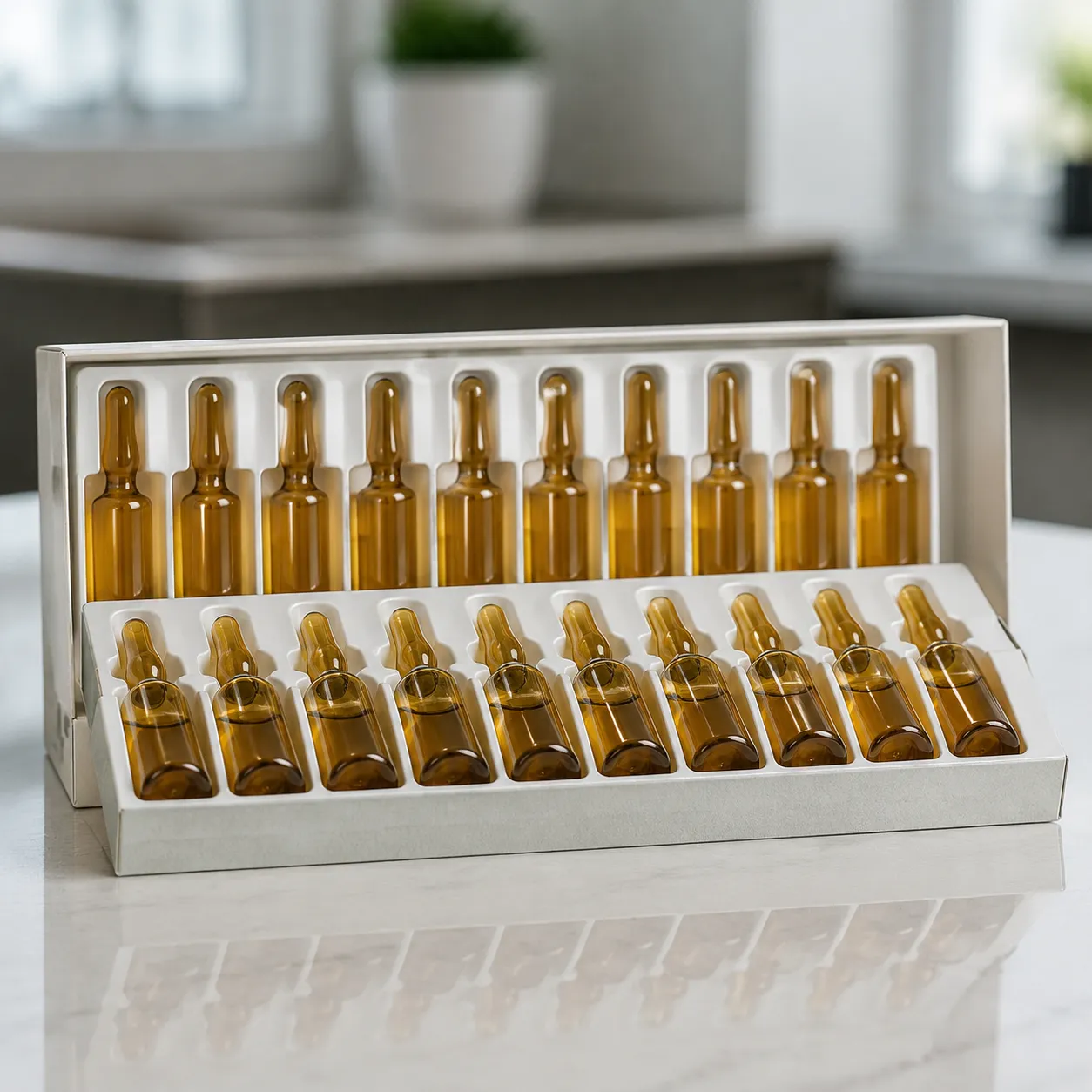
Single-Dose Oral Liquid Ampoule Trays
- Retail-Ready Formats: Compact 4-pack and 5-pack layouts optimized for direct-to-consumer OTC nutraceutical brands.
- Precision Retention: Engineered snap-in cavities built into our ampoule packaging trays lock each container in place, preventing shifting during retail display or consumer handling.
- Material Efficiency: Lightweight thermoformed designs that minimize secondary packaging volume while maintaining rigid protection.
Clinical & Injectable Solution Packs
- High-Density Storage: Heavy-duty 10-pack nested tray systems structured for hospital networks, clinical administration, and high-potency intramuscular regimens.
- Sterile Handling Compliance: Manufactured using custom PETG medical trays for enhanced structural integrity, exceptional clarity, and seamless integration into clinical workflow environments.
- Impact Isolation: Individual cell separation ensures zero glass-to-glass contact under heavy vibration or stress.
Customized Multi-Unit Outer Shippers
- Precision Fit: Custom-engineered outer shippers built to match exact dimensions for secondary carton packaging and blister packs.
- Supply Chain Protection: Structural ribbing and shock-absorbing margins absorb transport energy, delivering complete unit stability throughout international logistics networks.
Frequently Asked Questions (FAQ)
Can Jiahua Package design custom plastic trays for non-standard Vitamin D ampoule sizes?
Yes. We engineer custom thermoformed and injection-molded plastic trays tailored to any non-standard vitamin d ampoule packaging profile. We customize cavity depths, friction-fit retention clips, and outer tray dimensions with precision tolerances down to ±0.02 mm to prevent container movement during transport.
Which plastic materials comply with USP Class VI standards for pharmaceutical packaging?
We process USP Class VI certified polymers including medical-grade PETG, Polypropylene (PP), Polystyrene (PS), and Cyclic Olefin Copolymers (COP/COC). These materials ensure full bioburden control, low extractables, and superior chemical resistance for light-sensitive formulations. For high-volume primary and secondary packaging requirements, review our custom glass vial packaging options for bulk orders.
How do your nest and tub trays integrate with high-speed automated packaging machines?
Our nest and tub trays feature rigid perimeter flanges, anti-stacking lugs, and precise robotic pickup points. This architecture prevents de-nesting jams and enables smooth integration into automated filling, sealing, and secondary cartoning lines. For further technical details on automated line compatibility, consult our vial packaging process guide for pharmaceutical lines.
What is the typical turnaround time for custom prototyping and mass production tooling?
- CAD Design & 3D Prototyping: 7–10 working days.
- Precision Mold Engineering & Validation: 2–4 weeks.
- Cleanroom Mass Production: 3–4 weeks following sample sign-off.