What Is Included in Vial Packaging?
Primary Packaging vs. Secondary Packaging
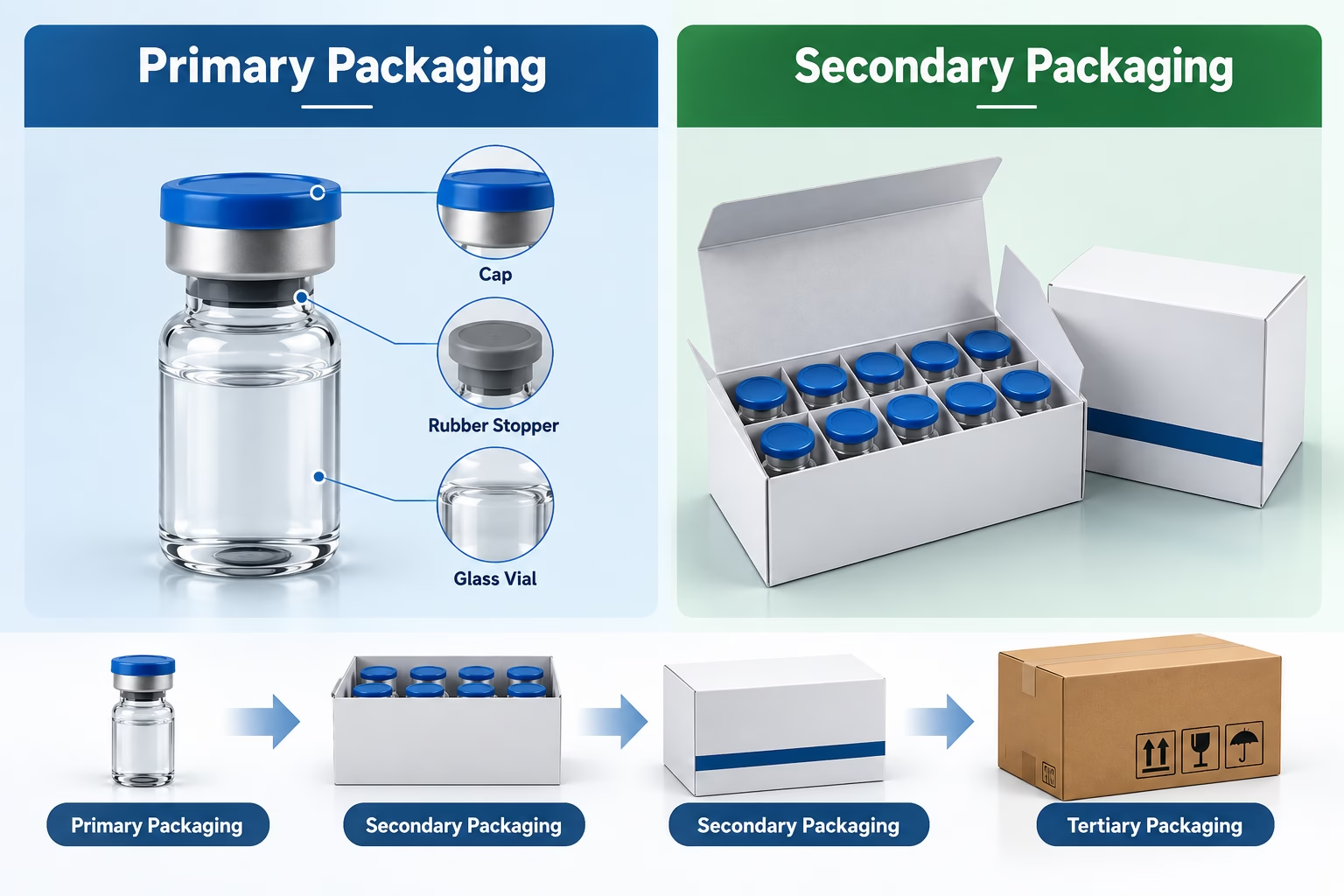
Understanding the distinction between primary and secondary layers is essential for accurate budget forecasting and calculating your overall pharmaceutical vial packaging cost:
- Primary Packaging: Direct-contact components that maintain product sterility and chemical stability. This includes tubular or molded glass vials, plastic vials, elastomeric rubber stoppers, and aluminum flip-off seals.
- Secondary Packaging: Outer protective layers designed for physical defense, branding, and regulatory compliance. This encompasses individual unit cartons, vial box with inserts cost variables, thermoformed trays, and master shipping cases.
Common Vial Packaging Formats
Different formulations and handling systems demand specific packaging structures. We supply the standard configurations used across global logistics networks:
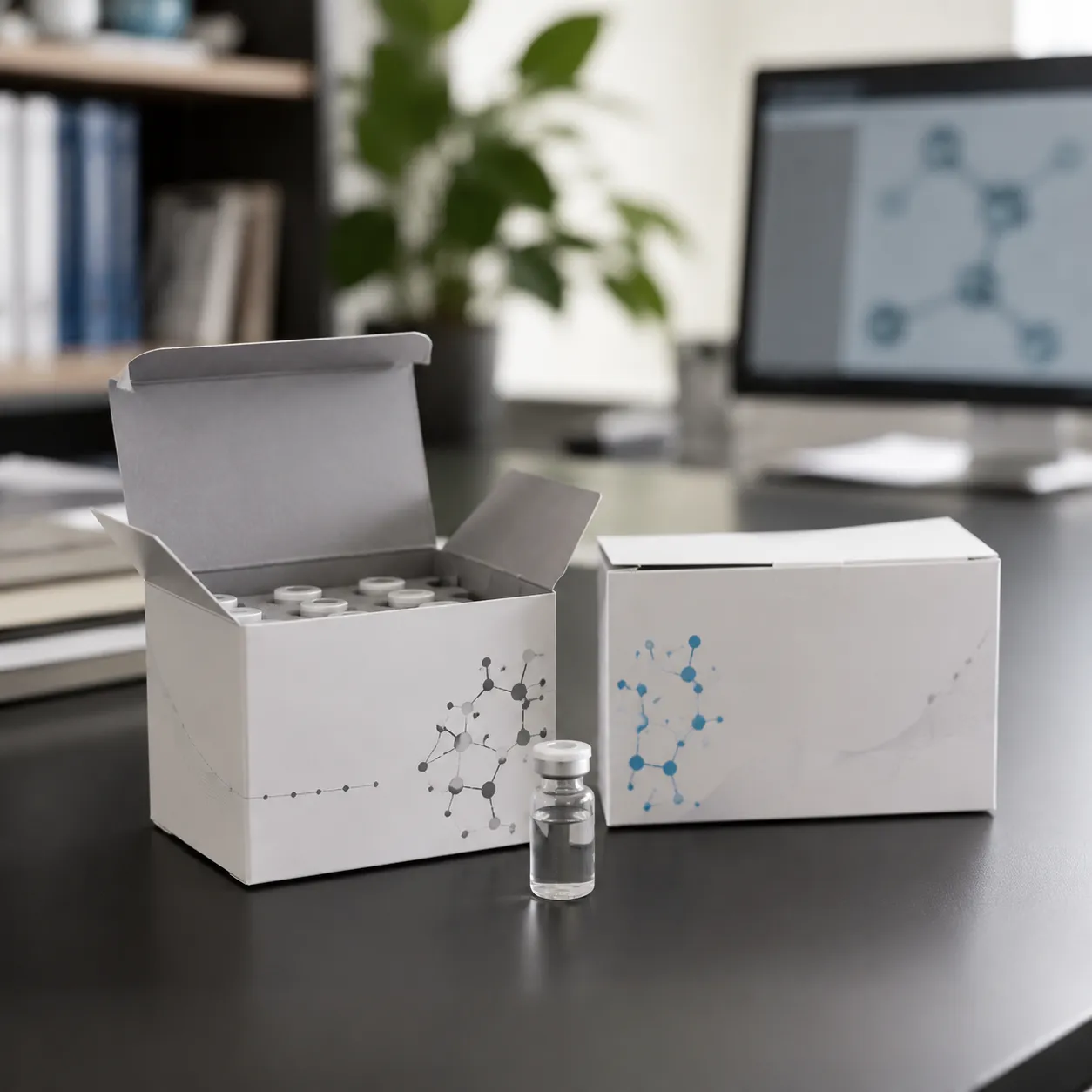
- Custom Printed Vial Boxes: High-density paperboard folding cartons engineered with custom foam, paperboard, or plastic inserts to lock vials in place.
- Plastic Vial Trays: A medical grade plastic vial tray or thermoformed clamshell designed to prevent glass-to-glass contact during transport and automated handling.
- Ready-to-Use (RTU) Packaging: Nest-and-tub configurations pre-sterilized for direct entry into aseptic filling lines.
- Bulk Transport Outer Packaging: Heavy-duty corrugated master cartons, partition dividers, and shrink-wrapped pallet systems optimized for high-volume wholesale vial boxes shipments.
What Does “Vial Packaging Cost” Really Mean?
When we discuss vial packaging cost with pharmaceutical buyers and procurement managers, we often see a common oversight: focusing strictly on the upfront per-unit price tag. While a low unit cost looks attractive on paper, it rarely reflects the actual financial impact on your operational line.
Unit Cost vs. Total Project Cost
Understanding the difference between what you pay per item and what the entire packaging cycle costs is essential for accurate budgeting.
- Unit Cost: The base purchase price per individual item, such as a single custom box or a specialized medical grade plastic vial tray.
- Total Project Cost: The comprehensive expense including upfront tooling, cleanroom processing, freight, storage, assembly labor, and potential waste rates.
Why Buyers Should Look Beyond the Sticker Price
Choosing packaging based solely on the lowest sticker price often leads to hidden operational expenses that quickly undermine your margins.
- Breakage and Product Loss: Subpar materials lead to damaged glass during shipping, driving up replacement costs.
- Automation Inefficiency: Imprecise tray or box dimensions cause jam-ups on automated filling lines, triggering costly downtime.
- Regulatory Hazards: Non-compliant materials can result in batch rejections or quarantine delays.
Evaluating your true pharmaceutical vial packaging cost requires looking at total landed cost and operational efficiency. By prioritizing an optimized custom vial packaging design with inserts, we help you eliminate hidden production risks, protect your product integrity, and achieve true long-term savings.
Main Factors That Influence Vial Packaging Cost
When we calculate a vial packaging cost quote for our B2B clients, several critical technical and operational variables come into play. Here is a direct breakdown of the primary drivers that determine your overall project spend.
Material Selection
Raw material choice heavily dictates your base price. Using medical-grade plastic vial trays, high-density paperboard, or specialized molded inserts directly impacts the bottom line. For sensitive formulations, choosing the right ampoule and vial packaging materials ensures product integrity without over-engineering your budget.
Packaging Structure and Design Complexity
Simple folding cartons cost far less than complex multi-piece setups. Intricate foam inserts, custom dividers, or specialized rigid boxes require extra engineering. For instance, a standardized 2ml vial box for lab storage keeps structural costs much lower than a multi-tiered custom setup.
Tooling and Mold Development
Custom thermoformed trays or unique die-cuts require upfront tooling charges. While custom molds increase initial expenditure, they reduce unit prices significantly over large production runs.
Cleanroom Production and Compliance
Sterile vial packaging cost factors include cleanroom environment class requirements (such as ISO 7 or ISO 8), environmental monitoring, and compliance validation. Medical-grade manufacturing demands strict quality control, raising operational overhead compared to standard commercial packaging.
| Cost Driver | Impact on Unit Price | Key Consideration |
|---|---|---|
| Material Grade | Moderate to High | Medical-grade plastics vs. standard paperboard |
| Tooling & Molds | High (Initial) | One-time setup fee, amortized over high production volumes |
| Cleanroom Assembly | High | Required for sterile and RTU vial packaging applications |
| Custom Printing | Low to Moderate | Special finishes (foil stamping, spot UV) raise per-unit cost |
Printing and Finishing Requirements
Opting for simple single-color printing keeps your vial box manufacturing cost down. Upgrading to custom printed vial boxes with foil stamping, matte lamination, or anti-counterfeiting features adds to per-unit expense.
Order Quantity and MOQ
Higher volumes unlock economies of scale. Small batch orders bear a higher proportion of fixed setup and calibration costs, whereas bulk orders drive down individual unit pricing substantially.
Lead Time and Delivery Method
Rushed production schedules require shift reallocations and priority machine time. Air freight or expedited courier shipping will substantially increase total landed cost compared to scheduled sea freight.
Compatibility with Filling and Handling Systems
If your packaging must integrate with automated filling lines or Ready-to-Use (RTU) handling equipment, precision tolerances are non-negotiable. Designing for machine automation requires tighter manufacturing standards, which slightly increases unit pricing but yields massive savings in filling line efficiency.
Typical Vial Packaging Cost by Packaging Type
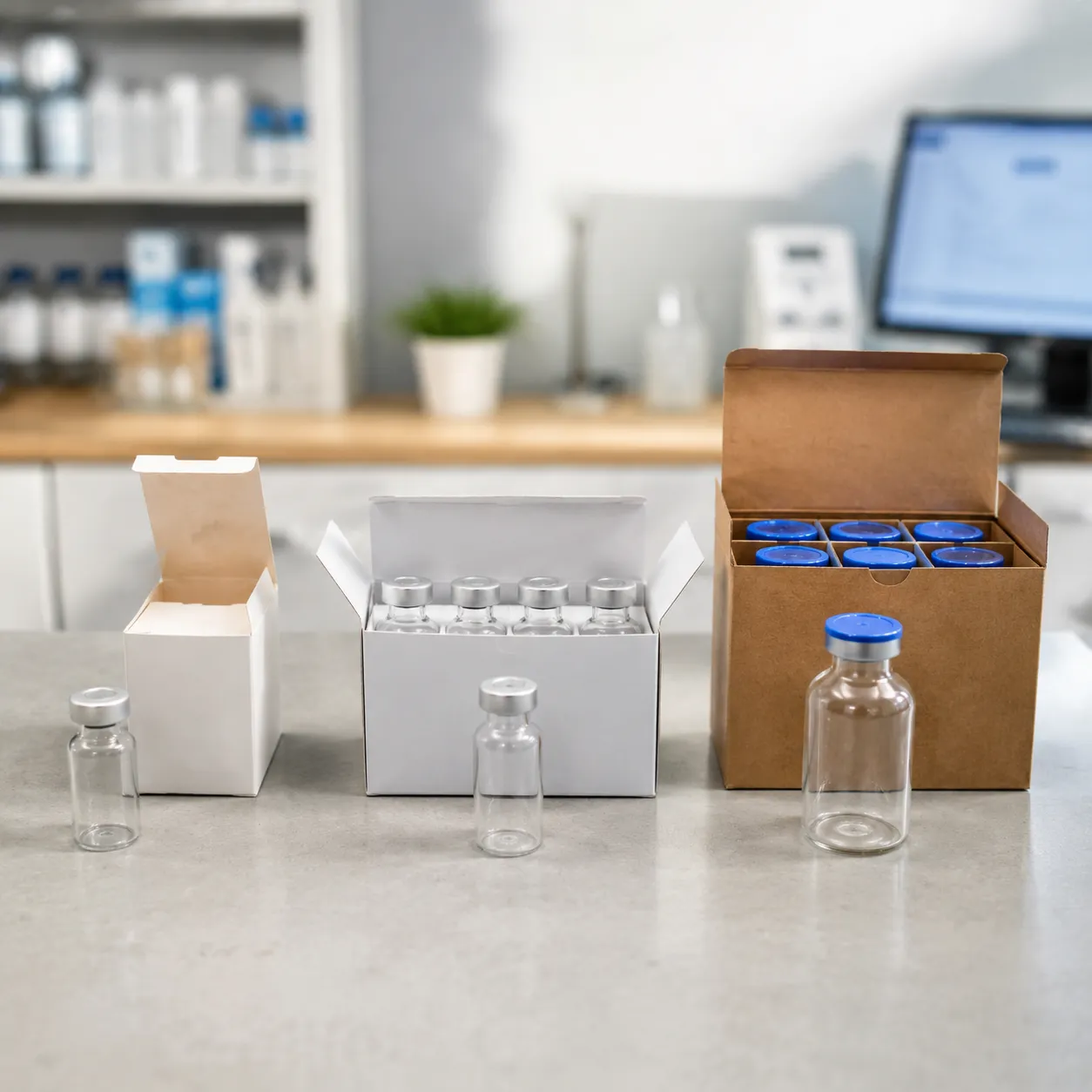
When we calculate your vial packaging cost, we group options into clear tiers. Each tier offers a different mix of structural protection, compliance readiness, and shelf appeal to match your budget and product sensitivity.
| Packaging Tier | Typical Unit Price Range | Primary Materials & Features | Best Application |
|---|---|---|---|
| Economy | $0.05 – $0.25 | Standard paperboard, basic partitions, stock printing | High-volume OTC products, basic diagnostic reagents |
| Mid-Range | $0.25 – $0.85 | Custom folded boxboard, plastic trays, security seals | Clinical trials, standard pharmaceuticals, regional distribution |
| Premium | $0.85 – $3.50+ | Rigid boxes, foam/PETG inserts, cleanroom processing | High-value biologics, vaccines, premium cosmetic vials |
Economy-Level Packaging
This tier focuses strictly on utility and keeping unit expenses low. We rely on standard paperboard folding cartons paired with simple cardstock dividers. Because these formats use existing die-lines and high-speed offset printing, tooling costs are minimal. For simple storage and non-fragile distribution, standard vial packaging boxes offer the most budget-friendly entry point.
Mid-Range Packaging
Mid-range options provide enhanced physical security and cleaner presentation. Here, we combine custom-printed outer boxes with vacuum-formed plastic trays or molded pulp inserts to immobilize each vial. This structure shields vials against vibration and drop impact during transit. If you are shipping sensitive formulations across long transit routes, utilizing specialized pharmaceutical vial packaging for secure transit keeps damage rates near zero without overwhelming your packaging budget.
Premium Packaging
When dealing with high-potency drugs, biologics, or luxury serums, premium packaging is mandatory. This tier incorporates rigid box construction, medical-grade PETG blister trays, tamper-evident features, and specialized surface finishes like spot UV or foil stamping. While initial tooling costs and per-unit prices are higher, the structural integrity protects high-value liquid assets and fulfills strict retail or clinical expectations.
How to Evaluate Which Tier Fits Your Project
Choosing the right packaging level comes down to evaluating three essential factors:
- Product Value vs. Replacement Cost: If losing a single vial costs thousands of dollars, investing in a mid-range or premium tray system is far cheaper than paying for product loss.
- Distribution Channel: Air freight and international shipping require thermoformed inserts and shock absorption, whereas local bulk transportation can often manage with economy paperboard.
- Regulatory Requirements: Products requiring sterile cleanroom packing or specific medical-grade plastic trays automatically move into mid-to-premium pricing brackets.
Standard vs. Custom Vial Packaging: Which Is More Cost-Effective?
When Standard Packaging Makes Sense
Standard vial packaging relies on pre-existing molds and stock formats, eliminating upfront tooling fees and minimizing engineering requirements. We typically recommend standard configurations when:
- Launching pilot trials: Ideal for clinical testing, prototype testing, or small-batch R&D runs.
- Speed is critical: In-stock materials bypass mold fabrication, significantly shortening delivery schedules.
- Working with tight initial cash flow: Avoids custom tooling and setup expenses when order volumes remain low.
When Custom Packaging Is Worth the Investment
For scaled commercial production, custom engineering protects fragile glass, streamlines logistics, and reinforces brand value. Investing in custom packaging delivers a precise fit that drastically reduces transit breakage.
Custom solutions become far more cost-effective when requiring:
- Maximized product safety: Precision-engineered structures like a custom 10ml vial box with inserts securely lock individual vials, minimizing replacement loss.
- Automated production fit: Customized dimensions ensure smooth integration with high-speed filling, labeling, and tray-loading lines.
- Brand identification: Premium printing and structural finishes elevate market presentation in competitive pharmaceutical and cosmetic sectors.
Long-Term Cost Comparison
While stock designs save upfront money, custom manufacturing delivers a lower overall unit cost and higher operational efficiency at scale.
| Cost Metric | Standard Vial Packaging | Custom Vial Packaging |
|---|---|---|
| Initial Tooling / Mold Fee | $0 | Moderate initial investment |
| Per-Unit Production Cost | Higher for high volumes | Lower at volume |
| Custom Vial Packaging Price | Fixed pricing tiers | Scalable wholesale discounts |
| Breakage & Damage Risk | Higher (generic fit) | Minimal (tailored cushioning) |
| Lead Time | Fast (1–2 weeks) | Standard (4–6 weeks setup) |
| Long-Term Overall ROI | Lower for high-volume runs | Higher overall value |
How to Reduce Vial Packaging Cost Without Sacrificing Quality
Lowering your vial packaging cost does not mean you have to compromise on barrier protection, sterile integrity, or brand presentation. By optimizing design choices and sourcing strategies, we help pharmaceutical and healthcare brands significantly cut expenses while maintaining high compliance and quality standards.
Choose the Right Material for the Application
Over-specifying materials is one of the biggest drivers of unnecessary expenditure. Matching your packaging substrate strictly to your stability and transportation requirements prevents over-engineering. Utilizing tailored material selection ensures you pay only for the protective properties your specific vial format actually needs.
Simplify Packaging Structure
Complex multi-piece boxes or intricate folding mechanisms add manual assembly time and elevate die-cutting fees. Opting for streamlined structures, such as standardized custom vial boxes with inserts, speeds up automated production lines and keeps structural development lean.
Increase Order Quantity Strategically
Initial tooling and machine setup fees represent a fixed cost regardless of run size. Increasing your order volume spreads these fixed setup costs over more units, drastically lowering the individual vial box manufacturing cost.
Minimize Premium Finishing Layers
Excessive decorative finishes—like multi-foil stamping, heavy embossing, or localized spot UV—rapidly accumulate costs. Switching to high-resolution direct printing with standard protective matte or gloss coatings delivers a clean, professional aesthetic for wholesale vial boxes at a fraction of the price.
Work Directly with a Manufacturer
Sourcing directly from a primary production facility eliminates distributor markups, streamlines technical communication, and gives you direct access to engineering teams capable of optimizing designs for high-speed manufacturing.
| Cost Reduction Strategy | Typical Cost Savings | Impact on Quality & Function |
|---|---|---|
| Material Right-Sizing | 10% – 20% | Zero loss in barrier efficiency |
| Structural Simplification | 15% – 25% | Faster packaging line integration |
| Bulk Quantity Optimization | 20% – 35% | Identical product spec at lower unit rates |
| Direct OEM Sourcing | 15% – 30% | Enhanced quality control and direct support |
Why Packaging Design Has a Direct Impact on Total Vial Packaging Cost
Protection Reduces Replacement Loss
Fragile glass vials and sensitive biological compounds require robust protection. Poorly designed packaging leads to transit breakage, contamination, and costly product returns that quickly inflate your total project expenses.
- Engineered inserts: Custom thermoformed trays and rigid partitions lock each vial in place, absorbing shock during transport.
- Minimized replacement costs: Preventing even a 1% breakage rate on high-value therapeutics easily offsets the price of upgraded packaging structures.
- Lower claim rates: Secure packaging reduces shipping disputes, product write-offs, and logistics re-handling costs.
Precision Packaging Improves Production Efficiency
Packaging dimensions directly dictate how smoothly your automated fill-finish and packaging machinery runs. Inconsistent tray dimensions cause line jams, machinery downtime, and expensive manual interventions.
- Automated compatibility: Precision-molded structures ensure seamless loading into high-speed cartoning lines.
- Faster turnaround times: Standardized formats, such as specialized ready-to-use RTU vial packaging, eliminate unnecessary offline preparation steps and boost overall manufacturing throughput.
- Labor optimization: Easy-to-assemble outer boxes and trays reduce manual handling time on the packing floor.
Compliance Reduces Hidden Operational Risk
Failing to meet strict industry packaging standards introduces massive financial risks, from rejected shipments to severe market delays.
- Sterility preservation: Cleanroom-manufactured packaging preserves sterile integrity and eliminates batch contamination risks.
- Tamper-evidence and security: Integrated security features satisfy strict global regulatory requirements without needing extra secondary packaging processes.
- Reduced recall exposures: Validated, medical-grade materials prevent physical damage and chemical leaching, protecting your brand against compliance penalties.
What to Ask Suppliers When Comparing Vial Packaging Quotes
When evaluating vendors, comparing sticker prices alone often leads to hidden expenses. A low initial bid can quickly become expensive once tooling, freight, or quality failures are accounted for. Here is how we recommend reviewing supplier estimates to get a true vial packaging cost comparison.
Compare like-for-like pricing
Ensure every vendor quotes against identical technical specifications. A lower custom vial packaging price usually signals trade-offs in material thickness, barrier performance, or structural strength.
- Material specifications: Verify cardboard grammage, plastic resin type, and barrier coatings.
- Structural integrity: Confirm if the packaging is rated for rough transit or cold-chain environments, such as a specialized custom vial sample box for safe storage and shipping.
- Volume breakdowns: Make sure suppliers use the same minimum order quantities (MOQs) and batch tiers.
Ask what is included in the quote
Hidden fees can instantly skew your project budget. Always insist on an itemized breakdown for every bulk vial packaging quote.
| Cost Element | What to Confirm |
|---|---|
| Tooling & Molds | Are custom die-cutting and injection mold fees one-time costs or recurring? |
| Inserts & Trays | Is the foam, thermoformed, or corrugated divider included in the vial box manufacturing cost? |
| Shipping & Logistics | Is the pricing EXW, FOB, or DDP? Are duty and export fees included? |
| Testing & Quality | Are batch inspection reports, cleanroom processing, and certificates of analysis (CoA) included? |
Check supplier capability
Supplier reliability impacts your long-term operating costs far more than a few cents saved on a unit box. Before issuing a contract, evaluate the vendor's technical foundation:
- Manufacturing standards: Confirm their facilities hold relevant ISO certifications for medical and pharmaceutical production.
- Scale and lead times: Ensure their factory capacity can handle your scaling needs without extending lead times.
- Quality control: Check if they perform in-house drop testing, compression testing, and dimensional verification before shipment.
RFQ Checklist for an Accurate Vial Packaging Cost Quote
When you request a bulk vial packaging quote, vague specifications lead to inflated price estimates or unexpected fees down the line. To get the most accurate vial packaging cost upfront, we recommend preparing a detailed Request for Quotation (RFQ).
| RFQ Category | Key Details to Provide | Impact on Vial Packaging Cost |
|---|---|---|
| Product Specifications | Vial dimensions (height, outer diameter), capacity (e.g., 2ml, 10ml), container material | Ensures exact fit for custom inserts, trays, or folding cartons. |
| Design & Technical Needs | Secondary packaging structure, tray requirements, print finish, cleanroom needs | Dictates tooling, mold development, and manufacturing setup fees. |
| Commercial Details | Target order quantities (MOQ), annual volume, lead time, shipping terms | Unlocks volume tier discounts and optimizes logistics pricing. |
Product Information to Prepare
Before contacting a custom vial packaging supplier, gather your physical container specifications. Provide exact outer dimensions, neck finishes, and whether you require primary trays or secondary folding cartons. For standard requirements, such as custom printed 10ml vial box options, having your dimensions ready immediately streamlines the pricing process.
Design and Technical Requirements
Outline your functional and structural needs clearly:
- Tray & Box Structure: Specify whether you need thermoformed plastic trays, paperboard boxes, or corrugated master cartons.
- Material Standards: State if your product requires medical-grade plastics, recycled folding board, or cleanroom production.
- Printing & Artwork: Detail surface finishes (CMYK, Pantone colors, soft-touch matte, foil stamping) and structural artwork files.
- Line Compatibility: Mention if packaging must run on automated high-speed filling or cartoning systems.
If you have specialized structural requirements, taking advantage of dedicated technical support ensures your specifications are fully optimized before tooling begins.
Commercial Details to Include
- Order Quantities: Request tiered pricing (e.g., 5,000 / 25,000 / 100,000 units) to identify key cost-break points.
- Delivery Timeline: State your target sampling dates, batch production schedules, and preferred shipping terms (FOB, DDP, CIF).
- Compliance Standards: List any required transit testing standards (e.g., ISTA) or cleanroom certification documentation.
Why Detailed RFQs Get Better Pricing
Suppliers add risk margins to quotes when specs are ambiguous. By providing explicit technical parameters, clear artwork specs, and reliable volume forecasts, you eliminate supplier guesswork. A comprehensive RFQ allows us to calculate exact raw material usage, optimize production runs, and offer you the lowest possible vial packaging cost right from the start.
Why Choose Jiahua Package for Vial Packaging Solutions?
Finding the right supplier is the most direct way to control your overall vial packaging cost while guaranteeing safety and compliance. As a dedicated OEM vial packaging manufacturer, we combine advanced production technology with flexible customization to give you high-tier protection at factory-direct rates.
Our Core Strengths
| Key Advantage | What We Deliver | Buyer Benefit |
|---|---|---|
| Precision Manufacturing | ISO-certified cleanroom production & automated lines | Zero-defect packaging that integrates smoothly with automated filling systems |
| Custom OEM/ODM | Tailored dimensions, custom inserts, and custom printing | Optimized structural design that cuts overall unit costs |
| Global Export Support | Fast RFQ response, streamlined logistics, & compliance aid | Reduced lead times and zero hidden import delays |
| Application-Focused | Sector-specific designs for pharma, biologics, & peptides | Maximum product protection with minimal breakage risk |
Complete Packaging Capabilities
- Precision Manufacturing: Our state-of-the-art precision manufacturing capabilities ensure tight tolerances for cleanroom trays, vial inserts, and protective outer packaging.
- Tailored OEM/ODM Engineering: We help you design cost-effective solutions like custom peptide vial boxes with low MOQs, preventing unnecessary tooling expenses.
- Rapid Global Response: Our export specialists handle technical documentation, international compliance checks, and direct shipping to keep your total landed costs clear and low.
- Targeted Security: We engineer every structural element around your specific product requirements, whether you need sterile barrier protection, cold-chain stability, or high-impact shock absorption.
Frequently Asked Questions About Vial Packaging Cost
How much does vial packaging cost?
Unit costs generally range from $0.10 to $0.50 for bulk cardboard boxes or standard partition inserts. Custom sterile trays, rigid boxes, or complex packaging with protective foam inserts typically cost between $0.80 and $3.00+ per unit, depending on your order volume and material specifications.
Why do custom vial packaging quotes vary so much?
Quotes vary based on technical requirements and material quality. Main price drivers include:
Material Grade: Medical-grade plastics and specialized paperboard cost more than standard materials.
Tooling and Molds: Custom plastic trays require upfront mold investment.
Production Environment: Cleanroom manufacturing adds operational costs.
Order Scale: High-volume runs significantly lower the cost per unit.
Is plastic vial packaging more expensive than cardboard packaging?
Yes, thermoformed plastic trays usually carry higher material and tooling costs than paperboard. However, products like a scintillation vial cardboard storage box provide a highly cost-effective, durable solution for lab organization and secondary storage without custom mold expenses.
What is the minimum order quantity for custom vial packaging?
Standard or stock packaging options have lower thresholds, starting around 500 to 1,000 units. For custom-printed packaging, tailored structural dimensions, or thermoformed trays, our minimum order quantity (MOQ) typically ranges from 3,000 to 10,000 units to optimize production efficiency and keep unit pricing competitive.
How long does sampling take?
Digital proofs and structural die-lines are completed within 24 to 48 hours. Physical prototypes typically require 3 to 7 business days. Through our fast sampling service, we provide accurate pre-production samples so you can test fit, clearance, and material durability before committing to full production runs.
Can vial packaging be customized for automated filling lines?
Yes. We design and manufacture trays, dividers, and outer cartons to precise dimensional tolerances. This ensures smooth handling on automated packing, filling, and robotic denesting systems, preventing line jams and minimizing downtime.
What information is needed to get a quote quickly?
To receive an accurate, detailed quote on your initial request, provide the following details:
Vial Dimensions: Outer diameter, height, and total capacity.
Packaging Style: Outer box, thermoformed tray, or combined kit.
Order Quantities: Initial sample size and full production volume.
Customization Details: Artwork files, print finishes, or branding requirements.
Special Handling: Cleanroom requirements or specific regulatory standards.
Related Sources
- https://www.tricorbraun.com/blog/is-glass-better-than-plastic-for-packaging.html
- https://knowledge.bsigroup.com/products/primary-packaging-materials-for-medicinal-products-particular-requirements-for-the-application-of-iso-9001
- https://knowledge.bsigroup
- https://www.fda.gov/regulatory-information/search-fda-guidance-documents/container-closure-systems-human-drugs-and-biological-products