Primary Ampoule Packaging Materials: Material Performance & Trade-Offs
Selecting the right ampoule packaging materials directly dictates product stability, shelf life, and safety within any container closure system (CCS). We evaluate material performance, chemical compatibility, and mechanical trade-offs to optimize primary containment for sensitive formulations.
Type I Borosilicate Glass
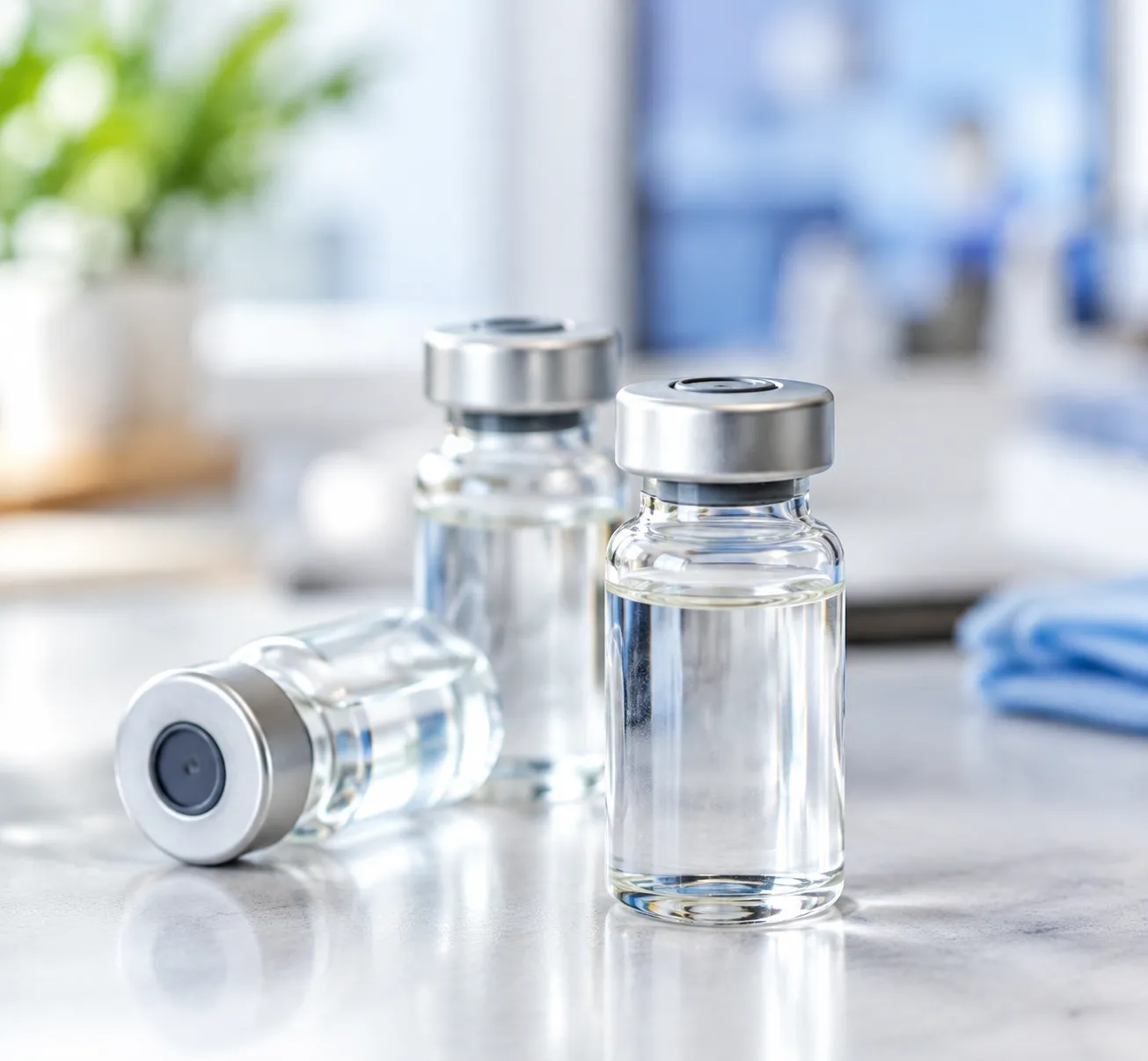
Type I borosilicate glass remains the industry standard for parenteral drugs due to its neutral glass composition and high hydrolytic resistance.
- Chemical Inertness: Minimizes leaching of alkali ions, preventing pH shifts and degradation in delicate liquid formulations.
- Hermetic Flame Sealing: Creates a total gas and moisture barrier for maximum long-term stability.
- Shatter Risk Mitigation: Precision neck scoring, break-rings, and controlled drawing eliminate glass particulate contamination during opening.
Advanced Thermoplastic Polymers
Polymer alternatives eliminate glass breakage and delamination, offering tailored solutions for high-speed manufacturing and biopharmaceutical ampoules.
- Medical-Grade PP & PE: Tailored for automated Form-Fill-Seal (FFS) technology. They provide flexible, shatterproof packaging for standard diagnostics, wash solutions, and high-volume injectables.
- Cyclo Olefin Polymer (COP/COC): Designed for high-value biologics, mRNA therapies, and sensitive proteins. Offers glass-like optical clarity, zero delamination risk, minimal protein adsorption, and exceptional impact resistance in cold-chain environments.
Comparative Technical Evaluation Matrix
| Material Class | Optical Clarity | Barrier Efficacy (O₂ / H₂O) | Shatter Resistance | Delamination Risk | Primary Applications |
|---|---|---|---|---|---|
| Type I Borosilicate Glass | High (>90%) | Superior (Impermeable) | Moderate | Low (Formulation dependent) | Injectable drugs, volatile active serums, freeze-dried products |
| Medical-Grade PP / PE | Translucent | Moderate | High | None | FFS/BFS solutions, eye drops, standard unit doses |
| COP / COC Polymers | Superior (>92%) | High | Exceptional | None | Biologics, protein therapeutics, high-value reagents |
Secondary Packaging Materials & Structural Engineering
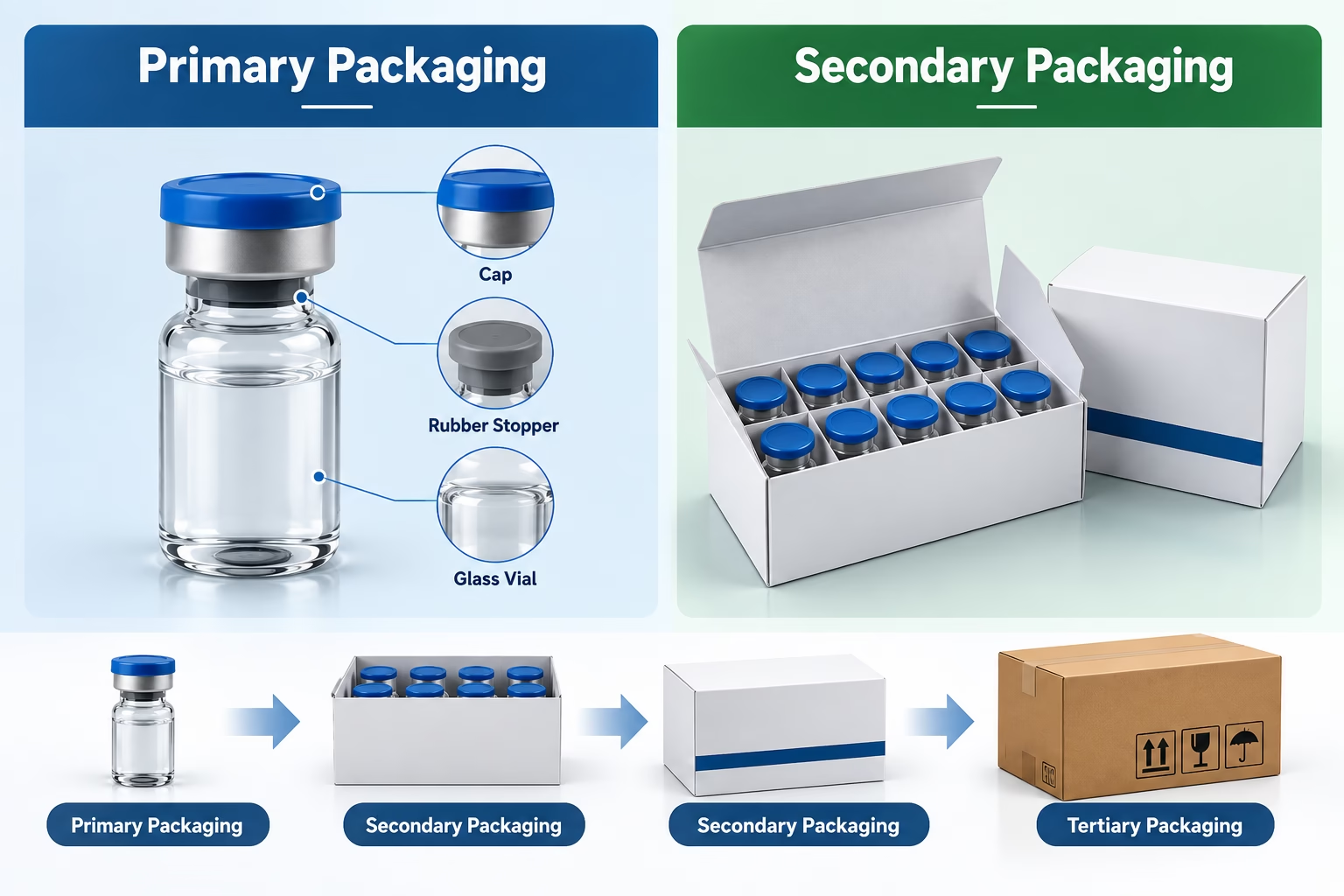
When primary containers leave the line, secondary ampoule packaging materials take over to prevent breakage, preserve sterility, and protect sensitive formulations from environmental exposure. We engineer robust secondary packaging systems designed to withstand high-speed automated handling and harsh logistics environments.
Custom Thermoformed & Injection-Molded Trays
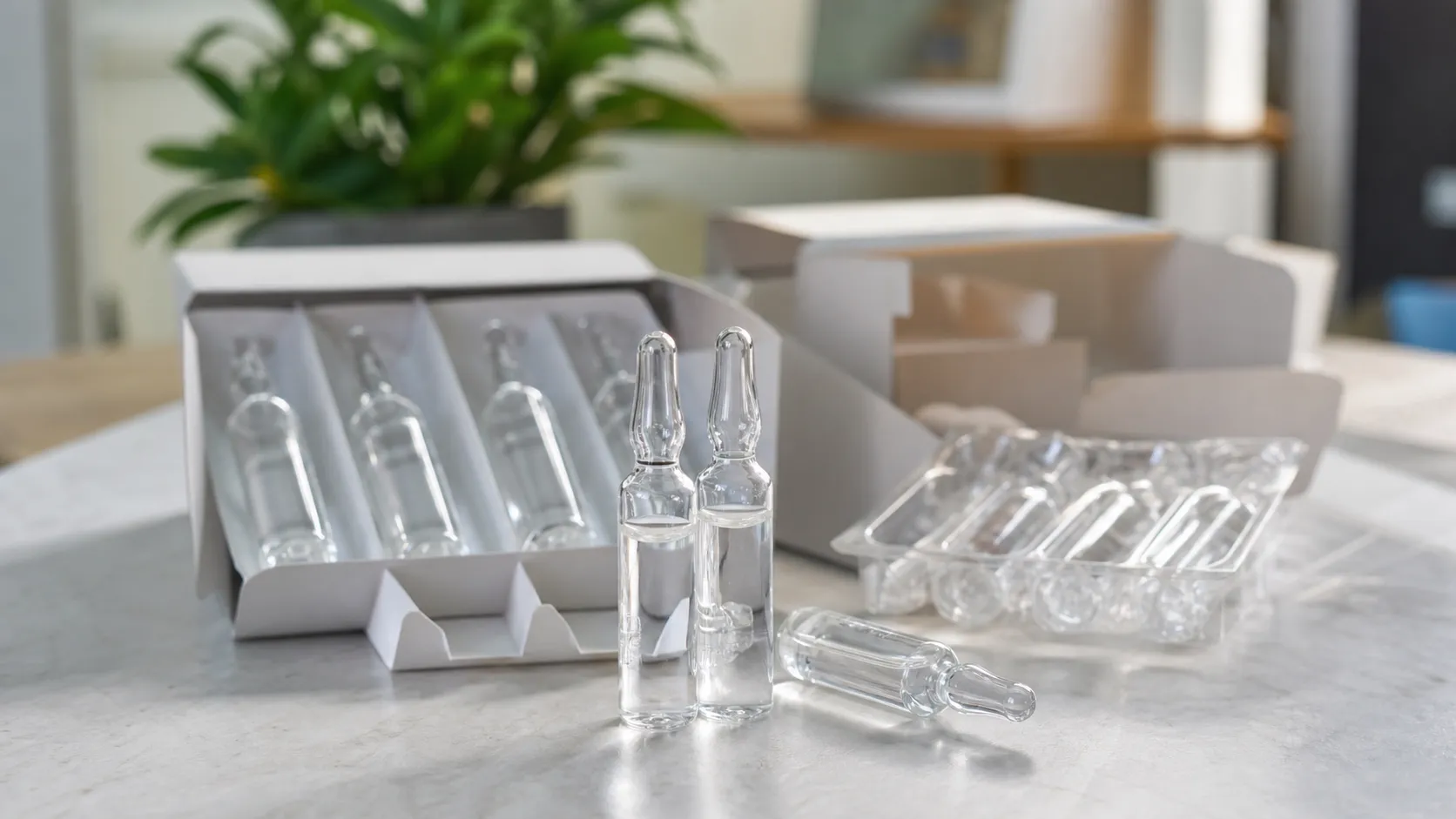
To keep fragile glass and polymer ampoules secured during transit, precise mechanical retention is non-negotiable. We engineer custom thermoformed and injection-molded trays tailored to exact container geometries.
- Material Selection: We utilize medical-grade Polypropylene (PP), Polyethylene Terephthalate Glycol (PETG), and Polystyrene (PS) depending on your specific rigidity, clarity, and sterilization requirements.
- Precision Fit: Our tooling holds strict dimensional tolerances of ±0.02 mm, preventing lateral movement, glass-to-glass contact, and neck shearing.
- Automated Line Compatibility: Trays feature denesting lugs and uniform flange dimensions for seamless integration with high-speed cartoning lines.
For high-value biopharmaceutical applications, integrating engineered custom PETG medical trays provides maximum impact resistance while maintaining crystal-clear visual inspection capabilities.
Ready-To-Use (RTU) Nest & Tub Systems
Modern aseptic processing demands pre-sterilized, drop-in packaging solutions that minimize particulate contamination and streamline high-speed operations.
- Aseptic Filling Integration: Designed for effortless interface with Restricted Access Barrier Systems (RABS) and isolator filling lines.
- Cold-Chain Durability: Engineered polymer nests maintain structural integrity across extreme thermal ranges, enduring deep-freeze conditions down to -80°C without brittleness or cracking.
- Zero Glass Contact: Suspended nests eliminate contact between individual ampoules, eliminating micro-cracks during cold-chain transit.
Adopting standardized RTU nest and tub systems speeds up batch setups, reduces cleanroom preparation overhead, and optimizes overall manufacturing throughput.
Outer Packaging & UV Defense
The final layer of secondary protection combines structural impact absorption with light barrier engineering to protect light-sensitive compounds.
| Packaging Component | Material & Design | Structural & Barrier Function |
|---|---|---|
| Folding Solid Boards | Premium bleached paperboard | Compact, high-printability unit packaging for end-user display |
| Corrugated Shipper Boxes | Multi-wall fluted fiberboard | Structural shock absorption and stacking strength during transport |
| Light-Shielding Barriers | Amber-tinted sleeves & UV coatings | Blocks harmful light wavelengths to prevent active compound degradation |
By combining protective outer shippers with UV-blocking barriers, we shield sensitive active ingredients from physical impact and light degradation throughout their entire shelf life.
Quality Standards, Cleanrooms, and Regulatory Compliance

Selecting high-performance ampoule packaging materials requires uncompromising adherence to global safety and purity standards. We engineer every container closure system to satisfy the most stringent international regulatory frameworks, protecting drug efficacy and accelerating product approvals.
Regulatory Frameworks & Material Safety
- Pharmacopeial Compliance: Full alignment with USP Class VI polymers, European Pharmacopoeia (EP 3.1/3.2), and FDA 21 CFR specifications.
- Extractables and Leachables (E&L): Comprehensive chromatographic testing to prevent harmful container-drug interactions and chemical migration into active formulations.
- Audit-Ready Documentation: Complete batch traceability and testing documentation backed by recognized international quality certifications to simplify filing.
Cleanroom Manufacturing Standards
| Parameter | Operational Specification | Key Advantage |
|---|---|---|
| Cleanroom Class | ISO Class 7 & ISO Class 8 facilities | Minimizes airborne contaminants during material processing |
| Purity Management | Continuous bioburden and particulate control | Prevents microscopic foreign matter in sterile injectables |
| Defect Detection | Automated high-speed visual scanning | Scans 100% of production for structural flaws and micro-cracks |
Leveraging advanced capabilities across our cleanroom manufacturing lines ensures your product maintains total integrity from production through clinical delivery.
Sector-Specific Applications
Choosing the right ampoule packaging materials depends entirely on the stability requirements, filling methods, and delivery environments of your specific formulation. We engineer primary containment solutions tailored to the strict demands of both regulated medical manufacturing and high-performance skincare lines.
Biopharmaceuticals & Diagnostic Reagents
In critical medical and biotechnology applications, primary packaging must guarantee absolute sterility and chemical inertness. We provide containment systems that protect sensitive formulations against oxidation, moisture vapor, and container-closure interactions.
- High-Potency Injectables: Type I borosilicate glass ampoules offer maximum hydrolytic resistance, preventing alkali extraction and maintaining drug potency over extended shelf lives.
- Biologics & Cell Therapies: Advanced COP and COC polymer ampoules eliminate shatter risks during ultra-low temperature storage while remaining break-resistant during handling.
- Diagnostic Reagents: Pre-measured unit-dose ampoules deliver exact reagent volumes, preventing evaporation and maintaining test accuracy across specialized diagnostics applications.
Cosmeceuticals & Active Skincare
Modern active skincare requires packaging that protects sensitive ingredients from degradation without relying on harsh synthetic preservatives. Single-use ampoule formats provide an ideal blend of formula integrity and high-end user experience.
- Oxidation-Sensitive Actives: Hermetic flame sealing blocks atmospheric oxygen completely, preserving volatile compounds like pure Vitamin C (L-ascorbic acid), retinol, and peptide complexes.
- Preservative-Free Formulations: Sterile, single-dose unit packaging keeps active serums sterile right up to the moment of application, enabling cleaner beauty claims.
- Controlled Dosing: Standardized unit-dose capacities protect active ingredient efficacy and prevent user overuse or formula contamination from repeated exposure.
Partner Integration: Custom Ampoule Packaging Materials
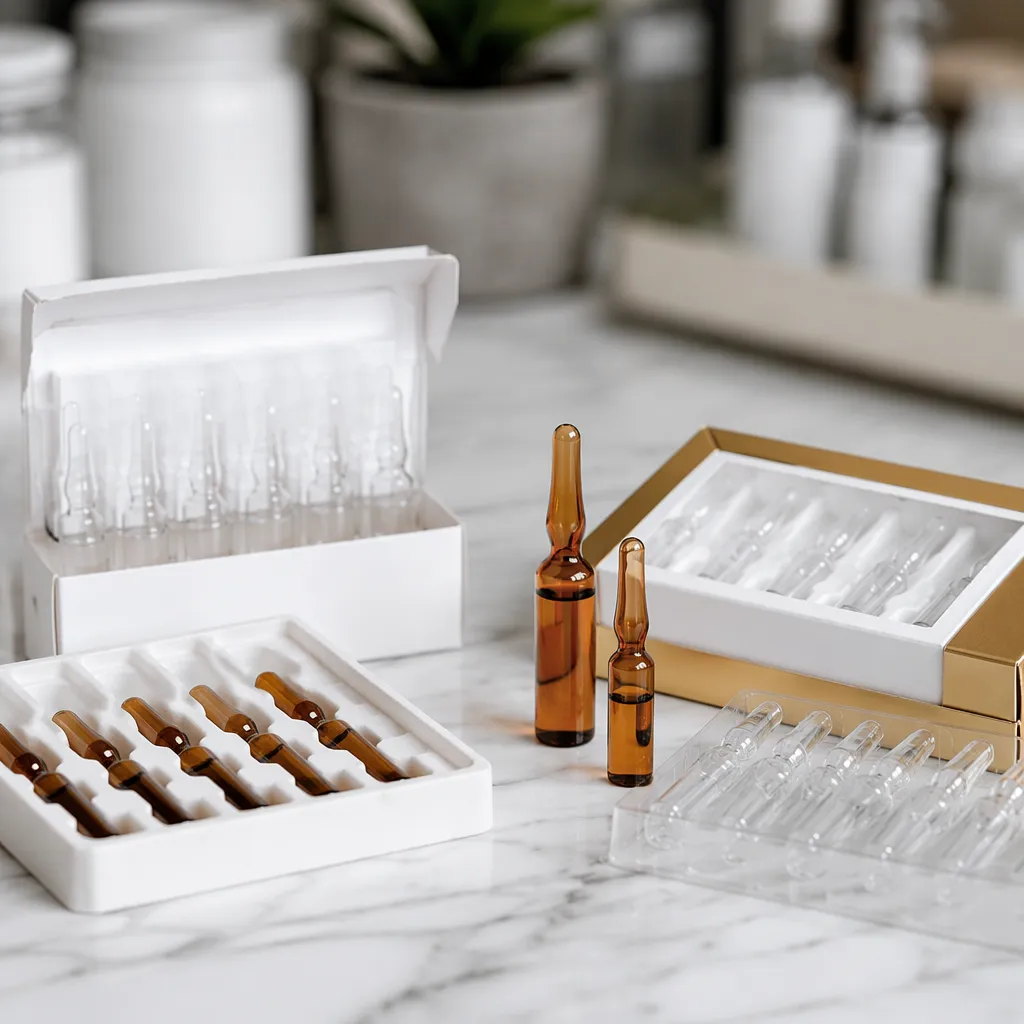
We translate complex technical requirements into high-performance protective formats. At Jiahua Package, we align our production capabilities with your strict regulatory and operational workflows to deliver turnkey secondary packaging solutions.
Custom OEM & ODM Tooling Capabilities
- Rapid 3D CAD Design: We build custom layouts tailored exactly to your primary container closure systems.
- Precision Tooling: Our advanced manufacturing facility handles high-tolerance mold development to produce thermoformed and injection-molded trays that securely lock fragile ampoules in place.
Prototyping Agility
Minimizing time-to-market requires fast iterations. We offer fast sampling turnarounds for standard components and custom molds, allowing engineering teams to run physical fitment, sterilization, and drop tests without line delays.
End-to-End Compliance Support
- Full Batch Traceability: Complete material certificates and production logs for reliable extractables and leachables (E&L) validation.
- Cleanroom Production: Secondary tray manufacturing occurs in controlled environments prioritizing bioburden and particulate control.
- Custom Tray Engineering: Specialized designs holding tight dimensional tolerances (±0.02 mm) to prevent friction and breakage during demanding cold-chain transit.
Frequently Asked Questions About Ampoule Packaging Materials
What are the primary differences between Type I glass and COP/COC polymer ampoules?
Both options serve critical roles in drug containment, but their material properties dictate their specific use cases:
| Feature | Type I Borosilicate Glass | Cyclo Olefin Polymer (COP/COC) |
|---|---|---|
| Barrier Performance | Impermeable gas & moisture barrier | Excellent moisture barrier; moderate gas barrier |
| Shatter Resistance | Low (susceptible to thermal & mechanical shock) | Virtually shatterproof |
| Biological Compatibility | Standard; risk of delamination with specific pH | Superior; ultra-low protein binding for biologics |
| Weight & Handling | Heavy; requires careful line integration | Lightweight; ideal for rapid automated handling |
We recommend Type I borosilicate glass for classic small-molecule parenterals requiring hermetic flame sealing. For high-value biopharmaceuticals, COP/COC polymers eliminate glass breakage and flaking risks.
How does secondary tray packaging eliminate ampoule breakage during cold-chain transport?
We mitigate transport shock through precision engineering. Custom-molded ampoule packaging materials and thermoformed secondary trays hold each unit firmly in place with rigid snap-in cavities:
- Tight Dimensional Tolerances: Holds dimensions to ±0.02 mm to prevent micro-movements during transit.
- Thermal Stability: Materials like PETG and specialized PP maintain structural flexibility down to -80°C without becoming brittle.
- Vibration Absorption: Engineered wall thicknesses absorb kinetic shock during road and air freight logistics.
Which regulatory certifications are essential for medical-grade ampoule packaging materials?
To ensure safe container closure systems, we maintain compliance across global pharmacopeias:
- USP Class VI & ISO 10993: Guarantees biological reactivity and biocompatibility safety for plastic components.
- EP 3.1 / EP 3.2: European Pharmacopoeia standards covering materials used for containers for aqueous solutions and non-parenterals.
- FDA 21 CFR 177: Compliance for food and drug contact polymers.
- Extractables & Leachables (E&L) Testing: Mandatory profiles to prove zero toxic chemical migration into drug formulations over shelf life.