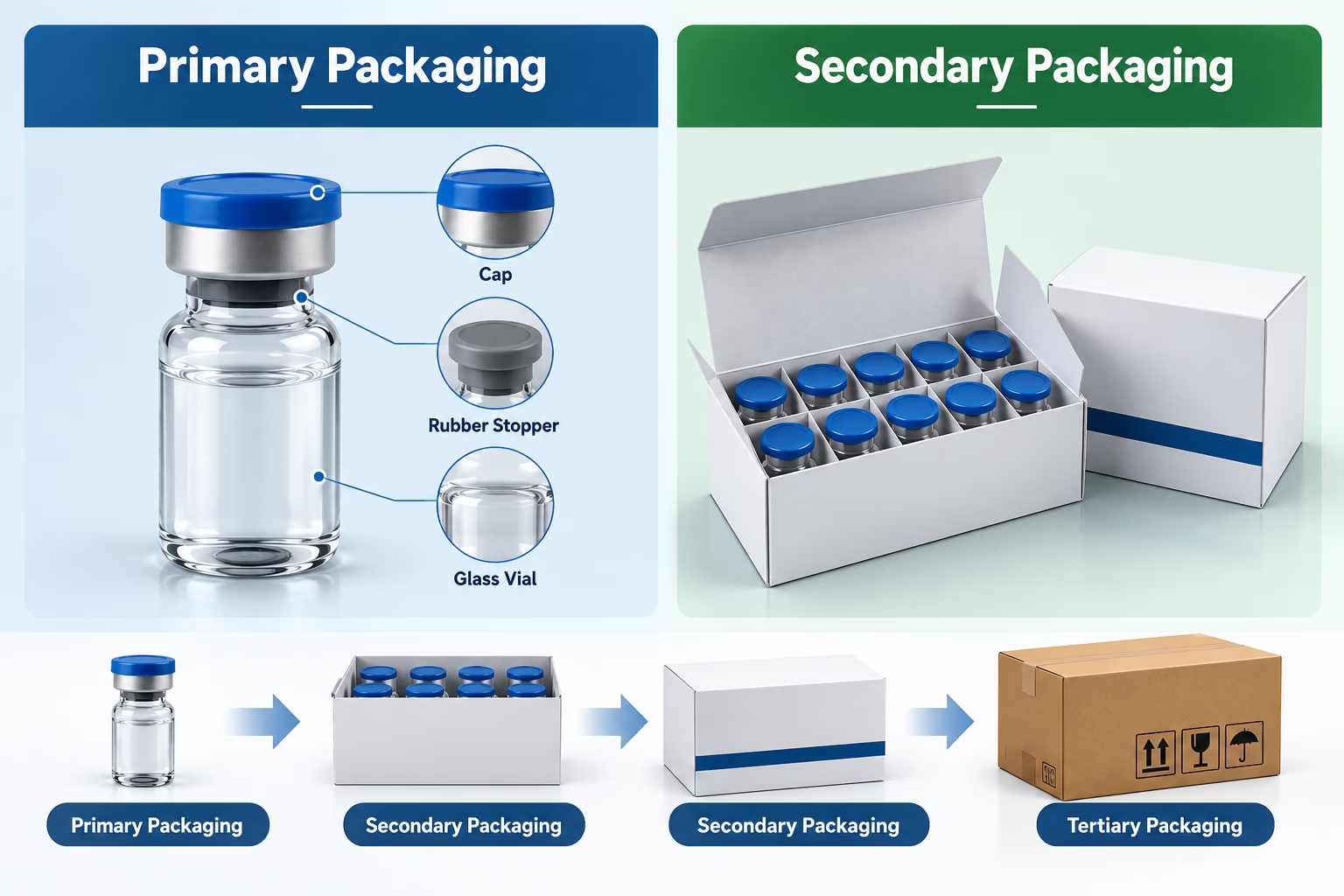
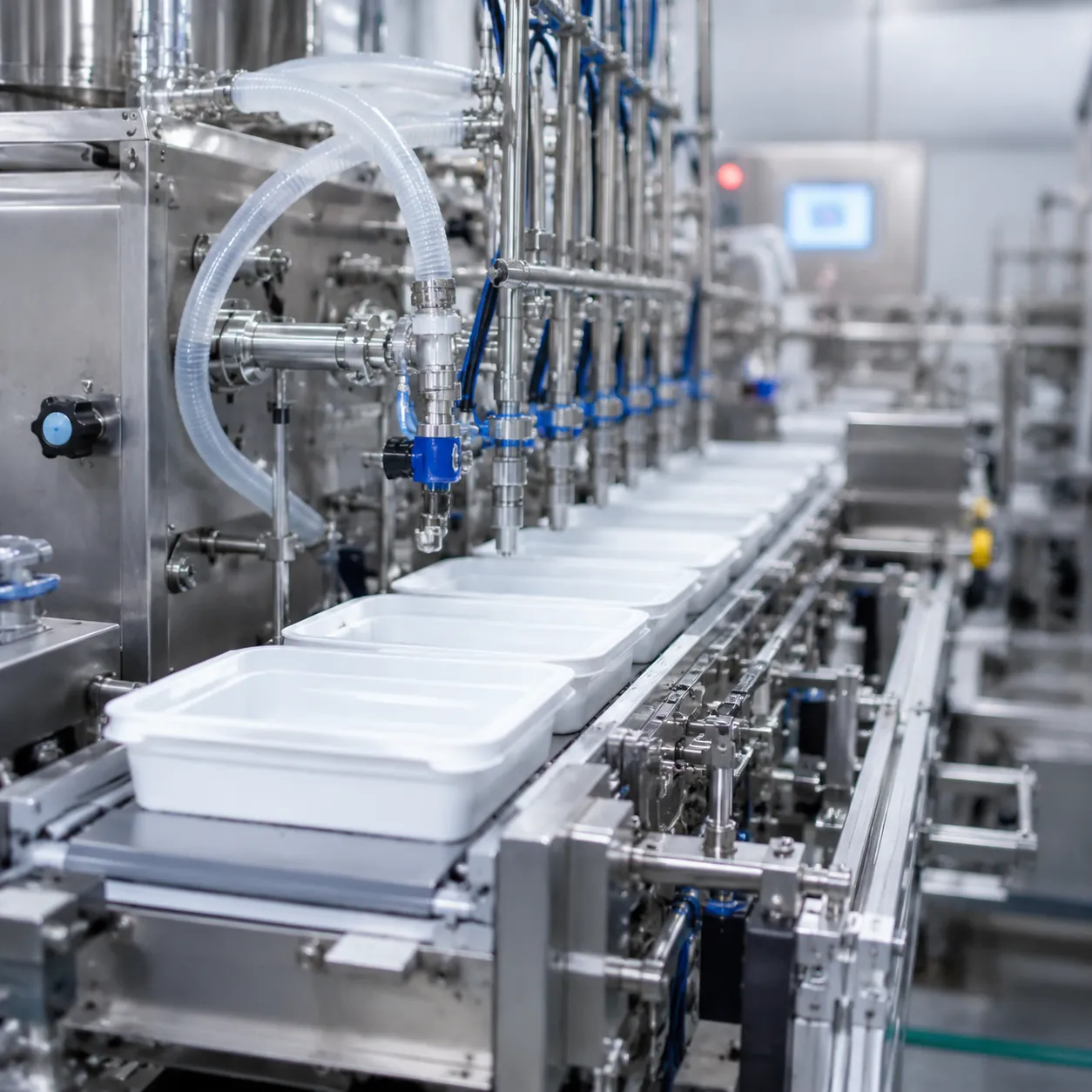
The Aseptic Throughput Bottleneck: Bulk Processing vs. RTU Formats
The High Cost of Cleanroom Downtime
Conventional container washing, depyrogenation tunnels, and bulk accumulation tables represent the primary bottlenecks in modern aseptic filling. In our work with high-throughput facilities, we continuously observe how container preparation infrastructure drives up operational overhead and creates critical failure points:
- Extended Setup and Validation: Thermal profiling, water-for-injection (WFI) loop maintenance, and component washer re-validation consume hundreds of productive operational hours annually.
- Elevated Bioburden Risks: Accumulating loose, unconstrained glass containers before filling increases particulate generation and bioburden exposure risk within the cleanroom core.
- Mechanical Line Jams: Bulk accumulation tables depend on random container pressure, resulting in frequent tipped vials, glass breakage, and emergency operator interventions that disrupt Grade A airflow.
Maximizing UPM with Ready-to-Use Containers
Adopting nested tub and tray formats aseptic processing throughput improvement strategies allows pharma operations to uncouple primary container processing from the sterile core. By shifting container washing, depyrogenation, and sterilization upstream to specialized packaging suppliers, we streamline the sterile filling footprint:
- Boosted Line Speeds: Eliminating speed-limiting depyrogenation tunnels lets lines run at maximum mechanical capacity, dramatically boosting Units Per Minute (UPM).
- Direct Core Integration: Ready-to-Use (RTU) containers arrive pre-sterilized in sealed double-bags, entering the filling isolator directly through automated debagging and delidding.
- Zero Glass-to-Glass Contact: Precision plastic nests hold each container in an isolated matrix, preserving structural integrity and virtually eliminating particulate-generating collisions during transit.
Bulk Line Constraints vs. Nested RTU Efficiency
| Operational Metric | Conventional Bulk Processing | Nested RTU Tub & Tray Formats |
|---|---|---|
| Sterile Core Footprint | Large (requires washer & depyrogenation) | Compact (debagging/delidding only) |
| Process Flow Speed | Throttled by thermal tunnel limits | Maximized UPM throughput |
| Container Handling | Random pressure on accumulation tables | Fixed grid positioning in precision nests |
| Glass Damage / Particulates | High risk due to surface collisions | Zero glass-to-glass contact |
| Changeover Downtime | Hours (multi-component mechanical adjustments) | Minutes (recipe-driven toolless changeovers) |
Mechanized Denesting and Transport: Eliminating Line Jams
Dimensional Consistency as a Throughput Enabler
High-speed automated fill-finish lines leave zero room for mechanical variance. When robotic end-effectors interact with nests at high speeds, even a sub-millimeter offset causes mispicks, dropped components, or catastrophic line jams that halt production. We manufacture custom injection-molded trays with precision molding tolerances up to ±0.02 mm, ensuring perfect alignment between the robotic gripper and the nested primary containers.
- Robotic Pick-and-Place Precision: Prevents gripper misalignments during high-speed denesting and renesting cycles.
- Uniform Separation: Maintains consistent denesting forces, eliminating tray deformation and mechanical jams.
- Sensor Compatibility: Ensures accurate positioning for 100% In-Process Control (IPC) weighing and optical inspection.
Material Selection for Automated Stability
Selecting the right polymer is essential to balancing structural rigidity, particulate generation, and cleanroom compatibility. We utilize medical-grade resins engineered to withstand mechanical stress without outgassing or flexing during high-speed transport.
| Material | Key Properties | Primary Application |
|---|---|---|
| Polypropylene (PP) | High chemical resistance, cost-effective rigidity | Standard nested tub and tray formats |
| COP & COC | Glass-like clarity, zero breakage risk, low extractables | High-value biologics and sensitive liquids |
| PETG / PS | Superior dimensional stability, impact resistance | Heavy-duty transportation and automated denesting |
Our team integrates these materials into custom vial packaging design with compliant inserts to maintain strict geometric tolerances across varying humidity levels and V vapour-phase sterilization cycles without warping.
Non-Contact Packaging Architecture
Glass-to-glass contact is a leading cause of particulate contamination, cosmetic scuffing, and vial breakage during rapid transport. Our non-contact packaging architecture isolates each primary container within its own engineered cavity pocket.
- Zero Glass-to-Glass Contact: Eliminates rubbing and impact during transport, preventing micro-cracks and sub-visible particulate generation.
- Preserved Cosmetic Integrity: Protects the surface finish of prefilled syringes, cartridges, and sensitive glass vials.
- 600 UPM Capability: Holds containers firmly in place to support seamless, high-speed movement up to 600 units per minute (UPM) while dramatically boosting overall aseptic processing throughput.
EU GMP Annex 1 Compliance via Nest & Tub Handling
We engineer nested tub and tray formats to directly satisfy the stringent contamination and operator-intervention mandates of revised EU GMP Annex 1 standards. By replacing manual container prep with fully automated handling, we help fill-finish operations maintain continuous Grade A continuity while driving maximum line speed.
No-Touch Transfer (NTT) under Grade A Airflow
Manual bag opening and seal peeling introduce immediate contamination risks. We design nested formats for seamless integration into automated debagging and delidding units operating strictly under unidirectional Grade A airflow.
- Automated Debagging: Precision cutting and stripping mechanisms remove outer protective bags without introducing shedding particles into critical zones.
- Robotic Delidding & Liner Removal: End-effectors peel lid seals and liners cleanly, keeping mechanical contact far away from container openings.
- Sterile Integrity: Coupling automated tub opening with high-grade primary and secondary packaging for vials prevents particulate generation across the entire transfer sequence.
Zero-Intervention Gloveless Isolator Integration
Human operators remain the primary source of cleanroom bioburden. Nested tub architectures natively support gloveless isolator barrier systems and robotic filling cells, completely removing human intervention from the sterile core.
- Standardized Kinematic Docking: Rigid tub profiles lock precisely into machine tracks, giving pick-and-place robotics absolute positional accuracy.
- Jam-Free Container Positioning: Secure nest cavities eliminate container tipping and glass friction, preventing the line jams that typically force glove-port interventions.
Rapid VHP Decontamination Compatibility
All packaging materials and structural geometry must withstand aggressive bio-decontamination without absorbing chemicals or degrading over time.
| Performance Vector | Engineering Requirement | Operational Benefit |
|---|---|---|
| Material Selection | Medical-grade polypropylene (PP) and cyclic olefin copolymers | Prevents material outgassing and micro-cracking during deep cycles |
| Tub Design Geometry | Smooth radii and low-profile ribs | Eliminates gas entrapment zones, shortening VHP aeration times |
| Chemical Resistance | Non-porous surface treatment | Prevents hydrogen peroxide vapor absorption and structural embrittlement |
Multi-Format Versatility: Handling Vials, Syringes, and Cartridges on One Line
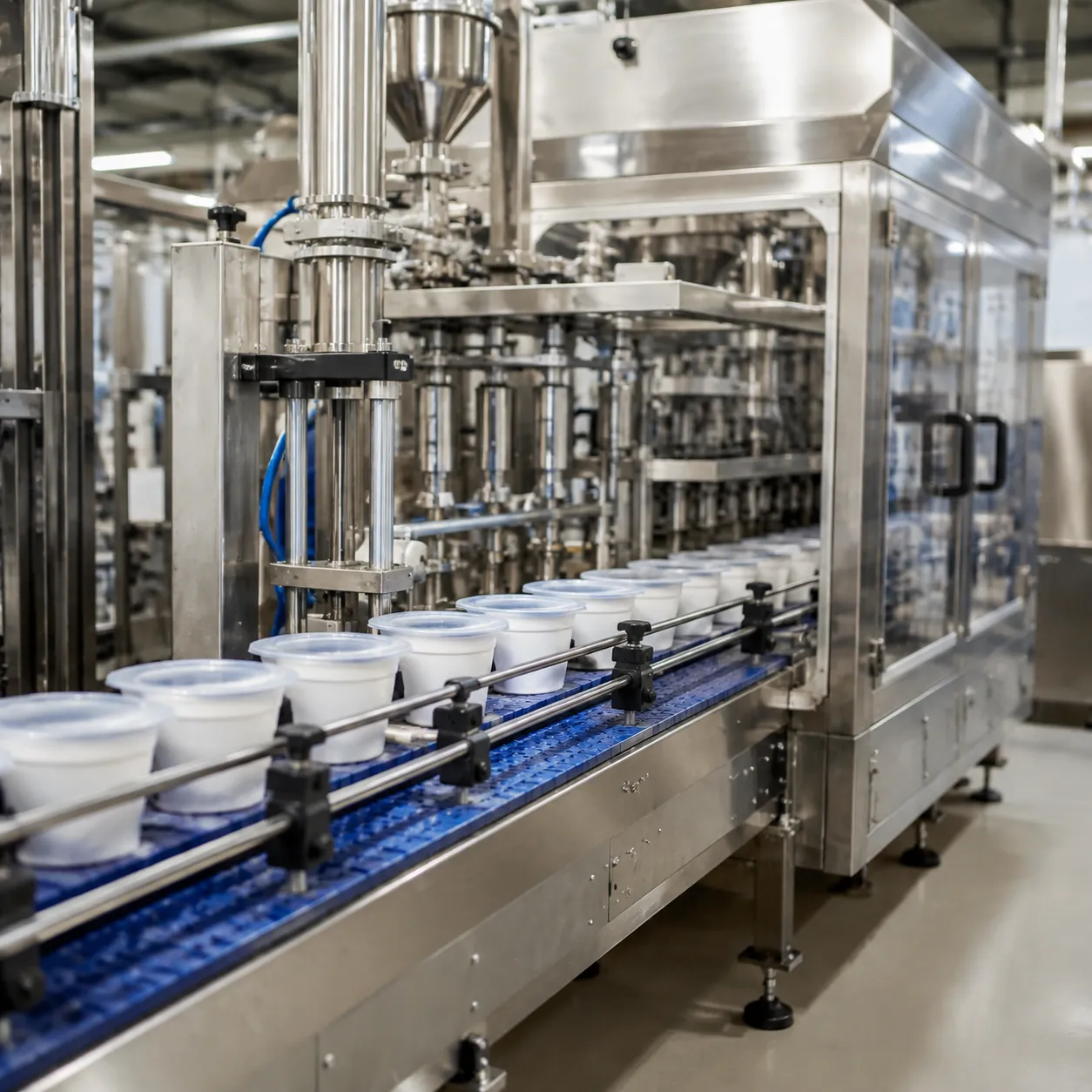
Standardized Tub Footprints for Rapid Changeovers
Switching fill-finish lines between prefilled syringes, cartridges, and vials historically required hours of mechanical retooling. By standardizing outer footprint profiles across container formats, we eliminate mechanical line teardowns. Utilizing standardized nest and tub systems allows automated debaggers, denesters, and filling needles to execute recipe-driven software changeovers in minutes.
In-Nest Filling vs. High-Speed Denested Processing
Selecting between processing containers inside the nest or denesting them depends on your target units per minute (UPM) throughput and weighing requirements.
| Processing Method | Target Speed | Operational Mechanics | Ideal Application |
|---|---|---|---|
| In-Nest Filling | Up to 300 UPM | Containers remain locked in the nest during dosing, stoppering, and capping. Zero container-to-container contact. | High-value biologics, targeted therapy, smaller batch runs. |
| Denested Processing | 300–600+ UPM | High-speed robotic pick-and-place extracts containers for inline filling and 100% In-Process Control (IPC) weighing, then renests them. | High-speed commercial production, high-volume fill-finish lines. |
Engineered Cavity Pockets for Fragile Components
Fragile delivery devices require precise containment geometry to prevent micro-fissures, cosmetic scratches, and particulate generation during rapid transport. We engineer tailored pocket architecture for each primary container configuration:
- Prefilled Syringes & Auto-Injectors: Suspended finger-flange nests support barrel weight while isolating the tip cap and needle shield from axial impacts.
- Cartridges & Glass Vials: Custom-contoured base supports eliminate point-load stress, providing full circumferential clearance during high-speed robotic maneuvers.
Integrating these custom-molded sterile RTU vial tray kits into your packaging flow yields a direct aseptic processing throughput improvement by drastically lowering rejection rates and protecting component integrity across all nested tub and tray formats.
Precision Manufacturing & Customization Capabilities: The Jiahua Package Advantage
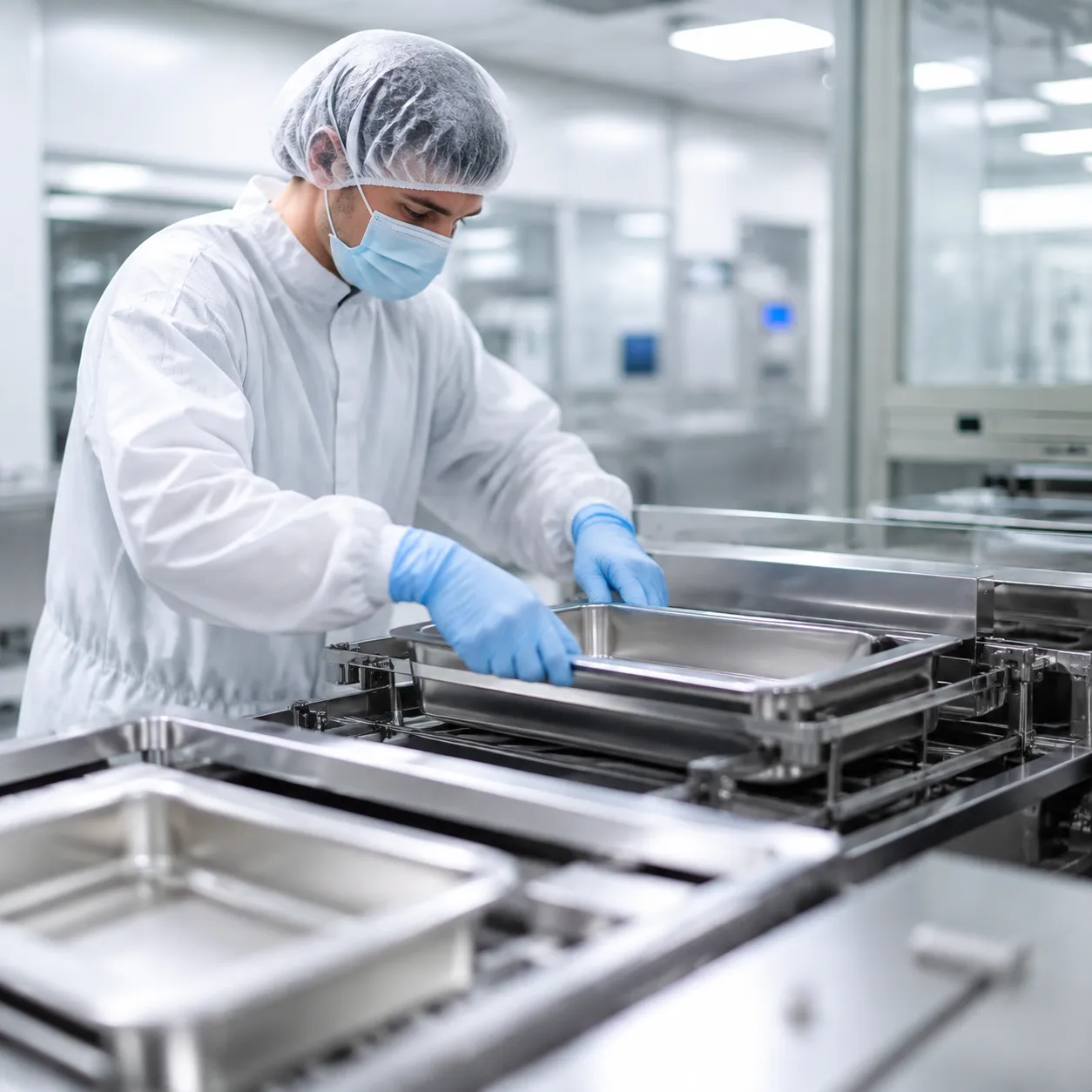
Controlled Environment Production
We manufacture our nest and tray systems within strictly monitored ISO Class 7 and Class 8 cleanroom environments. By enforcing rigorous air quality controls and environmental monitoring, we guarantee ultra-low bioburden and minimal particulate counts. This precise cleanliness protocol ensures our packaging components integrate cleanly into Grade A sterile cores without introducing contaminants or disrupting line airflow.
Rapid Prototyping to Mass Production
Matching nested packaging to customized automated fill-finish equipment demands tight lead times and precise tolerances. We leverage advanced CAD modeling and rapid tooling workflows to fast-track production without compromising dimensional accuracy.
- Turnaround Times: We deliver physical prototypes in just 7 to 10 days through our streamlined fast sampling process for immediate machine-fit testing.
- Tooling Scale-Up: We transition seamlessly from prototype to full-scale manufacturing within 2 to 4 weeks using high-cavitation custom mold development built directly to your machine specs.
Quality Assurance Rigor
High-speed robotic handling systems require zero defect margins. We enforce multi-stage quality checks across every production batch to protect your line throughput:
| QA Phase | Inspection Method | Primary Objective |
|---|---|---|
| Environmental Control | Continuous airborne particulate monitoring | Prevents static-borne contamination during molding |
| Dimensional Scanning | Automated 3D optical vision systems | Verifies nested tray pocket tolerances to within ±0.02 mm |
| Traceability | Full raw material and batch lot-tracking | Guarantees complete regulatory documentation and risk mitigation |
ROI Analysis: Quantifying Throughput Gains and Yield Protection
Calculating the True Cost of Line Efficiency
| Operational Metric | Conventional Bulk Packaging | Nested Tub & Tray Format | Net Operational Impact |
|---|---|---|---|
| Batch Setup & Changeover | 4 – 8 hours (Washing/Depyrogenation) | < 45 minutes (RTU Direct Load) | 85%+ reduction in setup downtime |
| Particle & Rejection Rate | 1.5% – 3.0% (Glass-to-glass damage) | < 0.1% (Isolated pocket support) | Up to 2.9% direct yield recovery |
| Line Processing Speed | 100 – 250 UPM | Up to 600 UPM | 2x – 3x throughput capacity |
| Cleanroom Energy Costs | High (Continuous hot air tunnels) | Low (Streamlined VHP cycle) | Significant utility savings |
Lower rejection rates and faster recipe changeovers directly boost annual product yield without expanding your cleanroom footprint.
Strategic Roadmap for Upgrading Line Packaging
We recommend a three-step implementation plan to upgrade existing fill-finish lines:
- Audit Line Mechanics: Measure current denesting clearances, end-of-arm tooling tolerances, and barrier system airflows.
- Optimize Nest Parameters: Align tray pocket geometries with container dimensions—such as specialized prefilled syringe packaging—to ensure zero-contact transport at maximum line speeds.
- Execute Automation Trials: Run rapid prototyping samples using production-grade resins to validate robotic pick-and-place accuracy before full-scale deployment.
Frequently Asked Questions
How do nested tub and tray formats improve aseptic processing throughput?
Nested tub and tray formats drive major aseptic processing throughput improvement by uncoupling primary container preparation from the sterile filling core. By using Ready-to-Use (RTU) containers, we eliminate the operational bottlenecks of in-line washing, depyrogenation tunnels, and bulk accumulation zones. Holding containers securely in individual matrix pockets prevents glass-to-glass contact, eliminates cosmetic defects, and enables smooth robotic transfers at line speeds up to 600 units per minute (UPM).
How does robotic denesting help comply with EU GMP Annex 1 guidelines?
Robotic denesting facilitates automated No-Touch Transfer (NTT) under continuous Grade A unidirectional airflow. By automating the debagging, delidding, and tub opening steps, we remove human operators—the primary source of bioburden—from critical processing zones. This approach directly aligns with Annex 1 requirements for gloveless isolator barrier systems and automated container handling.
What tolerance specs are critical for nested trays in automated fill-finish lines?
Automated pick-and-place robotics demand strict precision injection molding tolerances, ideally down to ±0.02 mm. Exact dimensional consistency across rigid polymer trays prevents gripper misalignment, avoids high-speed line jams, and guarantees accurate pocket positioning during 100% In-Process Control (IPC) weighing cycles.
Can a single nested packaging line accommodate vials, syringes, and cartridges?
Yes. Flexible multi-format fill-finish lines rely on standardized external tub footprints. Processing lines can transition seamlessly between vials, prefilled syringes, and cartridges through recipe-driven changeovers. By switching out specialized inner nests—such as dedicated cartridge trays or custom-designed RTU pharma kits for clinical fill-finish—we protect fragile delivery systems without requiring dedicated equipment for each format.