
Formula details
Product Details
Overview
Medical Device Packaging Quality Standards and ISO Cleanroom Manufacturing
As an ISO 13485 certified medical packaging manufacturer, we engineer high-integrity sterile barrier systems designed to protect critical medical devices from production through aseptic presentation.
Certified ISO Class 8 Cleanroom Production
Every sterile packaging unit we manufacture is processed inside certified ISO Class 8 (Class 100,000) cleanrooms. This controlled environment guarantees strict management over environmental factors:
- Particulate & Bioburden Control: Continuous environmental monitoring prevents airborne and surface particulates from compromising barrier integrity.
- Validated Environmental Parameters: Automated positive pressure, humidity control, and multi-stage HEPA air filtration minimize baseline microbial load.
- Medical-Grade Handling: Strict operator gowning protocols and automated production lines prevent human-contact contamination during converting, heat-sealing, and slitting.
| Regulatory Standard / Directive | Quality Scope & Requirement | Direct Manufacturing Impact |
|---|---|---|
| ISO 11607-1 & ISO 11607-2 | Sterile barrier performance & validation process | Validated seal strength, microbial barrier integrity |
| EN 868 Series | Packaging materials for terminally sterilized items | Material-specific compliance (porous/non-porous) |
| ISO 13485 | Medical device quality management system (QMS) | Full lot traceability, standardized QA procedures |
| FDA 21 CFR Part 820 & CE Directive | Global regulatory registration & compliance | Audit-ready technical files & material declarations |
Full Compliance with ISO 11607 and EN 868 Standards
Our sterile barrier packaging complies with ISO 11607-1 (material performance, microbial barrier, and biocompatibility) and ISO 11607-2 (forming, sealing, and assembly process validation). We align all raw material conversion and pouch-making processes with the EN 868 series, ensuring consistent seal integrity, puncture resistance, and clean fiber-free opening across all standard sterilization cycles.
Direct Cleanroom Factory Manufacturing vs. Third-Party Brokers
Working directly with our primary cleanroom facility offers tangible operational and regulatory advantages over intermediary trading companies:
- Direct Quality Assurance: Seamless communication with our on-site packaging engineers for rapid resolution of technical requirements, mold adjustments, or audit documentation.
- End-to-End Lot Traceability: Direct batch records, Certificate of Analysis (CoA), and raw material certifications linked directly to every production batch.
- Stable Lead Times & Pricing: Eliminate middleman markups and unexpected supply chain bottlenecks with factory-direct material conversion and inventory management.
- Custom Validation Support: On-demand access to our cleanroom testing data to support your regulatory submissions and shelf-life studies.
Sterile Medical Device Packaging Portfolio Available for Sale
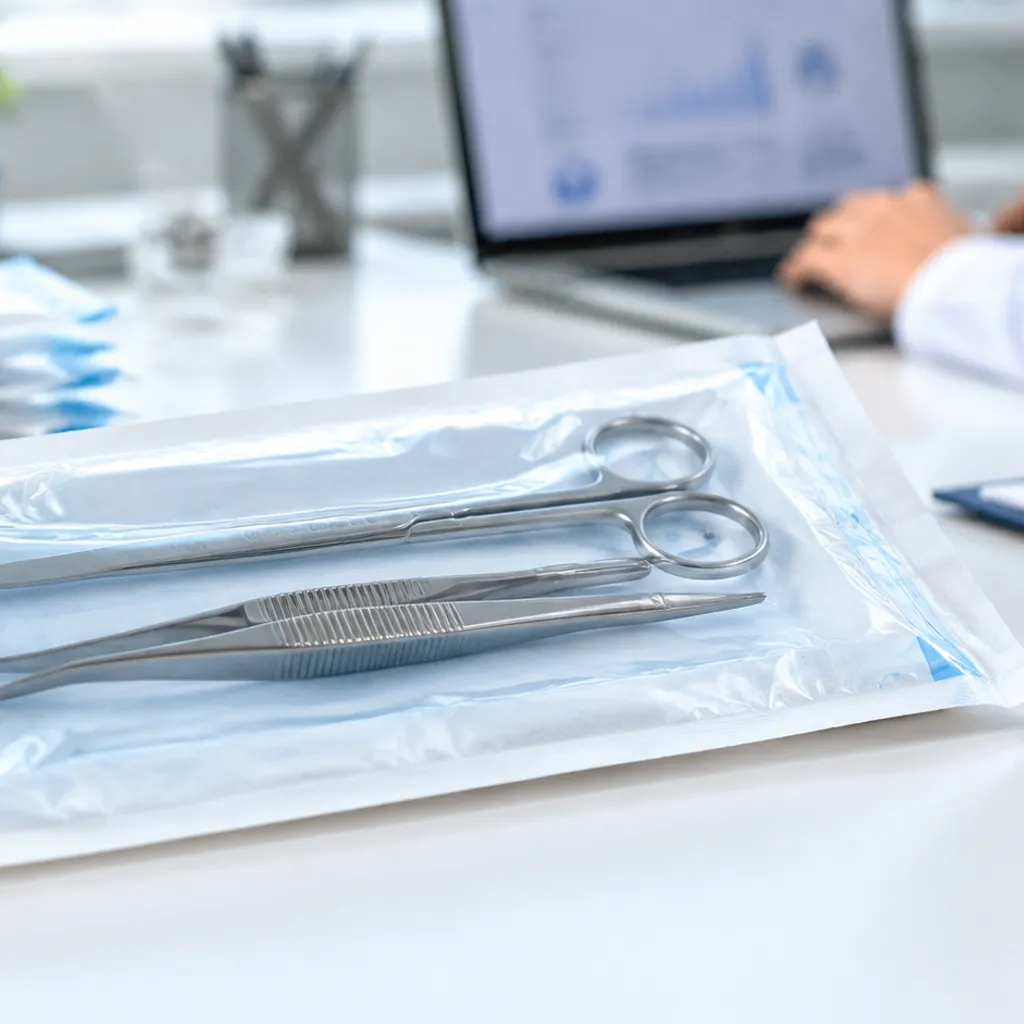
DuPont™ Tyvek® Sterilization Pouches and Reels
Our breathable Tyvek sterilization pouches provide high tear strength, superior puncture resistance, and rapid gas transfer for gas-based sterilization methods.
Substrates: DuPont™ Tyvek® 1073B (heavy-duty devices/implants), 1059B (medium-duty instruments), and 2FS (lightweight devices).
Lamination: Heat-sealed to multi-layer composite films (PET/PE or PET/PP) to guarantee a wide sealing window and fiber-free, clean peeling.
Configurations: Flat pouches, chevron peelable pouches, and continuous heat-seal reels with integrated chemical process indicators.
Medical-Grade Paper Pouches and Continuous Heat-Seal Reels
Designed as a cost-efficient barrier solution for standard medical devices, hospital sterilization, and surgical kits.
Material Composition: Medical-grade porous paper sealed against multi-layer shatterproof film laminates.
Sterilization Compatibility: Optimized for Ethylene Oxide (EO) and steam autoclave cycles.
Performance: High tensile strength with controlled porosity to ensure rapid air evacuation and sterile barrier maintenance.
Rigid Thermoformed Blister Trays and Die-Cut Lids
We design and tool custom thermoformed medical trays to secure delicate implants, diagnostic assemblies, and sterile injectable device trays.
Tray Materials: Medical-grade PETG, APET, HIPS, PVC, and PP in customizable thickness gauges.
Die-Cut Lidding: Heat-seal adhesive-coated Tyvek® or aluminum foil lids engineered for clean, fiber-free aseptic presentation without particle shedding.
Protection: Precision-molded cavities that prevent device movement and puncturing during transit.
High-Profile Medical Header Bags
Engineered specifically for bulky surgical kits, catheter tubing systems, and high-volume procedural trays.
Design: Heavy-duty polyethylene or composite film bodies featuring a breathable DuPont™ Tyvek® header strip.
Function: Facilitates rapid EO gas penetration and degassing while handling heavy physical loads without seal blowout.
SMS/SMMS Non-Woven Wraps and FFS Rollstock
- Sterilization Wraps: Multi-layer SMS and SMMS non-woven fabrics providing high microbial resistance, fluid repellency, and drapeability for wrapped surgical cassettes.
- Form-Fill-Seal (FFS) Rollstock: Top-web breathable Tyvek® rolls and thermoformable bottom-web barrier films engineered for high-speed automated packaging lines.
| Packaging Format | Primary Substrates | Compatible Sterilization | Key Application |
|---|---|---|---|
| Tyvek® Pouches / Reels | Tyvek® (1073B/1059B/2FS) + PET/PE Film | EO, Gamma, E-Beam, Plasma (VHP) | Implants, single-use surgical tools |
| Medical Paper Pouches | Medical Paper + Multi-Layer Laminate | EO, Steam Autoclave | Standard hospital kits, dental sets |
| Thermoformed Trays & Lids | PETG / APET / HIPS + Coated Tyvek® Lids | EO, Gamma, E-Beam | Prefilled syringes, orthopedic implants |
| Medical Header Bags | Barrier PE Film + Tyvek® Header Strip | EO Sterilization | Bulky catheter kits, tubing assemblies |
| SMS/SMMS Wraps | Multi-Layer Polypropylene Non-Woven | EO, Steam Autoclave | Hospital surgical instrument trays |
Material Performance Guide and Sterilization Process Compatibility
Substrate Strength Comparison
Our factory tests raw materials to ensure high tensile strength, puncture resistance, and seal integrity under ISO 11607 standards.
| Substrate Material | Puncture Resistance | Tensile Strength | Microbial Barrier | Primary Sterilization Methods |
|---|---|---|---|---|
| DuPont™ Tyvek® 1073B | Maximum | Extremely High | Superior | EO, Gamma, E-Beam, VHP Plasma |
| DuPont™ Tyvek® 1059B / 2FS | High | High | Superior | EO, Gamma, E-Beam, VHP Plasma |
| Medical-Grade Paper (60g/70g) | Moderate | Standard | High | Steam (Autoclave), EO |
| Medical PETG / APET Trays | High Rigid Impact | High Rigidity | Impermeable Barrier | EO, Gamma, E-Beam |
| PET/PE & PET/PP Multilayer Film | High Elasticity | High Tear Resistance | Impermeable Barrier | EO, Radiation, Steam (PP only) |
Ethylene Oxide (EO/ETO) Sterilization
EO sterilization requires packaging with rapid gas transfer and controlled aeration.
Gas Permeability: We use porous DuPont™ Tyvek® and reinforced medical paper webs that allow the EO sterilant gas and humidity to penetrate quickly.
Degassing Efficiency: High-breathability header bags and pouches release residual EO gas rapidly, cutting down quarantine cycles and post-sterilization aerating times.
Radiation Sterilization (Gamma / Electron-Beam)
High-energy radiation can cause polymer embrittlement and discoloration in low-grade plastics.
Polymer Stability: Our gamma-compatible films and PETG blister formulations use radiation-stabilized resins that prevent yellowing, cracking, or loss of impact resistance.
Seal Retention: Tyvek®-to-film heat seals maintain their burst pressure and seal strength without material degradation after standard 25–50 kGy radiation doses.
Steam Autoclave and Low-Temperature Gas Plasma (VHP)
- Steam Autoclave: We laminate heavy-duty medical paper to high-temperature polypropylene (PET/PP) films to withstand high-pressure steam up to 134°C (273°F) without seal delamination or web curling.
- VHP Gas Plasma: Tyvek® substrates do not absorb the active sterilant agent, making our plasma-compatible pouches ideal for low-temperature processing of heat-sensitive electronics and optical instruments. For specialized rigid configurations, our nested tub and tray aseptic processing solutions deliver reliable barrier stability under strict cleanroom conditions.
Fiber-Free Peel Seal Integrity and Aseptic Presentation
Particulate contamination inside the operating theater can compromise patient safety. Our adhesive coating formulations and peelable composite films provide:
Clean, Fiber-Free Opening: Continuous, cohesive peel mechanisms ensure zero paper or synthetic fiber tear when opened at the sterile field.
Visual Seal Verification: Consistent seal transfer patterns allow surgical teams to visually verify seal integrity before use.
Balanced Seal Strength: Validated sealing windows prevent channel formation during shipping while avoiding aggressive bonding that could hinder quick aseptic opening.
[ Pouch Top Web (Tyvek® / Paper) ]
↓ Clean Peel Separation (No Fiber Shedding)
[ Heat-Seal Adhesive Layer ]
↓ Controlled Peel Strength (ASTM F88)
[ Bottom Barrier Film / Rigid PETG Tray ]
Balancing substrate durability with sterilization compatibility is central to optimizing your final medical device packaging price. As leading medical device packaging companies, we supply direct-from-factory substrates that match your device profile while keeping your wholesale price medical device packaging within budget.
Medical Device Packaging Price Factors and Wholesale Cost Breakdown
Calculating the exact medical device packaging price requires evaluating your device's sterility method, physical geometry, barrier requirements, and production volume.
Raw Material Cost Drivers: Tyvek® vs. Medical Paper & PETG vs. APET
Substrate selection is the primary variable affecting unit cost:
- Porous Barrier Substrates: DuPont™ Tyvek® (1073B, 1059B, 2FS) carries a premium cost over standard medical-grade paper due to its superior breathability, puncture resistance, and clean fiber-free peel during ethylene oxide (EO) sterilization. Medical paper provides a budget-friendly sterile barrier for lighter, less abrasive devices.
- Rigid Tray Substrates: Medical-grade PETG offers maximum clarity, low-temperature impact strength, and gamma radiation stability. For applications with standard mechanical demands, medical-grade APET or HIPS delivers significant cost savings while maintaining compliance with sterile barrier standards.
Dimensional Gauge, Film Thickness, and Tooling Investments
Physical specifications dictate resin usage and initial tooling amortizations:
- Material Gauge & Draw Depth: Deep-draw thermoformed trays require thicker starting sheet gauges (up to 1,000 µm) and precision temperature controls to prevent corner thinning, which increases raw material mass per unit.
- CNC Mold Fabrication: Custom thermoformed blisters require dedicated CNC-machined aluminum molds. While custom molds involve upfront engineering costs, our standard pouch sizes and interchangeable tooling options help lower initial capital expenditure.
- Secondary Kitting & Protection: For diagnostic kits and combination sets, integrating a custom vial sample box for safe storage and shipping protects primary sterile barrier pouches and vials during transport.
Custom Print Specifications and ISO 11140-1 Chemical Indicators
Our cleanroom flexographic printing lines accommodate custom UDI barcodes, batch tracking, and ISO 11140-1 compliant chemical process indicators (EO, Gamma, Steam). Standard 1-color indicator prints minimize plate costs, whereas multi-color graphic artwork carries nominal setup fees that scale down quickly on long-run orders.
Wholesale Cost Determinants Matrix
| Cost Determinant | Economical Baseline | High-Performance Specification |
|---|---|---|
| Top Web / Lidding | Medical-grade paper (60–80 gsm) | DuPont™ Tyvek® 1073B / Foil laminate |
| Rigid Bottom Web | Medical APET / HIPS | Medical-grade PETG / High-barrier laminates |
| Tooling Setup | Standard pre-existing die profiles | Custom multi-cavity CNC thermoforming tooling |
| Printing | 1-color sterilization indicator text | Multi-color custom branding + UDI layout |
| Order Volume | Bulk FCL procurement / High volume | Low MOQ pilot batches / Short validation runs |
Wholesale Price Medical Device Packaging: Volume Tiers and MOQs
We offer tiered wholesale pricing structures designed for global procurement teams, contract packagers, and medical device manufacturers:
- Bulk FCL Orders: Full container load orders maximize raw material yields and continuous cleanroom machine runs, yielding the lowest wholesale price medical device packaging rates.
- Flexible MOQs for Validation: We support small-batch pilot runs, packaging validation testing (ASTM F88 / ASTM F1929), and clinical trial packaging without demanding prohibitive full-scale production commitments.
Custom OEM/ODM Medical Packaging Engineering and Validation Testing
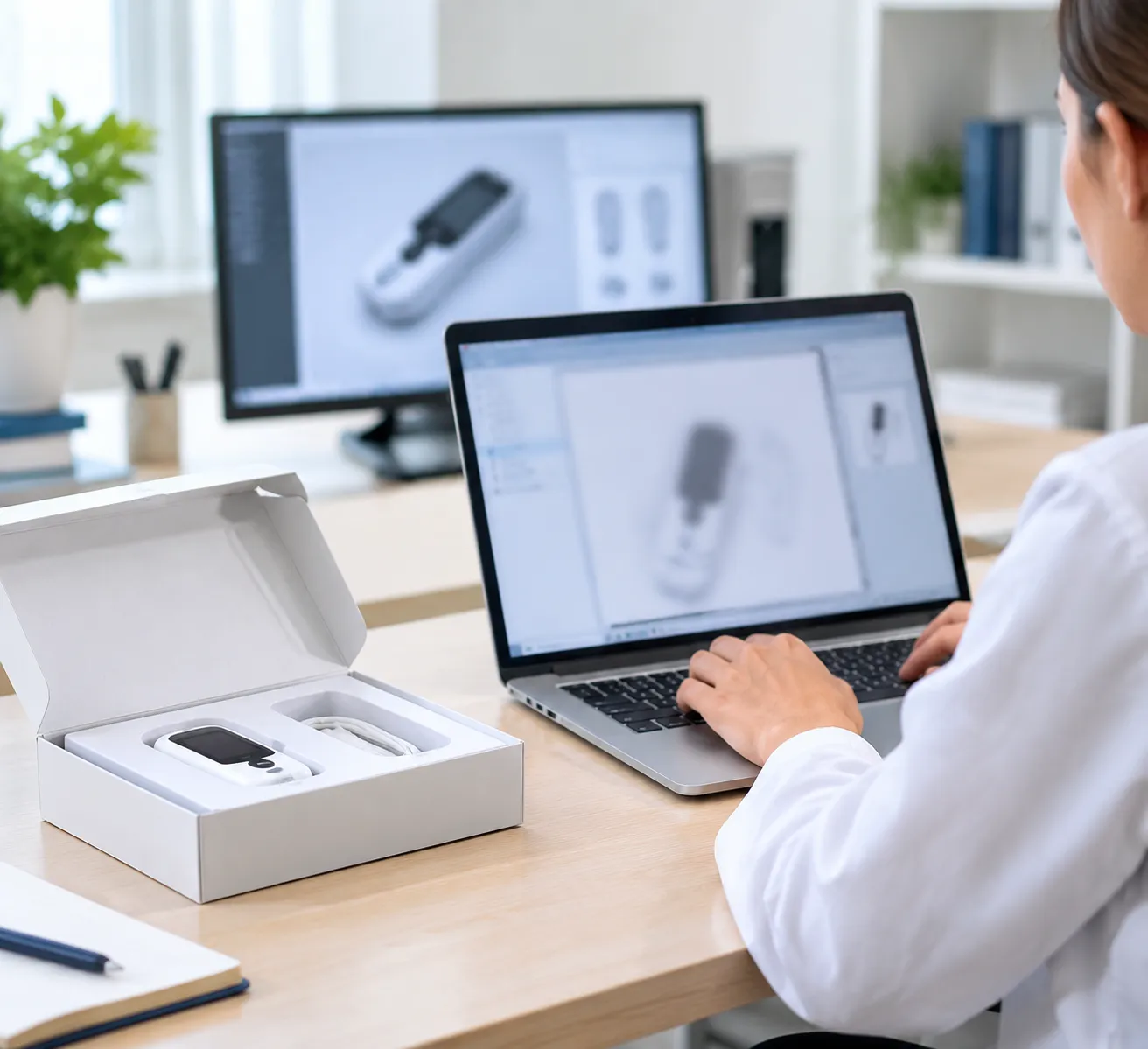
Our in-house engineering team works directly from your CAD files and physical product samples to develop validated, custom sterile packaging.
OEM/ODM Packaging Validation & Testing Workflow
| Engineering Phase | Standard Test Method & Deliverables |
|---|---|
| 3D CAD & Prototyping | Rapid CNC cavity sampling & custom kit layouts |
| Seal Peel Strength Testing | ASTM F88 (quantifies peak seal force & peel window) |
| Barrier Integrity & Leak Testing | ASTM F1929 (dye penetration micro-channel analysis) |
| Shelf-Life & Stability Testing | ASTM F1980 (accelerated aging for 1/3/5-year claims) |
| Lot Release & Cleanroom Compliance | ISO Class 8 bioburden reports & complete raw CoAs |
Rapid 3D CAD Modeling and Cavity Prototype Sampling
We engineer custom blister cavities, die-cut lidding, and custom barrier pouches tailored to complex product geometries, heavy implants, and multi-component sets. Our tooling division designs matched thermoform molds and sealing nests with exact tolerances to prevent device shifting and puncture during transit. We also assist device manufacturers with integrated combination formats, including custom vial packaging design with inserts and compliance for diagnostic and drug-delivery assemblies.
Sterile Barrier Testing and Regulatory Compliance
Every custom packaging run is qualified according to ISO 11607-1 and ISO 11607-2 standards to eliminate sterile barrier failure risks during regulatory submissions:
- ASTM F88 Seal Strength Testing: Measures seal peel strength across defined temperature, pressure, and dwell windows to guarantee clean, fiber-free aseptic presentation.
- ASTM F1929 Dye Penetration Testing: Validates seal integrity by identifying porosity leaks, micro-channels, or seal voids in breathable substrates like DuPont™ Tyvek® and medical-grade paper.
- ASTM F1980 Accelerated Aging Protocols: Simulates real-time environmental exposure to substantiate 1-year, 3-year, and 5-year shelf-life claims for your terminal sterilization packaging.
Batch Traceability and Quality Assurance
We maintain complete documentation for every production batch manufactured inside our ISO Class 8 cleanroom facilities:
- Raw Material Traceability: Full Certificates of Analysis (CoAs) provided for all medical-grade films, Tyvek® grades, and coated papers.
- Bioburden & Environmental Audits: Routine particulate monitoring, microbial bioburden testing, and seal parameter verification records.
- Scalable Commercial Economics: Dedicated tooling investments transition smoothly from pilot-run validations to high-volume commercial production, keeping your unit medical device packaging price predictable across full supply contract schedules.
Frequently Asked Questions About Medical Device Packaging
What factors determine the wholesale price of medical device packaging?
The final medical device packaging price depends on five key technical and production variables:
- Substrate Selection: Premium materials like DuPont™ Tyvek® (1073B, 1059B, 2FS) and medical-grade PETG carry higher raw material costs than standard medical kraft paper or APET.
- Material Gauge and Sizing: Thicker barrier films, deeper thermoform draw depths, and larger surface areas consume more raw material per unit.
- Tooling and Mold Engineering: Custom thermoformed blister designs require initial CNC aluminum mold tooling, whereas standard pouch sizes eliminate tooling fees.
- Printing Specifications: Multi-color flexographic printing and integrated ISO 11140-1 process indicators add minor per-unit ink and setup costs.
- Order Quantities: Bulk manufacturing runs and container-load shipments significantly reduce unit costs, giving B2B buyers the best wholesale price medical device packaging rates directly from our factory floor.
| Pricing Variable | Standard Option | Premium / High-Barrier Option |
|---|---|---|
| Pouch Substrate | Medical-Grade Paper / Composite Film | DuPont™ Tyvek® (1073B / 1059B) |
| Rigid Tray Material | Medical APET / HIPS | Medical PETG (Gamma/EO Stable) |
| Tooling Investment | Standard Tooling (Zero Tooling Cost) | Bespoke Multi-Cavity CNC Aluminum Molds |
| Order Volume Tier | Pilot / LCL Batches | Bulk FCL Procurement |
How do I choose between Tyvek® and medical-grade paper for sterile barrier pouches?
The choice comes down to the device's physical profile, required sterilization method, and microbial barrier requirements:
- Choose DuPont™ Tyvek®: When packaging sharp, heavy, or high-value devices that require maximum puncture resistance, superior tear strength, fiber-free aseptic peeling, and compatibility with Ethylene Oxide (EO), Gamma radiation, or low-temperature VHP gas plasma sterilization.
- Choose Medical-Grade Paper: When packaging lightweight, non-sharp consumables requiring cost-effective sterile barrier systems compatible with steam autoclave or standard EO sterilization cycles.
Which regulatory standards must medical device packaging companies comply with?
Reputable medical device packaging companies must operate under comprehensive quality and barrier integrity standards, including:
- ISO 13485: Quality management systems specific to medical device design and manufacturing.
- ISO 11607-1 & ISO 11607-2: Global standards for materials, sterile barrier systems, and packaging process validation (seal integrity, aging, and microbial impermeability).
- EN 868 Series: Specific European performance standards for packaging materials such as non-wovens, paper, and heat-sealable pouches.
- ISO Class 8 Cleanroom Protocols: Controlled manufacturing environments to keep bioburden and particulate levels strictly managed before sterilization.
What is the difference between flexible pouches and rigid thermoformed blister trays?
- Flexible Pouches & Header Bags: Manufactured from peelable laminated films combined with Tyvek® or medical paper. They are the ideal, cost-effective choice for flexible medical tubing, single-use disposables, large surgical gown kits, and catheter assemblies.
- Rigid Thermoformed Trays: Formed from medical-grade PETG or APET sheets and sealed with coated, die-cut Tyvek® lids. Trays provide superior dimensional stability, impact resistance, and secure cavity snapping for high-risk surgical instruments, orthopedic implants, and precision devices. Explore our full catalog of certified medical device packaging for sale to find the right configuration for your device geometry. For specialized pharmaceutical and vial packaging, we also supply custom PETG medical trays engineered to strict dimensional tolerances.
How can we request free packaging samples or submit an RFQ for custom tooling?
We provide comprehensive engineering support for new device launches and contract packaging lines:
- Submit Product Specifications: Share your device dimensions, CAD drawings, weight, preferred substrate materials, and target sterilization method.
- Review Tooling & Unit Pricing: Our engineering team reviews the technical requirements and provides an itemized quotation outlining mold tooling costs, production lead times, and tiered wholesale pricing.
- Receive Evaluation Samples: We supply pre-production physical samples and standard stock pouches for fit testing, seal validation, and biocompatibility verification before starting full-scale production.