
What is Compact Vial Packaging and Why Does It Matter?
Key Definition and Space-Saving Mechanics
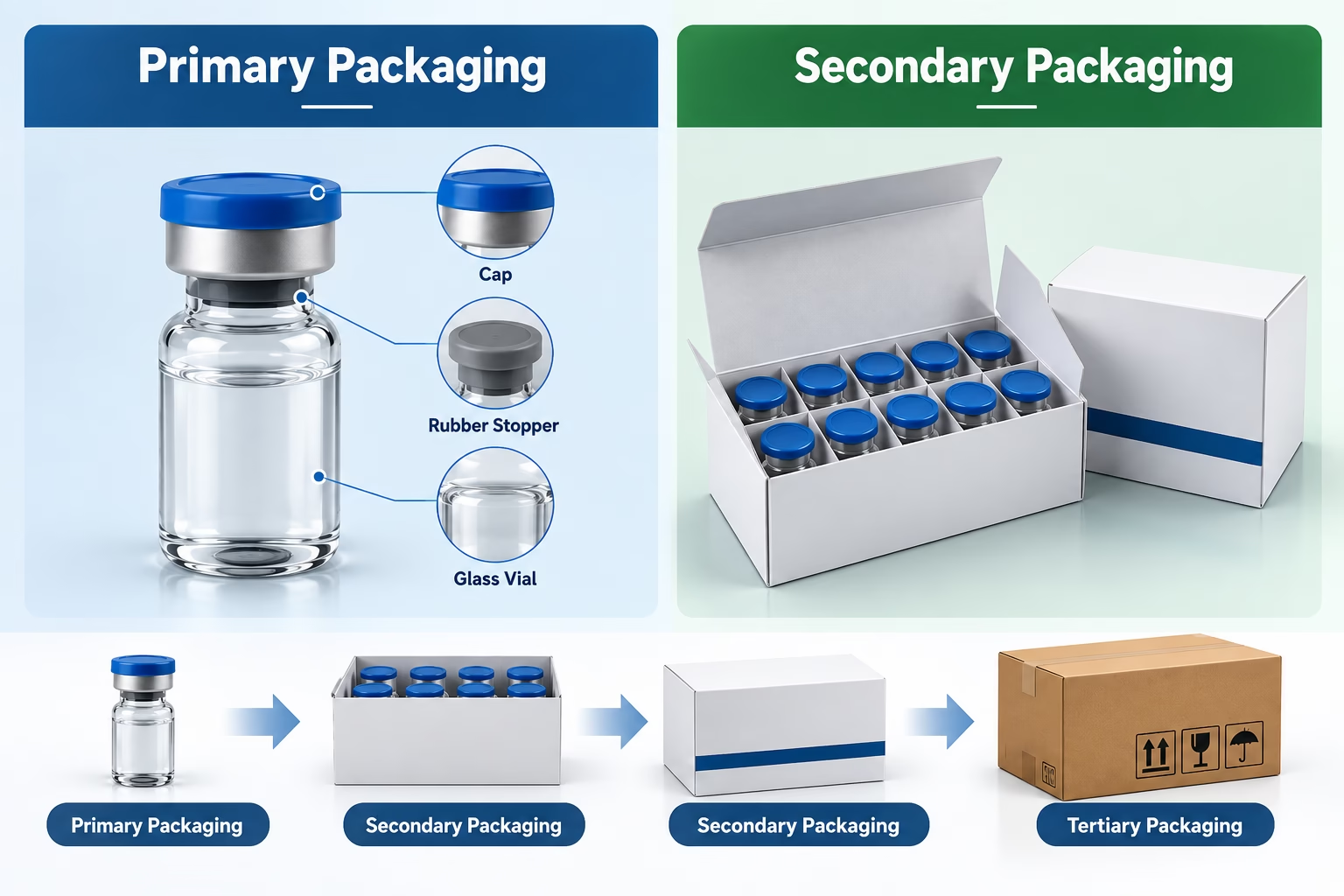
Compact vial packaging uses precision-engineered geometries, ultra-thin protective dividers, and custom-molded inserts. By minimizing the footprint of individual cartons, we help operations pack more units into every master shipper.
- Zero-Void Layouts: Custom structural designs eliminate empty space around each vial.
- Integrated Dividers: Thin, rigid inserts keep glass surfaces from touching while reducing overall box thickness.
- Nested Stacking: Standardized box profiles optimize volumetric utilization across standard shipping pallets.
How Compact Designs Cut Storage and Freight Costs
Unnecessary packaging bulk adds up quickly in freight charges and warehouse storage fees. Switching to space-saving vial packaging solutions directly impacts your operational bottom line.
| Cost Factor | Traditional Packaging | Compact Packaging Solution |
|---|---|---|
| Dimensional Weight (DIM) | High billable weight due to oversized boxes | Reduced outer dimensions lower DIM surcharges |
| Pallet Density | Lower vial yield per shipment | Up to 40% higher unit yield per standard pallet |
| Warehouse Storage | Excessive shelf space consumed | Fits significantly more inventory per square foot |
Standard Vial Sizes Accommodated (1ml to 100ml)
Our structural designs adapt seamlessly to standard pharmaceutical and laboratory glass formats:
- Micro-Dose Vials (1ml – 3ml): High-density multi-pack trays tailored for sensitive, low-volume formulas.
- Standard Pharma Vials (5ml – 20ml): Custom-folded cartons engineered for high-speed automated cartoning lines.
- Large-Capacity Containers (30ml – 100ml): Reinforced compact sleeves designed to support heavier liquid payloads safely.
Core Types of Compact Packaging for Glass Vials
Finding the right balance between small footprints and breakage protection comes down to picking the right structural layout. We offer four primary styles of compact vial packaging tailored for pharmaceutical and laboratory distribution:
- Custom Molded Trays & Thermoformed Inserts: Precision-molded plastic and thermoformed trays hold each unit firmly in place. Selecting optimized custom glass vial packaging options minimizes outer box volume while preventing lateral shifting during shipping.
- Multi-Vial Folding Cartons with Integrated Dividers: Built-in paperboard partitions reduce packaging assembly time and material waste. These single-piece cartons prevent direct glass-to-glass contact without relying on bulky secondary padding.
- Foam-Lined Sleeves for Fragile Ampoules: High-density foam sleeves offer targeted shock absorption for thin-walled containers. Utilizing specialized ampoule packaging materials safeguards delicate liquid formulas against drop impacts and transit vibration.
- Nested Honeycomb Grids for High-Density Transit: Interlocking structural grids maximize pallet density and vertical compression strength. This high-density grid arrangement protects bulk shipments during long-distance transport.
Protective Features in Space-Saving Vial Designs
| Security Feature | Mechanism | Primary Benefit |
|---|---|---|
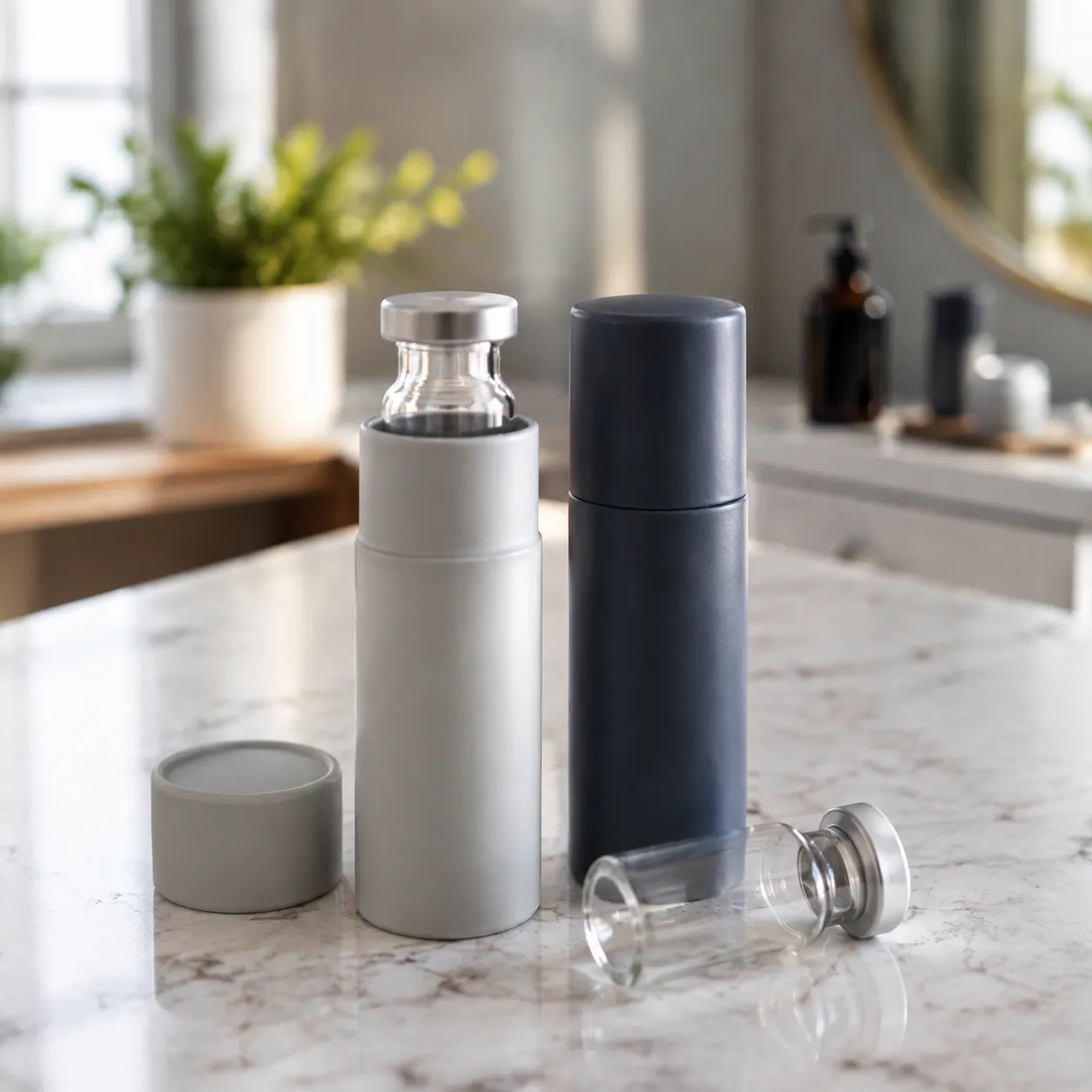
| Shock Absorption | Precision-fit cavities & impact walls | Stops glass-on-glass contact during rough transit |
| Tamper-Evident Seals | Integrated tear strips & breakable locks | Provides immediate proof of unauthorized access |
| Thermal Insulation | Low-air-space density materials | Maintains cold chain temperatures using less coolant |
| Barrier Shields | UV-blocking coatings & humidity foils | Protects light-sensitive and moisture-reactive liquids |
Glass Breakage Prevention & Shock Absorption
We design custom tight-fit cavities that lock every container securely into place. Utilizing high-density thermoformed trays and shock-resistant dividers, our custom vial sample box for safe storage and shipping eliminates destructive glass-on-glass collision during high-vibration freight conditions.
Tamper-Evident Seals & Safety Locks
Product security is non-negotiable. We integrate tear-away perforation strips, specialized lock tabs, and tamper-evident closures into the outer carton geometry. This gives lab personnel and medical staff instant visual proof of container integrity before use.
Cold Chain Logistics & Thermal Insulation
Temperature-sensitive biologics and vaccines demand stable thermal protection. Compact designs minimize excess air volume inside outer shippers, increasing thermal efficiency. Utilizing a sterile RTU vial tray kit for biologics and pharmaceutical storage allows refrigerant packs to work more effectively while optimizing refrigerated transport capacity.
Light & Moisture Barriers
Sensitive chemical and biological reagents rapidly degrade when exposed to light or ambient humidity. We layer moisture-resistant paperboard, foil linings, and UV-blocking coatings onto compact packaging to shield sensitive formulations and prolong shelf life.
Key Benefits of Compact Vial Packaging for Pharma and Lab Operations
Core Operational Advantages
- Maximized Warehouse & Pallet Density: Smaller packaging footprints let you fit significantly more units on every pallet, instantly multiplying available storage space in temperature-controlled warehouses.
- Lower Freight Costs & Carbon Emissions: Cutting down unnecessary package volume reduces overall dimensional weight, lowering shipping fees and shrinking your shipping carbon footprint.
- Streamlined Line Automation: Uniform packaging dimensions feed smoothly into high-speed cartoning machines. Following an optimized vial packaging process guide for pharmaceutical lines keeps automated packaging lines running cleanly with minimal downtime.
- Improved Unboxing & Product Safety: Custom-fit cavities secure each glass container tightly. Clinicians and lab technicians receive an organized, easy-to-open kit that prevents accidental drops during prep work.
| Operational Area | Compact Packaging Advantage | Core Business Result |
|---|---|---|
| Warehouse Storage | Reduced outer box volume | Higher pallet density and lower storage fees |
| Freight & Transport | Lower dimensional weight | Reduced fuel consumption and shipping charges |
| Packaging Lines | Consistent box dimensions | Faster automated cartoning with fewer jams |
| End-User Experience | Precision insert fit | Zero glass-on-glass contact and easy handling |
Implementing a specialized custom vial packaging design with inserts gives pharmaceutical facilities a reliable way to scale distribution while protecting liquid formulas from breakage.
How to Choose the Right Compact Vial Packaging

Picking the ideal setup for your product comes down to balancing structural protection, materials, compliance, and your overall production budget. We evaluate four core criteria to select the most efficient compact vial packaging design for any supply chain.
Fragility and Transport Distance
- Glass Thickness & Type: Thin-walled tubular glass requires higher-density shock absorption than standard molded glass.
- Shipping Routes: Long-distance air freight and multi-leg ground shipping demand tighter insert tolerances to prevent micro-fractures.
- Drop Safety: Tailor tray cushioning to pass standard ISTA drop tests without adding bulk.
Recyclable vs. Plastic Packaging
Choosing between plastic thermoformed trays and eco-friendly paper materials depends on your cold chain setup and sustainability targets.
| Packaging Material | Shock Protection | Moisture Resistance | Sustainability | Tooling Cost |
|---|---|---|---|---|
| Molded Paper Pulp | High | Medium | 100% Recyclable | Moderate |
| Thermoformed PET/PVC | Very High | Excellent | Recyclable (Select Grade) | Low to Moderate |
| Dense EVA Foam | Maximum | High | Low | Low |
Regulatory Compliance (FDA, ISO, and GMP)
- Cleanroom Compatibility: Select secondary packaging materials that avoid particle shedding during automated cartoning.
- Material Standards: Use medical-grade, non-toxic materials compliant with FDA and ISO 11607 standards.
- GMP Layouts: Ensure box dimensions accommodate required regulatory labeling, serialized barcodes, and tamper-evident seals cleanly.
Custom Tooling Costs vs. Unit Savings
Upfront mold fees for custom inserts can seem high, but high-density layouts lower your per-unit freight costs significantly over time. When analyzing your long-term vial packaging cost and custom inserts, bulk shipping savings quickly offset initial tooling expenses. For specialized or small-batch runs, adopting tailored custom 10ml vial box packaging with inserts keeps units secure while optimizing footprint and handling efficiency.
Frequently Asked Questions About Compact Vial Packaging
How does compact packaging prevent glass-on-glass impact?
We design our protective vial packaging solutions with engineered cell dividers, shock-resistant sleeves, and thermoformed trays that lock each unit into a dedicated slot. By keeping every unit separated in high-density layouts, our designs eliminate rattling, vibration transfer, and glass-on-glass contact during transport.
Can compact vial trays fit into existing filling machinery?
Yes. We engineer our compact vial packaging trays and nests to match standard dimensions for automated vial packaging machinery and modern RTU packaging systems. They integrate smoothly into your existing aseptic filling, capping, and downstream cartoning lines without requiring custom machine retrofits.
Are eco-friendly materials strong enough for cold chain transport?
Modern eco-friendly vial packaging materials use moisture-resistant bio-coatings and high-density recycled fibers specifically built for sub-zero temperatures. They maintain structural strength, resist condensation collapse, and provide reliable thermal insulation inside refrigerated and deep-freeze logistics networks.
What is the typical minimum order quantity for custom inserts?
Minimum order quantities vary based on whether you choose fully custom vial inserts and trays or stock designs. We offer flexible production runs to support both small batch vial cartoning for clinical trials and large-scale manufacturing for commercial pharma distribution.