
A single temperature excursion can render an entire shipment of life-saving medicine completely useless.
That is why choosing the right insulin cold chain packaging is non-negotiable for safe transit. But shipping is only half the battle—maintaining strict standards for insulin vial storage on-site is just as critical to prevent costly spoilage.
In this guide, you'll discover the most reliable temperature-controlled packaging solutions and best practices to keep every vial potent, compliant, and protected from end to end.
Let’s dive right in.
Biological Imperatives: The Science Behind Insulin Storage
Insulin is a delicate, protein-based therapeutic hormone. Maintaining its molecular integrity requires precise environmental control from manufacturing to clinical administration. Without robust insulin cold chain packaging and disciplined insulin vial storage, the protein chains denature, resulting in irreversible loss of potency and compromised patient safety.
The Critical 2°C to 8°C Thermal Window
For unopened insulin vial storage, maintaining a continuous 2°C to 8°C cold chain is non-negotiable. This temperature band preserves the secondary and tertiary structures of the peptide chains.
- Thermodynamic Stability: Keeps the hexameric insulin structure stable, preventing premature conversion into inactive monomers or fibrils.
- Unopened Insulin Shelf Life: Ensures the product retains maximum therapeutic efficacy through its full manufacturer-validated expiration date.
- Viscosity & Suspension Uniformity: Prevents formulation separation in intermediate- and long-acting suspensions.
| Storage Condition | Typical Temperature | Stability Impact |
|---|---|---|
| Refrigerated Cold Chain | 2°C to 8°C | Optimal shelf life maintained until expiration |
| Room Temperature / Ambient | 15°C to 25°C | Rapidly reduces shelf life (typically max 28 days) |
| Freezing Zone | < 0°C | Immediate destruction of active proteins |
The "Freezing Fallacy": Why Sub-Zero Exposure is Fatal to Insulin
A common misconception in pharmaceutical logistics is that "colder is safer." For insulin, sub-zero exposure is catastrophic.
- Protein Denaturation: When temperatures drop below 0°C, ice crystal formation ruptures the quaternary structure of the insulin peptide.
- Irreversible Aggregation: Freezing forces the molecules into permanent aggregates (fibrils), eliminating biological activity.
- Sub-Zero Chilling Risk: Contact with uncalibrated coolant packs can freeze liquid vials within minutes, rendering the medication entirely inert even after thawing.
We engineer insulin cold chain packaging specifically to eliminate sub-zero chilling risks, creating a thermal buffer that prevents product contact with sub-zero temperatures.
Ambient Exposure Limits and Photostability
Once an insulin vial exits the refrigerated cold chain, degradation accelerates:
- Thermal Breakdown: Prolonged exposure to temperatures above 30°C causes rapid peptide bond cleavage and chemical degradation.
- Photodegradation Protection: Direct ultraviolet (UV) and artificial light exposure catalyze oxidative reactions, discoloring the liquid and accelerating potency loss.
- Secondary Packaging Barrier: Effective transport packaging must combine thermal insulation with opaque barriers to shield vials from ambient light exposure throughout transit.
Inherent Vulnerabilities in Cold Chain Logistics for Insulin Vials

When managing insulin cold chain packaging and bulk transit, we face two distinct threats: thermal degradation and mechanical impact. A single break in the distribution chain compromises product integrity, leading to costly inventory write-offs and patient safety risks.
The Dangers of Standard Water-Based Ice Packs
Many logistics failures stem from using conventional water-based gel packs. While cheap, standard ice packs introduce severe sub-zero chilling risk to glass vials:
- Direct Thermal Shock: Water ice freezes at 0°C and often ships at -15°C to -20°C straight from commercial freezers. Placing it near unprotected insulin causes localized freezing within minutes.
- Lack of Buffer: Water ice absorbs heat rapidly once melted, leading to sudden temperature spikes above 8°C.
- Physical Condensation: Melting ice packs generate excessive moisture, weakening paperboard packaging and loosening vial labels.
To maintain secure insulin vial storage during transit, we replace standard ice packs with calibrated Phase Change Materials (PCMs) that freeze and melt precisely at +4°C or +5°C, creating a reliable thermal buffer.
Seasonal and Route Variations in Last-Mile Distribution
Last-mile delivery is the most volatile link in the distribution network. Vials often sit on hot airport tarmacs, endure unconditioned courier vans in summer, or face freezing cargo holds during winter freight.
| Risk Factor | Environmental Threat | Cold Chain Impact |
|---|---|---|
| Summer Peak Transit | Ambient heat exceeding 40°C | Rapid coolant depletion; protein breakdown |
| Winter Freight | Ambient sub-zero temperatures | Accidental freezing; loss of efficacy |
| Last-Mile Handling | Rough transit & road shock | Glass vial micro-fractures & seal leaks |
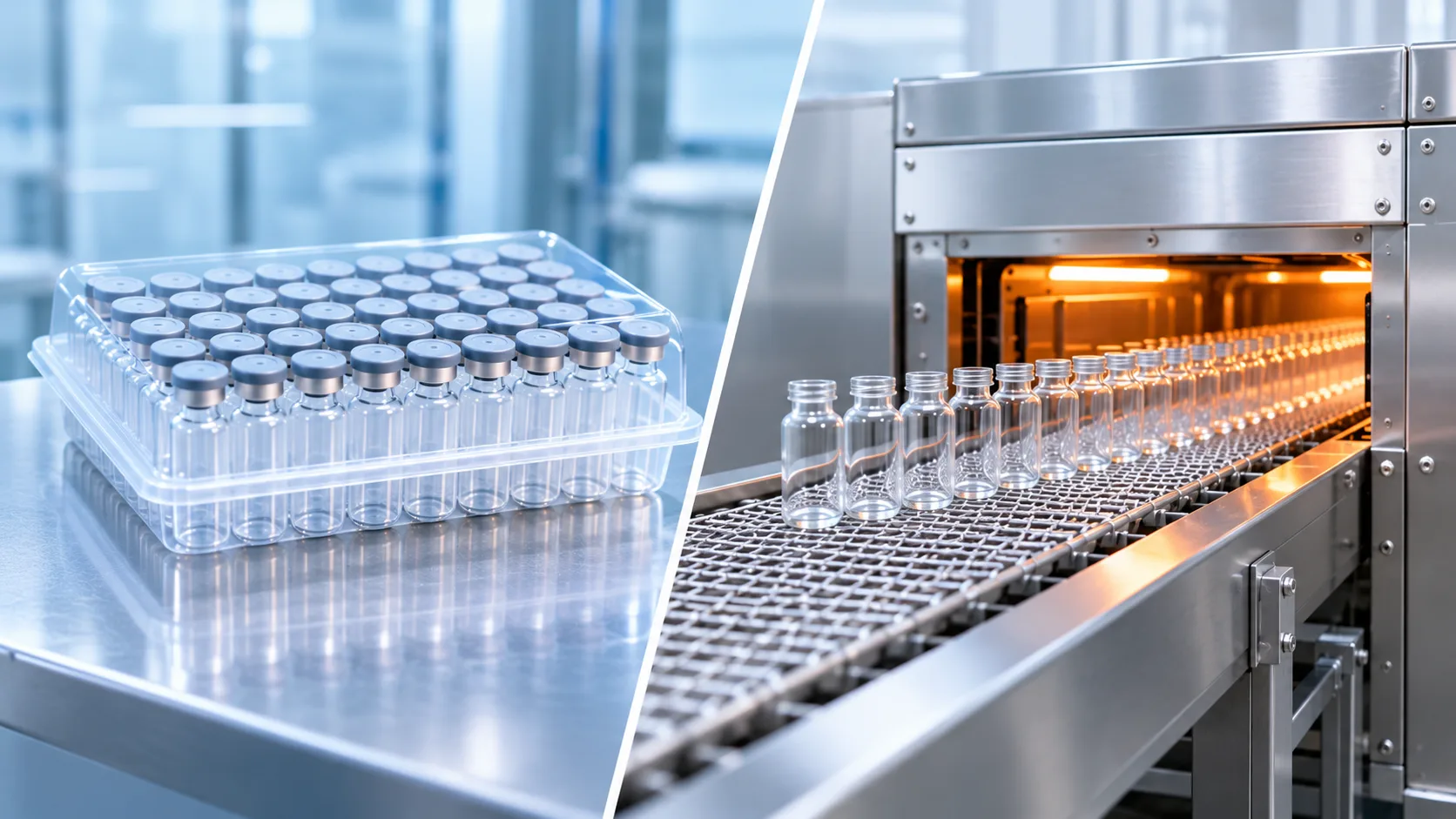
To prevent transit breakage and thermal bridging, we secure shipments using engineered plastic vial trays for pharma lab storage and transport, ensuring steady air circulation and physical isolation from external impacts.
Regulatory Compliance and Quality Frameworks
Maintaining a compliant 2°C to 8°C cold chain requires strict adherence to international quality standards:
- Good Distribution Practice (GDP) Compliance: Requires continuous temperature mapping and validated thermal shippers across all transport routes.
- WHO Guidelines for Biologics: Mandates that secondary packaging shields vials from ambient light and extreme thermal cycling.
- Audit-Ready Documentation: Every shipment must provide qualification data showing that the container system withstands both summer and winter ambient profiles without temperature excursions.
Engineering Advanced Cold Chain Packaging for Insulin Vials

Core Insulation Technologies
The outer barrier defines how well a shipper resists ambient extremes. We select and configure insulation materials based on shipping lane duration, payload volume, and external weather profiles:
- Vacuum Insulation Panels (VIP): Deliver the highest thermal resistance (R-value) with ultra-thin walls. Ideal for international transit and multi-day distribution routes where payload space and weight efficiency are critical.
- Polyurethane (PU) Insulated Containers: Offer robust, high-performance thermal retention with structural rigidity, serving as a reliable standard for regional cold-chain distribution.
- High-Density Expanded Polypropylene (EPP): Provides durable, shock-resistant, multi-use capabilities for closed-loop clinical and pharmacy distribution networks.
Thermal Buffering with Calibrated Phase Change Materials (PCMs)
Standard water-based ice packs freeze at 0°C and risk causing irreversible sub-zero chilling injury to insulin proteins. We utilize precision-engineered Phase Change Materials (PCMs) calibrated to freeze and melt at specific set points (such as +4°C to +5°C):
- Zero-Freezing Hazard: PCMs absorb ambient heat and release cooling without dropping the payload chamber below 2°C.
- Bidirectional Thermal Buffering: Formulated to protect against both scorching summer tarmac temperatures and sub-zero winter transport conditions.
- Consistent Latent Heat: Maintains a flat thermal plateau for extended durations, keeping unopened insulin vial shelf life completely intact.
Payload Mechanical Protection
Thermal security is ineffective if glass vials crack under vibration or impact. We integrate structural interior barriers to secure every vial during transport:
- Custom-Molded Cavities and Trays: Precision partitions prevent glass-to-glass contact, absorbing transit shocks and drops.
- Validated Secondary Containment: Integrating certified secondary packaging for vials ensures secure positioning, light protection, and compliance with pharmaceutical transport standards.
- Pressure-Equalized Cushioning: High-density foam inserts hold vials securely in place, dampening road vibration and rough cargo handling.
Validating Thermal Duration: 24 to 96-Hour Transit
Shipping temperature-sensitive biologics leaves no room for guesswork. We qualify every insulin cold chain packaging configuration against realistic transit timelines, ensuring that unopened vials stay strictly within the 2°C to 8°C cold chain whether they travel via domestic overnight couriers or face multi-day international customs delays.
| Transit Window | Primary Use Case | Thermal Configuration | Ambient Profile Focus |
|---|---|---|---|
| 24 – 48 Hours | Domestic express & last-mile pharmacy delivery | High-density PU insulation with calibrated PCMs | Rapid summer peak swings & brief tarmac exposure |
| 72 – 96+ Hours | Cross-border freight & bulk distribution | Vacuum Insulation Panels (VIP) with multi-zone PCMs | Prolonged extreme heat waves & severe sub-zero winter routes |
Testing Protocols (ISTA 7D / 7E Profiles)
We validate all thermal systems using standardized ambient temperature profile testing under strict ISTA 7D and ISTA 7E standards. These protocols simulate the worst thermal spikes a shipment might encounter:
- Summer Profiles: Simulating prolonged tarmac heat exceeding 35°C to test the heat absorption capacity of our Phase Change Materials without letting the payload climb above 8°C.
- Winter Profiles: Subjecting shippers to sub-zero environments (-10°C to -20°C) to verify that internal thermal buffers completely eliminate the risk of sub-zero chilling and accidental freezing.
- Payload Integrity: Pairing thermal validation with durable vial packaging for pharmaceuticals secure transit to protect fragile glass containers from simultaneous physical shock and vibration during long-haul transport.
Real-Time Monitoring & Traceability
Temperature validation does not stop when the box leaves our dock. To support Good Distribution Practice (GDP) compliance, we integrate active traceability tools directly into the packaging architecture:
- Cold Chain Data Logger Integration: Compact single-use or multi-use USB and Bluetooth data loggers positioned alongside the vials to record minute-by-minute payload temperatures.
- Real-Time Cellular & GPS Trackers: Automated alerts for temperature excursions or route deviations during critical 72- to 96-hour international transit.
- Visual Irreversible Indicators: Instant surface-check indicators that flag any high-temperature or sub-zero freeze event upon arrival at the clinic or pharmacy warehouse.
These validation protocols guarantee that your insulin vial storage requirements remain uncompromised from origin to final administration.
Standard Operating Procedures (SOPs) for Pack-Out & Facility Storage
Operational execution determines whether your cold chain succeeds or fails. Even top-tier insulation cannot compensate for improper pack-out steps or uncalibrated refrigerants. We establish rigorous Standard Operating Procedures (SOPs) to ensure every shipment maintains the required 2°C to 8°C cold chain from our packing floor to the destination pharmacy.
Refrigerant Pre-Conditioning Protocols
Eliminating the sub-zero chilling/freezing risk requires exact temperature stabilization before any coolant touches the payload container.
- Phase Change Materials (PCMs): We charge +5°C PCMs in a dedicated refrigerated unit set between 2°C and 4°C for at least 48 to 72 hours until fully solid.
- Water Gel Packs (if utilized with thermal buffers): Pre-conditioned gel packs must undergo bench stabilization at controlled room temperature (+20°C) for 30 to 45 minutes until surface frost completely disappears and pack surfaces reach 0°C or higher.
- Validation Check: Every coolant batch must pass an infrared surface temperature check before insertion into the assembly line.
| Coolant Type | Target Phase Temperature | Conditioning Requirement | Stabilization Step |
|---|---|---|---|
| Calibrated +5°C PCM | +4°C to +6°C | 48h at 2°C–4°C | Direct placement (No bench time needed) |
| Chilled Gel Packs | 0°C to +4°C | 24h at 2°C–5°C | Surface verification |
| Frozen Gel Buffers | -20°C base | 72h at -20°C | 30–45 min sweat cycle at +20°C |
Pack-Out Assembly Sequence
A systematic pack-out sequence prevents thermal bridging and physical shock during distribution.
- Outer Shipper Inspection: Ensure the insulated shipping container is clean, dry, and free of structural wall dents or puncture damage.
- Bottom Thermal Layer: Position pre-conditioned base PCMs flat along the bottom of the insulated cavity.
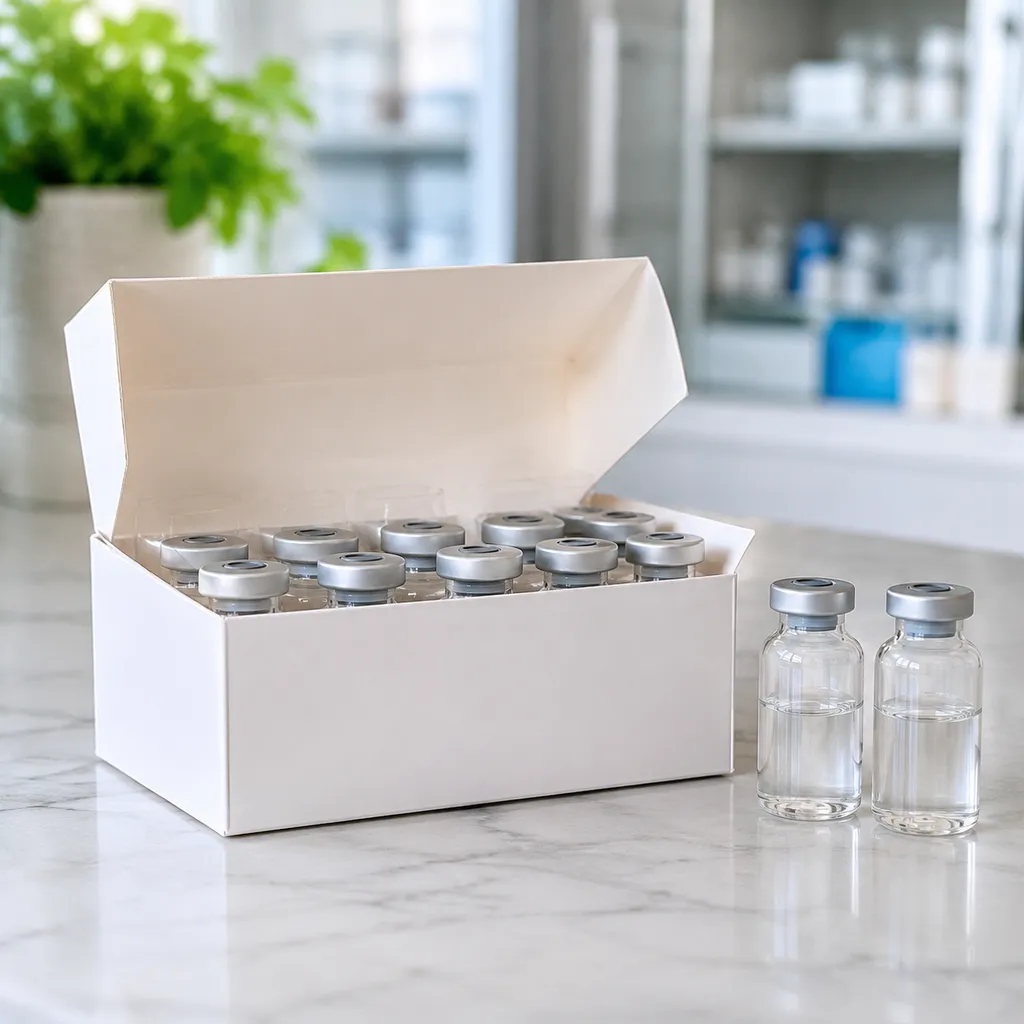
- Payload Stabilization: Place fragile glass vials into fitted secondary partitions, such as compact vial packaging boxes for secure sample storage, preventing vial-to-vial contact and mechanical shock.
- Data Logger Placement: Position a calibrated cold chain data logger directly alongside the center payload—never in direct contact with coolants.
- Top & Perimeter Layering: Insert side and top PCM panels to create a completely enclosed thermal envelope around the inner payload.
- Sealing: Secure the inner thermal lid tightly, close the outer corrugated shipper, and apply tamper-evident H-taping along all box seams.
Warehouse & Pharmacy Storage Protocols
Maintaining unopened insulin shelf life depends on strict adherence to warehouse staging rules prior to final transit.
- Dedicated Refrigerated Storage: Store all bulk insulin products strictly between 2°C and 8°C in validated pharmaceutical cold rooms featuring continuous NIST-traceable monitoring.
- Light Protection: Keep stock inside secondary cartons or specialized 2ml vial box containers to guard against photodegradation from ambient warehouse lighting.
- First-In, First-Out (FIFO): Enforce strict stock rotation based on manufacturer expiration dates to minimize staging dwell times.
- Rapid Handling Windows: Limit pack-out exposure in ambient packing areas to under 15 minutes per batch to prevent payload temperature drift before shipper sealing.
Tailored Thermal Packaging Solutions by Jiahua Package
Certified Thermal Shippers for Biologics and Vials
Our certified cold chain shippers maintain strict 2°C to 8°C thermal boundaries under rigorous ambient conditions. By combining high-efficiency Vacuum Insulation Panels (VIP) and rigid Polyurethane (PU) containers with pre-conditioned Phase Change Materials (PCMs), we provide stable environments for delicate biologics.
- Strict Thermal Integrity: Zero sub-zero chilling risks; our calibrated PCMs protect unopened insulin vials from frost injury and thermal spikes.
- Comprehensive Impact Damping: High-density, custom-molded cavity inserts secure each vial, preventing physical shock and glass breakage. Explore our custom vial packaging design with inserts and compliance for fully integrated payload protection.
- Turnkey Validation: Pre-qualified against standard summer and winter multi-day transit profiles to streamline your Good Distribution Practice (GDP) compliance.
| Solution Feature | Standard Specification | Key Benefit for Insulin Logistics |
|---|---|---|
| Thermal Range | 2°C to 8°C (Refrigerated) | Prevents protein aggregation and potency loss |
| Duration Options | 24h, 48h, 72h, and 96h+ | Supports both express delivery and global freight |
| Coolant Tech | Calibrated Phase Change Materials | Eliminates freeze damage common with water ice |
| Monitoring | Real-time data logger integration | Complete end-to-end temperature traceability |
Custom Engineering and OEM/ODM Services
Every distribution route presents unique cold chain challenges. We offer complete OEM/ODM engineering services to develop customized insulin vial storage and shipping solutions tailored to your operational requirements:
- Custom Payload Dimensions: Engineered compartments for single-dose patient deliveries, multi-vial clinic cartons, or bulk distribution.
- Outer Shipper Optimization: Dimensional weight optimization to lower volumetric shipping costs without sacrificing thermal performance.
- Private Labeling & Branding: Custom printing, standardized pack-out labeling, and clear handling instructions for pharmaceutical distributors and logistics providers.
- Thermal Performance Modeling: Chamber-tested configurations matched to your specific seasonal transit lanes and courier dwell times.
Frequently Asked Questions (FAQs)
What happens if an unopened insulin vial accidentally drops below 0°C during shipping?
Sub-zero exposure causes irreversible structural degradation in insulin proteins, leading to molecular aggregation and complete loss of therapeutic potency. Freezing also expands liquid contents, creating microscopic cracks in glass vials that compromise sterile barrier integrity. Once exposed to freezing temperatures, insulin cannot be salvaged and must be discarded immediately under GDP regulations.
How do PCMs outperform standard gel packs for pharmaceutical vial transit?
Standard water-based ice packs create severe sub-zero thermal spikes that easily freeze adjacent biological products. Engineered Phase Change Materials (PCMs) resolve this risk by freezing and melting at precisely calibrated temperatures (such as +4°C to +5°C).
Key advantages of PCMs in our insulin cold chain packaging systems include:
Zero chilling injury: Keeps the payload strictly within the required 2°C to 8°C cold chain without freezing risks.
Precise thermal buffering: Absorbs and releases latent heat at fixed transition thresholds.
Streamlined integration: Pairs seamlessly with protective inner packaging, such as our custom vial sample box for safe storage and shipping, to shield fragile glass containers from both thermal spikes and physical shock.
How long can a passive insulated shipper maintain 2°C–8°C under extreme summer ambient conditions?
Our qualified passive thermal shippers maintain the strict 2°C to 8°C range for 48, 72, and up to 96+ hours, depending on the insulation grade and coolant configuration. Combining high-density Polyurethane (PU) or Vacuum Insulation Panels (VIP) with calibrated PCMs allows our systems to resist aggressive ambient summer extremes exceeding 35°C to 40°C during extended domestic or international transit.
What validation documentation is required when shipping insulin commercially?
Commercial insulin distribution requires robust compliance and qualification documentation to satisfy international regulatory standards:
- Thermal Validation Reports: Chamber test data verified under standardized ISTA 7D or ISTA 7E seasonal profiles.
- Pack-Out SOPs: Detailed instructions outlining refrigerant pre-conditioning temperatures, coolant placement, and payload loading.
- Temperature Log Records: Real-time data logger readouts verifying continuous 2°C to 8°C compliance throughout transit.
- Quality Assurance Certificates: Material traceability and compliance records aligned with current Good Distribution Practice (GDP) guidelines for reliable insulin vial storage and transport.