Formula details
Product Details
Overview
What Is a Pharmaceutical Cartridge Nest & Tub?
A pharmaceutical cartridge nest & tub is a specialized packaging format developed for ready-to-use (RTU) glass cartridges. We provide these units pre-washed, depyrogenated, and pre-sterilized so fill-finish facilities can load them directly onto automated filling lines without requiring in-house preparation infrastructure.
Key Structural Components
The system relies on a multi-layer protective configuration designed to maintain sterility and structural stability:
- Outer Tub: A rigid outer enclosure that protects internal components from mechanical stress, particulate contamination, and handling damage.
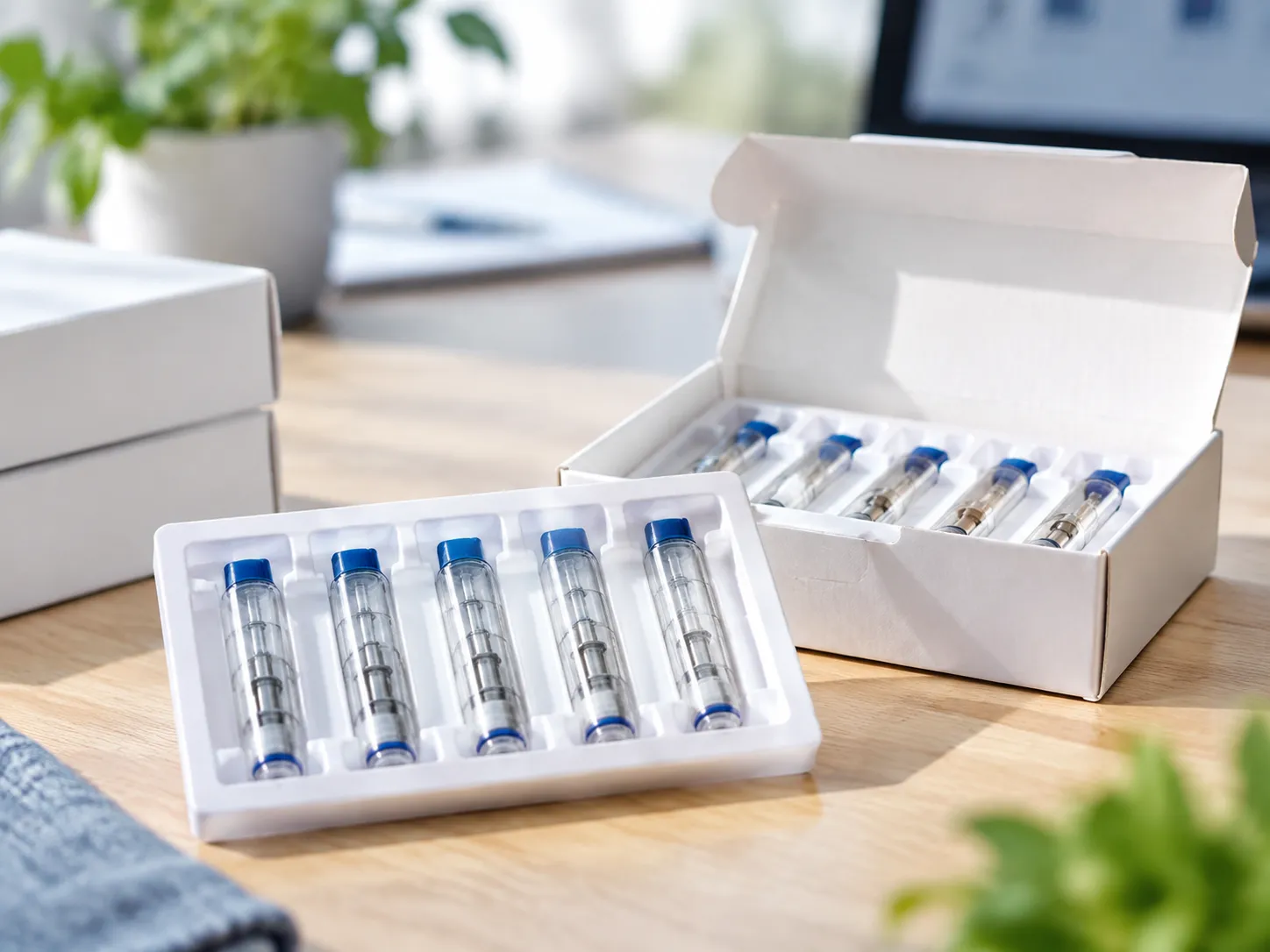
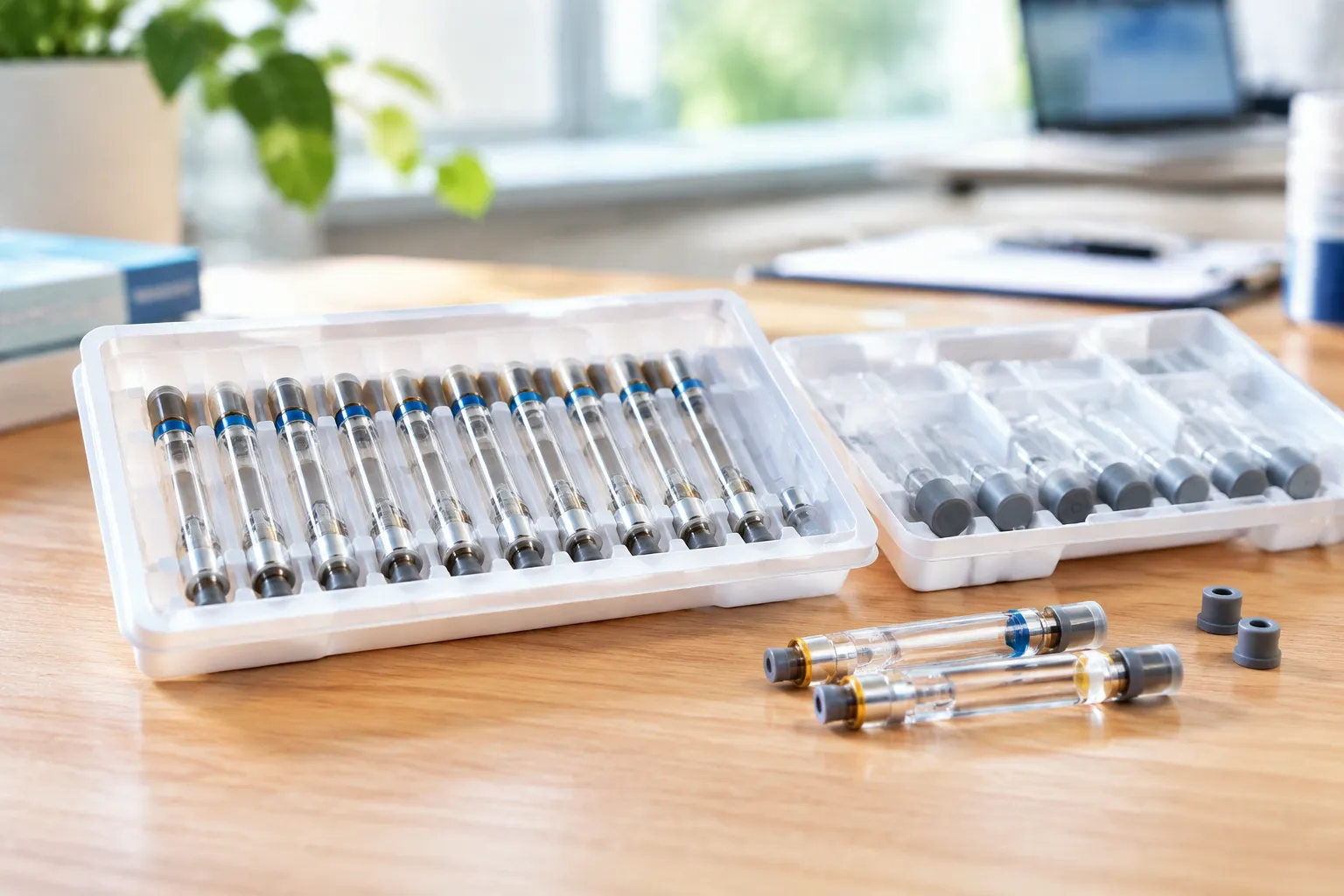
- Nest Rack: A molded grid that holds individual cartridges in vertical alignment, completely preventing glass-to-glass contact during shipment and processing.
- Tyvek® Lid: A heat-sealed, gas-permeable membrane that functions as a sterile barrier, facilitating gas sterilization while blocking microbial ingress.
- Protective Liner: A barrier sheet seated above the cartridges to prevent vertical movement, friction, and surface abrasion.
Primary Delivery Applications
This RTU cartridge packaging format serves critical parenteral drug-delivery systems, including:
- Insulin Cartridges: Standard 1.5 ml and 3.0 ml cartridges used in reusable and disposable pen injectors.
- Dental Anesthetics: Single-use cartridges designed for standard dental delivery syringes.
- Auto-Injectors and Wearable Pumps: Precision cartridges used for high-viscosity biologics, emergency therapeutics, and subcutaneous self-administration platforms.
Core Technical Specifications and Dimensions
For cleanroom facilities integrating modern nested tub and tray aseptic processing solutions, our dimensions maintain micron-level consistency across every batch.
| Specification Parameter | Standard 1.5 ml Format | Standard 3.0 ml Format |
|---|---|---|
| Footprint Standard | ISO / SBS Standard Tub | ISO / SBS Standard Tub |
| Outer Tub Dimensions | 260 mm × 226 mm × 97 mm | 260 mm × 226 mm × 97 mm |
| Nest Matrix Capacity | 160 holes (10 × 16 layout) | 100 holes (10 × 10 layout) |
| Cartridge Diameter Fit | 8.65 mm – 9.00 mm | 11.55 mm – 11.85 mm |
| Total Height (Tub + Nest) | 97.0 mm ± 0.3 mm | 97.0 mm ± 0.3 mm |
| Dimensional Tolerance | ±0.15 mm (Critical surfaces) | ±0.15 mm (Critical surfaces) |
| Static Stacking Load | ≥ 120 kg | ≥ 120 kg |
Precision Matrix Configurations
- 1.5 ml Glass Cartridges (160-Hole Nest): Designed for dental cartridges and micro-dose auto-injectors. The high-density matrix maximizes cleanroom fill-finish throughput per cycle without risking side-wall friction.
- 3.0 ml Glass Cartridges (100-Hole Nest): Standardized for insulin pens and wearable pump delivery systems. Optimized hole pitch delivers exact centering under filling needles and multi-head stoppering units.
- Strict Dimensional Tolerances: Nest hole positioning is held within ±0.10 mm, ensuring robotic grippers pick, orient, and replace cartridges without mechanical jamming or shear stress.
- Structural Weight-Bearing Parameters: Reinforced outer tub ribs withstand down-forces during automated nest removal and support up to five stacked units in cold storage without tub wall deflection.
Material Engineering and Cleanroom Standards
Material Selection & Performance
- Medical-Grade Polypropylene (PP) Outer Tub: Provides high impact strength, drop resistance, and thermal durability. The medical-grade polypropylene tub maintains dimensional accuracy under EtO gas processing, gamma irradiation, and standard cold-chain storage conditions without warping or embrittlement.
- Precision-Molded Nest (POM / HDPE): Engineered with high-grade polyoxymethylene (POM) or high-density polyethylene (HDPE). These low-friction, anti-static polymers prevent surface charging, reducing the risk of particulate attraction and surface scuffing on glass barrels.
- Tyvek Gas-Permeable Barrier: A medical-grade Tyvek sealed tub lid delivers high microbial barrier integrity (SBS footprint compliant). It allows rapid ethylene oxide gas penetration and evacuation while maintaining a hermetic microbial seal across distribution cycles.
| Component | Base Material | Key Functional Property | Compliance Standard |
|---|---|---|---|
| Outer Tub | Virgin Medical-Grade PP | Thermal resistance, rigid structural barrier | USP <661.1>, EP 3.2.2 |
| Nest Matrix | POM / Antistatic PE | Zero glass-to-glass contact, anti-static | ISO 11040-4 / ISO 13926 |
| Lid & Liner | Tyvek / Porous Non-Woven | Breathable microbial barrier, clean peel | ISO 11607-1, ASTM F1980 |
ISO 5 Cleanroom Processing and Particulate Control
To maintain minimal bioburden and prevent sub-visible particulate contamination, our cleanroom molded nest components undergo controlled manufacturing protocols:
- Injection Molding in ISO 7 / ISO 5 Cleanrooms: All injection molding and thermoforming operations run in controlled cleanroom environments to eliminate airborne contaminants at the source.
- Ultrasonic De-Ionized Washing: Molded nests and tubs pass through multi-stage ultrasonic baths using high-purity DI water to dislodge microscopic debris.
- Continuous Environmental Monitoring: Critical handling and final Tyvek sealing areas meet Class A laminar flow conditions, aligning with strict custom packaging design with inserts and compliance protocols for parenteral drug delivery systems.
Key Advantages in Aseptic Fill-Finish Workflows
Adopting a pharmaceutical Cartridge Nest & Tub format transforms modern aseptic filling lines by removing traditional bulk-handling bottlenecks. By switching to a structured nest and tub setup, we help manufacturers safeguard container integrity, reduce cleanroom footprints, and maintain continuous high-speed batch output.
Zero Glass-to-Glass Contact
In standard bulk lines, glass containers continuously collide, leading to cosmetic scuffing, micro-cracks, and particulate generation. Our RTU cartridge nest isolates each container in a dedicated cell:
Total Separation: Cartridges never touch during transit, debagging, or filling.
Structural Protection: Eliminates micro-fissures and maintains barrel strength under high injection pressures.
Lower Rejection Rates: Prevents surface scratches that trigger false rejects during automated visual inspection.
Pre-Sterilized Delivery Eliminates Upstream Prep
Our pre-sterilized nested cartridges arrive ready for direct filling, treated via validated Ethylene Oxide (EtO) or Gamma irradiation. Much like integrating pre-sterilized RTU vials and modular vial systems, using sterile cartridge tubs bypasses expensive preparation steps:
No On-Site Washing: Removes the need for heavy Water-for-Injection (WFI) washing equipment.
No Depyrogenation Tunnels: Cuts facility footprint, energy costs, and cleanroom heat loads.
Direct Isolator Entry: Double-bagged, Tyvek-sealed tubs move straight into RABS or isolator units.
Smooth Robotic Integration and Maximum Uptime
Standardized tub footprints deliver the geometric consistency required by modern automated machinery:
Precise Gripper Alignment: Fixed nest matrices allow robotic arms and vacuum end-effectors to pick, fill, and stopper with micron-level repeatability.
Reduced Line Jamming: Uniform nest positioning avoids the tipping, jamming, and downtime common with bulk feed screws and rotary sorting tables.
Predictable Batch Yield: Continuous, smooth indexing ensures minimal drug product loss and steady throughput during high-capacity runs.
Automated Line Compatibility and Equipment Integration

We design our pharmaceutical Cartridge Nest & Tub formats to drop directly into high-speed, automated fill-finish lines without requiring mechanical retooling or manual intervention.
Seamless Barrier System Integration (RABS & Isolators)
Operating inside Restricted Access Barrier Systems (RABS) and closed aseptic isolators demands predictable airflow and minimal particle generation:
Aerodynamic Tub Profiles: Smooth outer walls prevent turbulent air disruption in laminar flow zones.
Rapid De-bagging and De-lidding: Standardized lip dimensions allow automated peelers to remove Tyvek lids quickly and cleanly without shedding fibers.
Consistent Environmental Control: Built to function seamlessly alongside high-containment setups like our sterile RTU vial tray kit for biologics and pharmaceutical systems.
Robotic Handling and Stopper Insertion
Our RTU cartridge nest geometries match standard end-of-arm robotic tooling (EOAT):
Precise Gripper Alignment: Reinforced side notches and lifting tabs ensure robotic arms reliably grip, lift, and locate the nest matrix every cycle.
Stable Stopper Placement: The rigid grid holds each cartridge firmly upright, absorbing the downward vertical force during high-speed automated plungering and stopper positioning.
Dosing and Filling Performance
The cartridge nest system supports both peristaltic and rotary piston dispensing:
No-Drip Needle Centering: Tight hole tolerances keep glass barrels centered, eliminating off-axis dispensing needle strikes.
Vacuum Filling Readiness: Optimized open-bottom nest designs facilitate complete vacuum evacuation, preventing air bubbles during viscous drug dosing.
Downstream Capping and Inspection Flow
After filling, cartridges transition efficiently through automated denesting equipment to final processing:
Smooth Denesting: Individual cartridges lift freely out of the nest without jamming or side-wall friction.
Continuous Line Flow: Consistent spacing facilitates rapid transfer to automated crimping stations, laser coding, and automated high-speed visual inspection units.
Regulatory Compliance and Quality Assurance Testing
Every pharmaceutical cartridge nest and tub system we manufacture is built to meet strict global regulatory frameworks. Aseptic fill-finish operations require full traceability, material safety data, and verified barrier performance to secure smooth batch releases during regulatory audits.
Global Cartridge and Material Standards
We align all components directly with international pharmacopeia and device manufacturing standards:
- ISO 11040-4 & ISO 13926 Compliance: Dimensional uniformity and mechanical tolerance verification for pen injectors, dental cartridges, and automated line feeding.
- USP <661.1> & EP 3.2.2: Comprehensive plastic material characterization ensuring no harmful chemical interactions occur between the packaging polymers and primary drug containers.
- USP <788> Particulate Control: Strict sub-visible and visible particulate limits achieved through ISO Class 5 cleanroom molding and automated de-ionization processes.
- Extractables & Leachables (E&L) Validation: Detailed toxicological profiles and testing profiles confirming minimal organic and inorganic migrant risks.
| Standard / Test | Target Specification | Operational Impact |
|---|---|---|
| Sterility Assurance (SAL) | 10⁻⁶ (EtO / Radiation) | Guarantees sterile barrier for RTU automated filling |
| Particulate Matter (USP <788>) | Below sub-visible thresholds | Prevents batch contamination during high-speed denesting |
| CCIT (Dye Ingress / Vacuum) | Zero microbial ingress | Ensures integrity during long-distance transit and storage |
Along with our precision cartridge trays, our nest and tub configurations undergo routine Container Closure Integrity Testing (CCIT) and peel-force verification on Tyvek lids. Every production lot includes a complete Certificate of Analysis (CoA) containing full bioburden, particulate, and sterilization validation data ready for FDA, EMA, and NMPA filings.
Choosing the Right Pharmaceutical Cartridge Nest & Tub Configuration
1. Dimension and Pitch Matching
Precise mechanical tolerances prevent container-to-container contact and ensure accurate nozzle alignment during filling:
Hole Diameter & Depth: Tailored to barrel outer diameter (OD) and overall length to eliminate axial wobble while allowing free vertical motion during lift-out.
Flange Clearance: Calibrated nest neck pockets seat standard or custom cartridge flanges securely without edge-loading or chipping.
Matrix Pitch: Exact center-to-center spacing ensures multi-needle filling heads dispense simultaneously without alignment drift.
2. Robotic Tooling Compatibility
Automated high-speed lines rely on consistent mechanical handling points across the nest matrix:
End-of-Arm Tooling (EOAT): Nests must support standard vacuum cups or mechanical finger grippers for smooth denesting and re-nesting.
Tub Rigidity: High-rigidity sidewalls prevent perimeter deflection during robotic de-lidding and nest extraction inside barrier isolators.
Stacking and Indexing: Precise external tub ribs guarantee reliable alignment on automated infeed conveyors.
3. Sterilization Method Alignment
Your terminal sterilization strategy dictates the polymer selection and validation profile:
Ethylene Oxide (EtO): Requires breathable, high-porosity Tyvek membranes to enable rapid gas penetration and minimize degassing cycles to meet residual limits.
Radiation (Gamma/E-Beam): Demands radiation-stabilized polypropylene (PP) to avoid polymer embrittlement, yellowing, or elevated extractables profile shifts.
Nest Selection Comparison
| Selection Parameter | Standard Ready-to-Use Setup | Engineered Custom Setup |
|---|---|---|
| Primary Use Case | Standard 1.5 ml & 3.0 ml dental/insulin pens | Non-standard auto-injectors & dual-chamber formats |
| Tooling Lead Time | Immediate off-the-shelf availability | Mold design and validation required |
| Filling Line Fit | Standard ISO-footprint nests | Custom pitch aligned with specialized filling heads |
| Recommended Systems | Standardized nest & tub systems | Dedicated nests for custom pharmaceutical cartridges |
4. Standard vs. Custom Nest Configurations
While standard matrix setups cover high-volume commercial formats, custom nests are essential for non-standard barrel geometries, specialized safety devices, and integrated auto-injector systems. We recommend locking down your cartridge dimensions, line speed targets, and fill-finish isolator clearances early to establish the most cost-effective nest and tub architecture.
Frequently Asked Questions About Pharmaceutical Cartridge Nest & Tub Systems
Are pharmaceutical cartridge nest & tub formats interchangeable with syringe tubs?
The outer tub dimensions often share the industry-standard footprint to fit existing filling isolators and denesting equipment, but the interior nest grids are strictly non-interchangeable. Syringe nests rely on top-flange suspensions, while a pharmaceutical cartridge nest & tub system secures straight-walled cylindrical glass bodies at precise contact points to keep them vertical without bottom stress or lateral drift.
What is the standard shelf life of pre-sterilized RTU cartridge nest and tub systems?
Pre-sterilized ready-to-use (RTU) cartridge configurations sealed with Tyvek breathable membranes typically maintain a validated sterile shelf life of 2 to 5 years, depending on the specific sterilization method (EtO or Gamma radiation) and storage conditions. We validate every batch under real-time and accelerated aging protocols to guarantee container closure integrity (CCIT) up to the point of filling.
How do nested cartridges handle transport vibration without breaking?
Our nests use precision cell dividers that physically isolate each glass barrel, eliminating glass-to-glass contact during international freight and line transfer:
Suspended grid design: Absorbs vertical and horizontal vibration.
Tight dimensional tolerances: Prevents tilting, shaking, and surface abrasion.
Protective bottom clearance: Keeps cartridge bases elevated off the tub floor to absorb impact shock during handling.
Can custom nest configurations be manufactured for non-standard cartridge sizes?
Yes. While 1.5 ml and 3.0 ml cartridges in 100-hole or 160-hole setups are the industry standards, we regularly develop custom nest pitch patterns and matrix counts for specialized dual-chamber systems, dental cartridges, and proprietary auto-injector geometries. You can review our full range of tailored cartridge packaging options to match your line tooling.
What documentation is provided for batch release and regulatory audits?
Every shipment comes with a comprehensive regulatory compliance package ready for audit submission, including:
Certificate of Analysis (CoA): Batch-specific release criteria.
Sterility Validation Reports: Bioburden testing and Sterility Assurance Level (SAL $10^{-6}$) verification.
Particulate Matter Analysis: Compliance data for USP <788> and EP 2.9.19.
Material Compliance: Food-contact, USP <661.1>, EP 3.2.2, and Extractables & Leachables (E&L) safety assessments.