
Formula details
Product Details
Overview
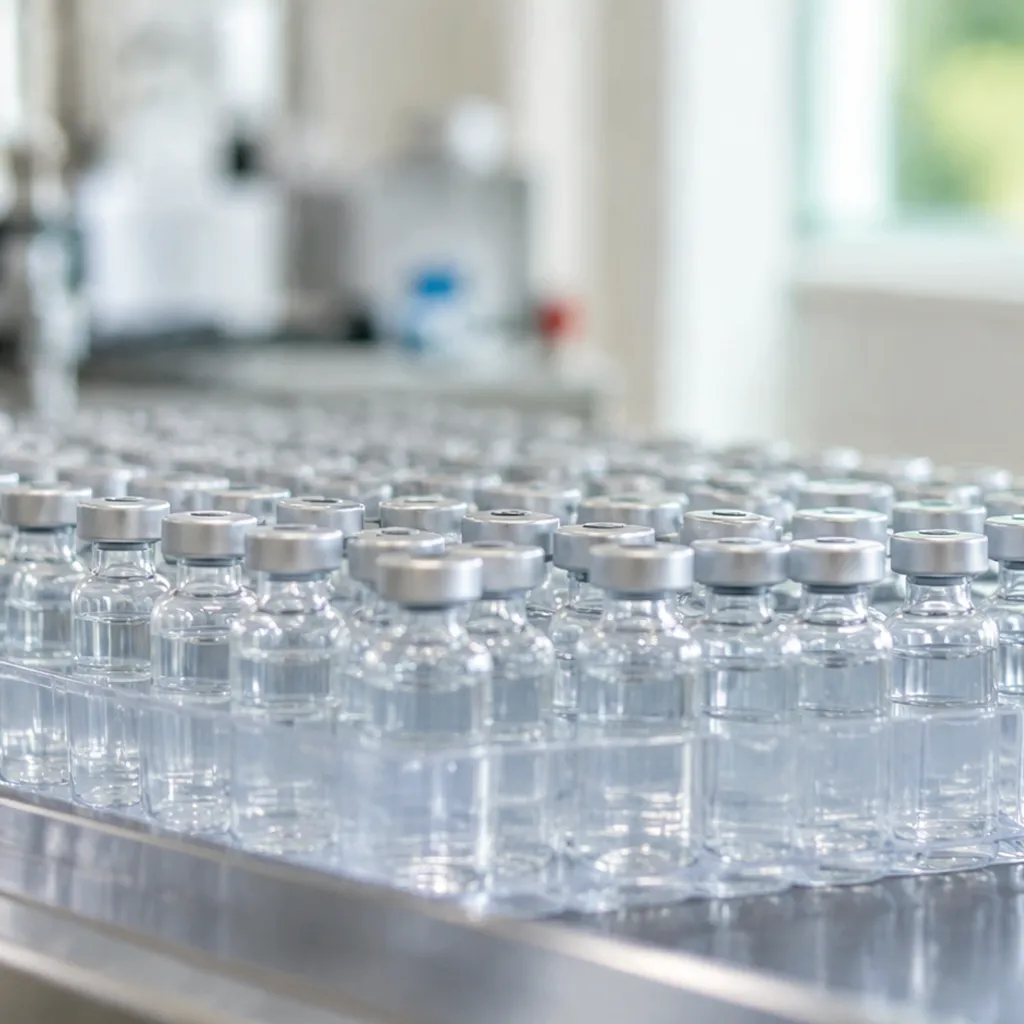
Pharmaceutical Vial Loading Tray & Automated Line Compatibility
Engineered for Seamless Fill-Finish Integration
Automated denesters, robotic pick-and-place arms, and high-speed conveyors rely on exact geometry to prevent costly line stoppages. We hold tight dimensional tolerances up to ±0.02 mm across every injection-molded cavity and outer frame.
- Consistent Dimensional Repeatability: Eliminates feed jams and misalignments on automated filling equipment.
- Cleanroom-Molded Construction: Manufactured under continuous particulate monitoring and strict bioburden management.
- Reduced Line Friction: Smooth, burr-free surfaces protect glass and polymer containers from scuffing or particulate shedding during high-speed transfer.
High-Stability Nesting & Ergonomic Handling
Whether your team loads trays manually in a lab or stages pallets for automated aseptic processing, stability is everything. We design our cleanroom vial handling trays with reinforced structural ribs and secure pocket geometry to keep vials upright and isolated from impact.
- High-Stability Nesting: Precision-engineered stacking features allow loaded and empty trays to nest securely, saving cleanroom floor space and preventing shifting during transit.
- Controlled Containment: Individual pockets prevent glass-on-glass contact, minimizing breakage and cosmetic defects.
- Operator-Friendly Handling: Lightweight, rigid medical-grade plastics make batch transfers safer and easier for technicians than bulky alternatives.
Compatibility Across Vial Formats
Drug pipelines rarely rely on a single container format, so your packaging shouldn't box you in. We offer both standard configurations and custom-tooled injection molded vial trays tailored to your exact container dimensions and filling workflows.
- Standard & Custom Vial Sizes: Engineered to support a wide range of parenteral vial diameters and heights.
- RTU & Nest-and-Tub Integration: Built to interface seamlessly with Ready-to-Use (RTU) vial workflows and automated nest-and-tub handling systems.
- Complete Secondary Packaging Ecosystem: Pairs directly with our durable plastic vial boxes and vial holders for end-to-end batch management from filling to cold-chain storage.
Technical Specifications & Material Options
When sourcing a pharmaceutical vial loading tray, the wrong polymer or loose tolerances can cause line jams, particulate contamination, or broken vials during transit. At Jiahua Packaging Solutions, we manufacture our trays in controlled cleanrooms using medical-grade plastics to keep your automated fill-finish lines running smoothly.
Standard & Custom Technical Specifications Table
| Specification | Standard & Custom Capabilities |
|---|---|
| Dimensional Tolerance | Up to ±0.02 mm precision control via advanced injection molding |
| Production Environment | ISO Class 7 (Class 10,000) & ISO Class 8 (Class 100,000) cleanrooms |
| Approved Materials | Medical-grade PP, PE, COP, COC, PETG, and PS (USP Class VI compliant) |
| Mold Cavitation | Single-cavity prototyping to high-cavitation production molds |
| Standard Sample Lead Time | 7–10 working days |
| Custom Mold Lead Time | 2–4 weeks from finalized CAD design |
| Quality & Compliance | Continuous particulate monitoring, bioburden management, automated cosmetic defect scanning, and full batch traceability |
Medical-Grade Polymer Selection Guide (USP Class VI)
Choosing the right resin depends on your sterilization workflow, chemical compatibility, and cold-chain storage needs. We offer six USP Class VI compliant polymers through our medical-grade material selection service to match your exact formulation requirements:
- PP (Polypropylene): High chemical resistance and structural durability for routine vial handling, storage, and transit.
- PE (Polyethylene): Reliable impact resistance and flexibility for protective containment and cold-chain logistics.
- COP & COC (Cyclic Olefin Polymer / Copolymer): Ultra-high purity, low extractables, and glass-like clarity ideal for sensitive biologics and parenteral drug workflows.
- PETG (Polyethylene Terephthalate Glycol): Tough, transparent, and sterile-ready performance for clear visual inspection on automated lines.
- PS (Polystyrene): Rigid, dimensionally stable trays suited for diagnostics, laboratory staging, and secondary packaging.
Cleanroom Plastics vs. Traditional Stainless Steel Vial Trays
Many facilities are replacing heavy metal trays with single-use or dedicated injection-molded polymer alternatives to eliminate cross-contamination risks and reduce line downtime.
- Particulate & Bioburden Control: Molded in ISO Class 7 and Class 8 cleanrooms with continuous particulate monitoring, eliminating the manual washing and validation bottlenecks of reusable metal trays.
- Tighter Dimensional Repeatability: Injection molding holds tolerances up to ±0.02 mm without the warping, denting, or bending common in metal trays over repeated cycles.
- Reduced Glass-to-Hard-Surface Damage: Smooth, precision-molded polymer pockets provide high-stability nesting that protects glass vials from micro-cracks and breakage during high-speed automated loading.
- Streamlined Batch Traceability: Every production run includes documented dimensional inspection records, bioburden testing, and lot traceability ready for regulatory audits.
Key Pharmaceutical & Life Science Applications
Aseptic Filling & Sterile Processing Lines
High-speed automation leaves zero margin for warped or inconsistent carriers. Our precision injection-molded pharmaceutical vial tray designs integrate smoothly into automated pharmaceutical filling workflows, supporting sterile-ready presentation and RTU vial handling without jamming or glass-on-glass contact.
Repeatable Geometry: Tight ±0.02 mm tolerances ensure smooth feeding and reliable pick-and-place indexing.
Contamination Control: Continuous particulate monitoring and bioburden management safeguard sterile drug integrity.
Sterilization & Lyophilization (Freeze-Drying) Workflows
Thermal cycling and sterilization steps demand polymers that maintain structural stability without shedding particulates. We mold trays using USP Class VI compliant medical-grade resins—including PP, PE, COP, COC, PETG, and PS—selected to match your facility's specific sterilization and cold-chain conditions.
High-Stability Nesting: Keeps vials upright and evenly spaced during loading, unloading, and batch transfers.
Material Versatility: Engineered for chemical compatibility and reliable dimensional stability across demanding processing environments.
Biologics, Cell & Gene Therapy Containment
High-value biologics and sensitive therapies require strict batch accountability and secure physical protection. Our trays pair high-purity polymer construction with full lot traceability, helping biotech teams prevent cross-contamination and protect delicate formulations throughout cold-chain storage and transit.
Clinical Trials, Diagnostics & Laboratory Staging
Smaller batch runs and diagnostic workflows still depend on organized, repeatable sample handling. Alongside our custom trays, we supply durable plastic vial boxes and holders tailored for laboratory and diagnostic staging, simplifying sample organization, batch management, and safe intra-facility transport.
Custom OEM & ODM Pharmaceutical Vial Loading Tray Development
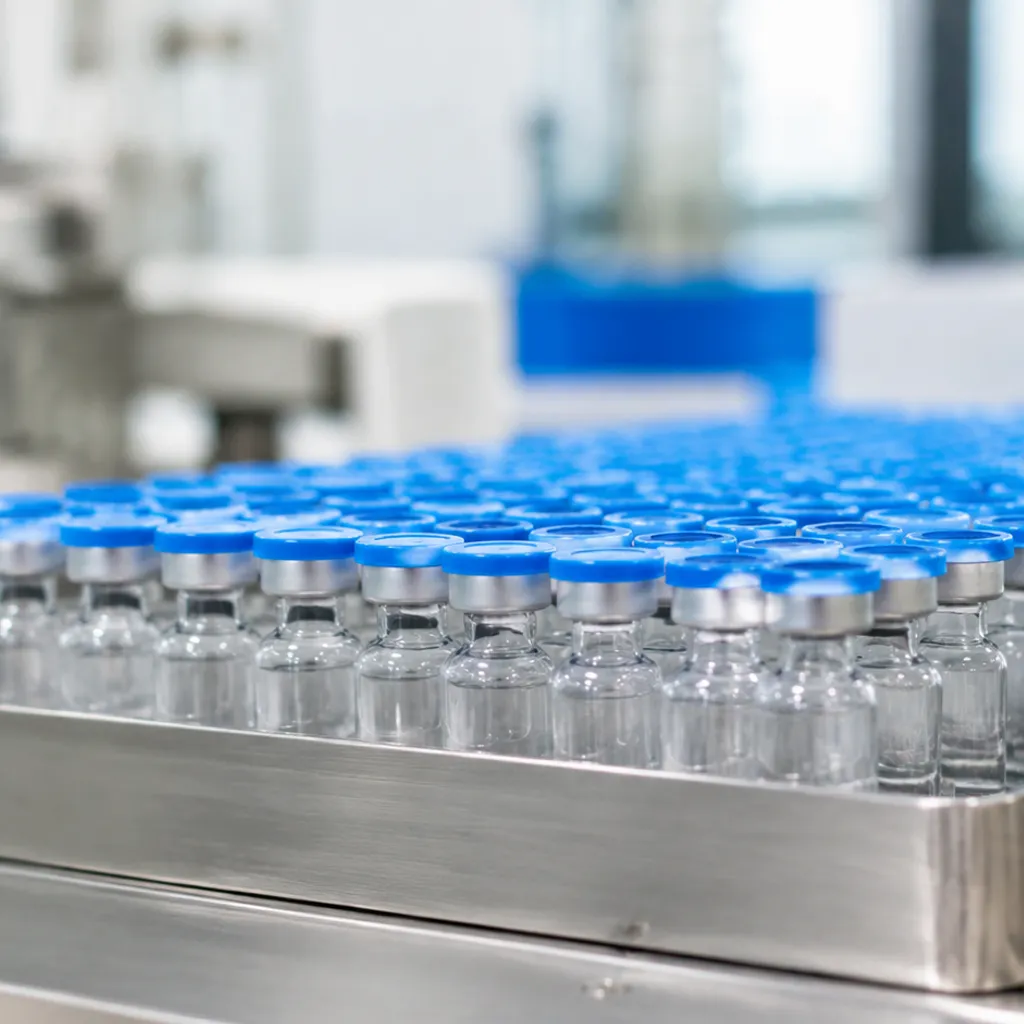
Off-the-shelf trays rarely match every proprietary vial geometry or automated filling line setup. If standard footprints cause jamming, unstable nesting, or line bottlenecks, we build custom pharmaceutical vial loading tray solutions tailored directly to your equipment and container specs. From single-cavity prototypes to high-cavitation production molds, we protect your intellectual property with exclusive tooling ownership agreements and guaranteed lifecycle maintenance.
4-Step Engineering & Tooling Workflow
- Consultation & Material Selection
We review your exact vial dimensions, drawing or sample photos, and filling process requirements. Together, we select the right USP Class VI compliant resin—choosing from medical-grade PP, PE, COP, COC, PETG, or PS—and align production with ISO Class 7 or ISO Class 8 cleanroom standards. - Product Design & In-House Mold Development
Our engineering team translates your specs into 3D CAD models and manufactures precision tooling in-house. Every mold is engineered to hold dimensional tolerances up to ±0.02 mm, ensuring smooth, repeatable performance on high-speed automated lines. - Rapid Prototyping & Validation
You can test fit, nesting stability, and line compatibility before committing to full-scale runs. Standard product samples ship in 7–10 working days, while custom mold prototypes are ready in 2–4 weeks from finalized CAD approval. - Mass Production & Global Technical Support
Once validated, we transition your pharmaceutical vial tray into high-volume cleanroom injection molding with automated cosmetic defect scanning and full batch traceability. Our Rugao, China manufacturing center and Whittier, California customer service office coordinate export documentation and ongoing technical support—starting with quote responses within 12 hours.
- Consultation & Material Selection
If you are planning a custom build or secondary packaging rollout, explore our guide on custom vial packaging design with inserts and compliance to align your tray tooling with complete regulatory documentation.
Quality Assurance, Traceability & Regulatory Documentation
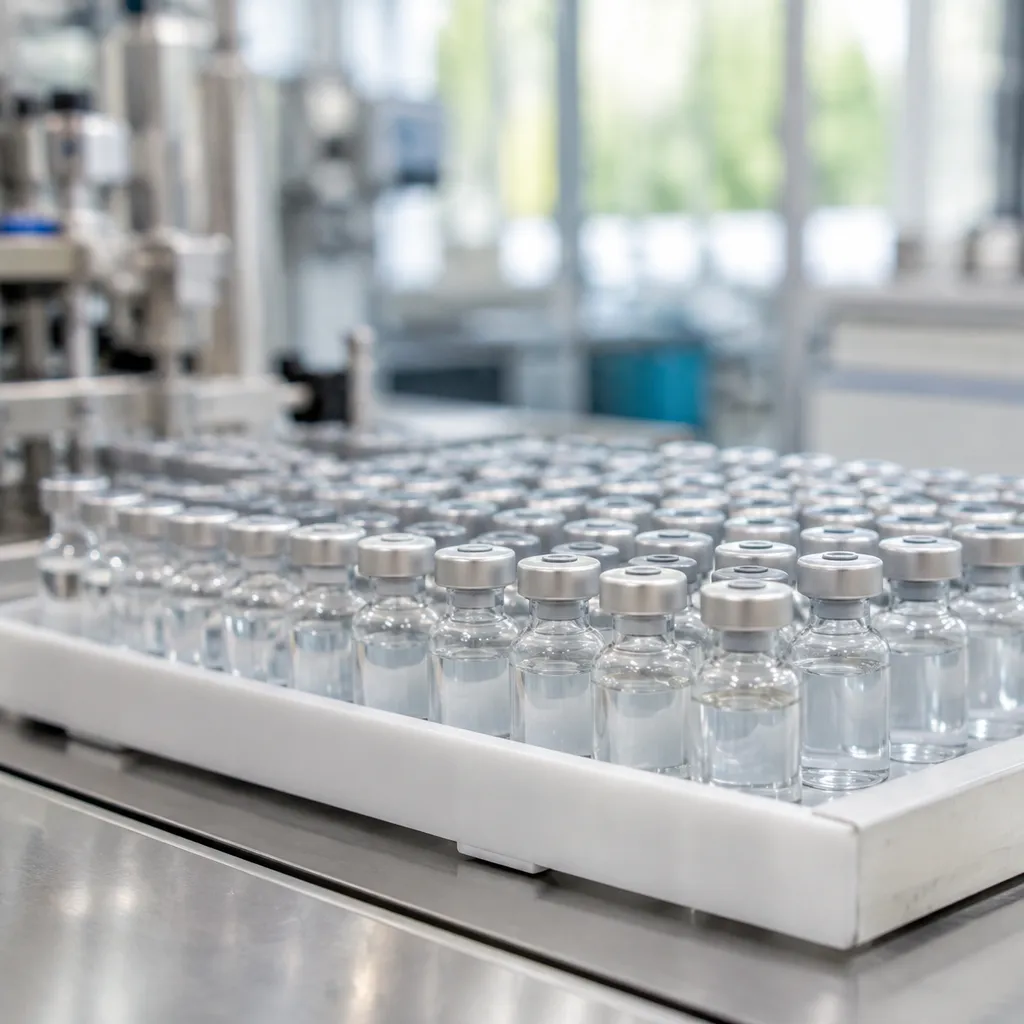
When you are sourcing a pharmaceutical vial loading tray, the biggest worry during an audit isn't just how well the tray holds a vial—it's whether you can prove it is clean, consistent, and traceable. At Jiahua Packaging Solutions, we build quality control directly into every stage of production so you never have to second-guess your supply chain.
Cleanroom Particulate & Bioburden Management
Contamination can ruin an entire sterile batch before filling even starts. We manufacture every pharmaceutical vial tray inside certified ISO Class 7 (Class 10,000) and ISO Class 8 (Class 100,000) cleanrooms with continuous particulate monitoring and strict bioburden management.
To catch issues before trays ever leave our facility, our quality process includes:
Automated cosmetic defect scanning to eliminate flash, warping, or surface flaws that could jam automated filling lines.
Precision dimensional inspections verifying tolerances up to ±0.02 mm for repeatable mechanical handling.
Routine bioburden testing and strict environmental controls to minimize particulate contamination in sterile packaging workflows.
Complete Lot Traceability & Export Compliance
Global life science buyers need clear paper trails for incoming quality checks and regulatory filings. Every production run we ship comes with full batch traceability and comprehensive documentation, backed by our verified quality management and cleanroom certifications.
With every order of cleanroom vial handling trays, we provide:
Raw Material Records: Full resin details confirming USP Class VI compliance (PP, PE, COP, COC, PETG, or PS).
Inspection & Test Reports: Lot-specific dimensional inspection records and bioburden test results.
Traceability & Export Paperwork: Complete production batch tracking, detailed packing lists, and global export documentation for smooth customs clearance between our Rugao manufacturing center and your facility.
Frequently Asked Questions (FAQ)
Can Jiahua customize pharmaceutical vial loading trays to fit our existing automated filling equipment?
Yes. We engineer custom OEM and ODM plastic vial trays for pharma and lab storage tailored to your exact vial dimensions and automated filling line requirements. Our in-house engineering team handles CAD modeling and precision mold development—holding tolerances up to ±0.02 mm—so every pharmaceutical vial loading tray integrates smoothly with your high-speed equipment. We also provide exclusive tooling ownership agreements to protect your intellectual property.
Which polymer material is best for autoclave or cold-chain vial processing?
We manufacture every pharmaceutical vial tray using USP Class VI compliant medical-grade resins, including PP, PE, COP, COC, PETG, and PS. Our packaging systems are engineered to support cold-chain and sterile-ready workflows. Because different sterilization and storage protocols require specific chemical and thermal properties, our technical team helps you select the right polymer based on your exact processing environment and drug compatibility requirements.
What are the lead times for standard vial tray samples versus custom injection molds?
We move fast so you can validate your line without delays:
Standard product samples: Prepared and shipped within 7–10 working days.
Custom mold prototypes: Developed and delivered within 2–4 weeks after CAD design finalization.
What documentation and compliance certificates are provided for regulatory audits?
All trays are produced inside ISO Class 7 (Class 10,000) and ISO Class 8 (Class 100,000) cleanrooms with continuous particulate monitoring and bioburden management. For audits and quality assurance, we supply complete documentation packages, including:
Raw material compliance data (USP Class VI)
Dimensional inspection reports
Bioburden testing records
Full production batch traceability
Packing details and international export documentation
What details are required to receive an accurate quote for custom pharmaceutical vial trays?
To get a quote back to you within 12 hours, share as many of the following details as you have available:
Product type (such as an automated vial transfer tray or sterile RTU vial tray kit)
Vial and tray dimensions, CAD drawings, or sample photos
Intended application and automated line workflow
Preferred medical-grade material requirement
Estimated order quantity, packaging method, and target delivery schedule