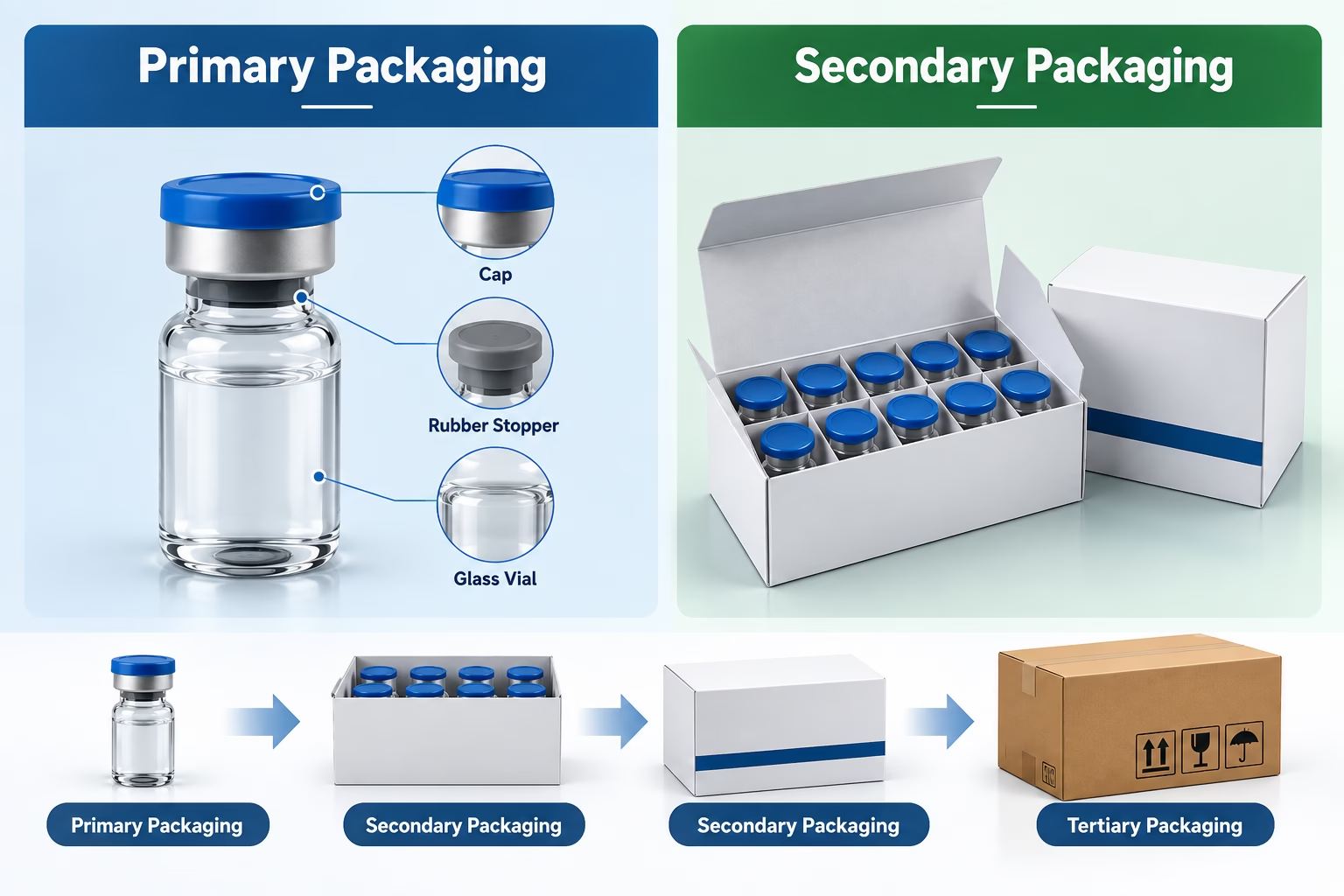
Sourcing genuine aesthetic supplies shouldn't feel like a gamble. Navigating Sculptra vial packaging—from choosing between 2-vial standard boxes and bulk 10-vial cases to confirming the correct 367.5 mg PLLA dosage—is critical for patient safety and clinic profitability.
In this guide, you will learn how to verify product authenticity, track LOT numbers, and implement updated reconstitution protocols with absolute confidence.
Let's dive right in.
Technical Analysis of Sculptra Vial Specifications
Sculptra Vial Anatomy & Specifications
| Component | Technical Specification | Functional Requirement |
|---|---|---|
| Active Formulation | 367.5 mg freeze-dried PLLA microparticle powder | Zero moisture ingress and intact cake structure preservation |
| Vial Container | 5 mL Type I borosilicate glass vial | High clarity, chemical inertness, and shock resistance |
| Closure System | Elastomeric rubber stopper with aluminum flip-off seal | Hermetic isolation with tamper-evident safety indicators |
Primary Handling Vulnerabilities in Global Transit
Lyophilized PLLA formulations face severe mechanical and environmental stresses across international supply chains:
- Glass Micro-Fractures: Hairline fractures caused by lateral impact and glass-to-glass contact during high-speed transport.
- Powder Cake Compaction: Degradation of microparticle powder structure caused by unmitigated ambient vibration and drop impacts.
- Stopper Displacement: Pressure differentials during air freight causing seal compromise and risk of bioburden exposure.
- Thermal Shock: Rapid ambient temperature shifts causing stress along the glass container and seal boundaries.
Storage & Environmental Stability Requirements
Maintaining primary packaging performance requires high-precision secondary packaging engineered for environmental resistance:
- Moisture Barrier Protection: Custom polymer trays prevent humidity exposure to hygroscopic PLLA powder.
- Temperature Stabilization: Thermal-resistant carrier trays buffer against sudden temperature fluctuations within cold-chain transit protocols.
Engineering Standards for Sculptra-Style Vial Packaging
High-Stability Plastic Trays & Inserts
We engineer high-stability thermoformed trays specifically contoured to match the base and shoulder geometry of standard 5 mL freeze-dried PLLA microparticle vials. Eliminating lateral movement and glass-to-glass contact during transit prevents micro-fractures and surface abrasion.
- Precision Cavity Geometry: Snug physical locks hold vials securely along both the lower base and upper neck finish.
- Surface Protection: Non-abrasive polymer surfaces protect vial clarity, batch printings, and delicate crimp seals.
- Powder Integrity Protection: Zero movement design minimizes vibration stress that can compromise lyophilized cake structures.
For custom engineered layouts, our custom vial packaging design with inserts provides structured physical isolation for delicate aesthetic biologicals.
Ready-To-Use (RTU) Nest & Tub Systems
Our RTU nest and tub solutions fit directly into automated filling, lyophilization, and secondary packaging lines. We build these systems to streamline manufacturing while guaranteeing sterile processing compliance.
- Automated Line Compatibility: Tight dimensional control enables seamless pick-and-place robotic handling without jamming.
- Optimized Density: Compact array footprint maximizes cleanroom and cold-chain storage capacity.
- Sterilization Ready: Materials remain structurally intact through ethylene oxide (EtO) and gamma sterilization routines.
Secondary Outer Packaging Integration
We integrate structural outer packaging built to survive international cold-chain shipping and express freight handling. You can review our custom glass vial packaging options for bulk orders to match your distribution volume requirements.
| Box Configuration | Primary Target Application | Key Structural Feature |
|---|---|---|
| 2-Vial Retail Box | Direct aesthetic clinic supply | Shock-absorbing fold flaps & tamper-evident seals |
| 10-Vial Bulk Case | Clinical distributor & pharmacy supply | High-density protective tray inserts & corrugated barriers |
- Drop & Vibration Dampening: Engineered structures pass ISTA transport simulation testing to absorb drop forces.
- Thermal Isolation: Outer boxes support thermal insulation layers required for cold-chain storage and transit.
Materials, Cleanroom Standards, and Regulatory Compliance for Sculptra Vial Packaging
USP Class VI Polymer Selection
We utilize medical-grade resins engineered for high structural stability and physical protection:
- Polypropylene (PP): High-impact strength and flexibility, ideal for shock-absorbing protective trays.
- Cyclic Olefin Copolymer (COC/COP): Superior glass-like clarity combined with exceptional moisture barrier properties.
- PETG & Polystyrene (PS): Rigid structural integrity, preventing lateral movement during transport.
Controlled Cleanroom Manufacturing
To control bioburden and particulate levels, our manufacturing and thermoforming occur inside certified environments:
- ISO Class 7 (Class 10,000): For primary tray inserts and direct-contact sterile dermal filler packaging.
- ISO Class 8 (Class 100,000): For secondary packaging, outer casing, and automated stacking.
Every production run includes continuous particulate monitoring and strict environmental protocols, similar to processing requirements for ampoule packaging materials for glass, plastic, and sterility.
Precision Injection Molding Tolerances
| Parameter | Specification | Functional Benefit |
|---|---|---|
| Dimensional Tolerance | Up to ±0.02 mm | Eliminates tray warping and fitting variances |
| Automated Compatibility | Nest & Tub System ready | Prevents jams on high-speed filling and labeling lines |
| Cavity Fit | Custom contour mapping | Perfectly matches exact sculptra vial size and dimensions |
Maintaining these precision injection molding tolerances ensures seamless integration into automated downstream systems. Learn how our engineering aligns with automated machinery in our vial packaging process guide for pharmaceutical lines.
Mitigating Supply Chain Risks: Authenticity & Protection
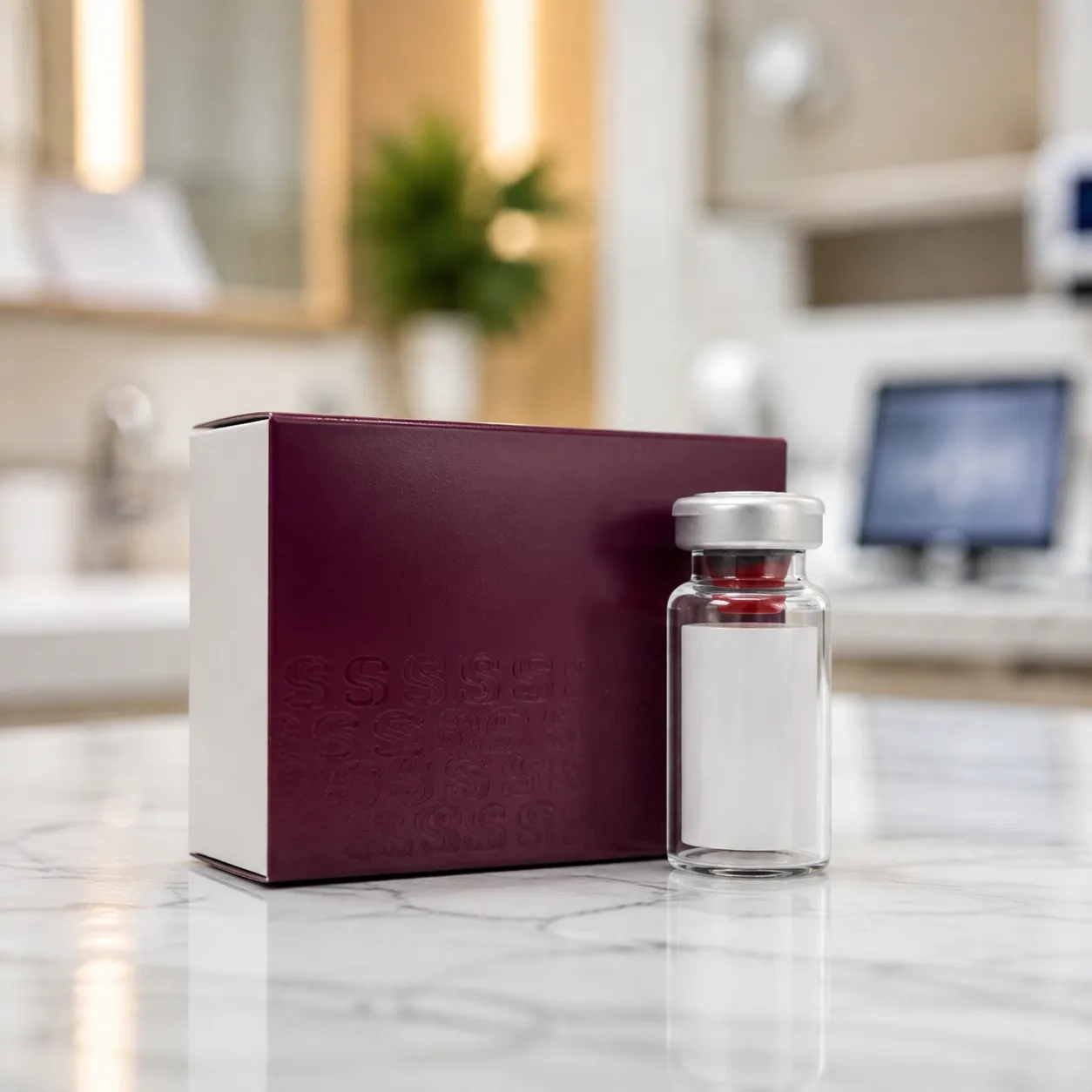
Anti-Counterfeiting & Physical Locks
To prevent illicit diversion and brand duplication, we integrate physical security mechanisms directly into secondary packaging:
Custom Molded Logos: Tooling inserts engrave distinct brand logos directly onto medical-grade plastic vial trays.
Tamper-Evident Structural Locks: Snap-closure mechanisms give clinicians immediate visual verification of uncompromised sterile packaging.
Embedded Batch Tracking: Integrated cavity positioning supports unique serialization tags to block grey-market diversion.
Transit & Drop Shock Protection
Fragile lyophilized powder packaging solutions require dynamic shock absorption during cold-chain shipping. Pairing custom tray geometry with high-impact custom 10ml vial box packaging with inserts isolates the vial base and closure system from structural stress.
| Protocol Standard | Environmental Stress | Engineered Protection Mechanism |
|---|---|---|
| ISTA 3A / 2A | Express freight & drop shocks | Geometric load-bearing ribs absorb drop impact energy |
| ASTM D4169 | Multi-axis transport vibration | Rigid anti-vibration packaging trays eliminate glass contact |
| Cold-Chain Cycling | Freeze-thaw thermal shifts | USP Class VI compliant polymers prevent low-temp brittleness |
LOT Traceability & Scanning Alignment
Our packaging layouts streamline warehouse inventory management and speed up clinical intake through automated sculptra packaging barcode verification:
Optically Clear Viewports: Transparent polymer lids allow barcode scanners to read 2D DataMatrix codes without unsealing the tray.
Oriented Pocket Geometry: Fixed vial placement keeps serial numbers and LOT codes facing upward for rapid camera inspection.
Batch Traceability Alignment: Layout designs align perfectly with automated sorting lines, delivering zero-friction scanning compliance.
Custom OEM/ODM Packaging Process for Aesthetics & Pharma
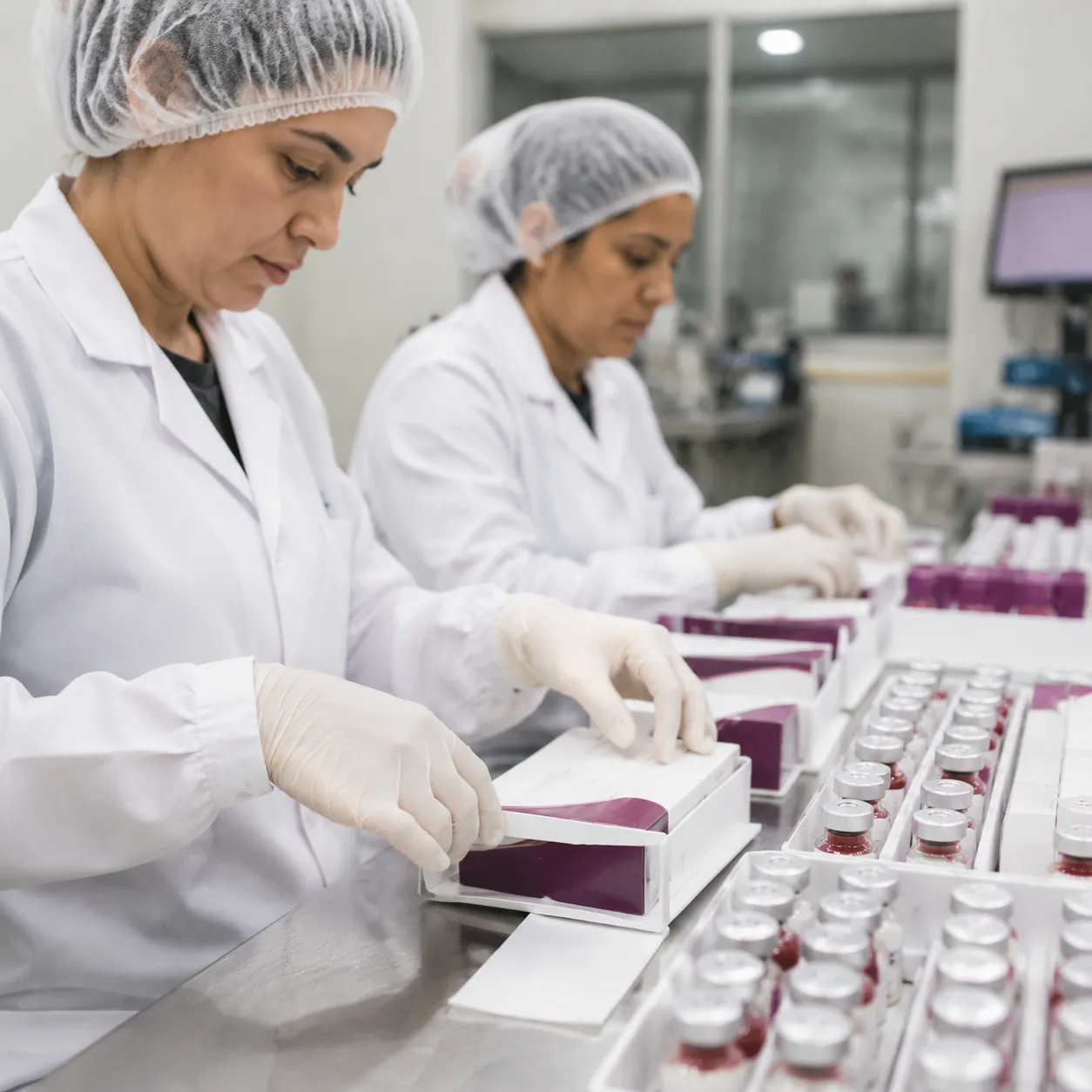
We engineer tailored Sculptra vial packaging solutions designed to meet strict pharmaceutical and aesthetic container specifications. Our streamlined OEM/ODM process ensures exact fitment, zero automated filling line downtime, and rapid market readiness.
| Phase | Core Focus | Key Deliverables & Timelines |
|---|---|---|
| Phase 1: Consultation & Analysis | Dimensional mapping & line integration | • Target vial and closure profiling • Packaging line automation specs • USP Class VI polymer selection |
| Phase 2: CAD Modeling & Tooling | Precision engineering & mold build | • 3D CAD modeling of custom cavity geometry • Single to high-cavitation tooling molds • Dimensional tolerances within ±0.02 mm |
| Phase 3: Prototyping & Sampling | Physical validation & structural testing | • ISO Class 7/8 cleanroom prototype sampling • Physical sample delivery in 7–10 days • Complete client validation in 2–4 weeks |
| Phase 4: Mass Production & Delivery | Scaled manufacturing & logistics | • High-speed automated injection molding • Continuous bioburden & particulate control • Complete LOT traceability & global shipping |
Step-by-Step OEM/ODM Execution
- Phase 1: Consultation & Requirement Analysis
We perform detailed dimensional mapping of your target Poly-L-lactic acid injectable vials, rubber stoppers, and flip-off seals. By evaluating your existing packing machinery, we design trays that prevent line jams and protect lyophilized powder integrity. - Phase 2: CAD Modeling & Precision Tooling
Our design team crafts custom tray geometry matching exact vial shoulder and base dimensions. Through our specialized proprietary mold development, we build high-cavitation tooling molds engineered for high-volume production and long-term durability. - Phase 3: Rapid Prototyping & Sampling
We accelerate your product launch through our fast sampling services, delivering cleanroom-molded prototype trays in 7–10 days. Complete structural validation—including vibration and drop-shock transport simulations—is finalized within 2–4 weeks. - Phase 4: Cleanroom Mass Production & Delivery
Mass manufacturing occurs inside certified ISO Class 7 and ISO Class 8 cleanrooms. Every production batch undergoes strict quality inspection, bioburden management, and complete batch traceability alignment before cold-chain dispatch.
- Phase 1: Consultation & Requirement Analysis
Sculptra Vial Packaging: Frequently Asked Questions
How does custom plastic secondary packaging protect lyophilized PLLA powder during transit?
Lyophilized poly-L-lactic acid (PLLA) microparticle cakes are highly sensitive to vibration, mechanical shock, and moisture exposure. Custom engineered packaging—such as contoured thermoformed trays and rigid inserts—locks each vial in place at the base and shoulder. This prevents glass-to-glass impact, absorbs transport vibration, and maintains seal integrity. Paired with high-durability outer packaging like custom window vial boxes with inserts, our solutions safeguard fragile PLLA powder cakes during global air freight and cold-chain distribution.
What plastic materials offer the best chemical resistance and structural rigidity for aesthetic vial trays?
Material selection directly impacts tray rigidity, sterilization performance, and physical protection:
- PETG (Polyethylene Terephthalate Glycol): Offers high structural clarity, superior impact strength, and compatibility with gamma/EtO sterilization. Our custom PETG medical trays maintain precise dimensional retention under physical stress.
- PP (Polypropylene): Provides high toughness, dynamic fatigue resistance, and excellent chemical stability during thermal cycles.
- COC/COP (Cyclic Olefin Copolymer): Delivers glass-like optical transparency combined with exceptionally low moisture vapor transmission rates (MVTR) for ultra-sensitive formulations.
Can Jiahua Package custom-engineer RTU nest and tub systems for existing automated filling lines?
Yes. We design and manufacture Ready-To-Use (RTU) nest and tub systems tailored to your specific automated fill-finish machinery (including Groninger, Bausch+Ströbel, and Syntegon). By holding tight manufacturing tolerances down to ±0.02 mm, our RTU nests prevent robotic arm misalignment, minimize friction during denesting, and ensure zero automated line stoppages.
What quality documentation and compliance certificates are supplied with cleanroom-molded packaging batches?
Every production run manufactured inside our ISO Class 7 and Class 8 cleanroom environments ships with full regulatory compliance documentation:
- Certificate of Analysis (CoA): Validating physical dimensions, visual clarity, and critical tolerances.
- USP Class VI & ISO 10993 Compliance: Confirming raw material biocompatibility and safety.
- Bioburden & Particulate Inspection Reports: Certifying adherence to stringent pharmaceutical cleanliness standards.
- Full LOT Traceability Records: Mapping raw material heat numbers, mold cavity identifiers, and processing parameters to your batch numbers.