Formula details
Product Details
Overview
Secondary Packaging for Syringes
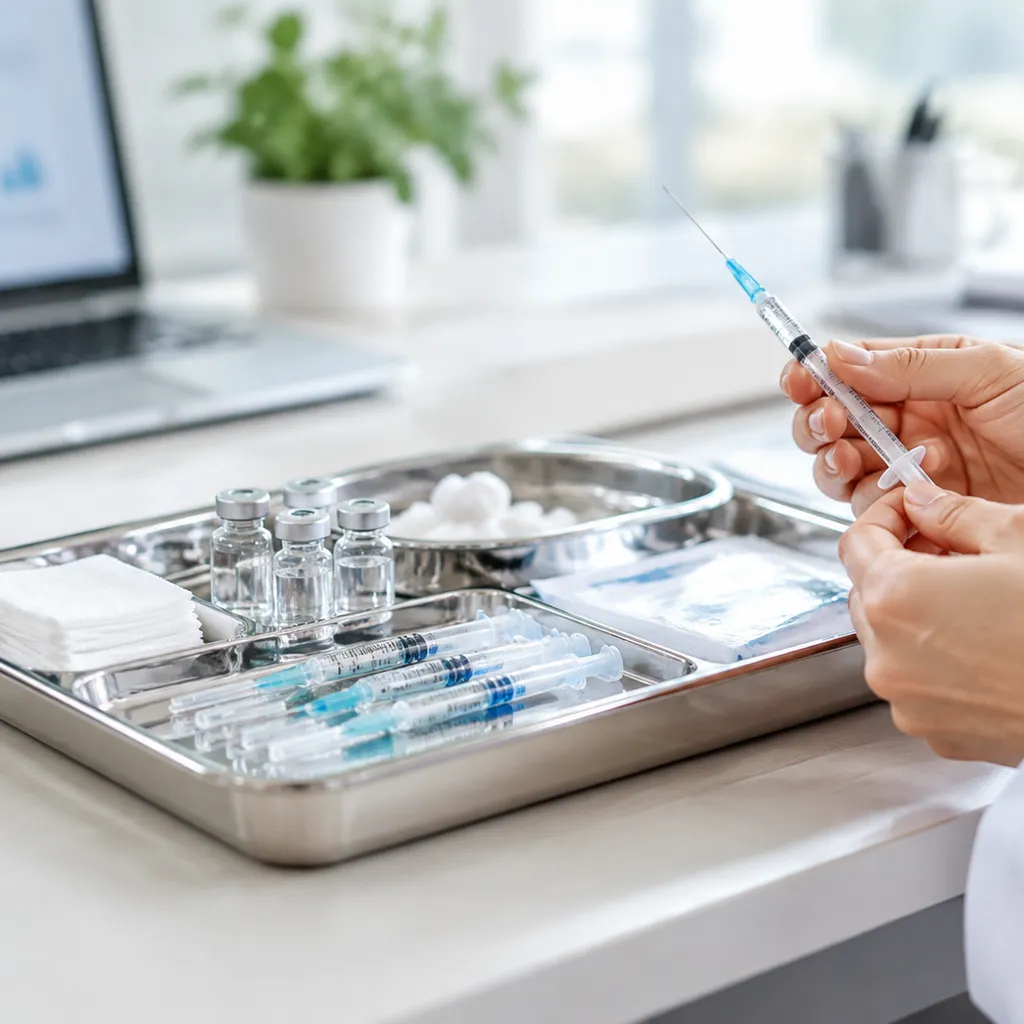
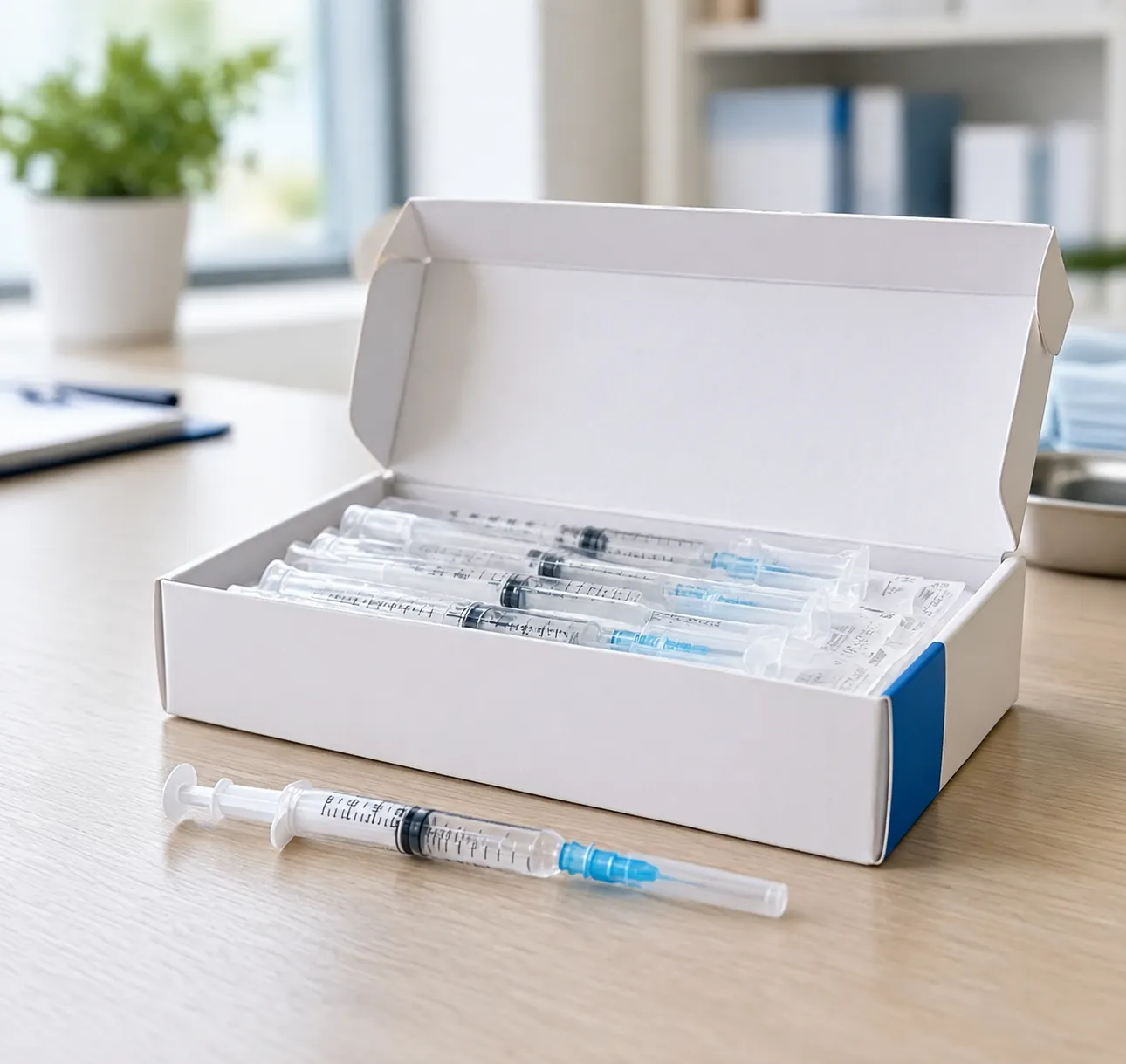
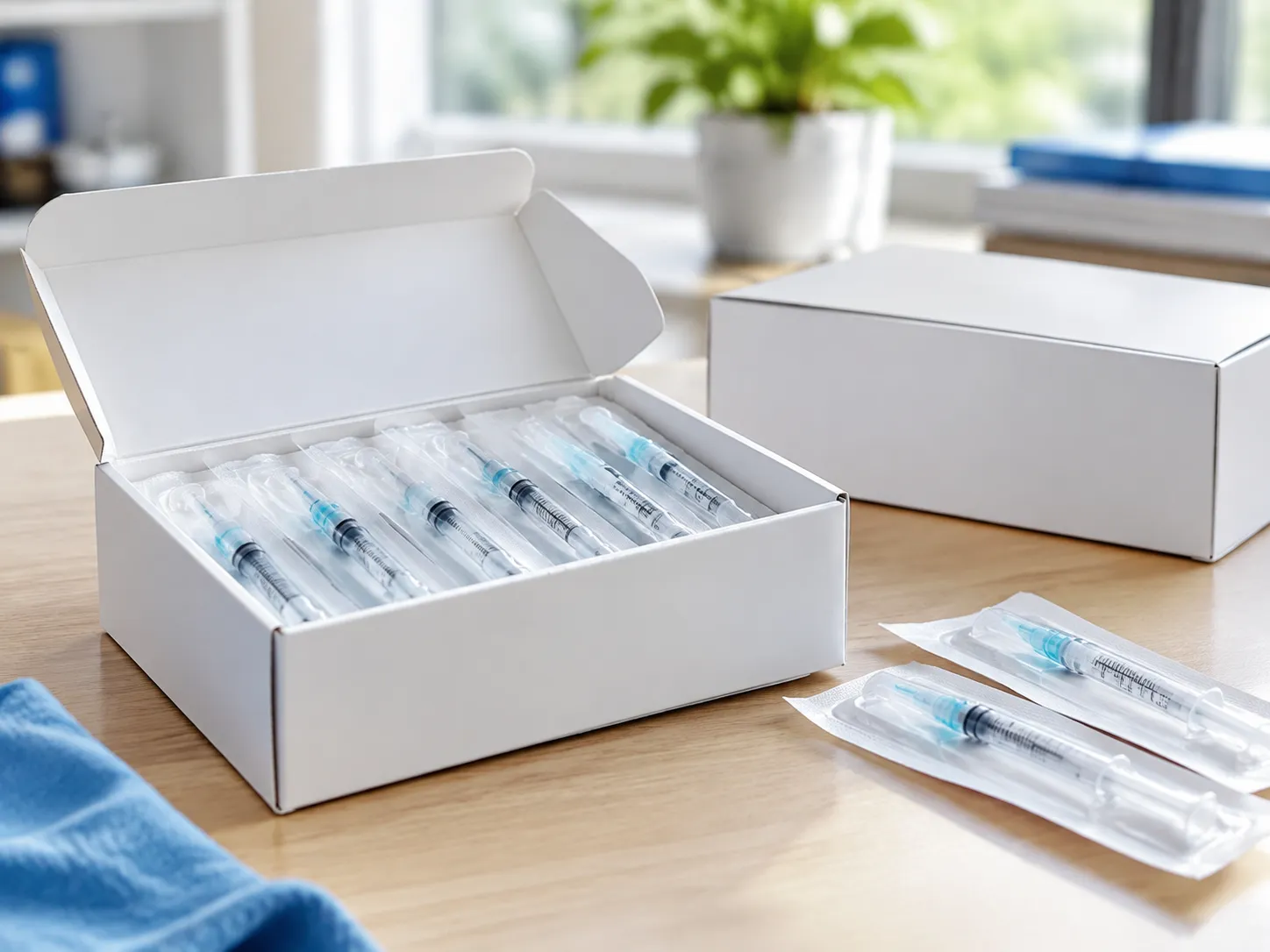
Secondary packaging for syringes serves as the critical defense layer in parenteral drug delivery. While the primary container holds the drug product, our secondary packaging systems safeguard prefilled glass and polymer syringes across downstream packaging, automated handling, sterilization, transit, and clinical presentation.
Critical Roles in Parenteral Drug Delivery
High-value biologics, sensitive vaccines, and viscous parenterals require total structural and sterile integrity from the manufacturing suite to the clinic. We design syringe packaging solutions that solve specific mechanical and environmental failure points:
- Mitigating Transit Shock and Barrel Breakage: Glass syringe barrels are vulnerable to vibration, dropping, and hydrostatic shock during transportation. Our thermoformed cavities utilize engineered clearance and structural ribs to distribute impact forces away from fragile glass walls.
- Preventing Accidental Plunger Travel: Fluctuations in atmospheric pressure during air freight and mechanical vibrations can induce plunger movement. We incorporate integrated plunger-lock channels and axial stops that prevent fluid leakage and maintain primary seal positioning.
- Isolating Needle Shields and Tip Caps: Displacement of Rigid Needle Shields (RNS) or tip caps leads to needle exposure and loss of sterility. Our cavity geometries securely grip the syringe shoulder, leaving the needle shield suspended in a non-contact isolation pocket.
- Preserving the Sterile Barrier: Manufactured in ISO Class 7 and Class 8 cleanrooms, our packaging protects the primary container from microbial contamination throughout the product's validated shelf life.
Standard Syringe Secondary Packaging Formats
We configure custom and standard packaging formats compatible with automated assembly lines, high-speed thermoform-fill-seal (TFS) machines, and manual packaging operations:
| Packaging Format | Typical Substrates | Engineering Features | Typical Use Case |
|---|---|---|---|
| Rigid Blister Trays | Medical-grade PETG, APET | Snap-fit retention clips, plunger stops, rigid planar sealing flange | Prefilled glass syringes, staked-needle PFS, autoinjector assemblies |
| Flexible Forming Webs | Multi-layer co-extruded PA/PE, PP/PE | High puncture resistance, deep-draw capability, vacuum sealability | High-volume disposable syringes, dilution kits, standard luer-lock barrels |
| Nested Tubs & Trays | High-impact thermoformed polymers | High-density matrix alignment, automated pick-and-place compatibility | Fill-finish transport, bulk device assembly, cleanroom transfer |
Materials for Syringe Packaging Trays and Lidding
We engineer our secondary packaging for syringes using medical-grade raw materials certified for biocompatibility, chemical inertness, and full compliance with ISO 11607 standards. Much like our specialized ampoule packaging materials, our rigid thermoforming films protect delicate glass-to-metal and plastic assemblies against severe shipping vibration.
Forming Web and Tray Materials
- Medical-Grade PETG: Our top-tier choice for rigid prefilled syringe blister trays. PETG offers exceptional structural clarity, superior impact strength at room and sub-zero temperatures, and high chemical resistance. It seals cleanly over a wide operating temperature window and maintains structural toughness without embrittlement under Gamma or E-beam radiation.
- Cost-Effective APET: An economical, highly transparent alternative for standard Ethylene Oxide (EtO) sterilization cycles. Medical grade APET packaging delivers dependable dimensional stability and high rigidity, making it ideal for high-volume disposable syringe kits and standard clinical formats.
- Polypropylene (PP) and Co-Extrusions: Formulated for syringe assemblies requiring high-heat steam autoclaving. We also manufacture multi-layer co-extruded films (such as PA/PE and PP/PE) for flexible bottom webs that demand high puncture resistance and flexible tear prevention around rigid luer-lock fittings.
Sterile Lidding Substrates
- DuPont™ Tyvek® (1073B, 1059B, 2FS): High-density polyethylene non-woven lidding for maximum tear resistance and rapid gas transfer.
- Tyvek® 1073B: Maximum puncture and burst resistance, ideal for heavy staked-needle glass syringes.
- Tyvek® 1059B: Balanced strength and porosity, standard for automated prefilled syringe packaging.
- Tyvek® 2FS: Light-duty applications and small 1 mL to 3 mL plastic syringes.
- Medical Dialyzing Paper: Breathable, medical-grade paper coated with heat-seal lacquer for cost-effective EtO-sterilized packaging lines.
- High-Barrier Foil Laminates: Multi-layer composite foil films designed to block moisture vapor, oxygen, and UV light for light-sensitive injectable drugs and moisture-reactive drug-device combinations.
| Substrate | Material Type | Sterilization Compatibility | Primary Performance Feature |
|---|---|---|---|
| PETG | Amorphous Copolyester | EtO, Gamma, E-Beam | Impact resistance, zero embrittlement |
| APET | Polyester (Rigid) | EtO, Gamma | High clarity, cost-efficient rigidity |
| Polypropylene (PP) | Polyolefin | Steam, Autoclave, EtO | High heat tolerance, chemical inertness |
| Tyvek® 1073B / 1059B | HDPE Flash-Spun Web | EtO, Gamma, E-Beam | Fiber-free clean peel, rapid gas transmission |
| Composite Foil | Multi-Layer Foil/PE | Gamma, E-Beam | Absolute light, moisture, and gas barrier |
Every tray and lid combination is custom-matched with medical heat-seal coatings to ensure consistent, fiber-free aseptic opening without particulate shedding.
Mechanical Design and Syringe Immobilization
We engineer our rigid syringe packaging trays with custom tooling geometries that isolate critical zones, withstand rough logistics, and ensure intuitive handling in surgical suites.
Precision Snap-Fit Clips and Barrel Undercuts
We integrate custom thermoformed undercuts and snap-fit ribs directly into the tray cavities. These clips exert calibrated retention force across the syringe barrel, holding both glass and polymer barrels firmly in place.
Zero Rattle: Eliminates radial and vertical motion during high-vibration distribution.
Controlled Extraction: Calibrated release force allows clinicians to remove the device smoothly without excessive force or sudden recoil.
Surface Protection: Contoured retention points avoid point-loading stress, preventing scratches on coated glass or printed graduation markings.
Plunger Lock Channels for Axial Travel Prevention
Accidental depression of the plunger can discharge expensive drug product, while backward displacement compromises the sterile fluid path. We design dedicated syringe plunger lock blister channels that capture the plunger flange securely:
Flange Restraint: Recessed slots grip the thumb rest on both sides, blocking any forward movement under vibration or air-pressure drops.
Back-Out Prevention: Longitudinal stops prevent the stopper from backing out of the sterile barrel zone during temperature swings and cargo elevation changes.
Non-Contact Isolation Pockets for Needle Shields
Rigid needle shields (RNS) and Luer-lock tip caps must never bottom out against the thermoformed wall. Our protective packaging for syringes utilizes floating, non-contact suspension cavities:
Tip Clearance: The needle area hangs suspended in an open pocket, completely isolating it from direct impact.
Cap Retention: Prevents radial torque or compression that could loosen tip caps or bend staked needles during drop tests.
Clean Fiber-Free Peel Systems
Particulate matter in an operating room poses direct patient risks. We design tray sealing flanges with ultra-flat, uniform surfaces to support aseptic peelable syringe packaging:
Particle-Free Opening: Flange widths and heat-seal transitions ensure Tyvek® or medical paper lidding peels cleanly without fiber tear.
Aseptic Presentation: Visual seal indicators allow operating staff to inspect seal integrity immediately prior to peeling the sterile barrier.
Ergonomic Finger Indents for Clinical Safety
To guarantee rapid, safe extraction in high-stress clinical environments, we incorporate functional ergonomic features:
Push-and-Lift Geometry: Offset finger wells at the syringe flange permit one-handed, sterile retrieval.
Glove-Friendly Access: Generous clearance accommodates double-gloved hands, eliminating the risk of dropping devices or tearing surgical gloves during aseptic presentation.
Sterilization Compatibility and Barrier Testing
Ethylene Oxide (EtO) Gas Cycle Tolerance and Rapid Degassing
Ethylene Oxide demands rapid gas ingress and thorough aeration to remove toxic residuals. We pair thermoformed rigid trays with breathable medical Tyvek® or medical dialyzing paper lidding. This setup provides:
High Porosity: Ensures rapid cycle times and complete gas penetration into complex syringe cavities.
Low Residual Retention: Speeds up degassing phases, preventing prolonged aeration holds.
Dimensional Stability: Flange designs resist pressure differentials during EtO vacuum and pressure phases, eliminating seal creep.
Gamma and E-Beam Radiation Compatibility
For prefilled syringes requiring radiation sterilization, standard plastics often degrade or discolor. We utilize radiation-stabilized medical-grade PETG and specialized APET formulations that offer:
Anti-Yellowing Chemistry: Retains clear optical transparency after Gamma or Electron Beam (E-beam) exposure up to standard radiation dosage limits.
Impact Retention: Avoids polymer embrittlement, ensuring snap-fit clips and barrel-locking ribs do not crack under mechanical transit stress post-sterilization.
Steam and Autoclave Options
For high-temperature terminal processing, standard polyesters warp. We thermoform syringe trays and flexible bottom webs using high-heat polypropylene (PP) formulations paired with compatible autoclavable lidding. These materials preserve pocket geometry, cavity depth, and seal strength through high-pressure saturated steam cycles.
Sterilization and Material Compatibility Matrix
| Sterilization Method | Recommended Tray Substrate | Lidding Substrate | Key Performance Benefit |
|---|---|---|---|
| Ethylene Oxide (EtO) | Medical PETG, APET | DuPont™ Tyvek® (1073B / 1059B / 2FS) | Fast degassing, no seal burst during pressure changes |
| Gamma / E-Beam | Radiation-grade PETG | DuPont™ Tyvek® | Zero embrittlement, optical clarity, no flaking |
| Steam / Autoclave | Medical PP, PA/PE films | Autoclavable paper / porous web | High heat resistance, maintains pocket snap-fit |
Seal Integrity and Transit Simulation Testing
A sterile barrier is only as reliable as its physical seal and structural durability. We validate our syringe secondary packaging solutions through rigorous laboratory test protocols:
- ASTM F88 (Seal Strength Testing): Quantifies seal peel force to ensure the package withstands pressure drops while providing a clean, fiber-free peel during aseptic presentation.
- ASTM F1929 (Dye Penetration Testing): Validates the continuous perimeter seal to verify zero channel leaks, micro-voids, or porous defects.
- ASTM D4169 (Transit Simulation): Subjected to sequential distribution stresses—including random vibration, drop shock, dynamic compression, and low-pressure altitude simulation—to confirm syringe barrels and plunger rods remain locked without puncture or barrier compromise.
- Microbial Barrier Testing: Confirms the complete package prevents aerosolized microbial ingress across the product's entire shelf life.
For combination drug delivery kits that package syringes alongside liquid medication containers, our testing protocols apply the same rigorous barrier controls utilized in custom vial box with inserts to ensure complete assembly protection from cleanroom sealing through clinical administration.
Syringe Formats and Custom Blister Cavity Options
Packaging Configurations for Standard 1 mL to 50 mL Luer Syringes
We design rigid and flexible blisters for standard Luer-lock and Luer-slip syringes across common volumetric sizes:
Small-Volume (1 mL – 3 mL): Precision micro-cavities with tight side-retention ribs that keep thin barrels stabilized during high-speed automated loading.
Mid-Volume (5 mL – 10 mL): Deep-draw pockets featuring reinforced sidewalls to resist crushing forces in clinical storage.
Large-Volume (20 mL – 50 mL+): Heavy-gauge trays engineered with wide flange areas to maintain rigid seal margins under the weight of large liquid volumes.
Custom Cavities for Staked-Needle Prefilled Syringes (PFS)
Staked-needle prefilled syringes require targeted protection at the needle shield. Our prefilled syringe blister trays feature non-contact tip pockets that suspend the needle cap in free space. This layout absorbs external impacts without transmitting force to the glass barrel shoulder or dislodging the rigid needle shield (RNS).
Protective Blister Designs for Safety Syringes and Autoinjectors
Active and passive safety syringes, as well as spring-loaded autoinjector assemblies, demand specialized cavity geometry. We incorporate:
Clearance Channels: Tailored relief spaces for external springs, needle retraction collars, and trigger guards to prevent pre-activation during shipment.
Oriented Loading Profiles: Asymmetric blister pockets that guide automated vision systems and prevent improper orientation during packaging line runs.
| Syringe System | Volume / Format | Key Cavity Engineering Feature | Packaging Application |
|---|---|---|---|
| Standard Luer Lock | 1 mL – 50 mL | Ribbed barrel clips, integrated flange locks | General hospital and clinical procedural kits |
| Staked-Needle PFS | 0.5 mL – 2.25 mL | Suspended needle pocket, glass barrel support | Biologics, vaccines, and antithrombotic therapies |
| Safety Syringes | 1 mL – 3 mL | Shield-locking recesses, trigger relief zones | Point-of-care emergency and self-injection systems |
| Combination Kits | Multi-component | Modular cavities for syringes, adapters, and vials | Reconstitution systems and co-packaged therapies |
Multi-Cavity Combination Trays for Syringes, Vials, and Transfer Devices
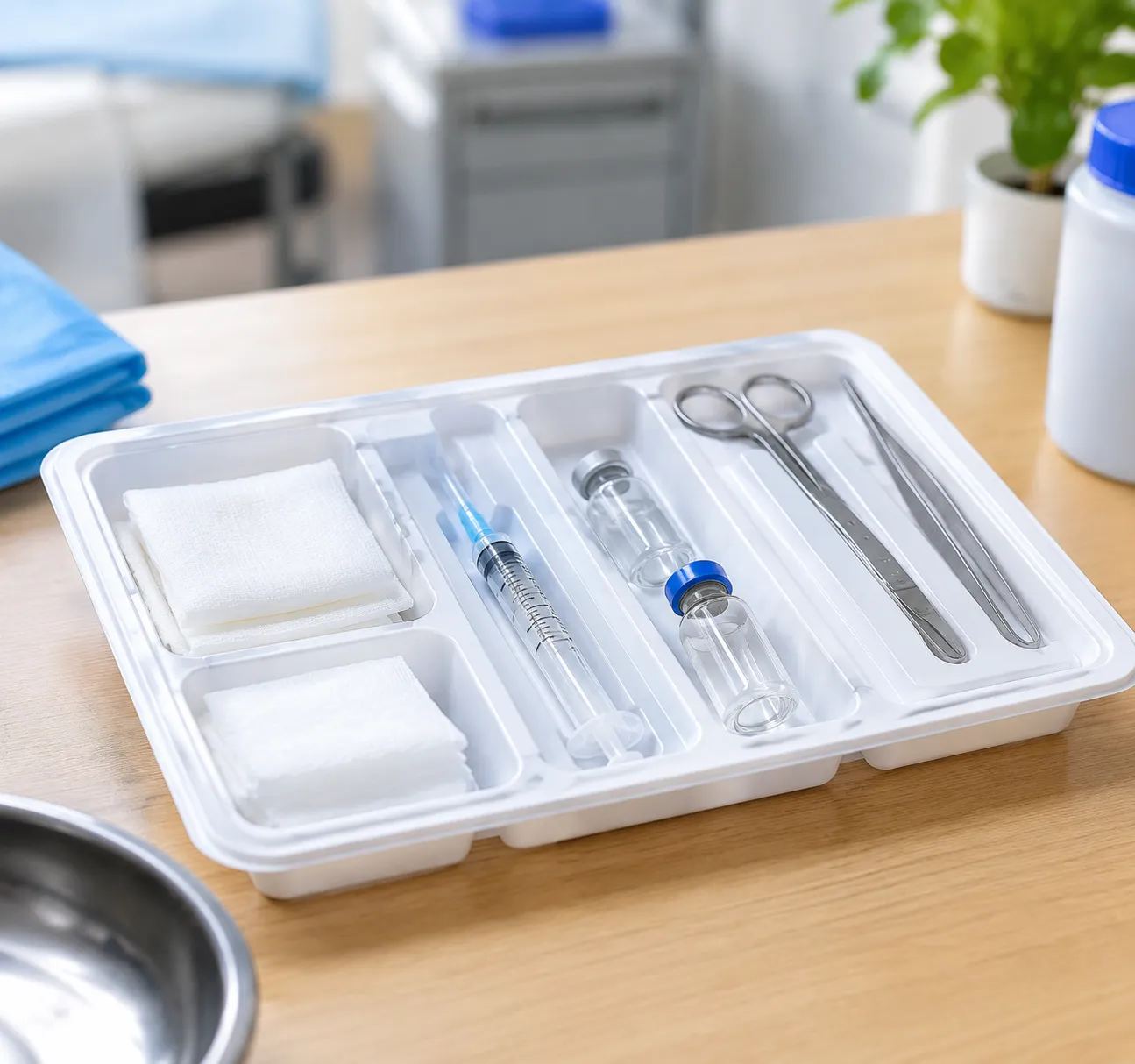
For lyophilized drugs and reconstitution therapies, we build multi-cavity procedural trays that hold a prefilled diluent syringe alongside glass drug vials, vial adapters, and transfer needles. When developing combination kits, our designs integrate seamlessly with secondary packaging for vials to ensure each component remains isolated and secure within a single sterile barrier.
Single Unit-Dose Blister Packaging vs. Multi-Pack Hospital Trays
- Unit-Dose Blister Packaging: Individual peelable blisters designed for operating rooms and emergency care. Each unit maintains an independent sterile barrier up to the exact moment of administration, complete with thumb indents for aseptic opening.
- Multi-Pack Procedural Trays: High-density, multi-cavity trays designed for high-volume clinical settings. These trays organize 5, 10, or 25 units per nested package, maximizing packing density and reducing overall secondary packaging waste.
Cleanroom Thermoforming and Quality Assurance

Controlled Cleanroom Environments
Our thermoforming facilities operate under certified ISO Class 7 (Class 10,000) and ISO Class 8 (Class 100,000) cleanroom conditions.
- Particulate Control: Continuous HEPA filtration prevents airborne contaminants from adhering to thermoformed cavities during the molding and trimming stages.
- Aseptic Alignment: Our production directly supports automated fill-finish lines and works alongside nested tub and tray aseptic processing solutions to ensure end-to-end device safety.
- Hygiene Protocols: Automated sheet-feeding, inline web cleaning, and enclosed packing systems limit human handling prior to terminal sealing.
Quality Management and Regulatory Compliance
We manage every step of production through an ISO 13485:2016 certified quality management system. Our manufacturing protocols align directly with ISO 11607 requirements for terminally sterilized medical packaging.
| Parameter | Standard / Specification | Operational Scope |
|---|---|---|
| Manufacturing Environment | ISO 14644-1 | ISO Class 7 and ISO Class 8 cleanrooms |
| Quality Management | ISO 13485:2016 | Complete medical device QMS integration |
| Barrier Integrity | ISO 11607-1 / ASTM F1929 | Dye penetration, bubble emission, microbial barrier |
| Mechanical Strength | ASTM F88 | Validated seal peel strength and tensile integrity |
| Tooling Turnaround | CNC Precision Machining | 48-hour rapid prototyping; dedicated aluminum tools |
Rapid Tooling and In-House Engineering
To cut your development lead times, our engineering team handles all mold development and prototyping in-house.
- 48-Hour CNC Prototyping: We transform 3D CAD data into physical sample cavities in as little as 48 hours for immediate dimensional and fit evaluations.
- Production Aluminum Tooling: For commercial volumes, we machine dedicated multi-cavity aluminum molds featuring integrated cooling channels to guarantee tight tolerances and uniform wall thickness across every cycle.
Batch Traceability and Regulatory Documentation
Every shipment of prefilled syringe blister trays includes a comprehensive quality documentation package. We provide:
- Certificate of Analysis (CoA): Verifying critical dimensions, material thickness, and visual inspection standards.
- Certificate of Conformance (CoC): Confirming raw material compliance, lot-specific cleanroom processing, and adherence to ISO 13485 controls.
- Full Batch Traceability: Unbroken tracking from raw resin lot numbers to final packaged cartons, ensuring reliable support for your Drug Master File (DMF) submissions and regulatory audits.
Custom Syringe Packaging Development Process
1. Design Specification and 3D CAD Modeling
We begin by mapping out your exact syringe dimensions, including barrel outer diameter, flange geometry, plunger stroke, and needle shield clearances.
- Critical Tolerances: We design retention undercuts and plunger-lock pockets to prevent product movement during transit while maintaining easy withdrawal for clinical staff.
- Material Selection: We evaluate whether medical-grade PETG, APET, or high-barrier multi-layer films best balance puncture resistance, clarity, and sterilization compatibility.
- Thermal Dynamics: Cavity draft angles and ribbing patterns are engineered to eliminate thin spots during vacuum forming.
2. Rapid Prototype Tooling and Fit Evaluation
Before cutting hardened production molds, we machine fast-turnaround CNC prototype tooling to evaluate real-world component retention and handling.
- Dimensional Fit Verification: We verify snap-fit force, flange alignment, and non-contact tip pockets using physical device samples.
- Functional Handling: Prototypes are evaluated for smooth de-nesting on automated filling lines and effortless manual presentation in surgical settings.
- Forming Adjustments: We modify pocket depth, edge chamfers, and rigidity ribs based on real tactile feedback and drop-testing data.
3. Pilot Mold Fabrication and Sealing Validation (OQ/PQ)
Once prototypes pass dimensional checks, we machine production-grade aluminum tooling and establish validated sealing parameters.
| Validation Stage | Focus Area | Quality Metric / Standard |
|---|---|---|
| Operational Qualification (OQ) | Seal tool temperature, pressure, dwell time | Optimized operational sealing window |
| Performance Qualification (PQ) | Consistent bond with Tyvek® or foil lidding | ASTM F88 seal tensile strength |
| Sterile Barrier Integrity | Continuous seal verification | ASTM F1929 dye penetration testing |
4. Inline Cleanroom Thermoforming, Automated Inspection, and Nested Packaging
Commercial production runs inside certified ISO Class 7 and Class 8 cleanrooms to minimize particulate contamination on primary seal surfaces.
- Continuous Monitoring: Inline thermoforming systems maintain constant web tension, heating zones, and forming pressure to deliver uniform wall thickness.
- Automated Inspection: Optical sensors verify tray perimeter cuts, flange flatness, and the absence of foreign particles before stacking.
- Pack-Out Options: Finished rigid blister trays are packed in cleanroom-grade polybags or organized into specialized configurations—similar to our pharmaceutical cartridge nest and tub sterile packaging—to integrate smoothly with high-speed automated robotic pick-and-place packaging systems.
Frequently Asked Questions About Syringe Secondary Packaging
How do blister trays prevent syringe plunger movement during transit?
We design precision snap-fit cavities, collar retaining tabs, and recessed plunger lock channels directly into the thermoformed base. These undercuts grip the barrel flange and hold the plunger rod firmly in place. By immobilizing the plunger against axial travel, our secondary packaging for syringes prevents accidental fluid ejection, stopper dislodgement, or loss of sterility caused by transit vibration and drops.
Can secondary packaging materials handle cold-chain storage down to -80°C?
Yes. When your biologic or vaccine requires dry-ice shipping or deep-freeze cold-chain storage, we thermoform using medical-grade PETG or custom-engineered co-extruded films. Unlike standard plastics that turn brittle and crack under extreme freezing, our PETG trays retain high impact strength and seal integrity at temperatures as low as -80°C.
Which Tyvek grade works best for EtO-sterilized prefilled syringes?
The ideal substrate depends on syringe mass, needle style, and transit rigor:
DuPont™ Tyvek® 1073B: The premier choice for heavy glass barrels and staked-needle systems requiring maximum puncture resistance and microbial barrier protection.
DuPont™ Tyvek® 1059B: Ideal for medium-weight plastic syringes, offering strong tear strength and rapid ethylene oxide (EtO) degassing.
DuPont™ Tyvek® 2FS: A cost-effective solution for lighter, smaller prefilled syringes under standard distribution cycles.
For comprehensive component layouts, our validated prefilled syringe packaging systems match each Tyvek grade with compatible heat-seal coatings to ensure clean, particle-free peeling.
What is the standard lead time for custom syringe blister tooling and samples?
We move from approved 3D CAD drawings to CNC prototype tooling within 48 to 72 hours. Once you evaluate the physical prototype fit with your syringe samples, we machine production-grade aluminum molds in 2 to 3 weeks. Production samples from our ISO Class 7 and Class 8 cleanrooms ship immediately for your dimensional and transit qualification tests.
Do you supply validated sealing parameters for blister packaging machines?
Yes. Every tray and lidding combination comes with our recommended baseline sealing window, covering:
Sealing Temperature: Narrow-band operating ranges to avoid film thinning.
Dwell Time: Exact durations required to form clean, peelable bonds.
Sealing Pressure: Target settings to ensure uniform seal width and ASTM F88 compliance.
| Syringe Packaging Parameter | Technical Specification | Operational Benefit |
|---|---|---|
| Plunger Retention | Mechanical snap-fit lock channels | Prevents accidental activation and travel |
| Cold-Chain Tolerance | PETG rigid sheet down to -80°C | Zero brittle fracturing during deep-freeze transport |
| Porous Lidding | DuPont™ Tyvek® 1073B / 1059B / 2FS | Rapid EtO gas permeation & microbial barrier |
| Tooling Turnaround | 48-hour rapid prototyping | Accelerates design verification and line trials |
| Process Parameters | Validated temperature, time, and pressure windows | Streamlines ISO 11607 sealing qualification |