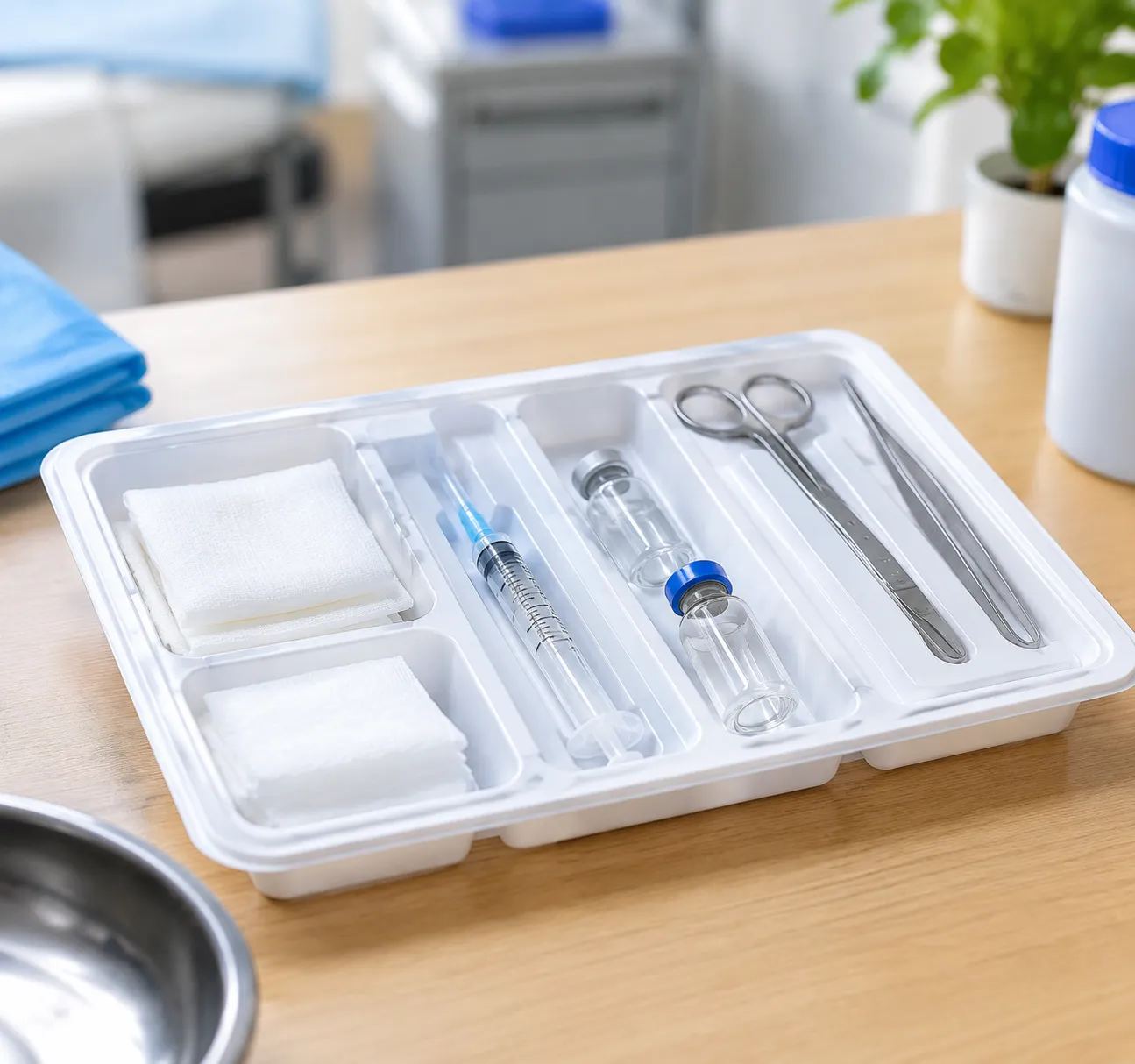
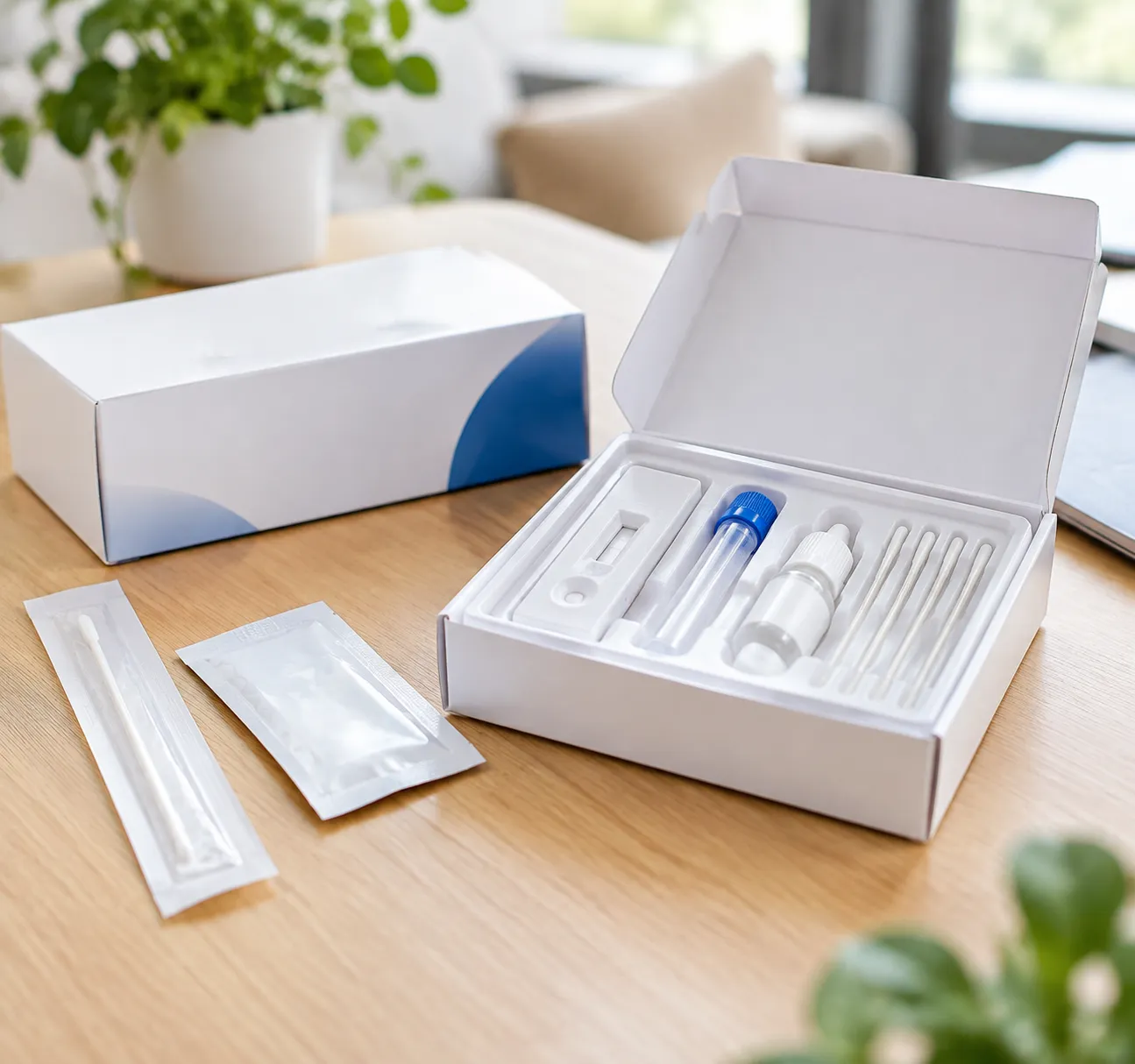
Formula details
Product Details
Overview
Diagnostic Kit Packaging Trays: Engineered Component Protection
Advanced Component Immobilization
- Zero Movement & Leak Prevention: Custom-engineered multi-cavity profiles secure reagent bottles, buffer tubes, and liquid vials upright to eliminate transit vibration, cap loosening, and fluid leakage.
- Damage Mitigation: Deep, contoured pockets protect lateral flow cassettes, glass ampoules, and sensitive optical chips against compression, dropping, and puncture forces.
- Component Separation: Dedicated partitions isolate sterile swabs, lancets, and pipettes from chemical reagents, preventing cross-contamination and abrasive surface contact.
Optimized Workflows & Precision Retention
- Sequential Usability: Ergonomic cavity arrangements guide end-users naturally through step-by-step procedures, enhancing efficiency for both high-throughput clinical laboratory workflows and at-home self-testing.
- Snap-In Locks & Undercuts: Calibrated retention beads and perimeter undercuts hold lightweight parts firmly inside their respective slots, delivering positive tactile feedback without requiring secondary adhesives or tapes.
- Tailored Cavity Depths: Standardized and custom pocket depths accommodate varied tube volumes, cassette form factors, and dropper shapes for complete integration into secondary cartons or sterile barrier packaging.
Applications & Component Accommodations for Diagnostic Kit Packaging Trays
Our multi-cavity layouts prevent cross-contamination, part migration, and transport damage across diverse medical applications:
- In-Vitro Diagnostic (IVD) Rapid Tests: Custom-molded cavities fit single or multi-panel lateral flow cassettes, test strips, desiccant packs, and droppers, keeping them locked in place during transit.
- Molecular & PCR Assay Kits: Multi-tier compartments hold lysis buffer tubes, microcentrifuge tubes, reaction master mixes, and pipette tips. For integrated laboratory testing workflows, our designs pair seamlessly with specialized formats like our plastic vial trays for pharma lab storage and transport.
- Specimen Collection Sets: Dedicated retaining grooves hold sterile nasal or throat swabs, blood lancets, alcohol prep pads, and viral transport media (VTM) tubes to ensure intuitive, sequential extraction by healthcare professionals or end users.
- Point-of-Care (POC) Cartridges & Electronic Readers: Shock-absorbing, anti-static tray profiles provide precision nesting for fragile microfluidic chips, disposable optical cartridges, and handheld electronic reader units.
Medical-Grade Material Specifications & Selection Guide
We thermoform our diagnostic kit packaging trays using certified medical-grade polymers. Selecting the right thermoforming resin depends on your sterilization method, component fragility, chemical exposure, and budget.
Core Material Options
- Medical-Grade PETG: The premier choice for sterile barrier packaging. PETG delivers exceptional optical clarity, outstanding impact resistance, and robust seal integrity with Tyvek® lidding. It withstands Ethylene Oxide (EO), Gamma, and E-beam sterilization without yellowing or becoming brittle.
- APET (Amorphous PET): A rigid, highly transparent, and economical polymer. Ideal for non-sterile diagnostic test assemblies, secondary packaging inserts, and retail point-of-care kits where high clarity is required at lower production costs.
- Medical-Grade HIPS (High-Impact Polystyrene): Offers superior stiffness, puncture protection, and a clean opaque white finish. We formulate HIPS with anti-static additives to shield sensitive lateral flow components and electronic assay readers from electrostatic discharge (ESD).
- Polypropylene (PP): Delivers maximum chemical resistance against aggressive reagents, buffers, and solvents. PP is flexible, fatigue-resistant, and suitable for autoclave (steam) sterilization and deep-freeze storage environments. Matching your assay components with the correct packaging materials for glass, plastic, and sterility ensures complete chemical and structural stability.
Material Performance Matrix
| Material | Optical Clarity | Impact Resistance | Primary Sterilization | Chemical Resistance | Relative Cost |
|---|---|---|---|---|---|
| PETG | Ultra-Clear (90%+) | High | EO, Gamma, E-Beam | Moderate | Premium |
| APET | High Clarity | Moderate to High | Non-Sterile / Low-Dose EO | Moderate | Economical |
| HIPS | Opaque (White/Custom) | High | EO, Gamma | Good | Cost-Effective |
| PP | Translucent / Semi-Clear | High | Autoclave, EO | Excellent | Moderate |
Structural Design & Precision Custom Engineering Features
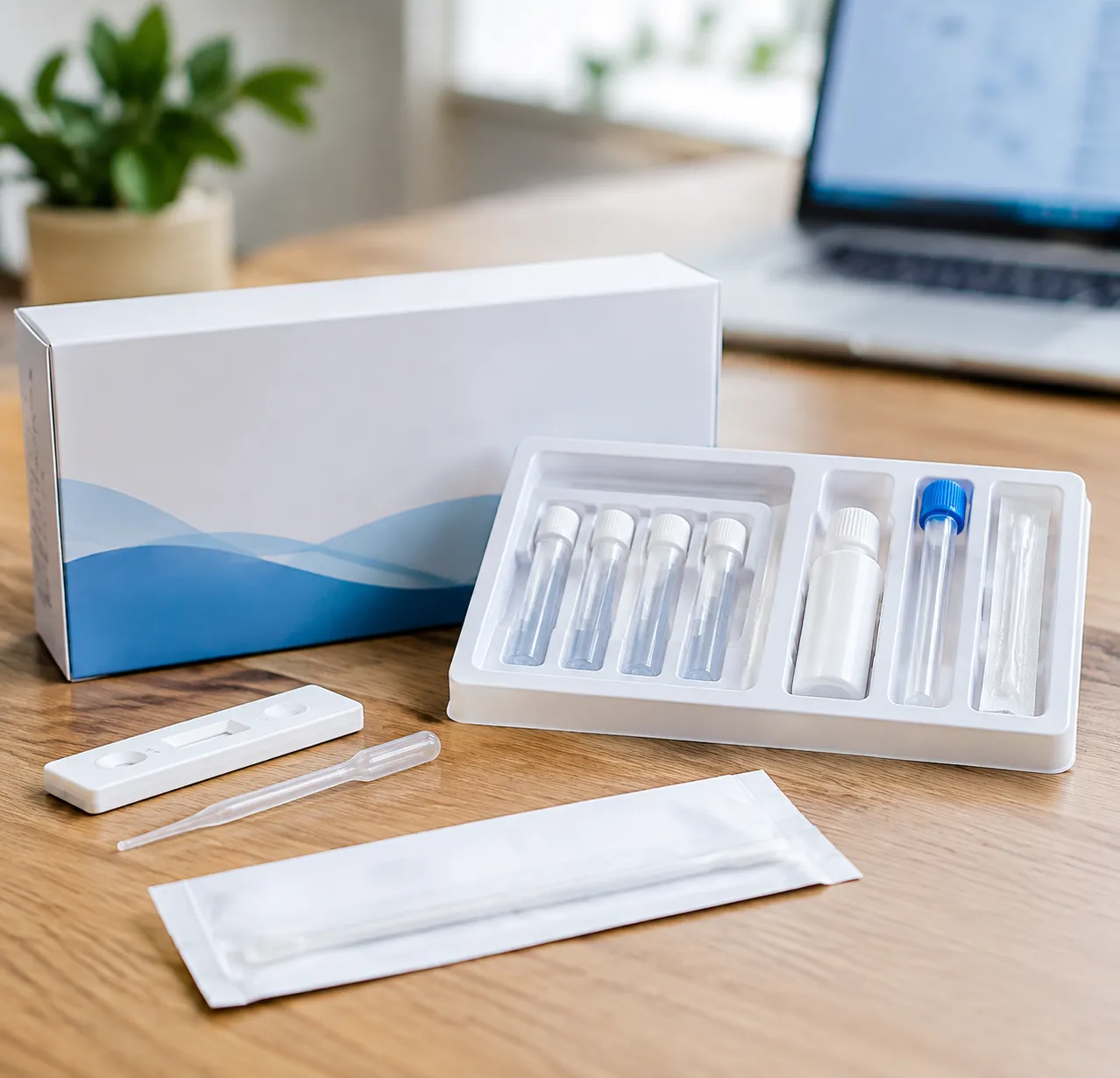
Ergonomic Cavity Architecture & Component Immobilization
- Ergonomic Finger Access Notches: Enable fast, intuitive removal of test cassettes, swab packets, and droppers without disturbing adjacent components.
- Micro-Retaining Beads & Undercuts: Precision snap-in features grip reagent vials and buffer tubes firmly, preventing them from falling out during transit or when opening the kit.
- Reinforced Sidewalls & Ribbing: Engineered structural ribs increase rigid load-bearing capacity, preventing tray collapse during stacking and secondary box packing.
For multi-component test kits requiring strict spatial isolation, our engineering integrates proven principles from custom vial packaging design with inserts to ensure zero component movement and maximum barrier integrity.
Sealing Flanges & Automation-Ready Features
- Flat, Continuous Sealing Flanges: Engineered for heat-sealing with Tyvek®, medical-grade foil, or porous paper lidding to maintain a validated sterile barrier.
- Anti-Interlocking Nesting Lugs: Prevent nested trays from sticking together in shipping boxes, ensuring smooth denesting on high-speed automated pick-and-place and Form-Fill-Seal (FFS) lines.
- Uniform Wall Distribution: Precision thermoforming tooling minimizes thin spots at sharp corners and deep draws, eliminating puncture risks.
Design-to-Production Engineering Workflow
| Phase | Timeline | Core Deliverables & Actions |
|---|---|---|
| 1. 3D CAD Modeling | 24–48 Hours | Component layout optimization, draft angle design, cavity fit simulation. |
| 2. Rapid CNC Prototyping | 3–5 Days | Precision prototype tooling and sample trays for form and fit verification. |
| 3. Pilot Testing & Validation | Flexible | Lidding heat-seal peel testing, drop tests, and automated handling trials. |
| 4. Mass Thermoforming | 7–14 Days | High-cavitation production tooling and cleanroom volume manufacturing. |
Cleanroom Manufacturing Standards & Quality Control
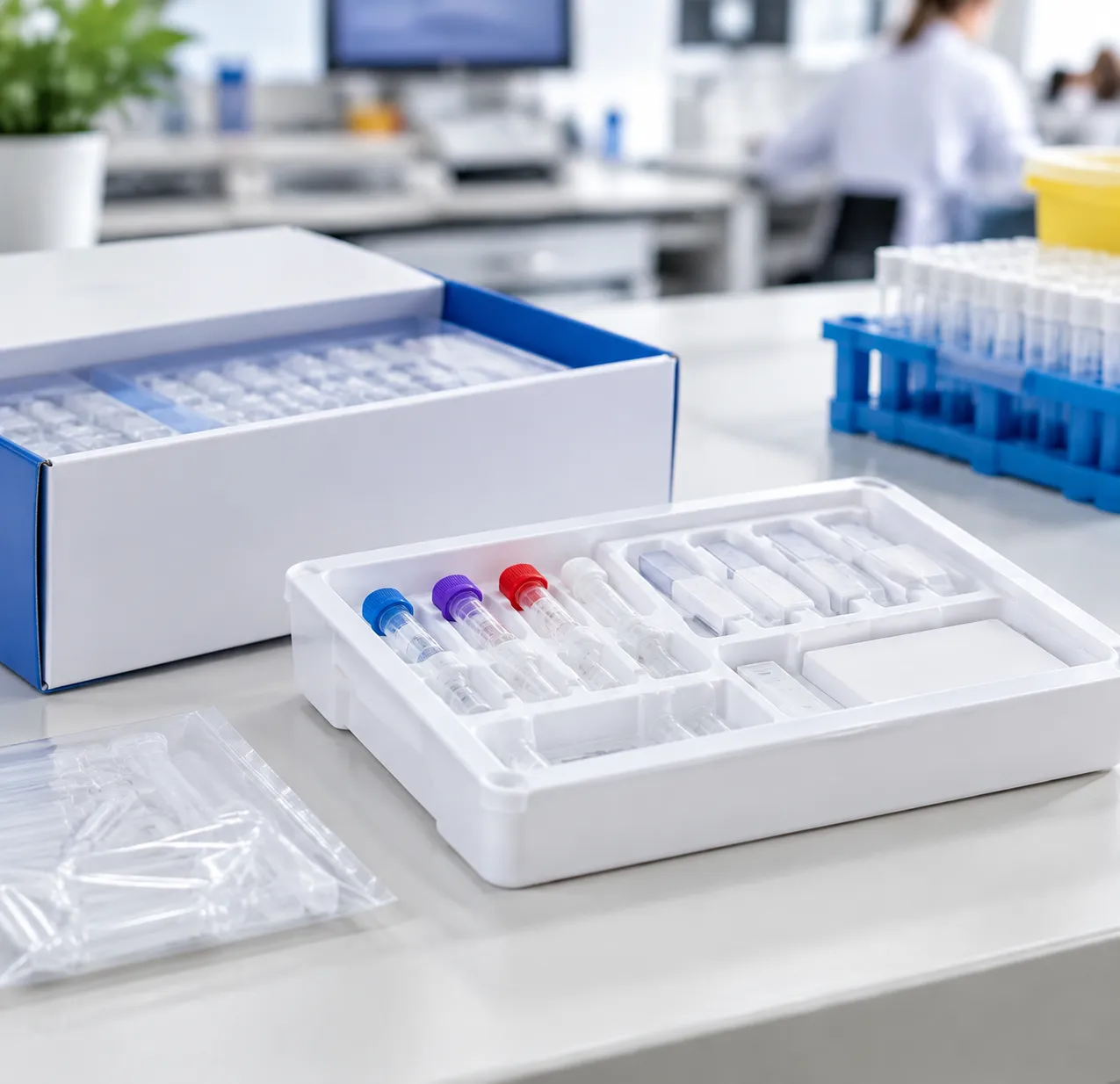
Controlled Cleanroom Production
Diagnostic assays and IVD reagents are sensitive to airborne dust, fibers, and foreign particulates. We operate controlled cleanroom thermoforming lines to eliminate contamination risks:
Dust-Free Thermoforming: High-efficiency air filtration systems eliminate airborne particles throughout sheet feeding, heating, and vacuum forming.
Clean Handling Protocols: Technicians follow strict cleanroom gowning and handling standards during production, trimming, and boxing.
Sterile Barrier Readiness: Trays arrive clean, static-controlled, and ready for immediate loading alongside automated pharmaceutical cartridge nest and tub sterile packaging and device assembly workflows.
Precision QC Inspection Protocols
Every thermoformed batch undergoes multi-point dimensional and structural testing to maintain reliable performance on automated packaging lines:
Flange Flatness & Uniformity: We measure sealing flange consistency to ensure continuous, gap-free perimeter bonding with Tyvek® or medical foil lidding.
Wall Thickness Distribution: Critical stress zones and deep-draw cavity corners are verified to eliminate thin spots and prevent transit puncture failures.
Snap-Fit Precision: Cavity retention tabs are checked against actual component masters to guarantee secure retention without crushing fragile buffer vials or test strips.
Visual Clarity & Defect Checks: Automated and manual inspections verify that clear PETG and APET trays are free of hazing, bubbles, or foreign inclusions.
End-to-End Lot Traceability
We maintain unbroken traceability records from raw plastic roll-stock to final delivery:
Raw Material Verification: Every lot of medical-grade resin is logged with manufacturer certificates of analysis (COA).
Batch Production Records: Machine parameters, ambient cleanroom conditions, and inspection logs are archived for every job.
Audit-Ready Documentation: Comprehensive quality reports and batch compliance certificates accompany your shipment for rapid QA release.
Technical Specifications & Manufacturing Matrix
Manufacturing Specifications
| Parameter | Specification Details | Common Diagnostic Applications |
|---|---|---|
| Material Thickness | 0.30 mm – 1.50 mm (12 mil – 60 mil) | Lightweight assay kits to heavy multi-component reagent trays |
| Dimensional Tolerances | ±0.2 mm to ±0.5 mm (Tooling dependent) | Automated pick-and-place lines, folding cartons, and outer kit boxes |
| Standard Colors | Ultra-clear, natural translucent, opaque white, medical blue | Clear visual inspection (PETG/APET) or light-sensitive assay shielding (HIPS) |
| Sterilization Options | EO gas, Gamma irradiation, E-Beam, Autoclave | Sterile barrier packaging and clinical collection kits |
| Tooling Turnaround | CNC Prototypes: 3–5 days Production Molds: 2–3 weeks | Rapid design verification and scalable high-cavity thermoforming |
Key Engineering Capabilities
- Custom Gauge Control: We process rigid plastic sheets from 0.30 mm up to 1.50 mm, ensuring the ideal balance between structural rigidity, puncture resistance, and cost efficiency.
- Secondary Packaging Integration: Our trays are built with tight tolerances to fit seamlessly inside kit boxes alongside secondary packaging for vials and outer folding cartons without binding or rattling.
- Aesthetic & Functional Finishes: Select ultra-clear transparent materials for instant component visibility, opaque white HIPS for high-contrast contrast backgrounding, or custom medical blue and anti-static coatings for ESD-sensitive chips.
- Sterilization-Ready Production: Formulated from medical-grade resins compatible with standard Ethylene Oxide (EO), Electron Beam (E-Beam), and Gamma sterilization cycles to maintain physical integrity and seal strength.
- Rapid Tooling Validation: We utilize precision CNC aluminum prototype tooling to produce functional test samples in as few as 3 to 5 business days, accelerating your pilot builds and clinical validation trials.
Frequently Asked Questions About Diagnostic Kit Packaging Trays
How do we guarantee a secure snap-fit for multi-component diagnostic test kits?
We design custom cavity profiles using direct 3D CAD modeling and physical component digitizing. By integrating engineered micro-retaining beads, undercuts, and friction ribs, our diagnostic kit packaging trays immobilize delicate items such as antigen cassettes, buffer tubes, and pipettes. This eliminates vibration damage and fluid leakage during transit while maintaining user-friendly extraction notches for clinical and at-home users.
Are our diagnostic packaging trays compatible with automated pick-and-place and FFS lines?
Yes. We engineer precision de-nesting lugs and anti-interlocking sidewalls into every thermoformed tray design. This prevents sticking during automated stack feeding and ensures reliable performance on high-speed pick-and-place and form-fill-seal (FFS) lines. Whether loading standard rapid tests or disposable cartridge trays for medical applications, our consistent dimensional tolerances prevent equipment jams.
Which tray material provides the best bond strength for Tyvek® heat-sealing?
Medical-grade PETG offers the highest seal integrity and widest processing window for Tyvek® and breathable medical paper lidding. It delivers continuous, fiber-free peelable seals that preserve sterile barrier integrity. For secondary, non-sterile packaging, we also thermoform APET and HIPS trays optimized for foil and film heat-sealing.
What are the standard MOQs and turnaround times for custom tooling and prototypes?
Because our diagnostic packaging is built to custom specifications, production quantities and pricing are quoted per project:
Rapid 3D Prototypes & CNC Sample Molds: Typically delivered within 3 to 5 business days for fast design verification.
Production Tooling: Fabricated in-house to accelerate time-to-market.
Order Volumes: We accommodate low-volume validation and pilot runs up to high-volume commercial production batches.
How do we protect sensitive electronic assay components from electrostatic discharge (ESD)?
For diagnostic kits incorporating digital readers, biosensors, or electronic point-of-care (POC) microfluidic chips, we thermoform using anti-static or static-dissipative HIPS and PETG sheet materials. These formulations control surface resistivity, preventing static charge accumulation and shielding sensitive microelectronics from ESD events.