Formula details
Product Details
Overview
Engineered Protection for Precision Injectable Systems
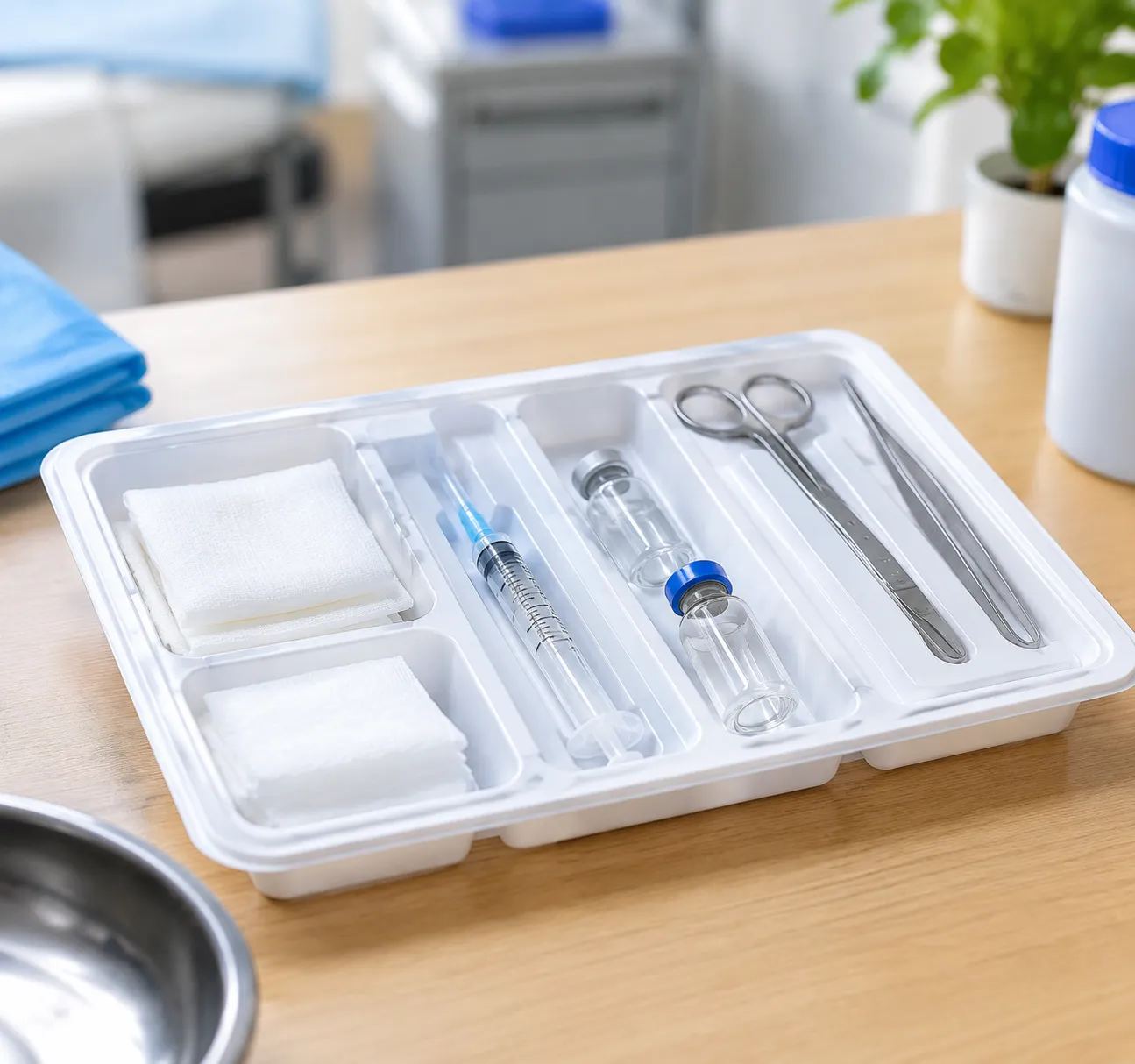
Injectable formats—including pre-filled syringes, autoinjectors, pen injectors, and safety needles—require packaging architectures that isolate fragile glass barrels, prevent premature activation, and eliminate particulate generation caused by friction.
Our engineering team develops rigid drug delivery device trays that balance structural rigidity with precise tolerances, ensuring your sterile barrier remains intact under dynamic transit stresses.
Device Immobilization & Cavity Retention
Maintaining absolute control over device orientation inside the package prevents functional failures before point-of-care use. We utilize precision tooling geometry to secure primary packaging without applying direct pressure to critical mechanical assemblies.
- Precision Snap-Fit Details: Custom undercuts and mechanical detents hold autoinjector bodies firmly in place, eliminating axial and radial displacement during ASTM drop and vibration testing.
- Needle Shield & Plunger Protection: Dedicated relief channels and standoff ribs prevent load transfer to syringe plunger rods or needle shields, mitigating accidental drug discharge or bent cannulas.
- Anti-Rotation Features: Formed geometric pockets match the exact silhouette of pen injectors, preventing roll-induced scuffing or label degradation.
Custom Injectable Cavity Geometry
Plunger Relief
→ Prevents accidental plunger actuation and drug discharge
↓
Snap-Fit Barrel Lock
→ Immobilizes the syringe barrel and minimizes transit movement/rattle
↓
Tip Standoff
→ Maintains a zero-contact clearance zone around the needle / tip channel
Multi-Component & Kit Packaging Architecture
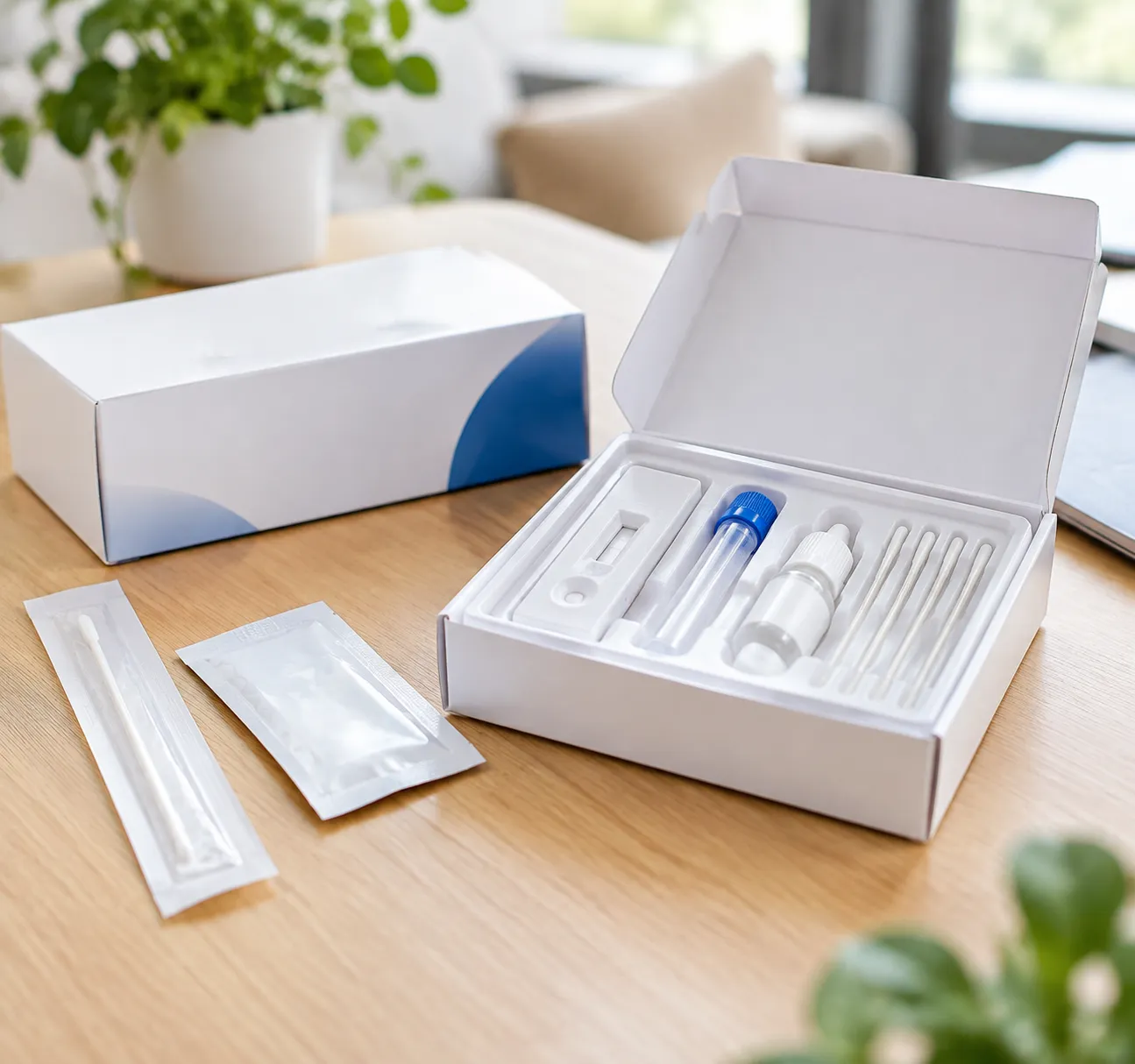
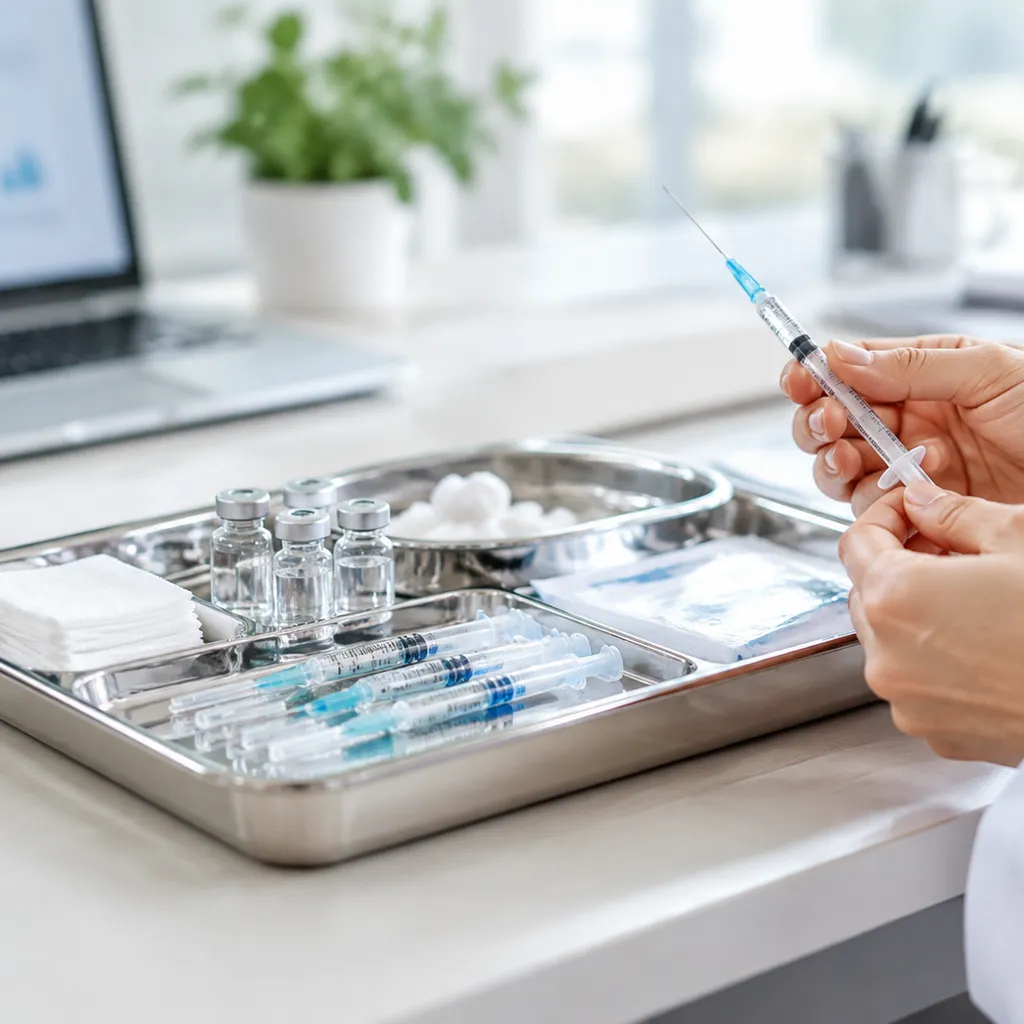
Combination products and clinical trial kits often demand the consolidation of secondary drug delivery devices with ancillary components into a unified, sterile footprint. We engineer multi-cavity custom device inserts that streamline procedural workflow and maintain aseptic technique.
- Segregated Cavity Layouts: Isolate liquid-filled cartridges, safety transfer needles, reconstitution vials, and alcohol swabs into designated, non-interfering compartments.
- Aseptic Presentation & Lift Access: Integrated finger-lift notches and tapered pop-up pivot points allow clinicians to retrieve devices effortlessly without compromising glove integrity or touching critical fluid pathways.
- Automation-Ready Design: Engineered anti-nesting lugs and uniform flange profiles ensure smooth destacking on automated tray loading and robotic pick-and-place lines.
Medical-Grade Materials & Sterilization Compatibility
We thermoform all rigid packaging from certified medical-grade resins that resist cracking, minimize particulate shedding, and withstand rigorous sterilization cycles without compromising mechanical strength.
Polymer Selection Matrix
Our engineering team matches raw sheet formulations directly to your device geometry, drug sensitivity, and transit stress profiles.
| Material Substrate | Optical Clarity | Impact Resistance | Primary Sterilization Compatibility | Common Applications |
|---|---|---|---|---|
| PETG (Eastar 6763) | Exceptional (Clear) | High | EtO, Gamma, E-Beam | Auto-injectors, pre-filled syringes, safety needles |
| APET | High (Clear) | Moderate to High | EtO, Gamma | Secondary device packaging, non-implantable delivery kits |
| HIPS (High Impact Polystyrene) | Opaque (White/Custom) | High | EtO, Gamma, E-Beam | Light-sensitive drug delivery devices, opaque trays |
| Polypropylene (PP) | Translucent / Semi-Clear | High / Ductile | Steam Autoclave, EtO, E-Beam | Reusable delivery systems, high-temperature processing |
For comprehensive barrier systems, we integrate these certified resins into our rigid medical device packaging solutions to ensure robust drop-test survival and dimensional stability.
Sterilization Method Validation
Terminal sterilization processes impose chemical and thermal stresses on thermoformed plastics. We validate our packaging materials for sterility across all standard medical sterilization modalities:
- Ethylene Oxide (EtO): Excellent dimensional stability across PETG, APET, and HIPS when combined with gas-permeable Tyvek® lidding. Maintains cavity tolerances and venting performance during pressure changes.
- Gamma & E-Beam Radiation: We utilize radiation-stabilized grades of PETG and PP to prevent polymer chain degradation, yellowing, or post-sterilization embrittlement up to standard dose ranges (25–50 kGy).
- Vaporized Hydrogen Peroxide (VHP) & Low-Temperature Cycles: Compatible with non-porous polymer surfaces for cleanroom pass-through and surface bioburden reduction.
- Steam Autoclave: Supported through specialized medical-grade polypropylene formulations that resist thermal warping up to 121°C.
Cleanroom Manufacturing & Certified Quality Standards
Controlled Environment Thermoforming (ISO Class 7 & Class 8)
We produce our medical blister packaging inside certified ISO Class 7 and ISO Class 8 cleanrooms (Class 10,000 and Class 100,000 equivalents). By housing raw material staging, high-speed thermoforming, precision trimming, and initial packing within positive-pressure, HEPA-filtered suites, we eliminate environmental contaminants before they can contact critical device cavities.
- Particulate & Bioburden Control: Continuous environmental monitoring safeguards against airborne particulates, hair, and foreign matter, ensuring compliance with strict pharmaceutical fill-finish and sterile assembly requirements.
- Static & Foreign Particle Management: Integrated ionizing de-dusting systems and antistatic sheet handling prevent static charge build-up, stopping micro-particles from adhering to deep-draw tray pockets.
- Aseptic Packaging Protection: Trays are double-bagged inside the cleanroom before boxing, preventing external contamination during transit and storage.
Regulatory & Quality Compliance (ISO 13485, ISO 11607, CMM Verification)
Our quality infrastructure conforms to strict medical device standards to streamline your Design History File (DHF) and 510(k) or CE mark validation processes. Backed by our verified quality certifications, every production batch undergoes comprehensive in-process testing and validation.
| Quality Standard / Testing Protocol | Operational Implementation | Risk Mitigation Target |
|---|---|---|
| ISO 13485:2016 | Comprehensive Quality Management System across mold design, material handling, and cleanroom thermoforming. | Eliminates process variation and guarantees complete lot traceability. |
| ISO 11607-1 / 11607-2 | Design and process validation for sterile barrier packaging systems (SBS) under continuous monitoring. | Prevents sterile barrier breach, seal failure, and packaging degradation. |
| CMM & Optical Verification | Automated Coordinate Measuring Machine (CMM) inspection validating critical snap-fit and cavity tolerances within ±0.1 mm. | Prevents device movement, needle stick hazards, and automated assembly line jams. |
| Material Traceability & CoAs | Lot-specific Certificates of Analysis (CoA), 100% virgin medical resin verification, and USP Class VI compliance data. | Eliminates cytotoxic risks and raw material variability across batch runs. |
Integrated DuPont™ Tyvek® Lidding & Sealing Solutions
We engineer our injectable device trays to integrate seamlessly with die-cut DuPont™ Tyvek® lidding, creating a validated Sterile Barrier System (SBS) compliant with ISO 11607 standards. Every tray flange is designed with uniform width and flatness tolerances to achieve complete seal integrity, preventing microbial ingress while ensuring clean, fiber-free peeling during aseptic presentation in clinical environments.
Sterile Barrier Lidding Options (1073B, 1059B, 2FS)
We supply pre-cut Tyvek® lids with specialized medical-grade heat-seal coatings matched to your specific tray polymer (PETG, APET, or PP). Choosing the right grade depends on the mass of your device and the required puncture resistance:
| Tyvek® Grade | Primary Characteristics | Target Injectable Packaging Application |
|---|---|---|
| DuPont™ Tyvek® 1073B | Highest puncture resistance, maximum tensile strength, heavy-duty microbial barrier | Heavy auto-injectors, large glass pre-filled syringe systems, multi-component delivery kits |
| DuPont™ Tyvek® 1059B | Balanced strength and breathability, optimized for gas sterilization (EtO) | Standard pre-filled syringes, pen injectors, safety needles, and cartridges |
| DuPont™ Tyvek® 2FS | Cost-effective, high breathability, suitable for lighter packaging loads | Lightweight injectable accessories, single-dose diagnostic injectors, secondary packaging |
Seal Integrity & Aseptic Presentation
Achieving a reliable sterile seal requires exact tool matching between the tray sealing flange and the heat-sealing platen. When paired with our custom thermoformed medical trays for sterile devices, our Tyvek lidded medical trays deliver:
- Fiber-Free Peeling: Proprietary adhesive coating formulations prevent particulate contamination and fiber tear when opened in sterile surgical fields.
- Controlled Seal Flange Geometry: Raised perimeter ridges and optimized sealing surfaces prevent channel leakers and ensure uniform pressure distribution across automated sealing equipment.
- Sterilization Breathability: Rapid EtO gas penetration and evacuation rates without compromising burst strength or bubble emission integrity during transport.
- Visual Seal Verification: Clear seal-transfer indication allows fast visual and dye-penetration inspection for packaging line quality assurance.
Injectable Device Applications & Packaging Compatibility
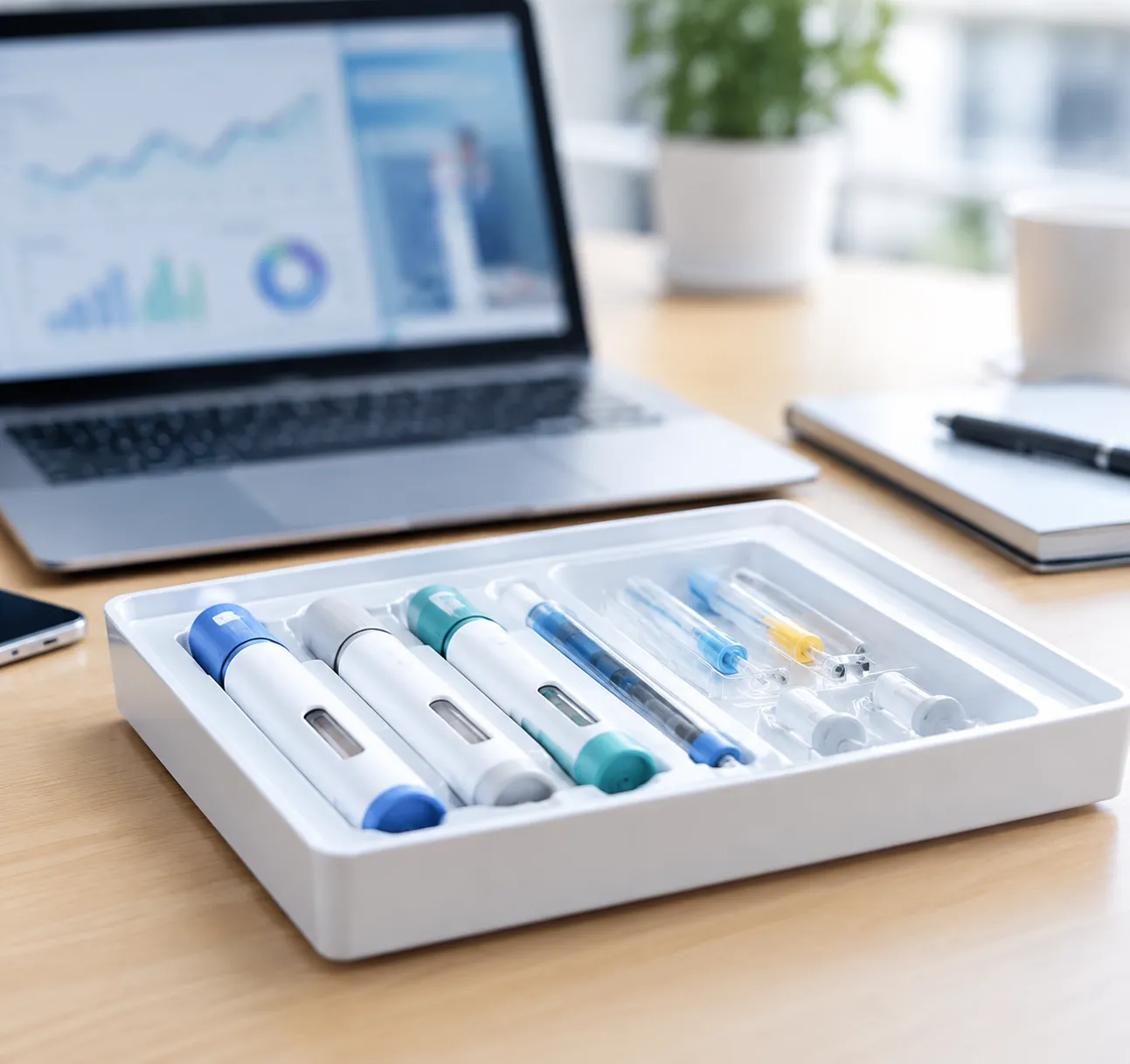
Supported Injectable Delivery Formats
Auto-Injectors
→ Lock Rings
→ Cap Retention
PFS Systems
→ Barrel Support
→ Flange Relief
Wearable Pods
→ Multi-Cavity Design
→ Adhesive Bed
Dual-Chamber Systems
→ Plunger Locks
→ Bypass Safety Features
- Auto-Injectors and Pen Injectors: Heavy mechanical devices require rigid perimeter walls and recessed zones. We integrate snap-fit geometry along non-functional housing sections to lock safety caps in place and protect viewing windows without stressing trigger springs.
- Pre-Filled Syringes (PFS) & Safety Needles: Designed for both glass and COP/COC polymer barrels (0.5 mL to 5.0 mL). Our prefilled syringe trays for safe medical packaging isolate the flange, barrel, and rigid needle shield (RNS) to prevent tip-strike and liquid leakage.
- Wearable Injectors & On-Body Delivery Systems (OBDS): Multi-cavity drug delivery device trays accommodate complex geometries, housing the electronic drive unit, dedicated fluid cartridge, and adhesive substrate in separate, sterile compartments within a single footprint.
- Dual-Chamber Syringes & Reconstitution Kits: Engineered partitions securely hold lyophilized powder vials alongside pre-filled diluent cartridges or safety transfer devices, isolating glass-to-glass contact points and ensuring rapid, intuitive aseptic preparation.
- Pre-Fillable Cartridges & Sub-Assemblies: Precision nest profiles support 1.5 mL and 3.0 mL dental and insulin cartridges, matching automated pick-and-place filling and terminal packaging lines.
Custom Tooling, Prototyping, and Production Workflow
We manage the full development cycle for custom injectable device trays, taking projects from initial 3D concepts to validated, high-volume cleanroom manufacturing.
1. Engineering & 3D CAD Modeling
Our engineering team analyzes your primary drug delivery system—whether an auto-injector, pre-filled syringe, or cartridge kit—to establish exact cavity geometry. Through our dedicated technical support and engineering design, we optimize draft angles, snap-fit undercut depths, and sealing flange flatness to prevent component movement and ensure reliable automated pick-and-place handling.
2. Rapid Tooling & Functional Prototyping
- Fast Sample Turnaround: Rapid CNC machining of prototype tooling to deliver sample blister trays for physical testing.
- Fit and Retention Checks: Direct physical verification of snap features, needle-tip protection zones, and ease of aseptic removal.
- Sealing Trials: Early evaluation of heat-seal parameters and visual peel behavior using target lidding substrates before cutting production steel.
3. In-House Production Mold Tooling
We engineer multi-cavity production tooling using aerospace-grade aluminum to guarantee long-term dimensional repeatability. Our in-house mold development process integrates dedicated vacuum channels, cooling lines, and precision-matched sealing nests that align seamlessly with industrial tray sealers.
4. Cleanroom Thermoforming & Lot-to-Lot Release
- ISO-Class Cleanroom Processing: Continuous roll-fed thermoforming within certified ISO Class 7 or Class 8 environments to prevent particulate contamination and keep bioburden low.
- In-Line Quality Control: Real-time monitoring of critical process parameters (sheet temperature, forming pressure, vacuum levels, and trim alignment).
- Lot Release Documentation: Every manufactured batch undergoes optical and CMM dimensional checks, seal-flange inspection, and particulate testing, delivered with a complete Certificate of Analysis (CoA) for Device Master Record (DMR) integration.
Technical Specification Matrix
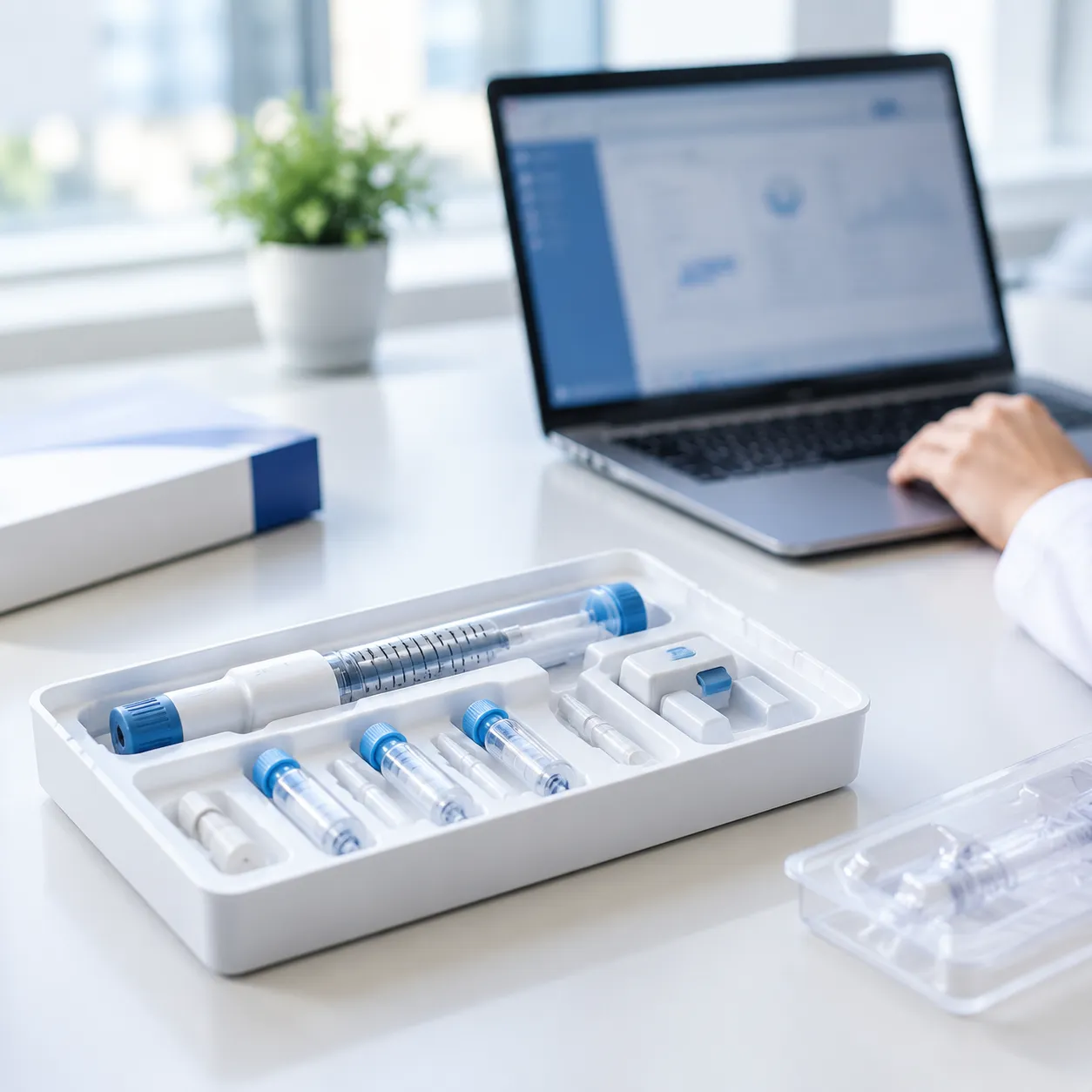
Substrate Material Types & Sheet Thickness Capabilities
We thermoform medical-grade polymers across various gauge profiles to balance tactile rigidity, crack resistance, and optical clarity for drug delivery systems and combination vial box with inserts packaging.
| Material Substrate | Thickness Range | Optical Clarity | Key Mechanical Characteristics | Typical Injectable Applications |
|---|---|---|---|---|
| Medical-Grade PETG (Eastar 6763) | 0.4 mm – 2.0 mm | Crystal Clear | High impact strength, crack resistance, non-cytotoxic | Pre-filled syringes, auto-injectors, safety needles |
| Medical APET | 0.4 mm – 1.5 mm | High Clarity | Cost-effective rigidity, high dimensional stability | Secondary packaging for injectables, diagnostic devices |
| Medical HIPS | 0.5 mm – 2.0 mm | Opaque White / Custom | High impact resistance, uniform deep-draw distribution | Multi-component injector kits, cartridge handling |
| Polypropylene (PP) | 0.5 mm – 1.8 mm | Translucent | Superior chemical resistance, steam sterilization stability | Syringe barrels, fluid-contact accessory components |
| Medical PVC / HDPE | 0.4 mm – 1.5 mm | Opaque / Semi-Clear | High flexural modulus, chemical inertness | Specialized fluid paths, standard procedure kits |
Dimensional Tolerances, Cleanroom Classification, and Sterilization Specs
Our engineering team maintains strict control over tooling, forming conditions, and environmental cleanroom standards to ensure seamless compatibility with automated pick-and-place lines and clinical environments:
- Cleanroom Environment: Thermoforming and inline processing in certified ISO Class 7 and ISO Class 8 (Class 10,000 / Class 100,000) cleanrooms to minimize particulate contamination and bioburden.
- Dimensional Tolerances: High-precision CNC tooling delivers cavity tolerances within ±0.15 mm, ensuring accurate snap-fit locking without applying stress to fragile glass barrels or auto-injector shells.
- Sterilization Validation: Fully compatible with Ethylene Oxide (EO), Gamma radiation, and E-Beam processing without yellowing, embrittlement, or seal barrier degradation.
- Sterile Barrier Integration: Engineered for continuous heat sealing with DuPont™ Tyvek® (1073B, 1059B, 2FS) and heat-seal coated medical-grade films.
- Quality Assurance & Traceability: Production is managed under an ISO 13485 certified quality management system compliant with ISO 11607 standards, including lot-specific bioburden, CMM dimensional reports, and seal-peel strength verification.
Injectable Device Trays: Technical & Quality FAQs
How do injectable device trays prevent needle tip damage or accidental plunger depression?
We engineer dedicated cavity geometries with mechanical snap-fit locks that grip the rigid syringe barrel or device housing rather than fragile moving components.
- Needle Shield Clearance: Suspended tip zones keep the needle cap or safety shield floating within a zero-contact cavity channel, eliminating blunt-force tip damage during transit.
- Axial Plunger Immobilization: Recessed stops and raised perimeter ribs isolate the syringe flange and plunger rod, preventing inadvertent axial compression and fluid displacement during drop events.
- Orientation Control: Asymmetrical cavities prevent backwards loading during automated pick-and-place assembly.
Can you provide customized sealing fixtures that match existing tray sealers?
Yes. Our in-house tooling team designs and CNC-machines custom aluminum heat-seal fixtures, silicone gaskets, and sealing nests tailored to your specific tray sealer models (e.g., Belco, SencorpWhite, Multivac, or Atlas Vac). We verify flange flatness, draft angles, and thermal transfer consistency to ensure uniform seal integrity across all medical blister trays.
What documentation is provided for regulatory filings (DHF / 510(k))?
We supply full technical and quality documentation packages to support your Design History File (DHF), 510(k), and CE mark submissions under ISO 13485 and ISO 11607 compliance.
| Document Type | Included Details & Verification |
|---|---|
| Material Compliance | Resin raw material CoAs, USP Class VI, ISO 10993 biocompatibility |
| Dimensional Inspection | CMM measurement data, critical tolerance reports, wall thickness mapping |
| Cleanroom Certification | ISO Class 7 / Class 8 particulate counts and routine bioburden testing reports |
| Sterility Compatibility | Ethylene Oxide (EO), Gamma, and E-beam resistance validation data |
Whether you are qualifying pre-filled syringe inserts or complete packaging such as our sterile RTU vial tray kit for biologics and pharmaceutical systems, our regulatory support simplifies customer audits and packaging validation protocols.
What are the minimum order quantities (MOQ) and lead times for custom tooling?
We support both clinical-phase pilot runs and high-volume commercial production with flexible minimums.
- 3D CAD & Prototyping: 3 to 5 business days for initial design concepts and 3D-printed/machined fit-check samples.
- Prototype CNC Aluminum Tooling: 7 to 10 business days, including sample thermoforming in medical-grade PETG or APET.
- Production Tooling: 2 to 3 weeks for multi-cavity hardened aluminum molds with dedicated trim dies.
- MOQ: Low minimum order quantities for clinical trial and validation batches, scaling up to automated, multi-million unit cleanroom production runs.