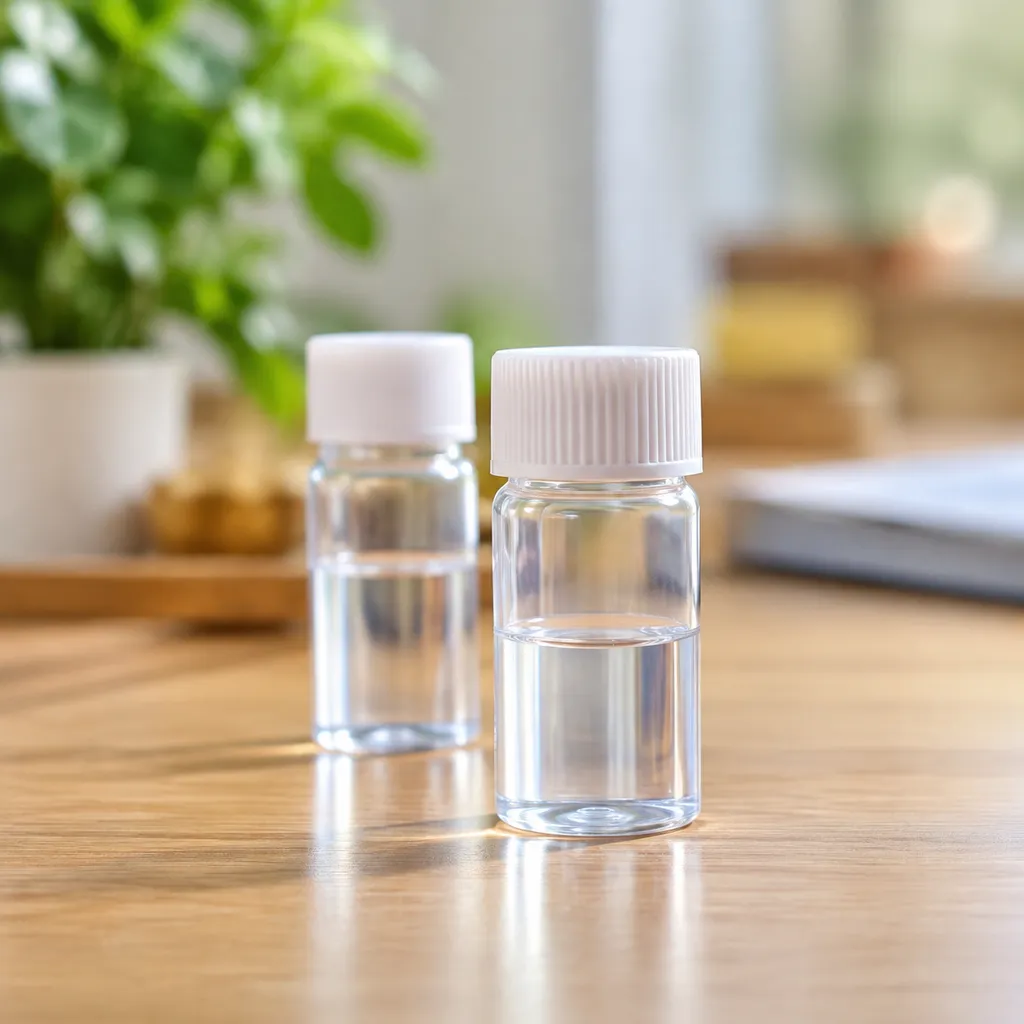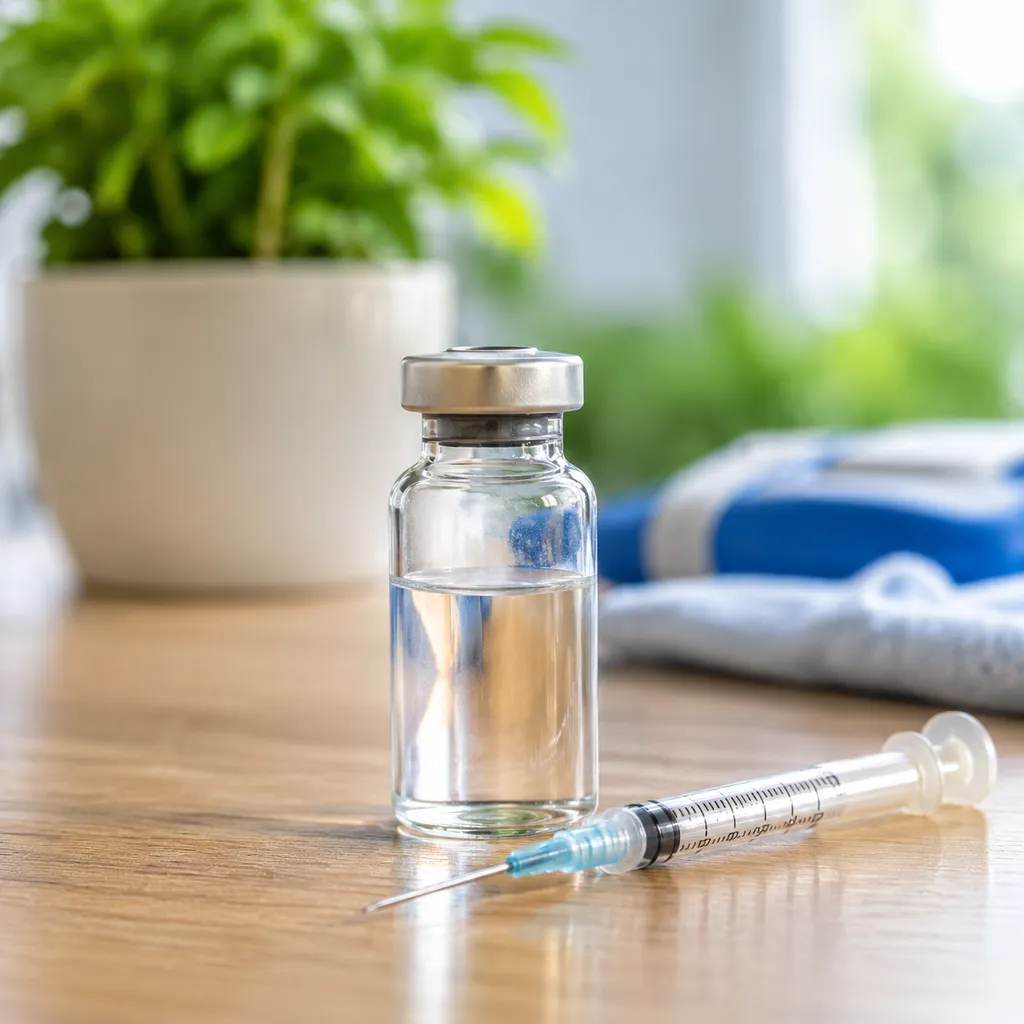
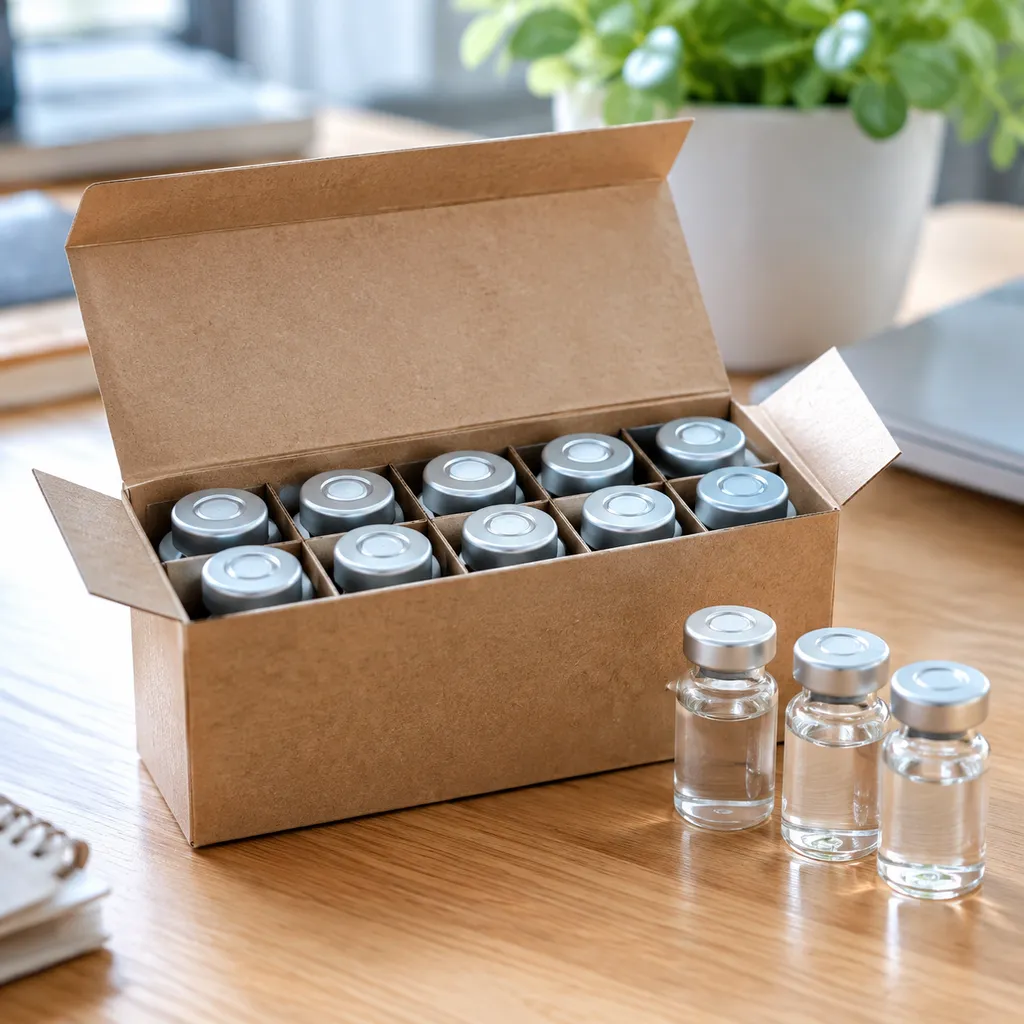
Formula details
Product Details
Overview
Types of Cardboard Vial Boxes
Finding the right cardboard vial box comes down to balancing structural strength, assembly speed, and presentation.
Single-Vial Tuck End Cartons for 10ml Bottles
Standard folding paperboard vial cartons remain the industry benchmark for retail display and pharmaceuticals.
Configurations: Straight tuck end (STE) or reverse tuck end (RTE) options.
Fitment: Engineered specifically for standard 10ml vial box packaging, fitting crimp-top or screw-cap bottles snuggly.
Efficiency: Shipped flat to minimize storage space and fully compatible with high-speed automated carton lines.
Multi-Pack Cardboard Boxes with Partitioned Dividers
Transporting multiple glass units requires separated compartments to ensure safe transit.
Collision Defense: Built as a dedicated vial box with divider inserts to eliminate glass-to-glass contact entirely.
Capacity: Configurable for 2, 5, 10, or 20 vials per carton.
Application: Ideal for clinical diagnostic kits, treatment series, and sample sets.
Rigid Two-Piece Setup Boxes for Luxury Serums and Oils
For high-ticket beauty serums, tinctures, and premium formulations, our rigid vial box architecture provides exceptional tactile appeal.
Construction: Heavyweight structural greyboard wrapped in custom-printed specialty paper.
Design Styles: Classic lid-and-base, magnetic closure, or slide-out drawer formats.
Protection: Maintains high structural integrity against vertical crushing during shipping.
Eco-Friendly Corrugated Mailers for Fragile Vials
Direct-to-consumer distribution demands heavy-duty packaging without excess plastic waste.
Material: Recyclable E-flute and B-flute corrugated cardboard.
Transit Safety: Double-walled front tabs absorb drop impacts and exterior corner crushing.
Sustainability: 100% recyclable, plastic-free alternative for shipping fragile glass bottle packaging.
| Box Style | Recommended Use | Core Benefit |
|---|---|---|
| Tuck End Carton | Individual 10ml vials & retail packaging | Fast assembly & low unit cost |
| Partitioned Box | Multi-vial sets & medical kits | Prevents bottle-to-bottle collisions |
| Rigid Setup Box | High-end cosmetic serums & luxury oils | Maximum unboxing appeal & rigidity |
| Corrugated Mailer | Direct-to-consumer eCommerce shipping | High drop and crush resistance |
Protective Inserts and Divider Options

| Insert Type | Best Used For | Shock Protection | Eco-Friendly Level |
|---|---|---|---|
| Cardboard Grid Dividers | High-volume multi-packs & ampoules | Moderate | 100% Recyclable |
| Custom-Cut EVA/PE Foam | Diagnostic kits, luxury serums, and oils | Maximum | Reusable |
| Molded Paper Pulp | Organic skincare & eco-certified labs | High | Biodegradable & Compostable |
| Die-Cut Paperboard Windows | Retail display & counter presentation | Light to Moderate | 100% Recyclable |
Folded Cardboard Grid Dividers to Stop Glass-to-Glass Contact
For multi-unit packaging, folded paperboard partitions are the most practical, cost-effective way to secure multiple containers. We interlock die-cut cardboard walls to create isolated cells for each unit. This prevents rattling, friction scuffs, and impact fractures during transport. If you are configuring a custom vial box with divider inserts, these grids fold flat for efficient shipping and assemble quickly on manual or semi-automated packing lines.
Custom-Cut EVA and PE Foam Trays for Impact Resistance
High-density closed-cell foams provide the ultimate cushion for sensitive liquid formulations. We precision cut high-density EVA (ethylene-vinyl acetate) and PE (polyethylene) foam inserts to match the exact profile of your glass containers, crimp necks, and dropper caps.
Zero Movement: Each cavity holds the bottle firmly in place, even if the package is dropped.
Refined Presentation: Foam can be lined with velvet, black cardstock, or textured paper for an elevated unboxing feel.
Multi-Part Layouts: Easily holds combinations of vials, syringes, transfer needles, and diluent ampoules in one organized tray.
Biodegradable Molded Pulp Inserts for Eco-Conscious Brands
If your brand prioritizes zero-plastic packaging, molded paper pulp trays offer the ideal balance between structural rigidity and environmental responsibility. Formed from recycled corrugated fiber and sugarcane bagasse, these molded inserts cradle each vial contour perfectly. They cushion against drops just like foam but break down naturally in standard municipal recycling and composting streams.
Cut-Out Display Windows for Direct Vial Visibility
For retail-facing shelves and clinical presentations, custom die-cut windows let buyers inspect labels, liquid clarity, and fill levels without opening the box. We cut clean display apertures directly into the paperboard facade, pairing them with an interior cardboard vial insert to keep the printed vial label facing forward at all times. These windows can remain open-air for quick product access or sealed with a clear, recyclable PET film to block dust and moisture.
Material Selection and Paperboard Grades
Choosing the right substrate sets the foundation for your cardboard vial box. Glass vials demand a balance between structural crush-resistance and clean visual appeal. We configure our cartons using four core paperboard grades tailored to specific market needs and production budgets.
| Material Grade | Typical Caliper / Weight | Primary Advantage | Best Suited For |
|---|---|---|---|
| SBS (Solid Bleached Sulfate) | 14pt – 24pt (300–500 GSM) | Bright white surface, superior print clarity | Pharmaceutical cartons, retail cosmetics |
| Natural Kraft Paperboard | 16pt – 26pt (350–550 GSM) | High tear strength, eco-friendly look | Organic essential oils, clean-label serums |
| Rigid Greyboard + Art Wrap | 1mm – 2.5mm dense core | Crush-proof protection, premium hand-feel | Luxury multi-vial sets, presentation kits |
| CCNB (Clay Coated News Back) | 16pt – 22pt (350–450 GSM) | Budget-friendly recycled base | High-volume retail runs, secondary packaging |
SBS (Solid Bleached Sulfate) Paperboard
SBS is our top recommendation when crisp artwork, solid ink coverage, and high-definition text are required. The virgin wood pulp produces a solid white profile throughout the sheet, ensuring consistent color matching inside and out. It handles fine die-cuts and tight scoring folds cleanly, keeping small vial boxes square and rigid.
Unbleached Natural Kraft Cardboard
Natural unbleached kraft gives your packaging an earthy, sustainable look right off the line. It delivers high tensile strength with less processing, making it ideal for brands targeting clean-label markets. Kraft pairs exceptionally well with direct black offset printing, single-color flexo inks, or simple foil stamping.
Heavyweight Rigid Greyboard Wrapped in Coated Art Paper
For luxury serums or delicate diagnostic samples, rigid greyboard delivers substantial drop and crush protection. We wrap a dense, 1mm to 2.5mm recycled greyboard core with 128 GSM or 157 GSM coated art paper. This gives you the sturdiness of a setup box alongside endless options for specialty laminations, foil accents, and embossed logos. For shipping larger batches of fragile glass containers, pairing these structures with a dedicated corrugated box for 10ml vial custom printed packaging ensures zero transit damage.
Lightweight CCNB for Cost-Effective Bulk Runs
CCNB features a clay-coated top surface over a recycled paperboard core. The smooth white top side accepts standard CMYK color printing, while the recycled back keeps material costs low for high-volume commercial production. It is a dependable, functional material choice for mass-distributed secondary vial packaging where cost efficiency is paramount.
Custom Printing and Surface Finishing
Transforming a basic cardboard vial box into high-end retail packaging comes down to the right print method and surface treatments.
Offset and Digital Full-Color CMYK and Pantone Printing
We run high-precision offset printing for large production volumes and agile digital printing for short runs and rapid prototyping.
CMYK 4-Color Process: Ideal for intricate artwork, gradients, and full-color product imagery.
Pantone (PMS) Color Matching: Guarantees exact spot-color consistency across every batch, ensuring your brand logos match strict corporate guidelines on every single custom vial sample box for safe storage and shipping.
Spot UV and Gloss Accents to Highlight Branding Elements
Targeted coatings create a crisp contrast against non-glossy backgrounds:
Raised Spot UV: Applies a clear, high-gloss polymer resin over specific logos, brand names, or usage symbols.
Flood Gloss Coating: Delivers an all-over reflective sheen that makes colors pop and resists dust collection.
Hot Foil Stamping and Embossing for Premium Finishes
Give your custom printed vial boxes an upscale, tactile feel that signals premium quality:
Metallic Foil Stamping: Applies metallic foil—available in gold, silver, rose gold, and holographic shades—using heat and pressure.
Embossing and Debossing: Raises or indents text and iconography directly into the paperboard, giving customers an immediate tactile cue when handling the box.
Anti-Scratch Matte Lamination for Scuff and Moisture Protection
Handling and shipping can easily scuff standard paper packaging. We apply functional barrier laminations to keep cartons clean and durable:
Velvet Soft-Touch Film: Offers a smooth, suede-like surface texture while stopping scuffs.
Anti-Scratch Matte Lamination: Shields dark ink surfaces from transit abrasion, fingerprints, and minor liquid spills, maintaining a flawless presentation from the warehouse to the end user.
Security and Tamper-Evident Packaging Features
Perforated Tear Strips and Security Tape
Tamper-evident carton designs utilize built-in perforations along the top flap or opening seam. Once opened, the fiber-tear design creates permanent visual damage, preventing resealing. For outer shipping units, tamper-evident tape leaves a visible residue or "VOID" pattern if lifted, ensuring clear evidence of interference before the vial reaches the customer.
Holographic Labels and Serial Number Verification
To counter counterfeit goods, we apply tamper-evident holographic stickers across the box closure. These labels feature micro-text, hidden security patterns, and unique sequential QR codes or serial numbers. Customers can scan each carton to confirm authenticity instantly. This level of traceability is especially critical for regulated solutions and clinical supplies, matching the standards we build into specialized tirzepatide vial packaging.
Child-Resistant Locking Mechanisms
For medications and active concentrates, we integrate certified child-resistant (CR) push-and-slide release tabs into rigid and folding paperboard styles. The dual-action locking mechanism requires two simultaneous movements—such as pressing two side release buttons while sliding out the inner tray—keeping fragile glass vials away from curious hands while staying simple for adults to operate.
Light-Blocking Inner Coatings
UV exposure degrades delicate peptide chains, active serums, and vitamins. To prevent photolytic breakdown, we apply opaque barrier coatings, solid black interior floods, or metallized liners to the inner carton walls. This creates a fully shielded, light-proof barrier that keeps amber, clear, or frosted glass vials completely protected throughout long supply chains.
| Security Feature | Primary Benefit | Common Application |
|---|---|---|
| Perforated Tear Strips | Irreversible visual proof of unboxing | Single-use pharmaceutical cartons |
| Serialized Holograms | Batch traceability and anti-counterfeiting | High-value cosmetic serums & injectables |
| Child-Resistant Locks | Accidental opening prevention | Concentrated extracts and oral medications |
| Light-Barrier Liners | UV and light-degradation shielding | Light-sensitive diagnostics and peptides |
Cardboard Vial Box Sizing Specifications and Fitment
Getting the exact fit for a cardboard vial box prevents rattling, protects fragile glass, and ensures a clean presentation on the shelf.
Standard Dimensions for Common Vial Volumes
Vial body diameters and total heights vary based on the neck finish and closure style. Below is a baseline sizing reference for standard tubular and molded glass containers. For detailed layout schematics, check our 10ml and 2ml vial box dimensions guide to match your exact bottle specs.
| Vial Capacity | Typical Vial Outer Diameter | Typical Vial Height | Recommended Internal Box Dimensions (L × W × H) |
|---|---|---|---|
| 2ml | 16 mm | 35 mm | 18 × 18 × 38 mm |
| 5ml | 22 mm | 40 mm | 24 × 24 × 43 mm |
| 10ml | 22 mm | 50 mm | 25 × 25 × 53 mm |
| 15ml | 25 mm | 60 mm | 27 × 27 × 63 mm |
| 30ml | 32 mm | 78 mm | 35 × 35 × 82 mm |
Calculating Closure and Cap Clearance
A common pitfall in vial packaging design is sizing only for the glass container body while forgetting the closure profile. We account for all closure types during the structural design phase:
- Aluminum Crimp Caps & Flip-Off Seals: Add a minimum of 2 mm to 3 mm vertical clearance above the crimp ring to avoid crushing the seal during lid closure.
- Dropper Pipettes and Bulbs: Tapered rubber bulbs and glass pipettes require both vertical headroom and lateral stabilization to keep the pipette centered.
- Screw Caps and Spray Pumps: Ensure internal box width accommodates the widest point of ribbed or overcap closures without bowing the carton side panels.
Flat-Shipping Collapsible Designs
To keep your storage footprints minimal and lower international freight costs, our folding paperboard vial cartons ship completely flat.
- Pre-glued auto-lock bottoms pop open in one motion on your packing line.
- Reverse-tuck and straight-tuck formats pack tight in master cartons, cutting storage volume by up to 70% compared to rigid setup boxes.
- Easy assembly keeps packing labor fast and efficient during high-volume manual or semi-automated fills.
Precision Custom Die-Cut Templates
Every production run starts with a structural CAD dieline tailored to your vial's outer profile. We supply these vector templates directly to your creative team with clearly defined trim lines, crease lines, bleed areas, and safe zones. This ensures your artwork aligns seamlessly across all panels, folds, and tuck flaps with zero distortion.
Industry Applications for Cardboard Vial Boxes
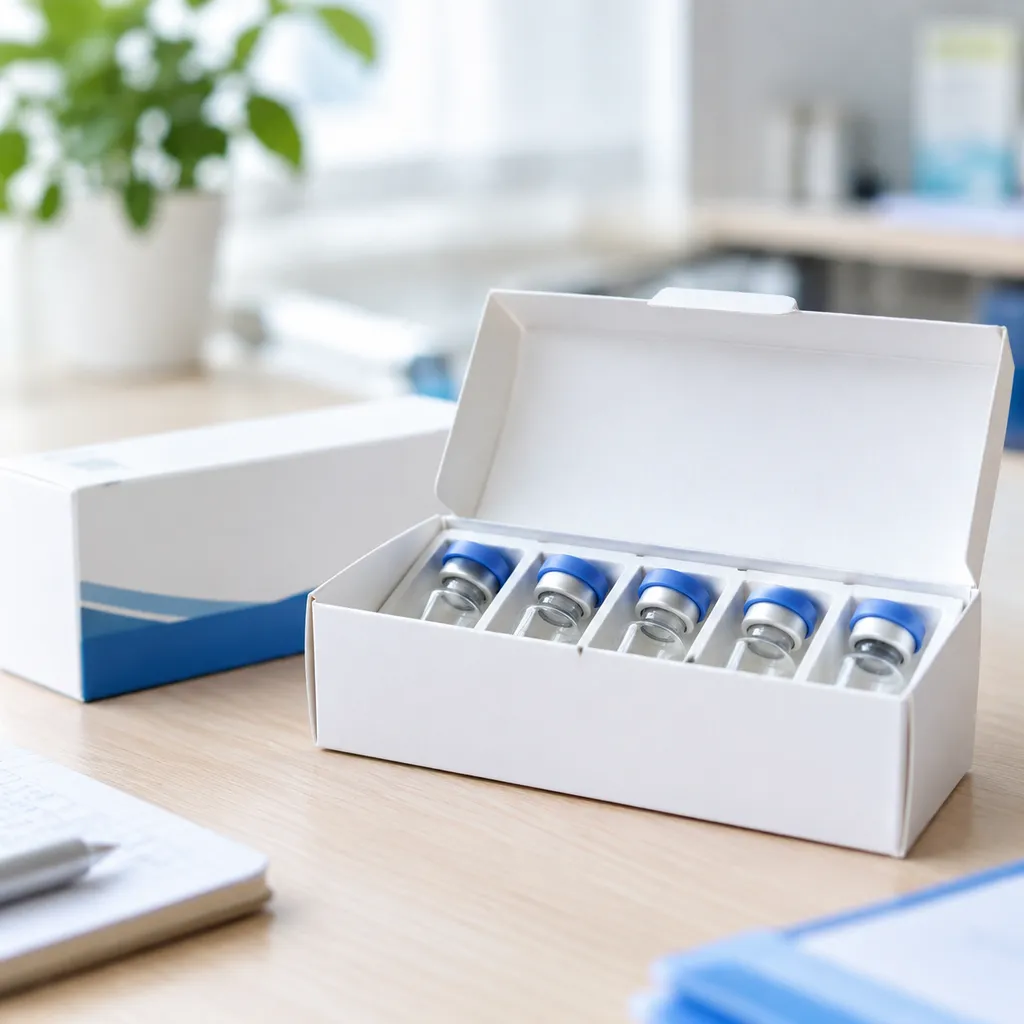
Every industry handles liquid glass containers differently, but they all share one baseline requirement: zero tolerance for transit breakage. We configure each cardboard vial box to match the exact protection, handling, and display requirements of your market.
Pharmaceutical Vials, Peptides, and Injectable Solutions
Clinical products demand secure fitments and tight contamination controls. We manufacture rigid pharmaceutical vial boxes that lock glass bodies firmly in place, keeping crimped seals untouched and light-sensitive compounds shielded from ambient exposure. To meet rigorous medical distribution standards, we align box architecture with custom vial packaging design with inserts and compliance to ensure transit durability and tamper-evident security.
Essential Oils, Tinctures, and Aromatherapy Packaging
Natural oils require heavy-duty outer packaging capable of handling heavier glass weights and tall dropper assemblies:
Upright stabilization: Prevents 5ml, 10ml, and 30ml tincture bottles from tipping, eliminating cap leakage during transport.
Oil-resistant surfaces: Coated cardstocks prevent grease marks if trace amounts of liquid escape onto the carton exterior.
Organic presentation: Unbleached kraft boards emphasize clean, natural product positioning on retail shelves.
Cosmetic Serums, Perfumes, and Skin Treatment Ampoules
In the personal care sector, secondary packaging sets customer value expectations. We design high-end custom printed vial boxes for single-dose skin treatments, sample perfumes, and multi-vial beauty kits. Dense rigid board cores paired with soft-touch coatings and metallic foil stamping turn fragile glass ampoules into luxury retail presentation sets.
Lab Sample Collection and Medical Diagnostic Test Kits
Diagnostic testing workflows rely on rapid identification and strict sample organization. We build custom partitioned vial boxes that keep test tubes, collection vials, and reagents indexed in numbered grids. These boxes work alongside nested tub and tray aseptic processing solutions to streamline cold-chain transport, laboratory intake, and multi-stage diagnostic packing lines.
Sourcing and Ordering Considerations
Planning your custom cardboard vial box production requires balancing unit budgets, validation steps, and freight schedules. Structuring your order accurately upfront avoids costly line delays and guarantees that fragile glass containers arrive intact.
MOQ vs. Wholesale Unit Pricing
Tooling, die-making, and machine setup represent the primary fixed costs in custom packaging runs. Lower runs carry a higher cost per unit, while mass production leverages economies of scale to slash unit expenses significantly.
| Order Tier | Typical Volume | Best Used For | Unit Cost Impact |
|---|---|---|---|
| Pilot Run | 500 – 1,000 pcs | New market tests & clinical pilots | Highest unit cost |
| Standard Wholesale | 3,000 – 5,000 pcs | Established product lines | Balanced pricing |
| High-Volume Bulk | 10,000+ pcs | Global distribution & retail brands | Lowest unit cost |
For targeted product rollouts or specialized formulations, sourcing custom peptide vial boxes with low MOQ keeps upfront capital free while preserving packaging quality.
Prototyping and Physical Sampling
Never move straight from screen to bulk printing. We recommend a phased validation sequence before starting full runs:
- 3D Digital Renders: Rapid visualization to verify artwork placement, flap orientations, and copy layouts.
- Structural Plain Mockups: Unprinted, plotter-cut samples made from the target board stock to test precise vial fit and insert tightness.
- Pre-Production Physical Proofs: Fully printed, die-cut, and finished samples showing exact Pantone accuracy, foil alignment, and coating textures.
Turnaround Timelines and Freight
Planning around realistic production cycles ensures you never hold filled vials waiting for packaging:
- Sampling: 3 to 7 business days from approved die-line art.
- Mass Production: 12 to 18 business days after sample sign-off.
- Air Express: 4 to 8 business days for fast inventory replenishment.
- Sea / Ocean Freight: 25 to 40 days, offering the lowest shipping cost per unit on high-volume pallet shipments.
Regulatory Compliance and Eco-Certifications
Global retail, medical, and cosmetics regulations require clear material labeling. Custom cardboard vial box runs can be tailored with:
- FSC-Certified Stocks: Paperboard traced back to responsibly managed forests.
- Standard Resin & Paper Recycling Symbols: Clear Mobius loops and regional disposal logos (such as PAP 20/21/22) printed directly onto bottom dust flaps.
- RoHS & REACH Compliant Inks: Non-toxic, soy- and water-based inks that meet heavy metal and chemical migration restrictions.
Cardboard Vial Box FAQs
What is the best cardboard thickness for a 10ml glass vial box?
For a single folding carton, we recommend 350 gsm to 400 gsm (approx. 16 pt to 18 pt) SBS paperboard. This weight delivers enough structural rigidity to hold a filled glass bottle without bowing or tearing at the tuck flaps. If you are shipping heavier multi-packs or premium presentation kits, stepping up to a 1.5 mm or 2.0 mm rigid greyboard core paired with our custom 10ml vial box packaging with inserts provides maximum crush resistance under heavy stacking pressure.
Can cardboard vial boxes hold multiple liquid vials safely during transit?
Yes. Multi-vial packaging works best when combined with dedicated internal partitioning:
- Interlocking Cardboard Dividers: Keep individual glass units separated to eliminate friction, scuffing, and glass-to-glass shock.
- Perimeter Cushioning: High-caliper outer walls absorb drops and vibration during courier transit.
- Snug Structural Fit: Using compact vial packaging boxes for secure sample storage prevents the bottles from shifting vertically, keeping crimp tops and dropper bulbs firmly aligned.
Are these boxes compatible with automated carton packing lines?
Our folding paperboard vial cartons are engineered specifically for high-speed automated packaging machinery. We manufacture them using:
- Precision Die-Cutting: Clean edges without burrs prevent feeder jams on pick-and-place systems.
- Exact Creasing Depths: Pre-broken fold lines ensure reliable, square erection under high-speed mechanical tucking arms.
- Consistent Caliper Specs: Uniform paperboard density keeps sensor feeds and auto-gluing runs operating without interruptions.
How do custom inserts prevent glass breakage during drops?
Custom inserts isolate each vial within its own shock-absorbing cell. Precision die-cut EVA or high-density PE foam creates a form-fitting pocket around the vial body, absorbing drop energy before it reaches the glass. The foam grips the bottle shoulders and crimp neck securely, neutralizing lateral movement so the glass never strikes the outer box walls or neighboring vials during rough handling.
Can I print branding and instructions inside the box lid?
Yes. We offer full two-sided offset and digital printing across our entire lineup of cardboard vial packaging. The interior lid is prime space for:
- Dosage & Usage Directions: Clear step-by-step application instructions.
- Reconstitution Guides: Visual diagrams for mixing solutions or inserting droppers.
- Compliance & QR Codes: Direct links to batch lab results, serialization tracking, or web portals.
- Brand Aesthetics: Solid interior flood coats or subtle spot patterns that create a polished unboxing experience.