
Why Small-Batch Biologics Depend on RTU Packaging
The High Stakes of Product Loss in Clinical Manufacturing
In clinical-stage parenteral manufacturing, drug substances—such as monoclonal antibodies, recombinant proteins, and cell and gene therapies—represent immense financial and therapeutic value. Traditional bulk container processing introduces mechanical stress, glass scratching, and particulate contamination, leading to reject rates that small-batch pipelines cannot afford. A single broken vial or contaminated lot can stall an entire clinical trial. Implementing Ready-to-Use (RTU) nested packaging protects critical fill volumes by delivering reliable, defect-free containers directly to the fill line.
Transitioning from Bulk Glass to Ready-to-Use Nested Systems
Moving away from conventional bulk packaging eliminates the need for on-site container preparation. RTU systems transform parenteral fill-finish workflows through proven container preparation advantages:
- Pre-Validated Cleanliness: Vials, syringes, and cartridges arrive pre-washed, depyrogenated, and pre-sterilized (via validated EtO, steam, or gamma processes).
- Zero Glass-to-Glass Contact: Standardized nest and tub configurations isolate each container, completely preventing surface abrasion, cosmetic defects, and transit micro-fissures.
- Closed-System Integrity: Packaging remains sealed within certified sterile barrier systems until robotic debagging and filling inside the isolator.
Reducing Cleanroom Footprint and Operational Overhead
Operating in-house washing machines and depyrogenation tunnels demands massive capital expenditure (CapEx), high utility consumption, and continuous cleanroom square footage.
| Operational Parameter | Conventional Bulk Processing | RTU Nested Packaging Systems |
|---|---|---|
| Facility Footprint | Large (requires washing & depyrogenation zones) | Minimal (direct integration with compact isolators) |
| Cleanroom Classification | Extensive ISO 7 / ISO 8 prep areas needed | Direct entry to ISO 5 / Grade A filling zones |
| Batch Changeover Time | Multiple hours (line clearing & re-sterilization) | Rapid (direct nest swap for different formats) |
| Utility & Maintenance Costs | High (WFI consumption, electrical heating, steam) | Low (utility-free container preparation) |
By bypassing container prep machinery, biopharma facilities and CDMOs significantly cut operational expenses (OpEx), streamline regulatory validation, and maintain the agility needed for fast clinical turnaround.
Evaluating Glass Substrate Quality and Chemical Compatibility
When selecting RTU packaging for high-value biologics, glass formulation serves as the primary barrier protecting drug stability. We prioritize USP Type I 5.0 expansion neutral borosilicate glass over standard high-expansion alternatives to ensure superior chemical durability, high hydrolytic resistance, and zero formulation interference during long-term storage.
Choosing USP Type I 5.0 Neutral Borosilicate Glass
The expansion coefficient directly dictates how glass behaves under rapid temperature changes and chemical exposure. High-expansion glass (such as 7.0 expansion or treated soda-lime) presents higher risks of ion leaching and structural fatigue. Understanding standard vial container types and uses helps clarify why 5.0 expansion tubing is the global benchmark for sensitive parenterals:
- Thermal Shock Resistance: Withstands deep-freeze and cryogenic storage conditions (down to -80°C) without micro-cracking.
- Hydrolytic Class 1 Performance: Prevents alkaline extraction that can alter the formulation's pH balance.
- Dimensional Precision: Provides uniform wall thickness and tight geometric tolerances required for automated nest-and-tub handling.
| Substrate Parameter | USP Type I 5.0 Borosilicate | High-Expansion Glass (7.0 / Type II) |
|---|---|---|
| Thermal Expansion | ~5.0 × 10⁻⁶ K⁻¹ (High stability) | 7.0–9.0 × 10⁻⁶ K⁻¹ (Moderate to low) |
| Hydrolytic Resistance | Maximum (Type I, EP/USP/JP) | Surface treated or moderate |
| Delamination Propensity | Extremely low | Elevated under basic/citrate buffers |
| Application Suitability | Monoclonal antibodies, vaccines, CGT | Bulk small-molecule generics |
Mitigating Delamination Risks and Protein Aggregation
Glass delamination—the shedding of microscopic glass flakes (lamellae) into the drug solution—poses a severe threat to biologic stability. Injected flakes trigger immunogenic responses and cause irreversible protein aggregation.
We mitigate this risk by screening RTU glass converters that maintain strict temperature controls during tube converting. Optimized forming reduces the evaporation and condensation of volatile alkali components (such as sodium and boron) on the vial's interior surface, keeping the silica network intact even when paired with aggressive phosphate, citrate, or high-pH buffers.
Screening Extractables and Leachables (E&L) Profiles
Biologics are susceptible to degradation triggered by trace chemical contaminants. Comprehensive E&L evaluation ensures that neither the glass substrate nor the nested packaging components introduce unwanted impurities into the active pharmaceutical ingredient (API):
- Elemental Impurities: Verifying low leaching of arsenic, aluminum, barium, and calcium in compliance with USP <232> and ICH Q3D guidelines.
- Surface Inertness: Eliminating surface-induced denaturation to preserve biologic potency and active drug titers.
- Validated Test Data: Reviewing vendor-supplied E&L simulation studies across variable pH ranges and accelerated aging conditions before supplier qualification.
Sterility Integrity and Particulate Management Standards
Biologic molecules are highly sensitive to foreign particles, which can trigger protein aggregation or cause immunogenic reactions in patients. We evaluate our primary packaging against strict international sterility and particulate standards to ensure every batch protects drug stability.
Adhering to USP <787> and USP <788> Particulate Limits
For parenteral formulations, visible and sub-visible particulates pose a direct threat to regulatory clearance and batch release. Our RTU nested components are washed and prepared under ISO Class 5 cleanroom conditions to exceed standard pharmacopeial cleanliness requirements:
- USP <788> Compliance: Tight particulate controls for conventional small-volume injectables.
- USP <787> Compliance: Specialized testing limits optimized for therapeutic protein injections and low-dose biologic formats.
- Automated Optical Inspection: 100% in-line camera verification to eliminate cosmetic defects, glass fragments, and fibers before tub nesting.
Validated Sterilization Methods (SAL 10⁻⁶)
Different drug products and primary packaging components require tailored sterilization approaches to maintain material integrity:
- Ethylene Oxide (EtO): Standard for nested vial and syringe configurations, ensuring zero thermal stress on pre-assembled components while maintaining verified low residual limits.
- Steam Sterilization: Suitable for robust elastomeric closures and specific glass formats requiring autoclave processing.
- Gamma Irradiation: High-penetration sterilization suited for specific polymer substrates and closed-barrier systems.
All sterilization cycles are validated to achieve a minimum Sterility Assurance Level (SAL) of 10⁻⁶, supported by comprehensive biological indicator data and residual dissipation reports.
ISO 11607 Sterile Barrier Performance
A pre-sterilized container is only as dependable as its packaging barrier. Using a fully validated sterile RTU vial tray kit for biologics ensures primary containers remain completely isolated from contamination during shipping, storage, and cleanroom transfer.
- Tyvek® Header and Lid Seals: Breathable, high-strength Tyvek seals provide a clean, particulate-free peel during automated or manual debagging inside the isolator.
- Double-Bagged Protective Tubs: External contamination is locked out via double-barrier medical-grade polymer bags, allowing step-down transfer across cleanroom grades (Grade C to Grade A).
- Seal Integrity & Aging Validation: Packaging seals undergo dye penetration, bubble emission, and peel-strength testing in accordance with ISO 11607 standards to guarantee real-time shelf life and sterile integrity.
Nest and Tub Architecture for Robotic Fill-Finish Lines
Zero Glass-to-Glass Contact Matrices
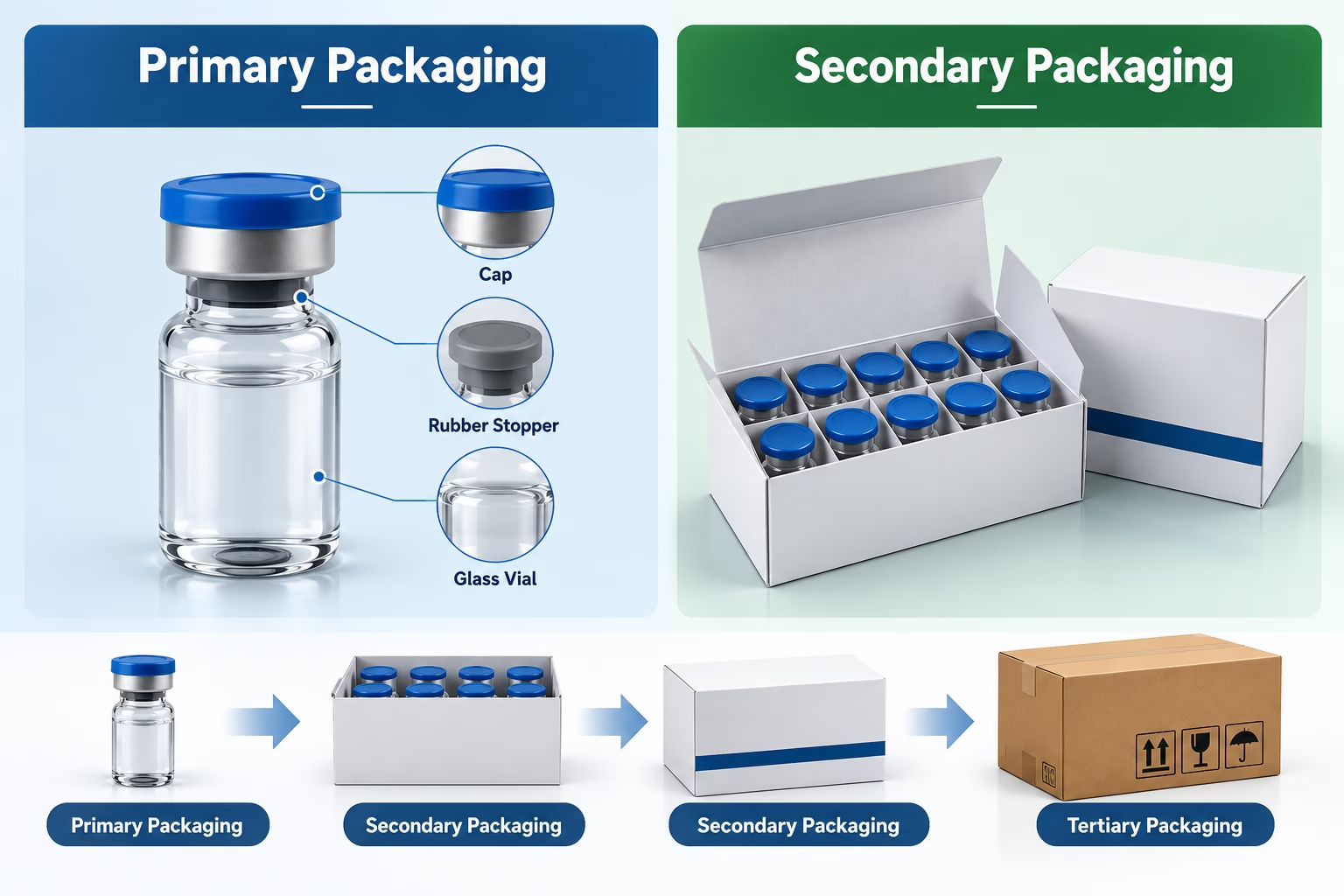
Bulk container handling introduces glass-on-glass friction, cosmetic scratching, and micro-fissures that risk vial breakage during capping or lyophilization. We rely on precision-engineered nested tub and tray aseptic processing solutions that hold each vial, syringe, or cartridge securely in its own pocket. This matrix design provides essential benefits:
Eliminates transit friction: Prevents surface abrasions, micro-cracks, and particulate generation during shipping.
Reduces fill-line breakage: Keeps containers perfectly vertical for exact needle entry and consistent fill volumes.
Maintains optical clarity: Protects glass walls to ensure unobstructed automated visual inspection (AVI).
Dimensional Compatibility with Multi-Format Robotic Isolators
Small-batch bioprocessing frequently alternates between 2R–30R vials, prefillable syringes (PFS), and pen-injector cartridges. Standardized nest and tub footprints ensure that a single robotic filling platform can handle multiple drug delivery systems with minimal changeover time. Implementing a qualified vial nest and tub system for RTU aseptic fill-finish guarantees:
Universal nest geometry: Fits industry-standard robotic filling arms and de-nesting grippers.
Smooth de-nesting and re-nesting: Consistent container spacing eliminates robotic pickup failures.
Minimized line changeover downtime: Speeds up transition times between different clinical trial batches.
Integrated Pre-Sterilized Closures and Push-Up Seals
An effective ready-to-fill setup requires fully matched primary packaging components. Pairing nested glass with validated, pre-sterilized elastomeric stoppers and aluminum/plastic flip-off push-up seals delivers a unified closed container system:
Validated Container Closure Integrity (CCI): Ensures precise mechanical fit between the glass neck finish and the elastomer to prevent micro-leaks.
Direct-to-Machine Integration: Pre-washed, depyrogenated, and pre-sterilized components are packaged for direct loading into robotic stoppering and capping modules.
Reduced Core Interventions: Minimizes manual handling inside Grade A/ISO Class 5 isolator zones to protect sensitive biologic formulations.
Regulatory Assurance and Quality Management Systems
When vetting an RTU packaging partner for high-value biologics, regulatory compliance is non-negotiable. Packaging defects or incomplete documentation can derail your clinical timeline and stall filings. We hold our sterile packaging operations to strict global quality standards to ensure every batch meets pharmacopeial criteria right out of the box.
ISO 15378 cGMP Cleanroom Manufacturing
Primary packaging must be produced under validated environmental controls. Our Ready-to-Use (RTU) vials nest and tub formats are washed, depyrogenated, and nested inside ISO Class 5 (Grade A laminar flow / Grade B background) cleanroom environments.
- ISO 15378 Certification: Direct integration of cGMP principles into primary packaging production, ensuring strict change control, line clearance, and contamination mitigation.
- ISO 9001 Alignment: End-to-end traceability from raw neutral borosilicate glass tubing to the final sealed tub.
Active FDA Type III Drug Master Files (DMF)
To streamline your IND, NDA, and BLA submissions, your supplier must offer ready access to regulatory dossiers:
- Type III DMF Registration: Containers, prefilled syringes, and sterile elastomeric closures are supported by active Type III Drug Master Files registered with the US FDA.
- Letters of Authorization (LoA): We provide prompt LoA issuance so regulatory agencies can review container safety, formulation compatibility, and toxicological profiles without delaying your review cycle.
| Regulatory Component | Quality & Compliance Benchmark |
|---|---|
| Manufacturing Standard | ISO 15378 (cGMP primary packaging for medicinal products) |
| Cleanroom Classification | ISO Class 5 / Grade C+A processing and packaging |
| Regulatory Master Files | US FDA Type III DMF with available Letters of Authorization (LOA) |
| Pharmacopeial Compliance | USP, Ph. Eur. (EP), JP, and YBB requirements |
Batch-to-Batch Certificates of Analysis (CoA) & Endotoxin Testing
Every small-batch shipment includes a comprehensive Certificate of Analysis verifying compliance with critical quality attributes:
- Endotoxin Limits: Verified via kinetic turbidimetric or chromogenic LAL assays to ensure levels remain well below standard pharmacopeial thresholds (< 0.25 EU/mL).
- Particulate Verification: Documented sub-visible particulate counts conforming to USP <787> and USP <788> standards for therapeutic protein injections.
- Sterility Assurance: Validated to a Sterility Assurance Level (SAL) of 10⁻⁶ via certified EtO, steam, or gamma processes.
Meeting the stringent containment expectations outlined in commercial standards—such as Opdivo Nivolumab vial packaging and storage specs—demands uncompromised lot-to-lot traceability and transparent documentation across every small-batch run.
Overcoming MOQ Constraints and Managing Lead Times
Procurement bottlenecks and rigid minimum order quantities (MOQs) are two of the biggest hurdles when sourcing primary containers for small-batch biologics. Legacy packaging manufacturers frequently enforce massive production minimums that simply do not align with early-phase clinical runs, personalized therapeutics, or orphan drug batches. When deciding how to select an RTU packaging supplier for small-batch biologics, you need a partner that combines low-volume ordering agility with predictable delivery schedules.
Securing Flexible Orders for Clinical-Stage Runs
Early-stage bioprocessing should never require purchasing tens of thousands of unneeded containers just to complete a pilot run. We align our sterile supply models directly with clinical realities:
Low MOQ flexibility: Access validated nest and tub configurations tailored to exact batch requirements for Phase I and Phase II clinical supplies.
Pre-packaged convenience: Streamline operational setup by utilizing standardized RTU pharma kits for clinical fill-finish that bundle containers and closures in balanced quantities.
Matched component sets: Source pre-sterilized Type I glass vials, elastomeric stoppers, and flip-off seals together, eliminating mismatched delivery dates across different component vendors.
Cutting Procurement Delays with Stocked Formats
Standard manufacturing queues for custom sterile glass runs can stretch clinical timelines by months. Sourcing from readily available stock prevents costly downtime on your fill-finish lines:
Standard container availability: Rapid dispatch of high-demand 2R to 30R neutral borosilicate vials, prefilled syringes (PFS), and cartridges.
Pre-validated sterile inventory: Off-the-shelf inventory processed under ISO Class 5 cleanroom conditions and pre-sterilized, ready to move straight into your isolator or biosafety cabinet.
Building Resilience with Buffer Stock Agreements
Clinical trial schedules are dynamic, and unexpected stability testing or cohort expansions can quickly deplete on-site inventory. We establish structured inventory agreements to maintain continuous supply:
| Supply Chain Strategy | Operational Benefit for Biopharma |
|---|---|
| Dedicated Buffer Stock | Pre-allocated RTU nests held in sterile barrier packaging for on-demand dispatch. |
| Standardized Tub Footprints | Universal tub designs that run across varied robotic filling platforms without mechanical changeover delays. |
| Fast Replenishment Windows | Guaranteed shipment timelines for follow-up batches to prevent clinical batch delays. |
On-Site Technical Audit Checklist for RTU Packaging Vendors
When qualifying an RTU packaging supplier for small-batch biologics, paper audits only reveal part of the story. An on-site technical audit confirms whether a supplier can consistently hit critical quality thresholds on the cleanroom floor.
We evaluate potential RTU packaging partners across four essential operational checkpoints:
1. Spectrometry Verification of Glass Tubing Source
We verify raw material origins to prevent drug-container incompatibility. A reliable supplier must maintain incoming traceability for every glass cane batch:
Material Composition Testing: In-house or certified third-party X-ray fluorescence (XRF) and ICP-MS spectrometry records confirming authentic USP Type I 5.0 neutral borosilicate glass.
Dimensional Consistency: Automated laser gauging data measuring outer diameter, wall thickness, and total indicated runout (TIR) to avoid robotic handling jams.
2. Sterility Assurance Level (SAL $10^{-6}$) and Residue Testing
Sterility cannot be assumed; it requires strict validation data:
Cycle Validation: Reviewing fractional-run sterilization records verifying a minimum Sterility Assurance Level (SAL) of $10^{-6}$ across all Ethylene Oxide (EtO) or radiation cycles.
Residual Limits: Gas chromatography testing showing EtO and ethylene chlorohydrin (ECH) residuals remain well below standard limits to protect sensitive biologic molecules from oxidation.
3. ISTA Transit Simulation and Nest Integrity
Small-batch parenteral formulations cannot tolerate shipping-induced defects. We inspect how suppliers validate their sterile barrier systems:
Vibration and Shock Testing: Verifying ASTM D4169 and ISTA 3A/3E transit simulation records for nested tub and tray configurations.
Barrier Performance: Bubble emission and dye-penetration test data proving vial packaging for pharmaceutical secure transit maintains sterile seal integrity and zero glass-to-glass friction after severe dynamic stress.
4. Direct Engineering and Line Integration Support
Small-batch fill-finish setups often require rapid adjustments across different formats. We audit the vendor’s direct engineering readiness:
Robotic Nest Compatibility: Verifying standard dimensional compliance for automated de-nesting arms and filling needles.
On-Site Technical Troubleshooting: Direct access to packaging engineers for resolving de-nesting friction, static charge issues, or stoppering deviations during trial runs.
| Audit Checkpoint | Focus Parameter | Target Acceptance Standard |
|---|---|---|
| Glass Substrate | 5.0 expansion borosilicate composition | Zero high-expansion soda-lime traces; verified Type I compliance |
| Sterilization Efficacy | EtO / Steam / Gamma validation | SAL $10^{-6}$ certified with traceable bioburden and endotoxin counts |
| Packaging Robustness | Nested tub transit integrity | Passed ISTA 3A simulation; zero scuffing or micro-cracks |
| Line Integration | Robotic interface tolerances | Sub-millimeter nested alignment conforming to fill-finish isolator specs |
Strategic Sourcing: Partnering with a Specialized RTU Packaging Supplier
Custom Precision RTU Nested Vials (2R–30R) and Syringe Formats
Every drug formulation has distinct dosing and stability profiles. We provide customized primary containment configurations designed specifically for agile clinical operations:
- Tubular and Molded RTU Vials: Standard 2R to 30R formats nested in standardized tubs to prevent surface micro-scratches and glass particulate generation. Check our dedicated RTU vials for validated nest-and-tub configurations.
- Prefillable Syringes (PFS) and Cartridges: Pre-sterilized systems equipped with rigid needle shields (RNS) and tip caps, fully ready for automated or manual fill-finish.
- Matched Sterile Closures: Pre-washed and pre-sterilized elastomeric stoppers and push-up flip-off seals engineered to ensure container closure integrity (CCI).
Leveraging ISO 15378 Certified Manufacturing for Agile Clinical Runs
To maintain absolute drug purity, our primary packaging operations adhere strictly to ISO 15378 standards within certified ISO Class 5 / Grade A processing environments:
- Turnkey Ready-to-Fill Containers: Pre-washed, depyrogenated, and sterilized via validated EtO, steam, or gamma processes so you can bypass capital-intensive prep lines.
- Robotic Isolator Compatibility: Outer tubs and nest matrices integrate directly with standard robotic filling platforms, eliminating line jamming and setup downtime.
- Zero Glass-to-Glass Contact: Secure nest cavities isolate each container throughout shipping and automated handling.
| Key Sourcing Capability | Operational Impact for Biopharma |
|---|---|
| Broad Format Versatility (2R–30R & PFS) | Seamless scaling from preclinical pilot batches to Phase I–III trials |
| ISO 15378 Cleanroom Processing | Guaranteed low bioburden and sub-visible particulate control |
| Pre-Validated Sterilization Methods | Immediate line-readiness without local autoclave validation |
Rapid Regulatory Dossiers for IND and BLA Filings
Securing early-stage approval requires end-to-end data transparency. We supply complete technical and regulatory packages to keep your IND and BLA filings on schedule:
- Active Type III Drug Master Files (DMF): Direct Letters of Authorization (LoA) for straightforward submissions to the US FDA and global health authorities.
- Batch-Specific Documentation: Comprehensive Certificates of Analysis (CoA) detailing endotoxin levels, particulate counts, and dimensional tolerances.
- Material Characterization: Complete Extractables and Leachables (E&L) data packages and pharmacopeial compliance (USP, EP, JP) across all glass and elastomer components.
Frequently Asked Questions About RTU Biologic Packaging
What is the difference between standard bulk vials and RTU nested vials?
Standard bulk glass containers require dedicated in-house infrastructure for washing, depyrogenation tunnels, and autoclave sterilization, which causes frequent glass-to-glass contact and surface scratching. In contrast, ready-to-use RTU packaging solutions are pre-washed, depyrogenated, and pre-sterilized in an ISO Class 5 / Class A environment. They arrive secured in standardized nest-and-tub configurations that completely eliminate container-to-container contact, particulate generation, and cosmetic defects.
| Feature | Standard Bulk Vials | RTU Nested Vials |
|---|---|---|
| Preparation Required | Washing, depyrogenation, autoclaving | Ready for immediate sterile filling |
| Glass-to-Glass Contact | High (leads to scratches & particulates) | Zero (matrix nest isolation) |
| Cleanroom Footprint | Large (requires washing/tunnel lines) | Minimal (direct robotic isolator feed) |
| Batch Flexibility | Rigid, suited for high-volume runs | Highly agile for small batches & clinical lots |
Why is 5.0 expansion neutral borosilicate glass essential for biologic drugs?
Sensitive biologics, monoclonal antibodies, and cell therapies react poorly to high-alkali glass surfaces. USP/EP Type I 5.0 expansion neutral borosilicate glass provides exceptional hydrolytic resistance and chemical stability. This minimizes glass delamination, prevents pH shifts, limits extractables and leachables (E&L), and stops surface-induced protein aggregation during long-term storage.
How does RTU packaging lower initial CapEx for small-batch CDMOs?
Adopting RTU nested packaging eliminates the need to purchase, validate, and maintain bulky washing stations, water-for-injection (WFI) loops, and depyrogenation tunnels. This reduces cleanroom space requirements, lowers utility consumption, and cuts capital equipment expenditure by millions of dollars, allowing clinical CDMOs to invest directly in compact, multi-format robotic isolators.
What documentation should I request before qualifying an RTU supplier?
When qualifying an RTU packaging partner for biologic drug products, verify the following core quality and regulatory files:
ISO 15378 Certification: Confirms cGMP compliance for primary pharmaceutical packaging manufacturing.
Drug Master File (DMF) Access: Active FDA Type III DMF registration and formal Letters of Authorization (LoA) for regulatory submissions.
Sterilization Validation Dossiers: Comprehensive validation reports for Ethylene Oxide (EtO), steam, or gamma sterilization guaranteeing a Sterility Assurance Level (SAL) of $10^{-6}$.
Batch Release Data: Complete Certificates of Analysis (CoA) verifying sub-visible particulate counts (USP <787>/<788>), endotoxin limits, and closure integrity.
Can nested RTU tubs run on multi-format robotic filling machines without downtime?
Yes. Standardized nest and tub formats are engineered to industry dimensions, allowing flexible robotic filling platforms to process vials (2R to 30R), prefillable syringes, and cartridges on the same line. Switching between container formats requires minimal recipe changes on the isolator interface rather than mechanical retooling, keeping changeover downtime to an absolute minimum.