Formula details
Product Details
Overview
Comprehensive Sterile Packaging Formats and Configurations
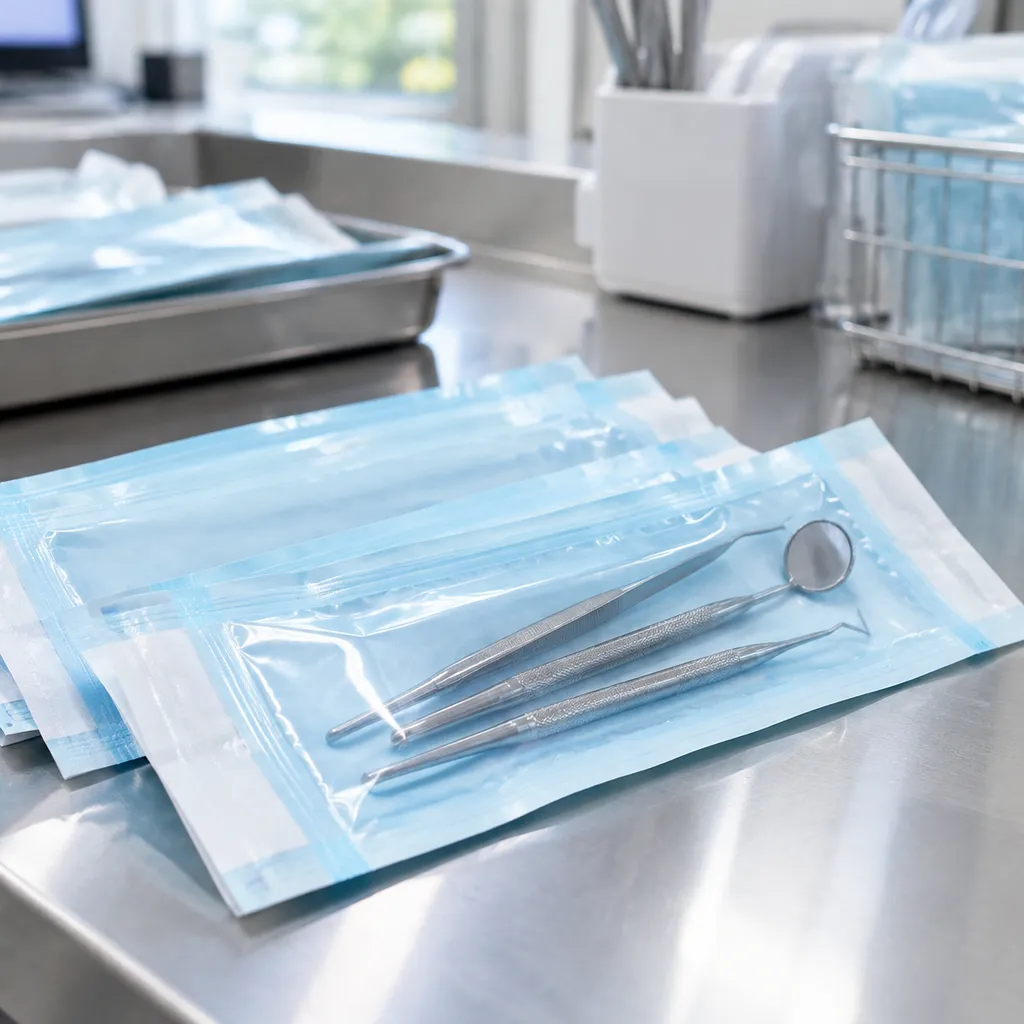
Heat-Seal and Self-Seal Sterilization Pouches with Chevron Peel Designs
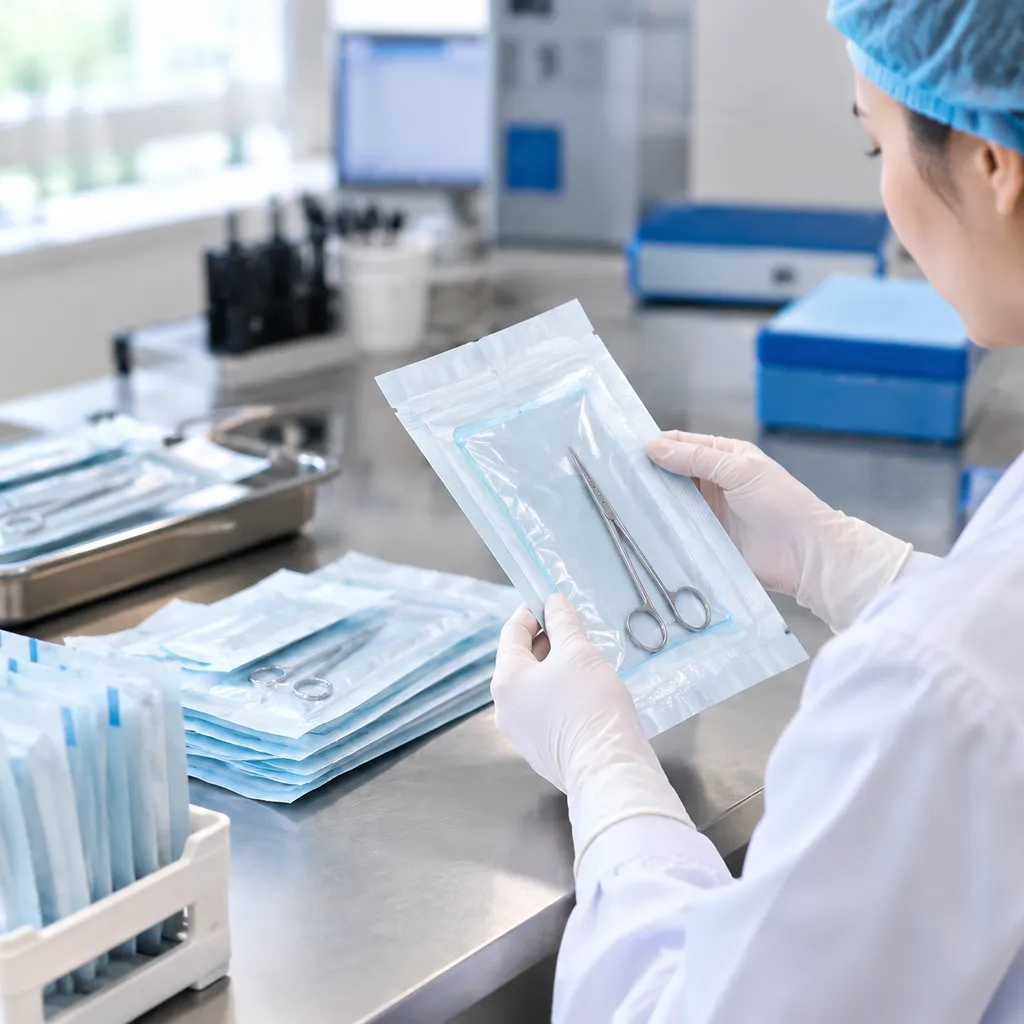
Our peelable sterilization pouches provide proven aseptic presentation without particulate generation during opening.
- Chevron Peel Configuration: Distributes peeling force evenly to eliminate substrate tearing, blowout, and microbial ingress.
- Closure Options: Available as factory-validated heat sealable pouches or self-seal formats featuring high-tack, medical-grade adhesive strips for secure manual packaging without sealers.
- Material Pairings: Medical-grade paper or DuPont™ Tyvek® paired with transparent, shatter-proof multi-layer laminated barrier film (PET/PP, PET/PE).
Continuous Sterilization Tubing and Reels with Process Indicators
Designed for variable-length items and customized batch handling in cleanroom environments:
- Flat and Gusseted Sterilization Rolls: Gusseted designs expand to accommodate bulky, three-dimensional surgical devices and heavy tubing sets.
- Integrated Chemical Indicators: Clear, high-contrast sterilization indicator lines printed directly along the web for steam and Ethylene Oxide (EtO) cycle verification.
- Process Tracking: Pre-printed alignment grids and directional arrows for precise cutting and consistent sealing intervals.
High-Gas-Permeability Tyvek® and Medical Paper Header Bags
Engineered specifically for heavy, bulky, or high-profile medical devices requiring rapid gas exchange:
- Rapid Aeration & Degassing: Breathable Tyvek® or medical-grade paper header strips allow rapid EtO gas penetration and vacuum extraction without risk of bag rupture.
- Heavy-Duty Puncture Resistance: Constructed with thick, co-extruded polyethylene (PE) bodies to securely hold orthopedic trays, surgical kits, and respiratory tubing.
- Cleanroom Packing Ready: Low-linting structural design minimizes particulate contamination in ISO-classified assembly rooms.
Flexible Forming and Non-Forming Web Films for Automated Packaging
Optimized for high-speed Form-Fill-Seal (FFS) automated packaging lines:
- Forming Webs: Multi-layer co-extruded films offering high drawability, uniform wall thickness, and puncture resistance across deep-draw pockets.
- Non-Forming Top Webs: Engineered to seal cleanly to flexible bottom webs or rigid trays, delivering dependable peel strength and airtight hermetic seals.
- Optimized Processing: Wide sealing temperature windows to prevent film distortion, burn-through, and web tracking issues on packaging lines.
Die-Cut Lidding and Preformed Sterile Barrier Trays
Rigid and semi-rigid packaging systems for delicate, sharp, or complex medical equipment:
- Die-Cut Lidding: Custom-cut Tyvek®, medical paper, or medical blister lidding foil with targeted heat-seal adhesive coatings for smooth, fiber-free peeling.
- Preformed Blister Trays: Formed from medical-grade PETG, APET, or HIPS to securely immobilize surgical implants, catheters, and vascular devices.
- Sealing Reliability: Formulated adhesive layers ensure clean, continuous visual seal transfer indicators across all flange perimeters.
Sterile Barrier Configuration Matrix
| Packaging Format | Primary Substrate Options | Common Sterilization Compatibility | Typical Device Application |
|---|---|---|---|
| Chevron Peel Pouches | Tyvek® / Medical Paper + Film | EtO, Steam, Gamma, E-Beam | Scalpels, forceps, wound dressings, IV sets |
| Tubing & Reels | Medical Paper / Tyvek® + Laminate | Steam Autoclave, EtO | Custom surgical sets, dental kits, lab tools |
| Header Bags | High-density PE Film + Tyvek® Strip | EtO, E-Beam | Bulky procedure kits, suction bags, tubing sets |
| Forming / Non-Forming | Co-extruded PA/PE, PP/PE Barrier Films | EtO, Gamma, E-Beam | Syringes, IVD consumables, mass disposables |
| Die-Cut Lidding & Trays | Coated Tyvek® / Foil + Rigid PETG/HIPS | EtO, Gamma, VH2O2 (Plasma) | Orthopedic implants, pacemakers, heart valves |
Substrate Selection and Material Science for Medical Sterilization Packaging
Selecting the right barrier materials is the foundation of dependable medical sterilization packaging.
DuPont Tyvek® Microbial Barrier Substrates (1073B, 1059B, 2FS)
For high-risk and heavy-duty medical devices, we utilize medical-grade DuPont™ Tyvek® to deliver superior breathability, puncture resistance, and microbial protection:
- Tyvek® 1073B: The highest-strength grade, engineered for heavy, sharp, or high-value orthopedic and surgical instruments.
- Tyvek® 1059B: Balanced strength and breathability, optimized for medium-weight diagnostic devices and catheter kits.
- Tyvek® 2FS: A cost-effective, high-puncture-resistant option designed for lighter medical disposables and high-volume automated packaging lines.
Direct-Seal Medical Grade Paper Options
Our medical-grade paper solutions deliver consistent porosity for gaseous sterilant penetration and evacuation without compromising barrier integrity:
- Steam & EtO Compatibility: Formulated for ethylene oxide and autoclave cycles, resisting high heat and moisture stress.
- Controlled Porosity: Prevents micro-channeling during pressure differentials while blocking bacterial ingress.
- Direct-Seal Coatings: Specially treated for direct heat sealing to multi-layer polymer webs, eliminating the need for added adhesives.
Optically Clear Co-Extruded & Multi-Layer Barrier Films
We manufacture high-barrier flexible web films designed for automated form-fill-seal (FFS) systems and preformed pouches:
- Polymer Blends (PET/PE, PA/PE, PP/PE): Multi-layer laminates and co-extrusions engineered for high puncture resistance and tear propagation control.
- Optical Clarity: High-transparency films allow rapid visual inspection of the sterile field and device orientation before opening.
- Rigid Barrier Compatibility: Formulated to seal reliably against flexible films and thermoformed sterile pharmaceutical trays for safe drug handling to ensure package integrity across variable shipping conditions.
| Substrate Type | Compatible Sterilization | Tensile & Puncture Resistance | Primary Application |
|---|---|---|---|
| Tyvek® 1073B | EtO, Gamma, E-Beam, VH2O2 | Maximum | Heavy orthopedic implants, surgical kits |
| Tyvek® 1059B / 2FS | EtO, Gamma, E-Beam, VH2O2 | High | Catheters, IV administration sets, tubing |
| Medical Grade Paper | EtO, Steam Autoclave | Medium | Standard wound care, syringes, disposable kits |
| Multi-Layer PA/PE Film | EtO, Gamma, E-Beam | Very High | Thermoformed blister packaging, puncture-prone devices |
Cohesive Failure-Free Clean Peel Mechanisms
Particle contamination inside an operating suite presents immediate risk. We formulate our seal layers to separate via cohesive transfer, delivering an ultra-clean peel with zero particulate shed:
- Clean Peel Geometry: Smooth opening force along the seal boundary without tearing the paper or Tyvek® substrate.
- Visual Seal Verification: Continuous, uniform seal transfers allow clinical personnel to verify complete seal integrity instantly upon opening.
- Validated Seal Window: Wide processing latitude to maintain hermetic seal strength across diverse sealing temperatures and line speeds.
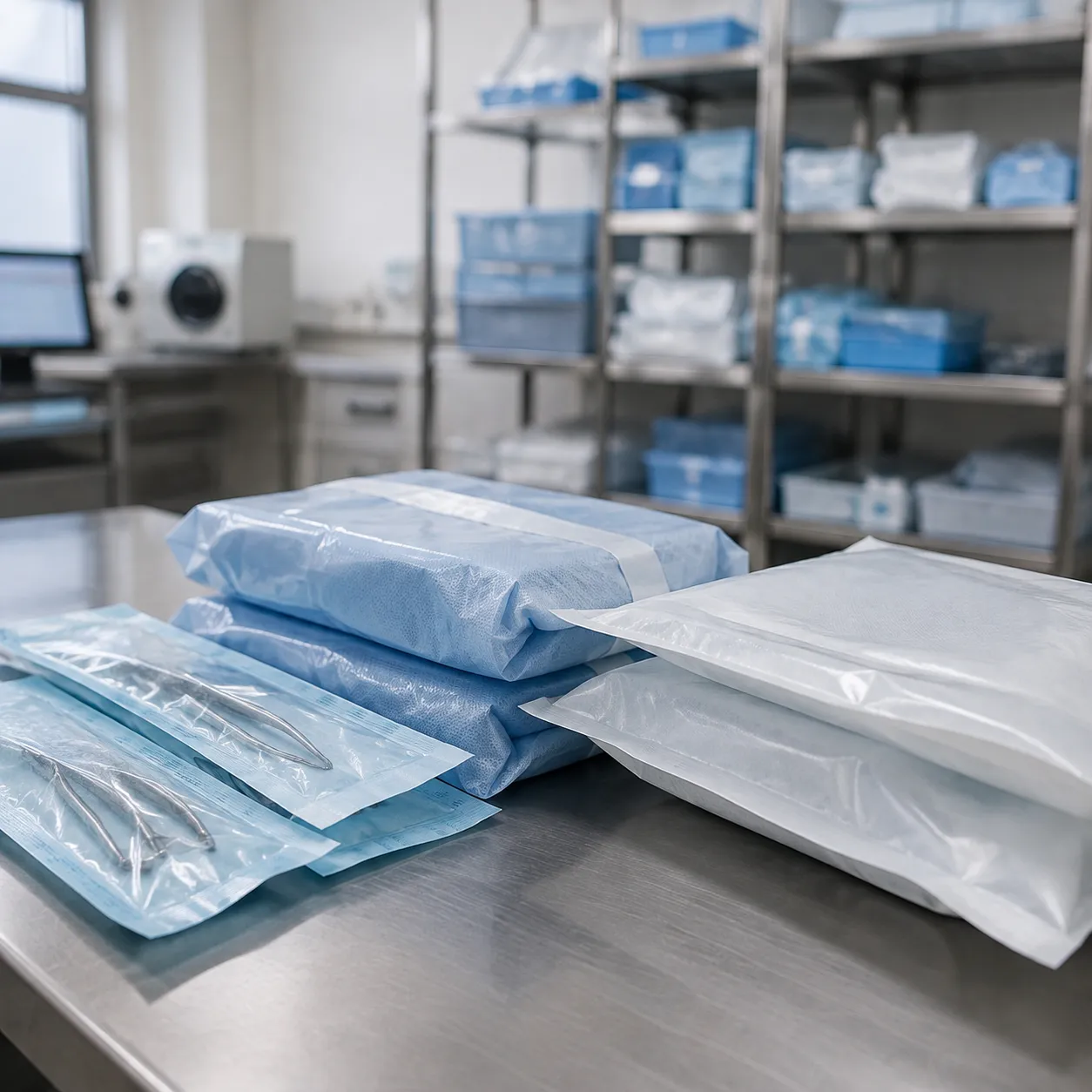
Sterilization Method Compatibility in Medical Sterilization Packaging
Ethylene Oxide (EtO) Compatibility and Gas Degassing
Ethylene oxide (EtO) packaging requires balanced porosity to allow rapid gas sterilant penetration, relative humidity transfer, and post-cycle degassing.
Rapid Aeration: High-porosity microbial barriers allow ethylene oxide and moisture to penetrate and evacuate smoothly, drastically reducing degassing hold times.
Low Residue Retention: Polymers and substrates are selected to minimize EtO, ethylene chlorohydrin (ECH), and ethylene glycol (EG) residual absorption.
Visual Verification: Integrated process indicator strips provide immediate visual confirmation of EtO exposure.
Steam Autoclave High-Temperature and Moisture Resistance
Our autoclave sterilization pouches and materials withstand saturated steam under pressure without bursting, delaminating, or losing seal integrity.
Thermal Endurance: Engineered for standard 121 °C gravity cycles and high-temperature 134 °C pre-vacuum runs.
Wet-Strength Protection: Medical grade paper and heavy-duty films resist fiber breakdown and puncture when wet.
Clean Peel Performance: Specially formulated heat-seal coatings prevent fiber tearing upon opening, even after intense thermal cycles.
Gamma and Electron Beam Radiation Polymer Stabilization
Ionizing radiation can embrittle or discolor untreated polymers. We use radiation-stabilized barrier films and substrates for gamma (⁶⁰Co) and E-beam processing.
Polymer Longevity: Radiation-stabilized polyolefins and barrier films retain elongation and tensile strength post-exposure (25–50 kGy doses).
Clarity Retention: Transparent web films resist yellowing, preserving post-sterilization optical inspection.
Aging Stability: Physical barrier properties remain intact throughout the shelf-life aging curve.
Low-Temperature Hydrogen Peroxide (VH2O2) Plasma Compatibility
Vaporized hydrogen peroxide (VH_2O_2) plasma sterilization requires synthetic, non-cellulosic barriers to prevent sterilant absorption and cycle aborts.
Synthetic Barrier Integration: Compatible with synthetic non-woven substrates that do not absorb active peroxide vapor.
Aseptic Handling: Works seamlessly with advanced packaging workflows, including nested tub and tray aseptic processing solutions, where rigid barrier stability and gas diffusion are required.
Cycle Assurance: Built-in plasma-specific chemical indicators react distinctly to confirm gas exposure during low-temperature cycles.
| Sterilization Modality | Recommended Substrate Combinations | Key Packaging Feature |
|---|---|---|
| Ethylene Oxide (EtO) | Tyvek / Film, Medical Paper / Film | Fast gas penetration and rapid degassing |
| Steam Autoclave | Medical Paper / High-Temp Film | Moisture resistance and high-heat stability |
| Gamma / E-Beam | Tyvek / Radiation-Stabilized PE Film | Resistance to cross-linking degradation |
| VH_2O_2 Plasma | Tyvek / Clear Multi-Layer Film | Zero cellulose content to prevent cycle aborts |
Quality Assurance, Regulatory Compliance, and Cleanroom Standards
ISO 11607-1, ISO 11607-2, and EN 868 Regulatory Compliance
Full regulatory alignment is built directly into our production processes:
- ISO 11607-1: Validates our raw material selection, microbial barrier performance, and physical integrity across all transit environments.
- ISO 11607-2: Governs our sealing process validation, defining strict process windows for critical parameters (temperature, pressure, dwell time).
- EN 868 Series: Verifies specific material performance metrics for heat-sealable pouches, reels, and direct-seal medical paper combinations.
ISO Class 7 and Class 8 Cleanroom Manufacturing Controls
To minimize particulate counts and manage pre-sterilization bioburden, we produce our terminally sterilized packaging inside dedicated cleanrooms:
- Environmental Monitoring: Continuous testing of airborne particulates, surface microbiology, and air change rates.
- Contamination Control: Positive air pressure systems, automated air showers, and strict cleanroom gowning protocols prevent contamination across our pouch converting lines and specialized formats like pharmaceutical cartridge nest and tub sterile packaging.
- Static & Particulate Management: High-efficiency particulate air (HEPA) filtration paired with anti-static ionizing bars across active web lines.
ASTM F88 Seal Strength and ASTM F1929 Dye Penetration Leak Testing
We execute comprehensive barrier integrity tests during every production run:
- ASTM F88 (Seal Strength): Measures the peak force required to separate the heat-sealed edges, ensuring robust bond strength that withstands transit while maintaining a clean, fiber-free peel.
- ASTM F1929 (Dye Penetration): Identifies micro-channel leaks and seal discontinuities in porous packaging materials using optical dye migration tests.
ASTM F2096 Bubble Emission and ASTM F1980 Accelerated Aging Protocols
| Test Protocol | Focus Area | Technical Execution & Objective |
|---|---|---|
| ASTM F2096 | Gross Leak Detection | Internal pressurization underwater to detect pinholes down to 250 μm via bubble emission. |
| ASTM F1980 | Accelerated Shelf-Life | Elevated temperature and humidity aging chambers to validate 1-year, 3-year, and 5-year sterile shelf-life stability. |
| ASTM D4169 | Transit Simulation | Drop, vibration, and atmospheric pressure variation testing to ensure sterile barrier durability during transport. |
Custom OEM and ODM Medical Sterilization Packaging Engineering
We deliver end-to-end custom engineering for medical sterilization packaging, tailoring every sterile barrier configuration to match specific medical device dimensions, material sensitivities, and high-speed automated packaging lines.
| OEM & ODM Engineering Capabilities | |
|---|---|
| Structural Formats | Flat pouches, corner/center chevron peel, expandable side gussets, thumb notches, custom die-cut lidding profiles |
| Printing Technology | High-precision flexographic printing up to 6 colors |
| Inks & Safety | Non-toxic, water-based medical inks (low-outgassing) |
| Chemical Indicators | Type 1 process indicators: EtO, steam autoclave, VH₂O₂, gamma / E-beam irradiation |
| Traceability / Data | High-resolution 2D DataMatrix, GS1 barcodes, UDI, batch/lot |
Custom Pouch Dimensions, Gusset Depths, and Die-Cut Profiles
Every medical device requires an exact fit to prevent puncture risks, excessive headspace, and seal abrasion during transit:
Tailored Pouches & Reels: Custom widths ranging from ultra-narrow profiles up to wide-format configurations with customizable chevron angles for smooth, fiber-free opening.
Side-Gusseted Designs: Engineered gusset depths accommodate bulky surgical kits, orthopedic instrumentation, and procedure sets without stressing perimeter seals.
Precision Die-Cutting: Custom-shaped breathable Tyvek and medical paper lidding precisely match thermoformed rigid blister trays. We also coordinate barrier formats to integrate directly with secondary containment units like a custom vial sample box for safe storage and shipping.
Medical-Grade Flexographic Printing up to 6 Colors
Our in-line flexographic printing facilities operate within controlled cleanroom environments to guarantee crisp visuals without risking sterile barrier integrity:
Safe Formulations: Certified non-toxic, solvent-free medical inks that do not flake, bleed, or migrate through porous substrates during high-heat or moisture sterilization.
Multi-Color Capabilities: Up to 6-color custom printing for branding, instructional graphics, multi-language instructions, and clear opening directions.
Multi-Process Chemical Sterilization Indicator Printing
We integrate certified chemical process indicator inks directly onto porous Tyvek, medical paper, and film substrates:
Clear Color Transition: Distinct visual color changes verify exposure to Ethylene Oxide (EtO), Steam Autoclave, Hydrogen Peroxide (VH2O2) Plasma, or Radiation.
Indicator Formats: Printed indicator strips, dots, and warning blocks placed strategically outside device contact zones to avoid direct surface interaction.
Variable Data Printing, UDI Compliance, and Barcode Serialization
We ensure full global regulatory readiness through precision inline dynamic printing:
UDI Compliance: GS1-compliant Unique Device Identification markings, 2D DataMatrix codes, and standard linear barcodes.
Inline Serialization: Crisp, high-contrast printing of lot numbers, manufacturing timestamps, expiration dates, and custom sequence codes for total supply chain traceability.
Target Medical Device Application Spectrum
We engineer our medical sterilization packaging to match the exact physical, chemical, and barrier demands of diverse healthcare products. From sharp surgical tools to sensitive bio-reagents, our sterile barrier systems deliver dependable protection across multiple device categories:
- Surgical Instruments and Operating Room Procedure Kits: Designed with high puncture resistance and clean peel characteristics to handle bulky metal instruments, procedural sets, and heavy OR drapes without barrier breach or fiber tear.
- Cardiovascular Catheters, Guide Wires, and Vascular Access Tubing: Formulated for long, flexible profiles requiring rapid gas flow during EtO processing and consistent seal integrity along extended pouch lengths.
- Orthopedic Implants, Bone Plates, and Fixation Hardware: Heavy-duty double-barrier configurations and robust film structures built to withstand abrasive surfaces, heavy payloads, and high-impact transit cycles.
- Diagnostic Disposables, Wound Care, and IVD Test Kits: Moisture-resistant and low-particulate packaging formats tailored for in vitro diagnostic cassettes, swab kits, and fluid-handling assemblies. For specialty diagnostic and clinical workflows, our solutions integrate seamlessly alongside plastic vial trays for pharma lab storage and transport and complete sterile RTU vial tray kit for biologics and pharmaceutical applications.
Technical Specifications and Product Selection Matrix
Substrate Compatibility & Sterilization Modality Mapping
| Substrate Combination | Top Web (Porous Substrate) | Bottom Web (Barrier Film) | Compatible Sterilization Methods | Key Performance Highlights |
|---|---|---|---|---|
| Tyvek / Film | DuPont™ Tyvek® (1073B, 1059B, 2FS) | Multi-layer PET/PE or PA/PE (52–100 µm) | EtO, Gamma, E-Beam, VH2O2 Plasma | Exceptional puncture resistance, rapid gas breathability, clean peel |
| Paper / Film | Medical Grade Paper (60–70 gsm) | Laminated PET/CPP or PET/PE (52–80 µm) | Steam Autoclave, EtO | Cost-effective microbial barrier, stable under high-heat steam cycles |
| Film / Film | Co-extruded Non-forming Barrier Film | Deep-draw Forming Web (PA/PE up to 250 µm) | Gamma, E-Beam | Complete moisture barrier, high clarity for visual inspection |
Standard Dimensions and Film Thickness Parameters
We supply pre-formed pouches, continuous tubing, and roll stock tailored to fit our complete portfolio of medical device packaging solutions.
- Standard Pouch Widths: 50 mm to 600 mm (custom widths available upon request)
- Pouch Length Ranges: 100 mm to 1,200 mm with straight or chevron peel seal configurations
- Film Thickness Profiles: 52 µm (lightweight disposables), 70 µm (standard barrier), and 100–150 µm (heavy-duty or sharp-edged devices)
- Reel Lengths: Standard 100 m and 200 m rolls, or custom continuous master rolls up to 1,000 m for automated form-fill-seal (FFS) equipment
Order Parameters and Packaging Specifications
- Cleanroom Pack-Out: Double-bagged in certified cleanroom polyethylene liners (100 to 500 units per inner pack).
- Shipper Specifications: Heavy-duty corrugated outer cartons optimized for palletization, complete with lot numbers, production dates, and barcode tracking.
- Custom Processing Add-Ons: Integrated multi-variable chemical indicator lines (EtO, Steam, Plasma), custom tear notches, and thumb tabs.
- Production Volume Flexibility: Production scheduling supports both low-volume pilot runs for design verification and high-volume commercial manufacturing.
Frequently Asked Questions About Medical Sterilization Packaging
How to achieve ISO 11607-2 compliance for heat sealing validation
Meeting ISO 11607-2 requires a fully validated, repeatable heat-sealing process across three core phases:
- Installation Qualification (IQ): Verifies that our sealing equipment meets design specifications, utilities are stable, and critical sensors are calibrated.
- Operational Qualification (OQ): Identifies the optimum sealing window by challenging upper and lower parameter limits (temperature, dwell time, and sealing pressure).
- Performance Qualification (PQ): Confirms consistent sterile barrier integrity using actual production runs across multiple shifts, testing seal strength (ASTM F88) and dye penetration (ASTM F1929).
Shelf-life stability differences between Tyvek and medical grade paper
Both materials create effective sterile barrier systems, but their long-term barrier properties, breathability, and mechanical endurance vary under accelerated aging (ASTM F1980):
| Performance Factor | Medical-Grade Paper Packaging | DuPont Tyvek Substrates (1073B / 2FS) |
|---|---|---|
| Validated Shelf Life | Typically 2 to 3 years | Up to 5+ years validated stability |
| Moisture Resistance | Vulnerable to water softening | Hydrophobic; retains strength when wet |
| Puncture & Tear Resistance | Moderate; suited for lightweight devices | Exceptionally high; suited for heavy/sharp devices |
| Clean Peel Fiber Tear | Minor fiber release risk under high peel rates | Completely lint-free, fiberless clean peel |
| Common Pairings | Standard pouches, flat reels | Custom thermoformed medical trays for sterile devices |
Minimum order quantities for custom medical sterilization packaging
We maintain flexible production lines to support both early-stage clinical trial batches and high-volume commercial runs:
- Standard Pouches & Tubing: Low MOQs starting from 1,000 to 5,000 pieces for standard stock configurations.
- Custom Die-Cut Lidding & Header Bags: Typically 10,000 to 25,000 units, depending on custom dimensions, film gauge, and multi-color flexographic printing requirements.
- Rigid Sterile Trays: Production runs scale efficiently for specialized designs like sterile injectable device trays for safe medical packaging.
Availability of IQ, OQ, and PQ validation support documentation
We provide complete regulatory support packages to streamline your device submission and audit readiness. Every order includes access to:
- Material compliance declarations (ISO 10993 biocompatibility, RoHS, REACH)
- Batch-specific Certificates of Analysis (CoA) and Certificates of Conformance (CoC)
- Initial sealing parameter window recommendations
- Sterile barrier test reports covering ASTM F88 seal tensile strength and ASTM F2096 gross leak bubble testing
Turnaround times for custom tooling, prototyping, and sterile barrier testing
- CAD Design & 3D Prototyping: 3 to 5 business days for initial dimensional approval.
- Sample Tooling & Pilot Samples: 7 to 10 business days for functional fit evaluation.
- Production Tooling Fabrication: 2 to 3 weeks for hardened production dies and sealing plates.
- Barrier Testing & Accelerated Aging: Standard protocol execution within 5 to 10 business days following post-sterilization conditioning.