Formula details
Product Details
Overview
Complete Primary and Secondary Vial Packaging Systems
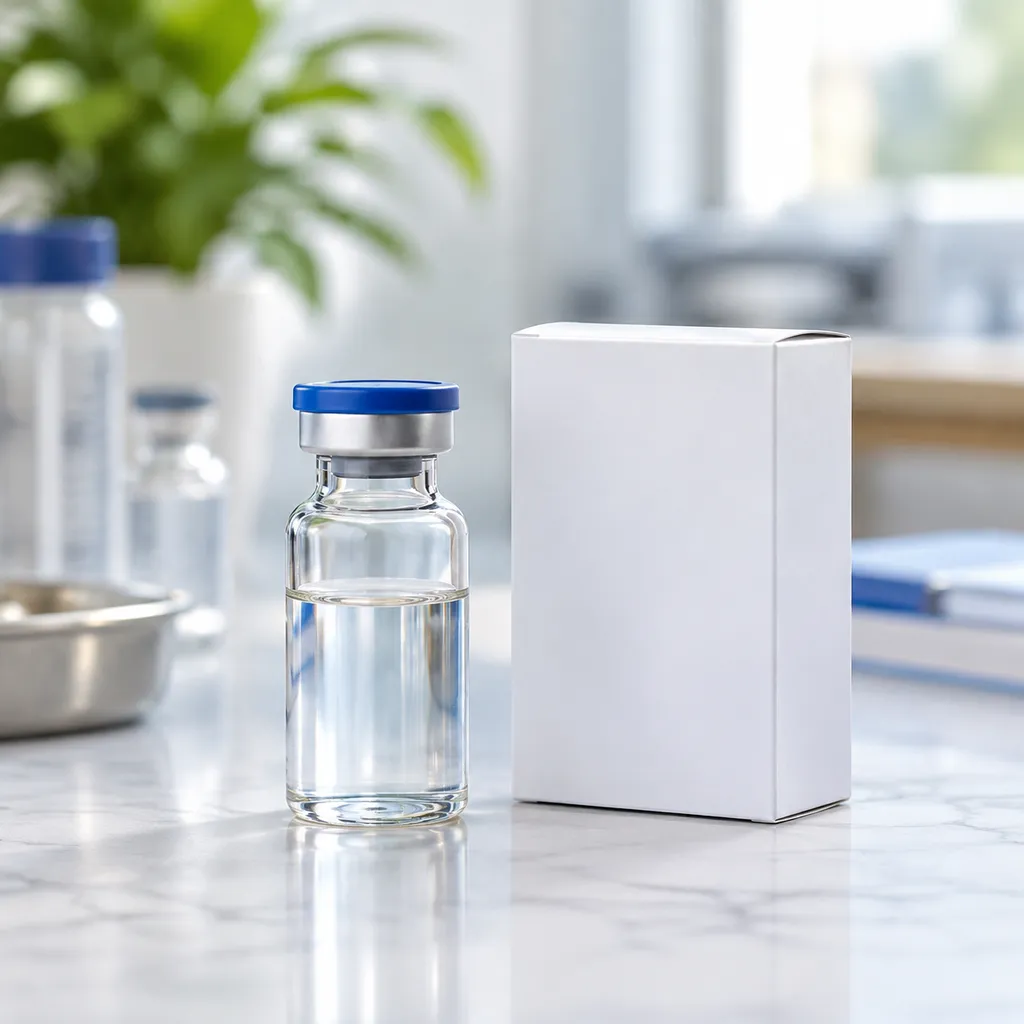
As a dedicated pharmaceutical vial packaging manufacturer and global pharmaceutical vial packaging supplier, we deliver end-to-end containment solutions engineered to safeguard drug efficacy, streamline fill-finish operations, and eliminate transit risk. Our integrated primary pharmaceutical packaging and secondary cartoning systems protect parenteral formulations from contamination, leachables, and mechanical shock.
Tubular and Molded Glass Vials (USP Type I, II, and III)
We manufacture high-precision tubular glass vials and heavy-duty molded injection vials engineered for chemical durability and thermal endurance.
USP Type I Borosilicate Glass: Superior hydrolytic resistance, ultra-low ion extraction, and minimal delamination risk for sensitive liquid injectables and lyophilized formulations.
USP Type II & III Soda-Lime Glass: Surface-treated and standard molded glass designed for dry powders, non-aqueous preparations, and infusion products.
Dimensional Accuracy: Tight outer diameter (OD) and neck finish tolerances optimized for high-speed automated filling lines.
Break-Resistant COP and COC Polymer Vials
For high-value biologics, gene therapies, and mRNA platforms, we supply advanced Cyclic Olefin Polymer (COP) and Cyclic Olefin Copolymer (COC) vials:
Impact Resistance: Shatterproof alternative to glass, reducing product loss during ultra-cold handling.
Chemical Neutrality: High drainability, zero heavy-metal release, and broad pH stability (pH 2–12).
Deep Cryogenic Stability: Maintains structural integrity down to -196°C without micro-fissuring.
| Component Type | Material Options | Key Application |
|---|---|---|
| Tubular Vials | USP Type I (Clear / Amber) | Biologics, Vaccines, Lyophilization |
| Molded Vials | Type I, II, III Borosilicate / Soda-Lime | Large-volume Parenterals, Antibiotics |
| Polymer Vials | COP / COC | Cell & Gene Therapy, High-pH Formulations |
| Elastomeric Closures | Chlorobutyl / Bromobutyl | Universal Parenteral Formulations |
Chlorobutyl and Bromobutyl Rubber Stoppers
Our low-particulate elastomeric closures provide gas-tight sealing and long-term chemical compatibility:
Formulation Formats: Available in straight-plug, 2-leg, and 3-leg configurations for liquid and lyophilization processes.
Ultra-Low Extractables: Formulated with premium chlorobutyl and bromobutyl elastomer compounds to prevent active ingredient degradation.
Coatings: Fluoropolymer-coated options available to minimize drug adsorption and particle transfer.
Tamper-Evident Aluminum and Flip-Off Containment Seals
We engineer secure crimping closures that protect drug integrity from manufacturing to bedside administration:
Flip-Off & Tear-Off Styles: Smooth plastic cap edges that prevent particulate shedding and glove tears during reconstitution.
Container Closure Integrity (CCI): Precision skirt tension ensures 100% airtight sealing under rapid crimping conditions.
Custom Identification: Universal color-coding, overt flip-off branding, and clear tamper-evident break lines.
Secondary Nested Tubs, Protective Trays, and Custom Folding Cartons
Our secondary packaging formats protect fragile components and integrate with automated hospital and pharmacy dispensing workflows:
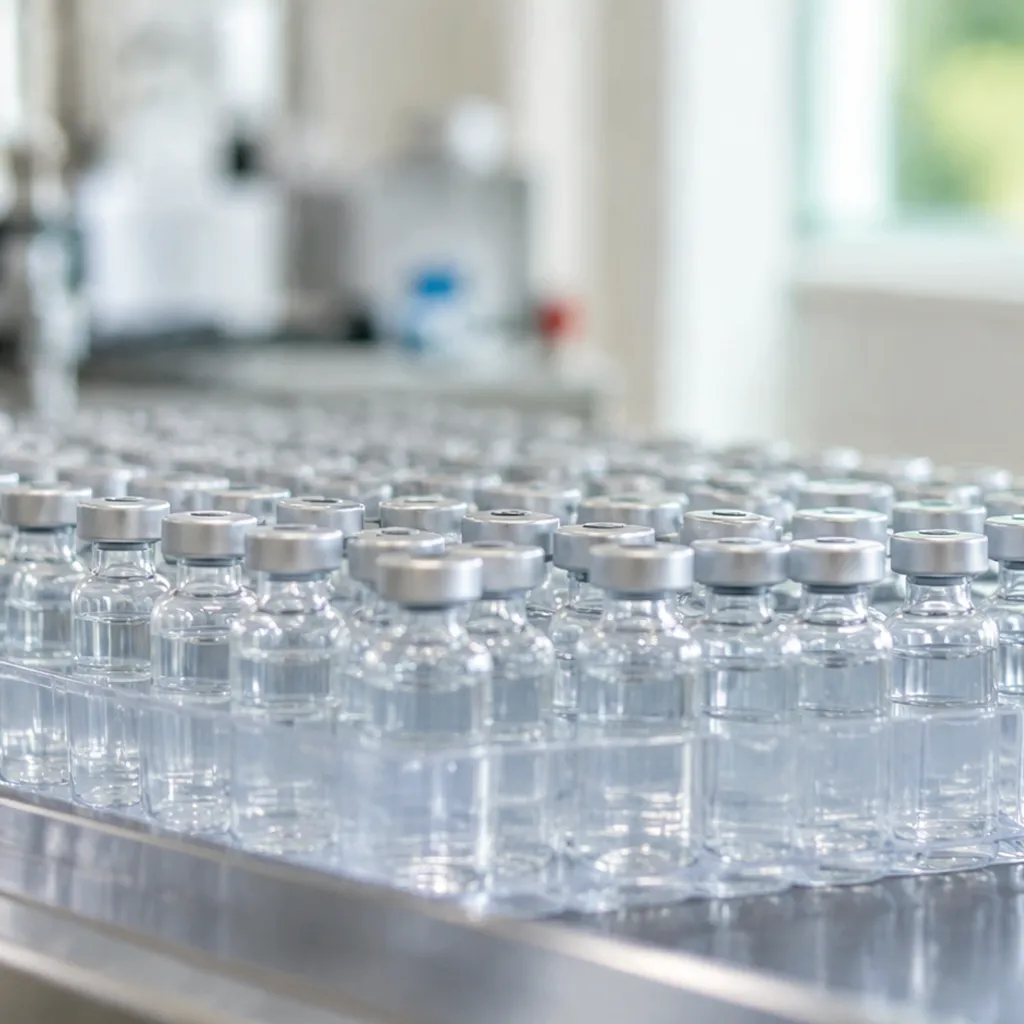
Nested Tub & Nest Systems: Secure honeycomb nests eliminate glass-to-glass contact during bulk transport and direct RTU nest-filling.
Medical-Grade Blister Trays: Rigid thermoformed trays holding individual or multi-vial combinations alongside reconstitution accessories.
Custom Pharmaceutical Folding Cartons: High-speed auto-bottom structural cartons featuring custom partitions, regulatory labeling real estate, and anti-counterfeiting security features.
Technical Specifications and Material Performance
Standard and Custom Sizing Options
We produce ISO-standard and custom dimensions to fit automated nested lines and conventional bulk operations. Review our standard capacity range:
| Specification Parameter | Standard Range / Metric | Custom Capabilities |
|---|---|---|
| Nominal Fill Volume | 2 ml, 5 ml, 10 ml, 20 ml, 50 ml, 100 ml | Specialized intermediate sizes |
| Material Types | USP Type I 5.0 / 7.0 Borosilicate Glass, COP | Amber UV-blocking, clear neutral |
| Finish Dimensions | 13 mm, 20 mm crimp (crimp neck & screw neck) | Custom blowback (European & American) |
| Temperature Tolerance | -196°C (cryogenic) to +500°C (depyrogenation) | Deep freeze lyophilization cycles |
For precise outer footprint planning and secondary pack fit, refer to our 10ml and 2ml vial box dimensions guide to align container specs with boxing equipment.
High Hydrolytic Resistance and Low Delamination Risk
Drug-container interaction causes product recalls. As an experienced pharmaceutical vial packaging supplier, we treat and form our borosilicate glass under strictly monitored furnace heat zones:
Controlled Surface Alkalinity: Minimizes ion exchange and prevents pH shifts in sensitive liquid formulations.
Delamination Prevention: Optimized converting processes reduce glass-flaking risks during prolonged terminal shelf life.
Chemical Durability: Complies fully with USP <660>, EP 3.2.1, and JP 7.01 standards.
Thermal Shock and Deep Cryogenic Durability
Biologics, mRNA formulations, and freeze-dried drugs demand resilience under rapid thermal shifts.
Cryogenic Storage down to -196°C: Our tubular glass and polymer vials maintain structural wall strength without micro-fissuring in liquid nitrogen storage.
Lyophilization Cycling: Uniform base thickness facilitates even heat transfer during freezing and sublimation, preventing breakage under thermal stress.
Container Closure Integrity (CCI) on High-Speed Filling
Uncompromising seal integrity protects sterility and active shelf life. To ensure seamless integration with automated fill lines, we optimize our vials, stoppers, and seals as a unified system:
Consistent neck geometry maintains continuous Container Closure Integrity (CCI) during high-speed vacuum crimping.
Compatible with automated plastic vial trays for pharma lab storage and transport to eliminate glass-to-glass friction and scuffing.
Fully validated through helium leak detection and high-voltage leak testing (HVLD).
Cleanroom Standards from an ISO 15378 Certified Supplier

Controlled Cleanroom Environments
Our manufacturing infrastructure is built to protect sensitive parenteral products from contamination:
ISO 5 (Class 100) zones: Dedicated to direct container forming, primary washing, and sterile vial handling.
ISO 7 (Class 10,000) areas: Controlled environments for secondary assembly, sub-assembly staging, and containment packaging.
Continuous environmental monitoring: Real-time air particle counting, differential pressure monitoring, and microbial sampling across all production lines.
Automated Inspection and Dimensional Precision
To eliminate line stoppages on high-speed commercial lines, we verify every single unit:
100% camera-vision inspection: High-resolution optical sensors inspect for cosmetic flaws, glass inclusions, cracks, and dimensional tolerances.
Seal-face integrity checks: Strict neck geometry verification to ensure leak-proof seals and dependable container closure integrity (CCI).
Particulate minimization: Validated water-for-injection (WFI) washing and depyrogenation tunnels guarantee extremely low particulate burdens.
| Quality Standard | Regulatory Benchmark | In-House Verification |
|---|---|---|
| Facility Management | ISO 9001 & cGMP | Validated HVAC, laminar flow units, and automated monitoring |
| Primary Packaging Quality | ISO 15378 | Total lot traceability and controlled change management |
| Dimensional & Visual | USP / EP Standards | 100% automated vision sorting systems |
Complete Regulatory and Filing Documentation
As your dedicated pharmaceutical vial packaging supplier, we streamline your market submissions by providing exhaustive audit-ready documentation packages:
Drug Master Files (DMF): Type III DMF filings submitted directly with the US FDA and global health agencies for seamless cross-referencing.
Batch Release Data: Complete Certificates of Analysis (CoA) with lot-specific biological, chemical, and physical test data.
Testing Packages: Full Extractables and Leachables (E&L) profiles, surface alkalinity data, and compliance reports.
When developing complex injectable drug delivery systems, pairing cleanroom production with validated custom vial packaging design with inserts and compliance guarantees total regulatory readiness from early formulation through full commercial distribution.
Custom Engineering and Turnkey OEM Capabilities
As a leading pharmaceutical vial packaging manufacturer, we provide end-to-end engineering support to bring your product from concept to commercial launch. Our custom design services ensure that your packaging meets the unique physical and branding requirements of your injectable drug products.
We specialize in advanced pre-sterilized RTU vials and modular systems that streamline your fill-finish operations and reduce contamination risks.
Engineering & Customization Features
| Service Category | Customization Options |
|---|---|
| Mechanical Design | Custom neck tooling, optimized blowback, and rapid prototyping |
| Sterility Solutions | Ready-to-Use (RTU) pre-sterilized packaging configurations |
| Branding & Security | Ceramic printing, custom color coding, overt and covert anti-counterfeiting |
Our turnkey OEM capabilities allow us to tailor every detail of your vial packaging supplier requirements, from precise glass dimensions to integrated anti-counterfeiting markers. By choosing our rapid prototyping services, you minimize time-to-market while ensuring your pharmaceutical packaging solutions comply with the highest industry standards.
Pharmaceutical Applications and Formulation Compatibility
As a dedicated pharmaceutical vial packaging manufacturer, we engineer primary containment systems to eliminate drug-container interaction risks. From aggressive solvent formulations to ultra-cold biologics, our systems preserve active pharmaceutical ingredient (API) potency across all critical drug delivery formats.
Target Formulations and Packaging Configurations
- Liquid Injectables & Parenteral Nutrition: Built with USP Type I borosilicate glass featuring low surface alkalinity. These containers prevent ion leaching, particulate contamination, and delamination in large- and small-volume parenteral products. Review common vial container types and uses to align glass formulations with your specific fill volumes.
- Lyophilized Biologics & Peptides: Paired with specialized two-leg or igloo-style chlorobutyl rubber stoppers. Flat-bottom tubular designs maximize shelf heat transfer during freeze-drying, while low-moisture formulations protect hygroscopic peptide cakes from rehydration.
- Vaccines, Cell & Gene Therapies: Designed for extreme cold-chain storage down to -196°C in liquid nitrogen vapor phases. Our cyclic olefin polymer (COP) and treated glass systems prevent container micro-fractures and maintain strict Container Closure Integrity (CCI).
- Clinical Trial Materials (CTM) to Commercial Scale: We supply flexible, small-batch sterile packaging for Phase I–III trials and scale seamlessly up to multi-million-unit automated fill-finish operations.
| Application Category | Primary Vial Material | Closure System | Key Performance Metric |
|---|---|---|---|
| Liquid Parenterals | Type I Borosilicate Glass | FluroTec-coated Butyl Stopper | Low extractables & leachables (E&L) |
| Lyophilized Products | High-transmittance Glass | Lyophilization Stopper + Flip-off Seal | Rapid sublimation & low residual moisture |
| Biologics & Gene Therapy | Break-resistant COP / COC | High-purity Bromobutyl Stopper | Deep cryogenic integrity (-80°C to -196°C) |
| Sensitive Small Molecules | Amber Type I Glass | Aluminum-plastic flip-off seal | Maximum UV light protection (290–450 nm) |
Every formulation presents distinct chemical and physical stability profiles. As your pharmaceutical vial packaging supplier, we run extraction, permeation, and break-force compatibility tests to verify that your selected primary packaging satisfies all pharmacopeial safety standards prior to validation batches.
Global Supply Chain Scalability
High-Volume Multi-Line Automated Capacity
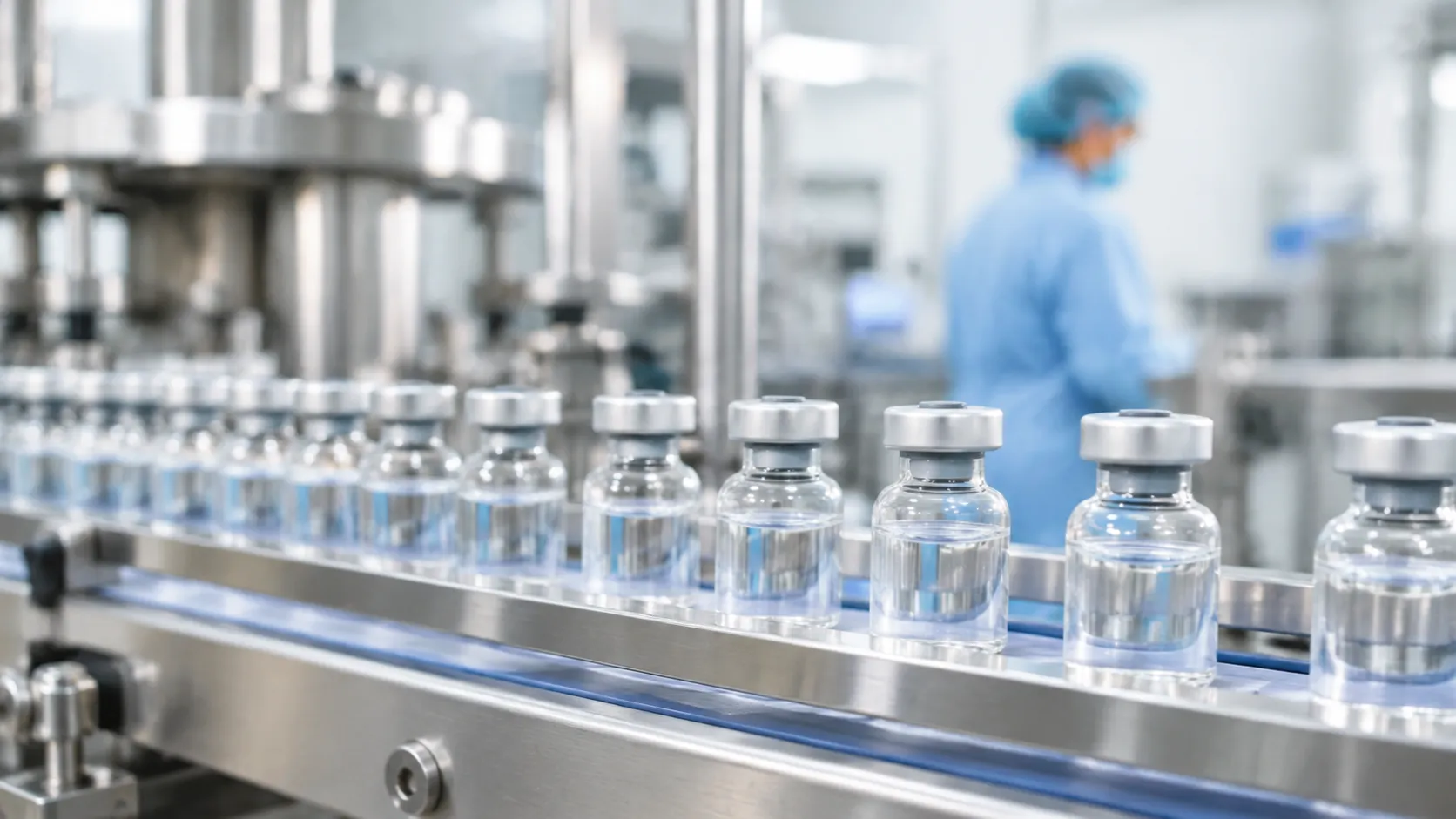
- 24/7 Automated Production: High-speed converting lines with integrated optical camera stations monitor dimensional tolerance in real time.
- Aseptic Compatibility: We package vials directly for cleanroom entry, standardizing formats for nested tub and tray aseptic processing solutions and bulk depyrogenation tunnels.
- Zero Line Interruption: Every batch matches tight dimensional specs to prevent line jams and maximize fill-finish throughput.
Raw Material Security and Safety Stock Programs
To eliminate global glass allocation risks, we maintain long-term agreements with top-tier borosilicate glass tube manufacturers:
| Program Feature | Operational Advantage | Supply Impact |
|---|---|---|
| Tubing Reserves | Pre-allocated raw borosilicate stock | Shields supply from market shortages |
| Vendor-Managed Inventory | 3 to 6 months of reserved finished goods | Guarantees rapid dispatch on scheduled runs |
| Redundant Warehousing | Climate-controlled regional hubs | Reduces transit delays and stabilizes lead times |
Direct Engineering Support from Formulation to Fill-Finish
We provide direct, engineer-to-engineer technical support at every phase of your drug lifecycle:
Tooling Optimization: Custom neck profiles and blowback designs engineered specifically for high-vacuum lyophilization and liquid fill lines.
Fill-Line Calibration: Direct consultation on machine handling, friction reduction, and capping pressure to prevent vial scratching or breakage during high-speed runs.
Regulatory Transfer: Seamless documentation handoffs, providing full batch traceability from raw tubing draw to final sterile packaging delivery.
Frequently Asked Questions About Pharmaceutical Vial Packaging
We understand that procurement teams require clear, concise answers to streamline the supply chain. As a dedicated pharmaceutical vial packaging manufacturer, we address common inquiries regarding production, compliance, and product safety below.
| Question | Answer Summary |
|---|---|
| Standard Lead Times | Catalog items typically ship in 2–4 weeks, while custom designs require 8–12 weeks for tooling and validation. |
| Minimum Order Quantities (MOQs) | MOQs vary based on glass type and customization; we support both clinical trial batches and high-volume commercial runs. |
| DMF Support | Yes, we provide full Drug Master File (DMF) authorization letters to support your FDA filings and regulatory audits. |
| Nested Packaging Safety | Nested tubs utilize specialized geometric inserts to eliminate glass-to-glass contact, preventing breakage during transit. |
| RTU Sterilization | Our Ready-to-Use (RTU) vials are sterilized using ethylene oxide (EtO) or gamma irradiation per your formulation needs. |
Procurement Insights for Global Partners
- DMF Authorization: We maintain comprehensive documentation for all primary packaging to ensure your compliance processes remain seamless.
- Transit Security: Our medical glass vial packaging for safe sterile storage is engineered to mitigate risks during high-speed transit and automated handling.
- Customization: As a trusted pharmaceutical vial packaging supplier, we offer tailored solutions to meet specific fill-finish requirements, ensuring your components are ready for immediate integration into your production lines.