Formula details
Product Details
Overview
Types of Medical Glass Vial Packaging
Drug-container interactions, unexpected line breakage, and particulate contamination cost pharmaceutical manufacturers millions each year. Selecting the wrong glass type risks chemical leaching, pH shifts, and catastrophic regulatory recalls.
Understanding the differences between glass grades and forming methods is the first step to securing your fill-finish line.
┌── Type I: Borosilicate (Injectables, Biologics, High Acid/Base)
├── Type II: Treated Soda-Lime (Buffered Neutral Injectables)
Glass Formulation ──┤
└── Type III: Soda-Lime (Dry Powders, Lyophilized, Non-Parenteral)
Forming Method ─────┬── Tubular Vials (Thin, Uniform Walls, Ideal for Lyophilization)
└── Molded Vials (Thick Walls, High Impact Resistance, Large Volume)
Type I Borosilicate Glass for High Chemical Stability
Type I borosilicate glass is the global gold standard for primary pharmaceutical packaging. Formulated with approximately 80% silica and 10% boric oxide, it offers the lowest thermal expansion coefficient and the highest hydrolytic resistance available.
- Chemical Inertness: Prevents alkali ion leaching into sensitive liquid drug matrices.
- Thermal Shock Resistance: Withstands abrupt temperature shifts from dry-heat depyrogenation (300°C+) to ultra-low cold storage (-80°C).
- Recommended Applications: Highly acidic or alkaline injectables, aqueous vaccines, complex biologics, and blood fractions.
Type II Treated Soda-Lime Glass for Neutral Liquid Solutions
Type II glass starts as standard commercial soda-lime glass that undergoes a specialized sulfur treatment on its inner surface during manufacturing. This process de-alkalizes the interior contact surface, significantly boosting its hydrolytic resistance.
- Surface Barrier: The de-alkalized layer stops sodium ions from migrating into the liquid.
- Usage Caution: The protective layer is surface-deep. It is designed for single-use neutral formulations and cannot withstand multiple wash-and-autoclave cycles without degrading.
- Recommended Applications: Neutral or acidic aqueous parenterals with stable pH profiles and large-volume intravenous (IV) solutions.
Type III Soda-Lime Glass for Dry Powders and Non-Parenteral Drugs
Type III glass is an untreated soda-lime formulation offering moderate chemical resistance. It contains standard levels of alkaline metal oxides, making it susceptible to ion exchange if exposed to long-term aqueous environments.
- Cost-Efficient Packaging: The most economical option for products with minimal liquid interaction risks.
- Parenteral Limitations: Not suitable for liquid injectables unless proven stable through extensive real-time leachables testing.
- Recommended Applications: Lyophilized dry powders, diagnostic reagents, oral liquids, topical medications, and tablet packaging.
Tubular Glass Vials versus Molded Glass Vials
The forming process dictates how the vial behaves under mechanical stress, automated conveyor pressure, and thermal freeze-drying cycles. We manufacture both formats to match exact line specifications:
| Feature / Metric | Tubular Glass Vials | Molded Glass Vials |
|---|---|---|
| Manufacturing Process | Continuous glass tubing drawn, cut, and formed | Molten glass dropped into molds and blown/pressed |
| Wall Thickness | Uniform, thin, and consistent throughout | Variable, thicker at the base and shoulders |
| Cosmetic Clarity | Flawless surface finish; high optical transmission | Slight mold seams and surface waviness |
| Thermal Transfer Rate | Rapid and uniform; flat bottom profile | Slower and irregular due to uneven base glass |
| Mechanical Strength | Susceptible to heavy mechanical crushing force | Exceptional resistance to direct physical impact |
| Weight | Lightweight; lowers cold-chain freight costs | Heavier tare weight |
| Primary Applications | Lyophilization, high-speed automated lines, vaccines | Large-volume parenterals (LVPs), rugged clinical use |
- Choose Tubular Vials if you run high-speed inspection systems, require precise freeze-drying cycles, or package high-value, small-dose biologics (1 ml to 20 ml).
- Choose Molded Vials if your production demands high mechanical durability, thicker container walls to survive drop-tests, or container sizes exceeding 50 ml.
Core Components of a Secure Medical Vial Packaging System
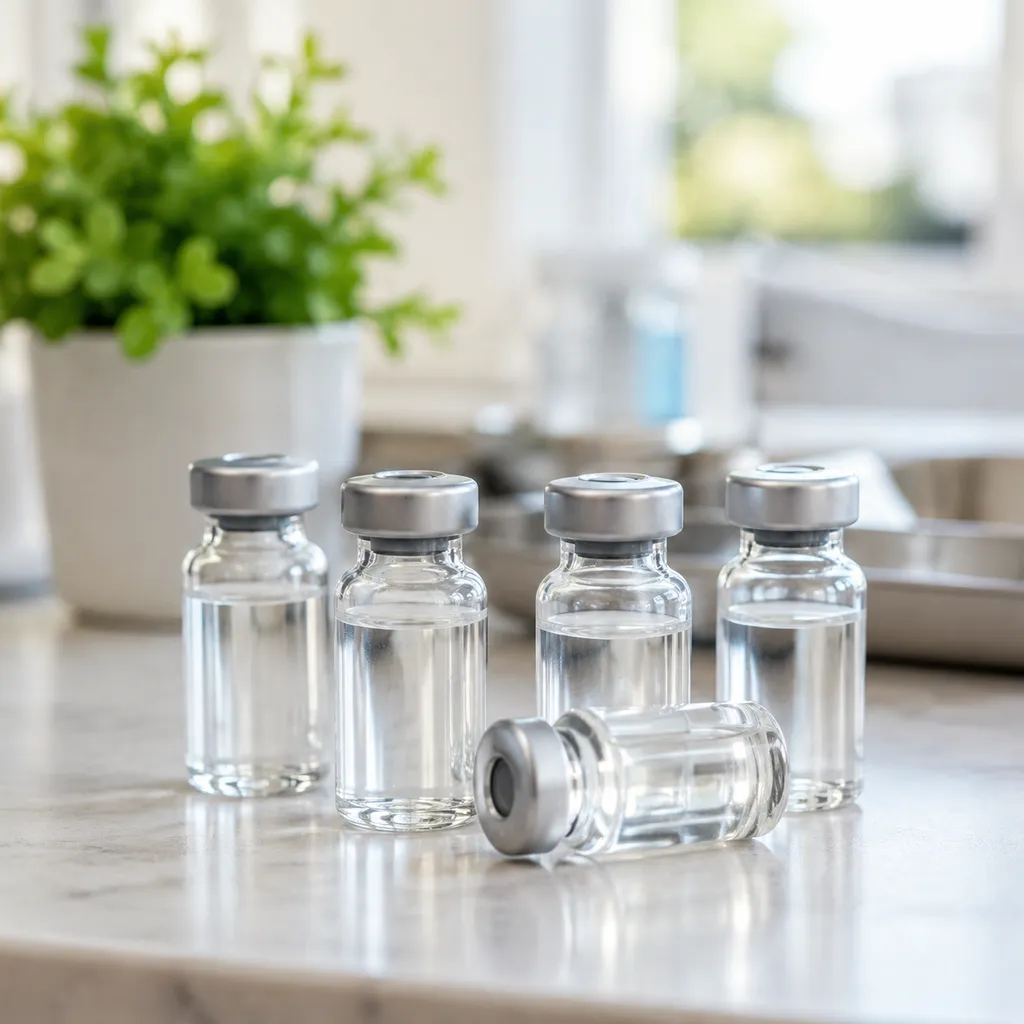
Primary Medical Glass Vials for Injectables and Biologics
The glass vial directly contacts the drug product, making physical stability and chemical inertness essential. We rely on USP Type I borosilicate glass to prevent alkali leaching and chemical shifting in sensitive parenteral formulations.
- Dimensional uniformity: Tight outer diameter (OD) and wall-thickness controls prevent jamming in high-speed de-nesting machines.
- Surface neutrality: High hydrolytic resistance minimizes ion release into aqueous solutions and biologics.
- Thermal tolerance: Chemically reinforced glass walls withstand deep cold storage down to -80°C and rapid temperature swings during lyophilization.
Elastomeric Rubber Stoppers for Sterile Airtight Sealing
The stopper creates the primary sterile barrier. Flaws in formulation or fit lead to loss of headspace vacuum, oxygen ingress, or stopper pop-up during autoclaving.
- Formulation chemistry: We use bromobutyl and chlorobutyl elastomers for their low gas permeability and minimal extractables and leachables (E&L) profile.
- Needle penetration and resealing: Engineered puncture zones prevent rubber fragmentation (coring) when pierced, maintaining seal integrity across multi-dose applications.
- Surface coatings: Fluoropolymer barrier films (such as ETFE) stop drug-elastomer interactions and eliminate the need for excess silicone oil lubrication.
Aluminum Crimp Caps and Flip-Off Tamper-Evident Seals
The cap secures the rubber stopper under calibrated compression to guarantee container closure integrity (CCI).
- Consistent crimping: Controlled aluminum skirt thickness prevents wrinkling, uneven crimps, or sharp edges during capping.
- Visual tamper evidence: Polypropylene flip-off buttons snap clean upon opening, leaving unmistakable proof of prior access.
- Sterile access: The plastic button protects the rubber injection site from dust and contact contamination until the moment of reconstitution or draw.
Protective Outer Trays and Nest-and-Tub Configurations
Glass-to-glass contact during transport creates micro-fissures that trigger line breakage under the stress of filling needles and depyrogenation heat. Modern aseptic filling relies on dedicated secondary nesting to protect primary containers.
Using a standardized vial nest and tub system for RTU aseptic fill-finish suspends each vial in an individual pocket. This zero-contact arrangement eliminates cosmetic scratches, prevents breakage during high-speed transit, and integrates directly with robotic isolation lines. For specialized handling and secondary packaging workflows, a sterile RTU vial tray kit for biologics maintains strict orientation and cleanroom particulate control.
| Component | Material Base | Primary Function | Failure Mode Prevented |
|---|---|---|---|
| Vial Body | Type I Borosilicate Glass | Drug containment & chemical barrier | Delamination, ion leaching, cracking |
| Stopper | Bromobutyl / Chlorobutyl Rubber | Airtight & moisture-proof sterile seal | Microbial ingress, vacuum loss, coring |
| Crimp Seal | Aluminum + PP Flip-off Button | Mechanical compression & tamper evidence | Loose seals, cap spin, contamination |
| Nest & Tub | Medical-grade Polypropylene / Akylux | Physical separation & robotic feeding | Line breakage, scuff marks, particulate generation |
Ready-to-Use (RTU) and Sterilization Processing in Medical Vial Packaging
Running an in-house washing and depyrogenation line eats up cleanroom real estate, increases utility bills, and introduces contamination risks before a single drop of drug is filled. To eliminate these operational bottlenecks, modern fill-finish operations are shifting toward validated sterilization protocols and pre-sterilized packaging formats.
Pre-Washed and Pre-Sterilized Ready-to-Fill (RTF) Formats
We provide ready-to-use (RTU) formats to help drug developers bypass the capital costs of automated vial washers and depyrogenation tunnels. Our pre-sterilized RTU vials and modular systems arrive pre-washed with Water for Injection (WFI), depyrogenated, and nested in sealed tubs.
- Zero prep footprint: Unpack inside the aseptic core and feed directly to the filler.
- Reduced glass-to-glass contact: Nested layouts eliminate scratching, chipping, and cosmetic rejects on high-speed belts.
- Aseptic reliability: Double-bagged and sealed with breathable Tyvek lids to maintain a sterile barrier until point-of-use.
Depyrogenation Tunnels and Dry-Heat Sterilization
For facilities running traditional bulk glass, eliminating bacterial endotoxins is non-negotiable. Glass containers must undergo continuous dry-heat treatment to achieve a minimum 3-log endotoxin reduction.
- Standard cycle: 250°C to 350°C using recirculated laminar flow HEPA air.
- Critical parameters: Precise dwell time and temperature distribution profiles prevent thermal shock and micro-cracks in Type I borosilicate.
- Process overhead: Requires regular HEPA filter integrity testing, temperature profiling, and high energy input.
Review our RTU packaging vs. wash-and-depyrogenate processing guide to compare operating expenses and validation timelines between bulk processing and pre-sterilized supplies.
Ethylene Oxide (EtO) and Gamma Radiation Methods
Terminal sterilization methods differ based on packaging configurations and glass chemistry:
| Sterilization Method | Penetration & Mechanism | Primary Application | Key Considerations |
|---|---|---|---|
| Ethylene Oxide (EtO) | Gas diffusion via breathable Tyvek barriers | Pre-packaged RTU nested tubs and tray packs | Requires validated aeration times to eliminate chemical residuals. |
| Gamma / E-Beam | High-energy ionizing photon/electron penetration | Sealed medical vial packaging components and stoppers | Fast turnaround, but excessive doses can cause slight cosmetic browning in certain glass formulations. |
We validate EtO residual levels well below standard safety thresholds to protect sensitive biologic molecules against chemical degradation.
Cleanroom Particulate Control Under ISO Standards
Sub-visible particulates inside sterile injectable packaging lead directly to batch recalls. We control contamination at the source through strict cleanroom manufacturing protocols:
- ISO 5 (Grade A) washing and packing zones: Final rinsing, nesting, and sealing occur strictly under laminar airflow.
- Multi-stage ultrasonic WFI washing: Removes loose glass particles and mold release agents prior to heat treatment.
- Automated camera inspection: High-resolution optical sensors verify 100% of vials for particulate matter, glass flakes, and structural flaws.
- Pharmacopeial compliance: Every batch satisfies particulate limits set by USP <788> and EP 2.9.19 for small-volume parenterals.
Protective Secondary Packaging for Medical Vials
Glass vials protect drug stability, but they cannot survive transit shocks or high-speed processing without solid secondary protection. A hairline crack from transit vibration destroys sterility instantly.
Understanding how outer layers interact with primary containers is critical. Our breakdown of primary vs secondary packaging for vials explained highlights how the right outer format directly cuts fill-finish scrap rates and stops distribution losses.
Nest and Tub Packaging for High-Speed Automated Filling Lines
Nest and tub packaging has transformed aseptic handling for both liquid and lyophilized drugs. Instead of bulk vials rubbing against each other on rotary turntables, vials sit securely in molded polymer nests inside sealed tubs:
- Zero Glass-to-Glass Contact: Suspended nests eliminate scuffing, cosmetic scratches, and structural micro-fissures.
- Aseptic Robotic Compatibility: Tubs feed directly into automated de-bagging, de-lidding, and fill-finish isolators without operator intervention.
- Reduced Particle Load: Pre-sterilized nested systems remove washing and depyrogenation steps inside the cleanroom, drastically cutting ambient particle risks.
| Feature | Standard Bulk Trays | Nest & Tub Formats |
|---|---|---|
| Handling Risk | High vial friction & tipping | Zero vial contact, fixed position |
| Line Speed | Moderate (sorting required) | High-speed automated pick-and-place |
| Cleanroom Footprint | Large (requires washers/tunnels) | Minimal (direct sterile entry) |
Shock-Absorbing Partitioned Trays and Corrugated Boxes
For bulk transport of filled or empty containers, mechanical dunnage prevents kinetic shock from cracking thin vial shoulders and bases:
- Die-Cut Cell Dividers: Corrugated partitions or thermoformed plastic grids isolate each glass unit, neutralizing side-impact forces during freight handling.
- Anti-Static Plastic Trays: Cleanroom-compatible rigid trays keep dust and paper fibers away from sterile vial finishes.
- Heavy-Duty Outer Shippers: Multi-wall corrugated cases absorb compression forces during pallet stacking, keeping vertical weight off the vial crimp caps.
Cold Chain Insulated Shippers for Temperature-Sensitive Drugs
Biologics, vaccines, and cell therapies degrade rapidly outside their validated temperature bands. Medical glass vial packaging must interface cleanly with thermal packaging to prevent freezing damage or heat exposure:
- Expanded Polyurethane (PUR) & VIPs: Vacuum insulated panels (VIP) offer high thermal resistance with minimal wall thickness, maximizing payload space.
- Phase Change Materials (PCMs): Tuned thermal packs maintain tight 2°C to 8°C ranges or -20°C conditions far longer than standard water-based gel packs.
- Thermal Shock Mitigation: Secondary buffers prevent frozen gel packs from directly touching glass vials, avoiding localized thermal shock and stress fractures.
Tamper-Evident Folding Cartons and Unit-Dose Blister Packs
Final commercial presentation requires patient safety features, clear labeling, and anti-counterfeiting controls. We rely on engineered secondary packaging for vials DSCSA compliant solutions to meet global track-and-trace mandates:
- Tamper-Evident Folding Cartons: Glue seals or tear-strip designs reveal physical evidence of unauthorized entry before the drug reaches a clinic.
- Serial Code Integration: Cartons provide flat, high-contrast surfaces for printing 2D DataMatrix codes, GS1 serial numbers, and expiry dates for real-time tracking.
- Thermoformed Unit-Dose Blister Packs: Clear, rigid blister pockets hold the vial, diluent ampoule, and transfer spike together, locking the vial firmly in place to protect clinic staff from broken glass.
Regulatory Standards and Quality Control for Medical Vial Packaging
USP <660> and EP 3.2.1 Hydrolytic Resistance Compliance
Chemical interaction between your formulation and the vial surface can alter pH and trigger product breakdown. We test all glass lots to verify hydrolytic resistance under USP <660> and Ph. Eur. 3.2.1:
- Surface Glass Test: Measures alkali extraction from the inner surface of intact vials at 121°C.
- Crushed Glass Powder Test: Verifies basic glass composition to confirm pure Type I borosilicate formulations.
- Etching Resistance: Proves treated soda-lime vials (Type II) maintain surface passivity without leaching sodium.
Container Closure Integrity (CCI) Testing for Zero-Leak Assurance
Traditional blue dye ingress is too subjective for modern sterile injectables. We use deterministic Container Closure Integrity (CCI) testing to verify that the vial, rubber stopper, and aluminum seal maintain an absolute microbial barrier:
- Vacuum Decay (ASTM F2338): Non-destructive physical test detecting micro-leaks down to sub-micron sizes.
- High-Voltage Leak Detection (HVLD): Verifies liquid-filled sterile glass vials without destroying product.
- Helium Mass Spectrometry: Provides deep cold-chain integrity profiling down to -80°C.
Extractables and Leachables (E&L) Safety Assessments
Volatile and non-volatile impurities migrating from packaging into liquid drugs can lead to toxicity or protein aggregation. We screen complete packaging systems:
- Glass Extractables: Monitored via ICP-MS for boron, sodium, aluminum, and heavy metal release.
- Elastomeric Stoppers: Tested via GC-MS and LC-MS for plasticizers, silicone oils, and curing agents.
- Accelerated Stability: Monitored over standard 6-month and 12-month incubation runs to ensure chemical inertness.
ISO 8362 Specifications for Injection Vials and Accessories
High-speed fill-finish lines require exact mechanical tolerances. We produce primary glass containers and components to strict ISO 8362 dimensions to eliminate capping failures and line jams. Integrating our containers with compliant secondary packaging, such as our custom vial packaging design with inserts and compliance, ensures end-to-end regulatory compliance from the production floor through transport.
| Standard / Test | Target Component | Method | Failure Prevented |
|---|---|---|---|
| USP <660> / EP 3.2.1 | Glass vial inner wall | Acid-base titration after autoclave | pH drift, glass delamination |
| ISO 8362-1 / ISO 8362-4 | Vial neck, flange, body | Optical dimensional profiling | High-speed track jams, poor crimps |
| ASTM F2338 (CCI) | Vial-stopper-cap assembly | Vacuum decay pressure tracking | Sterility loss, drug oxidation |
| ISO 8871 / USP <381> | Elastomeric rubber stoppers | Fragmentation & penetration force | Stopper coring, needle push-back |
| USP <788> | Cleaned, RTU packaging | Light obscuration particle count | Particulate contamination |
How to Choose the Right Medical Vial Packaging
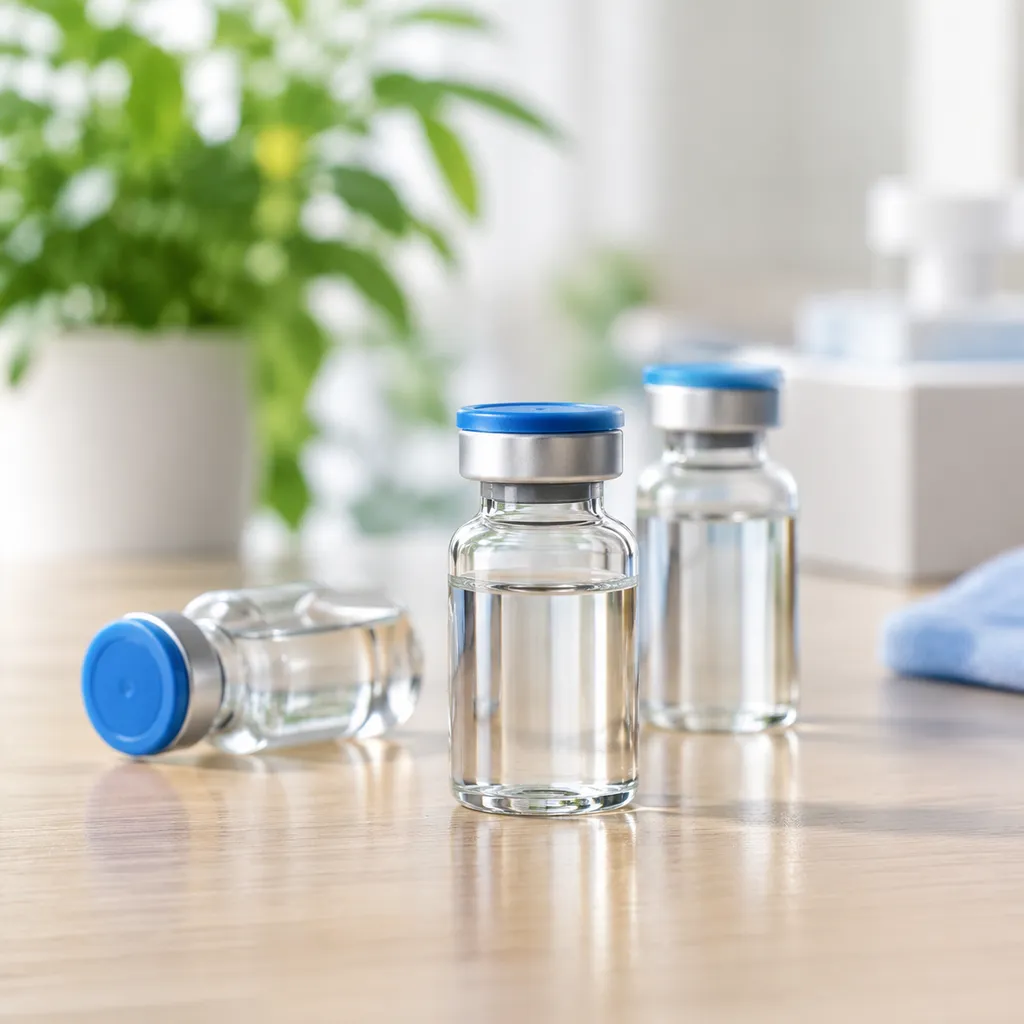
Picking the wrong container leads to rejected batches, shattered glass on automated conveyors, and stability test failures. When we evaluate medical glass vial packaging for fill-finish operations, we focus on four practical engineering factors: chemical compatibility, light protection, bottom geometry, and mechanical line speed.
Matching Glass Chemistry to Drug pH and Formulation Risks
Drug-container interactions dictate your glass choice. Formulations with extreme pH levels or active chelating agents attack untreated glass matrices, triggering chemical leaching.
- High/Low pH Formulations (pH < 3 or > 8): Standardize on Type I borosilicate glass vials. The low expansion coefficient and high silica content resist hydrolytic attack and prevent alkaline ion release into the solution.
- Neutral Parenterals (pH 5 to 7): Treated soda-lime (Type II) glass can handle specific unbuffered liquids, but it offers a limited safety window for long shelf lives.
- Aggressive Formulations: For highly sensitive biologics prone to delamination, we specify surface-treated tubular borosilicate glass with uniform interior chemistry.
Selecting Amber Glass Vials for Light-Sensitive Medications
Light-sensitive active pharmaceutical ingredients (APIs)—including specific oncology drugs, antibiotics, and vitamins—degrade rapidly under standard factory and clinic lighting.
- Spectral Transmission: Standard clear glass transmits UV and visible light down to roughly 300 nm. Quality amber medical glass vials absorb wavelengths between 290 nm and 450 nm, meeting USP <660> and EP requirements for light protection.
- Inspection Balance: While amber glass blocks photolytic degradation, its dark tint must remain clear enough for automated visual inspection systems (AVI) to detect foreign particulates.
Choosing Flat-Bottom Vials for Freeze-Drying and Lyophilization
Lyophilization demands rapid, uniform thermal transfer between the shelf and the product cake. Uneven bottoms compromise freeze-drying cycles.
- Base Flatness: Standard injection vials feature a concave bottom that creates an insulating air gap. We utilize specialized lyophilization glass vials engineered with flat, uniform bases to maximize surface contact with lyophilizer freeze-plates.
- Wall Uniformity: Controlled tubular glass prevents thermal stress fractures during rapid freezing down to -50°C and sudden pressure drops during primary drying.
Balancing High-Speed Filling Line Durability Against Tare Weight
Automated filling lines running at 300 to 600 vials per minute introduce intense mechanical shock. You must balance impact strength against container weight and dimensions. Implementing validated injection vial packaging solutions for injectable vials ensures your production line runs at full speed without line jams.
| Selection Factor | Tubular Glass Vials | Molded Glass Vials |
|---|---|---|
| Tare Weight Consistency | Extremely precise; ideal for auto-checkweighing | Broader tolerances; requires dynamic calibration |
| Wall Thickness | Thin, highly consistent wall distribution | Thicker walls, heavy impact resistance |
| Mechanical Strength | Lower shock absorption against neck clamping | Exceptional resistance against capping crush forces |
| Best Application | Lyophilized powders, low-dose liquid injectables | Large-volume parenteral solutions, high-speed lines |
Vial Selection Framework
- Verify API Chemistry: Match your drug buffer to Type I borosilicate glass to eliminate delamination risks.
- Determine Photostability: If the API breaks down under light, switch immediately to amber glass.
- Assess Processing Type: Specify strictly flat-bottom tubular vials for freeze-dried cakes; select molded vials if top-load crimp pressure exceeds standard thresholds.
- Audit Filling Line Dynamics: Set strict neck-outer-diameter (OD) and flange-height tolerances to stop capping failures and vacuum leaks.
Fixing Common Medical Glass Vial Packaging Defects
Common Vial Defects & Rapid Fixes
| Packaging Defect | Root Cause | Technical Solution |
|---|---|---|
| Delamination | Glass-formulation reaction | Premium Type I borosilicate + Low pH |
| Stopper Coring | Needle shear / Dull bevel | Optimized durometer + Silicone wash |
| Micro-Cracks | Glass-to-glass transit impact | Partitioned inserts + Damped lines |
| Loose Crimp Caps | Inconsistent skirt height | Calibrated pneumatic crimper heads |
Preventing Glass Delamination and Lamellae Flakes
Glass delamination occurs when aggressive drug formulations—especially those with high pH, citrate, or phosphate buffers—leach alkali ions out of the vial wall, shedding microscopic, shimmering glass flakes (lamellae) into the liquid.
- Switch to High-Purity Borosilicate: We use strictly controlled Type I borosilicate glass vials with uniform wall thickness to minimize thermal stress points during tube conversion.
- Optimize Thermal Forming: Overheating during bottom forming vaporizes borates and alters surface chemistry. Strict temperature monitoring prevents surface silica enrichment.
- Surface Treatment Testing: Run periodic accelerated screening (autoclaving empty vials with pure water) to evaluate hydrolytic surface resistance per USP <660> and ISO 8362 before filling.
Eliminating Rubber Stopper Coring During Needle Puncture
Coring happens when the bevel of a hypodermic needle shears an elastomeric plug out of the closure, dropping visible debris into the reconstituted medication.
- Adjust Stopper Hardness: Select pharmaceutical rubber stoppers with an optimal durometer rating (typically 40 to 45 Shore A) that self-heals rather than tears.
- Apply Validated Silicone Coatings: Bonded fluoropolymer films or micro-thin silicone oil coatings lower needle penetration resistance and stop particle generation.
- Specify Puncture Target Geometry: Direct reconstitution protocols to specify a 45-degree initial needle entry angle turned to 90 degrees before penetrating the stopper diaphragm.
Stopping Micro-Cracks and Breakage During Transit
Hairline fractures compromise container closure integrity instantly, destroying sterility without always showing an active fluid leak.
- Dampen Automated Line Handlers: Eliminate hard glass-to-metal and glass-to-glass collisions on staging turntables and transfer stars through polymer-cushioned track guides.
- Separate Units in Transit: Transporting vials loose invites side-wall abrasion. Pairing nested secondary trays or an engineered vial box with inserts absorbs transit vibrations and isolates each unit from mechanical shock.
- Inline Vacuum Decay Testing: Catch sub-micron wall fractures right after sealing with high-voltage leak detection (HVLD) or vacuum decay testing before release.
Resolving Seal Crimping Defects and Loose Vial Caps
Improper crimp force creates wrinkled aluminum skirts, shattered vial necks, or loose seals that fail container closure integrity testing.
- Balance Component Tolerances: Match the thickness of the stopper flange, the vial neck finish, and the skirt length of the flip off crimp seals to prevent axial play.
- Regulate Pneumatic Crimper Pressure: Set crimping heads with load-cell monitored pressure to compress elastomeric stoppers by 25% to 35% without over-stressing the glass lip.
- Inspect Over-Roll Quality: Ensure the lower edge of the aluminum seal curves smoothly under the glass lip without creasing, overhangs, or sharp metal burrs.
Frequently Asked Questions About Medical Vial Packaging
Procuring and running reliable medical glass vial packaging comes down to balancing drug stability, machine machinability, and patient safety. Below are direct answers to the technical questions we encounter most often on the production floor.
What is the difference between Type I and Type II medical glass vials?
The primary distinction is chemical composition and how the glass achieves its hydrolytic resistance:
| Feature | Type I Borosilicate Glass | Type II Treated Soda-Lime Glass |
|---|---|---|
| Material Base | Borosilicate (silica + boron oxide) | Standard soda-lime-silica glass |
| Surface Treatment | None needed; inert throughout the wall | De-alkalized interior surface using sulfur treatment |
| Durability | Permanent chemical resistance | Resistance diminishes if the surface layer erodes |
| Thermal Shock | Exceptional resistance to freeze-thaw cycles | Moderate; sensitive to sudden, high-temperature shifts |
| Best Used For | Injectables, biologics, lyophilized drugs | Neutral or mildly acidic aqueous solutions |
Why is borosilicate glass favored over plastic for vaccines and injectables?
Polymer containers have made strides, but Type I borosilicate glass vials remain the gold standard for high-risk formulations:
- Gas and Moisture Barrier: Glass provides an absolute barrier to oxygen and water vapor transmission, preventing drug oxidation.
- Low Chemical Reactivity: It exhibits ultra-low extractables and leachables, preventing active pharmaceutical ingredients (APIs) from degrading.
- Extreme Cold Tolerances: Borosilicate withstands deep cryogenic storage down to -80°C and liquid nitrogen conditions without cracking or losing wall integrity.
- Optical Clarity: High transparency allows automated visual inspection (AVI) systems to spot particles or discoloration instantly.
For delicate neurotoxins and biologics, our specialized botox vial packaging for secure medical storage utilizes this chemical stability to maintain potency from the fill line to the clinic.
Can medical vial packaging be purchased pre-sterilized?
Yes. Ready-to-Use (RTU) formats arrive pre-washed, depyrogenated, and terminally sterilized in nested tubs.
- Sterilization Methods: Processed via ethylene oxide (EtO) gas or gamma irradiation under strict cleanroom conditions.
- Operational Savings: Eliminates the need for capital-intensive washing stations and depyrogenation tunnels on your production floor.
- Compliance: Shipped with complete particulate tracking, endotoxin testing reports, and certificates of analysis matching validated medical sterilization packaging for safe device protection guidelines.
What sizes and capacities are standard for medical glass vials?
Standard medical vial packaging adheres to ISO 8362 specifications, covering tubular and molded formats:
- 2R to 4R (2 mL – 4 mL): Standard for single-dose liquid vaccines, peptides, and diagnostic reagents (typically 13 mm crimp finish).
- 6R to 10R (6 mL – 10 mL): The standard workhorse sizes for freeze-dried powders and multi-dose injectables (20 mm crimp finish).
- 20R to 50R (20 mL – 50 mL): Common for large-volume infusions, antibiotics, and intravenous diluents.
- 100R (100 mL): Dedicated bulk parenteral products, serum storage, and hospital-grade infusions.
How does container closure integrity impact drug shelf life?
Container closure integrity (CCI) determines whether your sterile boundary holds over time. A failure at the junction between the glass rim, elastomeric stopper, and aluminum crimp creates immediate shelf-life risks:
- Microbial Ingress: Compromised seals allow bacteria and fungi to bypass the sterile barrier, rendering parenterals unsafe.
- Oxidation and Potency Loss: Ambient oxygen leaking into headspace gases rapidly degrades oxidation-sensitive formulations.
- Evaporative Loss: Solvent loss through poor seals concentrates liquid drugs, causing incorrect dosing.
- Moisture Pickup in Lyophiles: Breached seals let atmospheric moisture hit freeze-dried cakes, causing collapse and rapid drug degradation. We validate every primary seal with high-voltage leak detection and laser headspace analysis to ensure an airtight seal throughout commercial distribution.