Formula details
Product Details
Overview
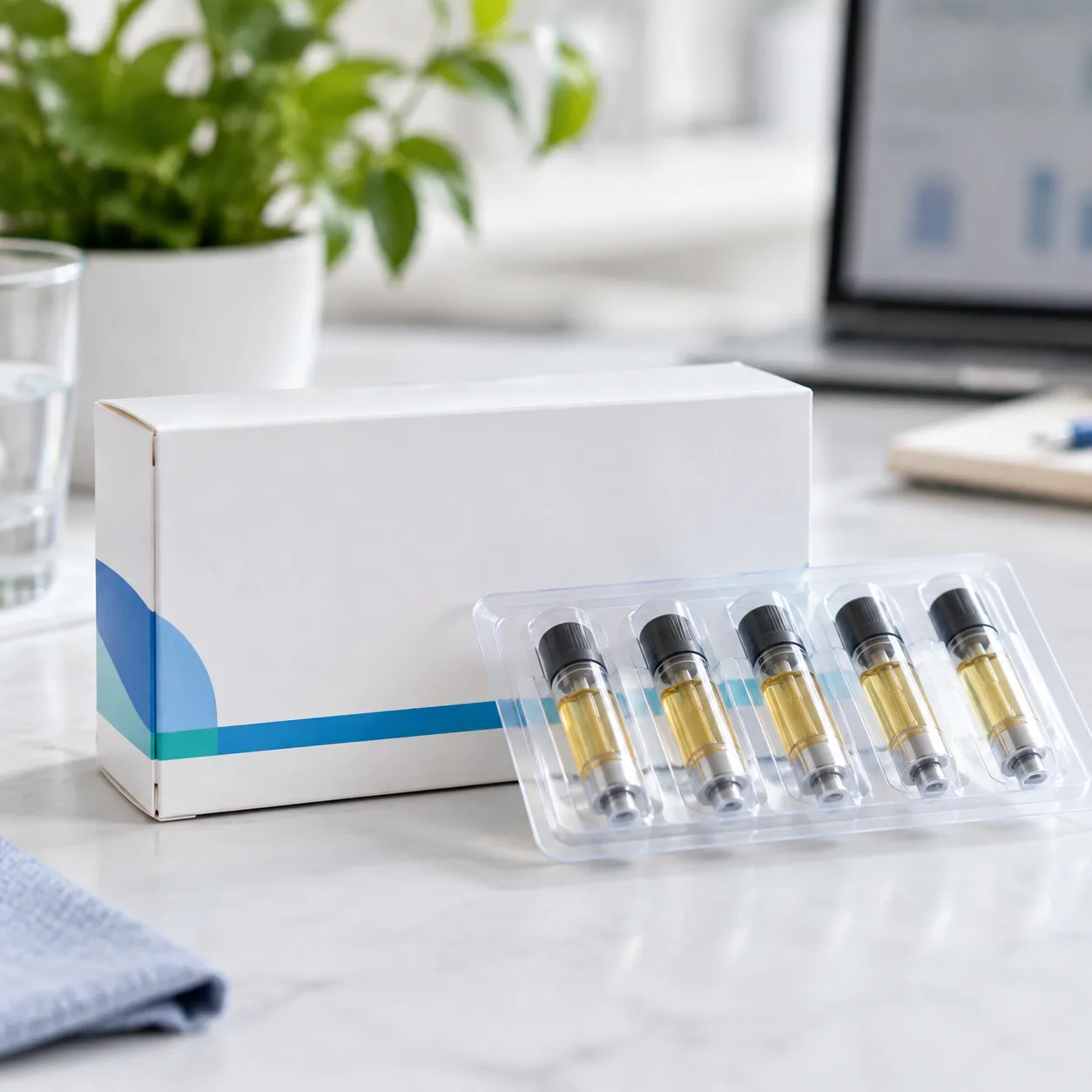
Secondary Packaging for Pharmaceutical Cartridges
High-Precision Ready-to-Use (RTU) Nest and Tub Systems
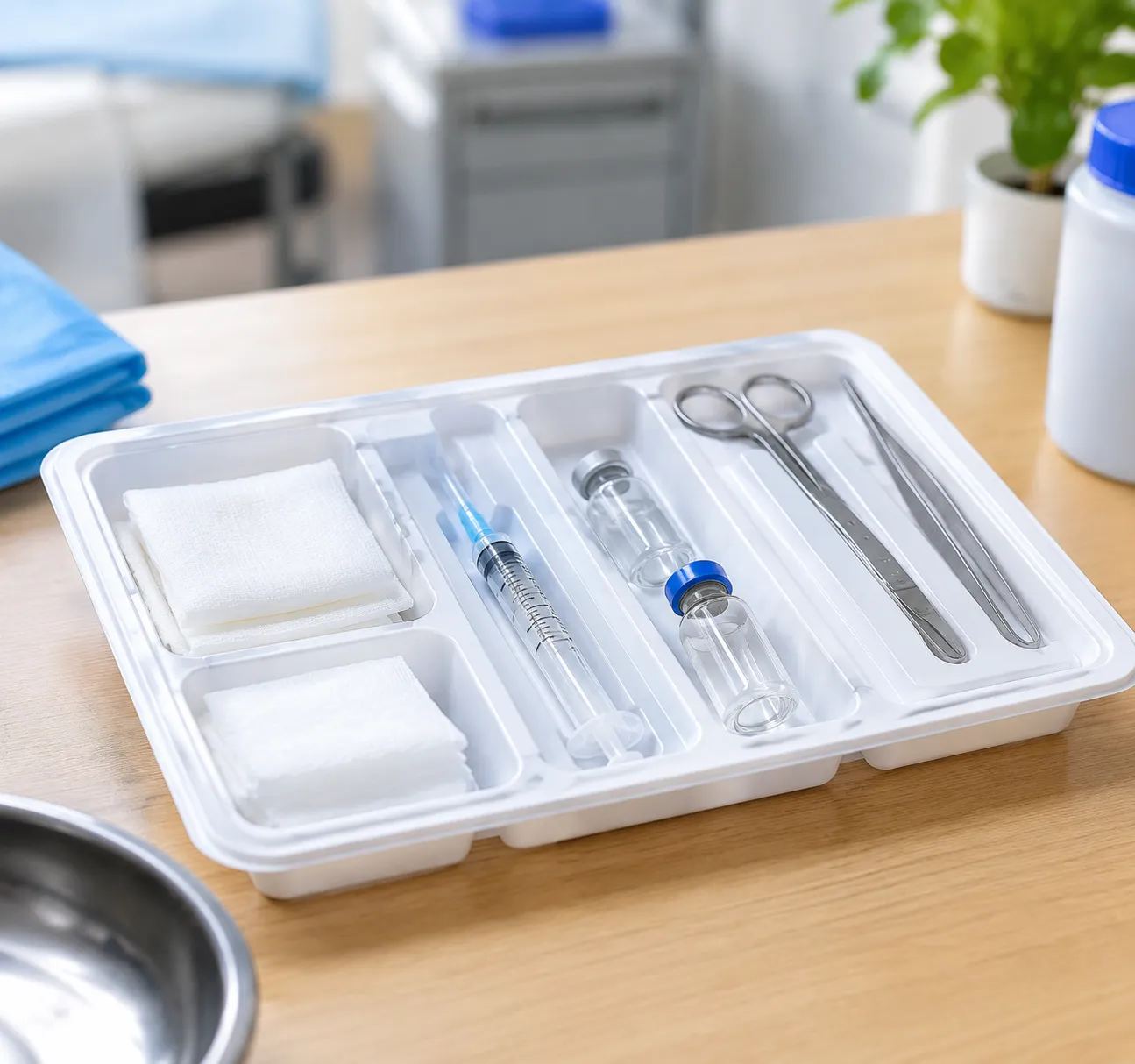
Multi-Tier Packaging Architecture
Our pharmaceutical glass cartridge packaging relies on a validated multi-tier containment hierarchy that maintains sterility, cleanliness, and structural alignment throughout distribution and processing:
- Nest Carrier: Precision-molded secondary carrier holding each cartridge in fixed vertical alignment to prevent friction, cosmetic defects, and tip damage.
- Tub Housing: Rigid outer base box engineered to standard automation dimensions, providing impact absorption and secure nest seating.
- Tyvek® Breathable Lid: Microbial barrier film heat-sealed to the tub perimeter, supporting EtO gas penetration while maintaining sterility.
- Protective Liner Bags: Cleanroom-grade outer barrier bags that seal the entire tub assembly, preventing particulate ingress and contamination during shipping.
Target Drug Delivery Formats
Our protective packaging for pharmaceutical cartridges supports critical delivery devices across parenteral drug applications:
- Insulin & GLP-1 Pen Injectors: Formats tailored for standard 1.5 mL and 3.0 mL cartridge barrels.
- Emergency & Biologic Autoinjectors: High-stability carriers designed for high-viscosity drug containers.
- Dental Anesthesia Carpules: High-density arrays for 1.8 mL and 2.2 mL dental glass cartridges.
Engineered for Automated Pick-and-Place Precision
Manual handling introduces contamination risks and process downtime. Our nested packaging systems feature uniform pitch spacing and tight dimensional tolerances, enabling robotic grippers to achieve reliable pick-and-place precision without line jams. Each cartridge remains completely suspended, delivering zero glass-to-glass contact and superior yield rates for modern fill-finish facilities.
Packaging Configurations & Modular Formats
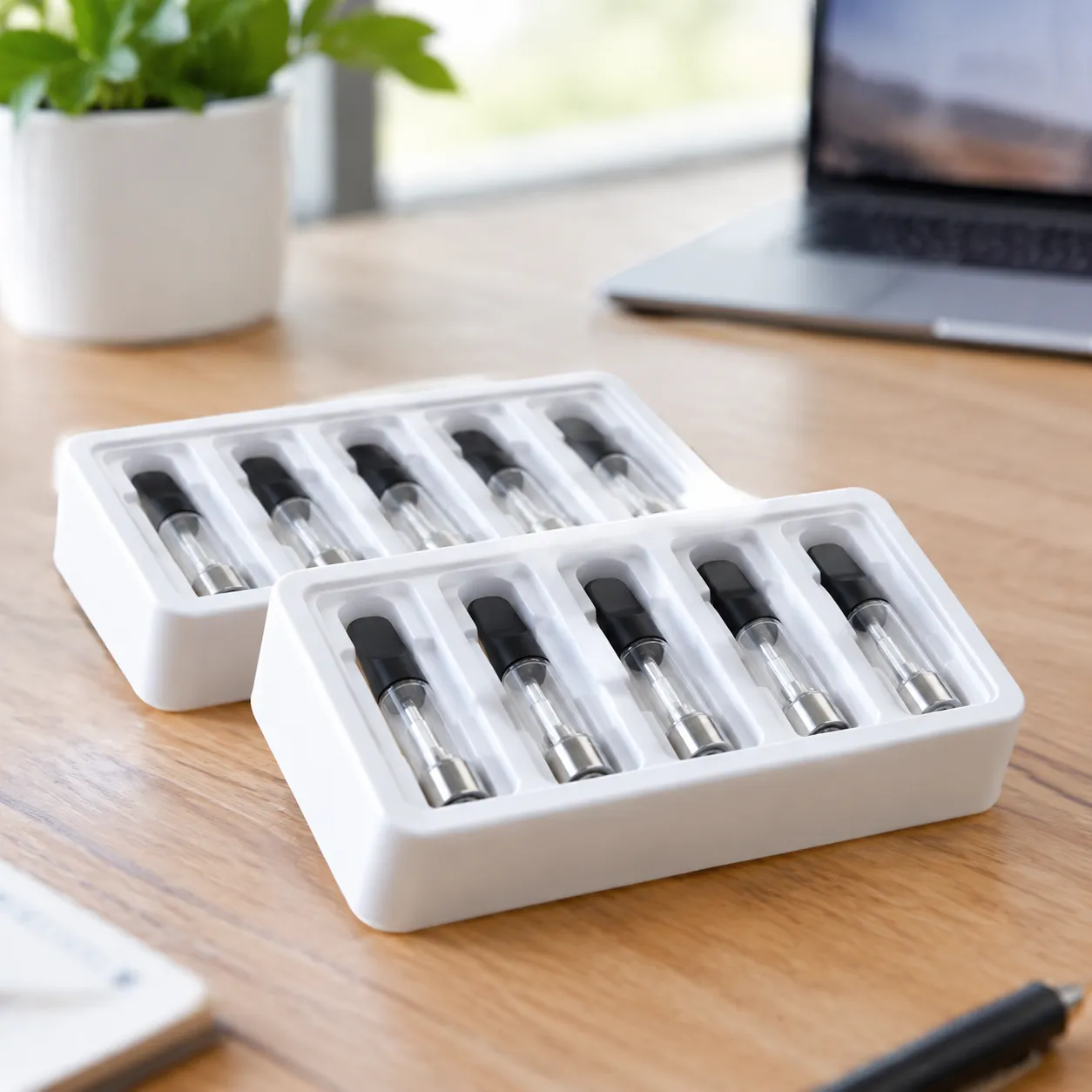
Standardized RTU Nest & Tub Systems
Our ready-to-use (RTU) nest and tub configurations are built to industry-standard external dimensions, ensuring direct compatibility with high-speed depacking and de-nesting robotics.
- 100-Cavity Arrays: Designed for larger barrel profiles (such as 3.0 mL dental and insulin cartridges) with rigid cell spacing to prevent contact.
- 160-Cavity Arrays: High-density matrix layout optimized for standard 1.5 mL and 1.8 mL formats to maximize filling throughput per batch.
- Standard Footprint: Outer tubs align with standard aseptic isolators and nests integrate seamlessly with our nested tub and tray aseptic processing solutions for streamlined robotic handling.
Custom Handling Cassettes & Thermoformed Trays
For specialized delivery devices, autoinjector assemblies, or non-standard carpules, we design custom-engineered thermoformed trays.
- Anti-Static (ESD) Formulations: Available in conductive or static-dissipative polymer blends to prevent particulate attraction in cleanroom environments.
- Orientation Locks: Molded geometry seats cartridges securely by the neck and flange, preventing axial rotation during high-acceleration transfer.
- Process Trays: Heavy-duty secondary carriers built for bulk transport between glass manufacturing facilities and fill-finish suites.
Sterile Barrier Components
To preserve sterility from our manufacturing line to your fill-finish cleanroom, each tub system incorporates validated barrier protection:
| Component | Material | Primary Function |
|---|---|---|
| Lid Film | DuPont™ Tyvek® (Gas-permeable) | Enables rapid EtO sterilization penetration and outgassing while maintaining bacterial filtration integrity. |
| Liner Cover | Medical-grade PE / Tyvek insert | Sits directly above the nest array to prevent vertical displacement and friction during transit. |
| Outer Bagging | Multi-layer Header / Barrier Bags | Sealed double-bag configuration to facilitate cleanroom wipe-down and transfer protocols. |
Technical Specifications & Material Matrix
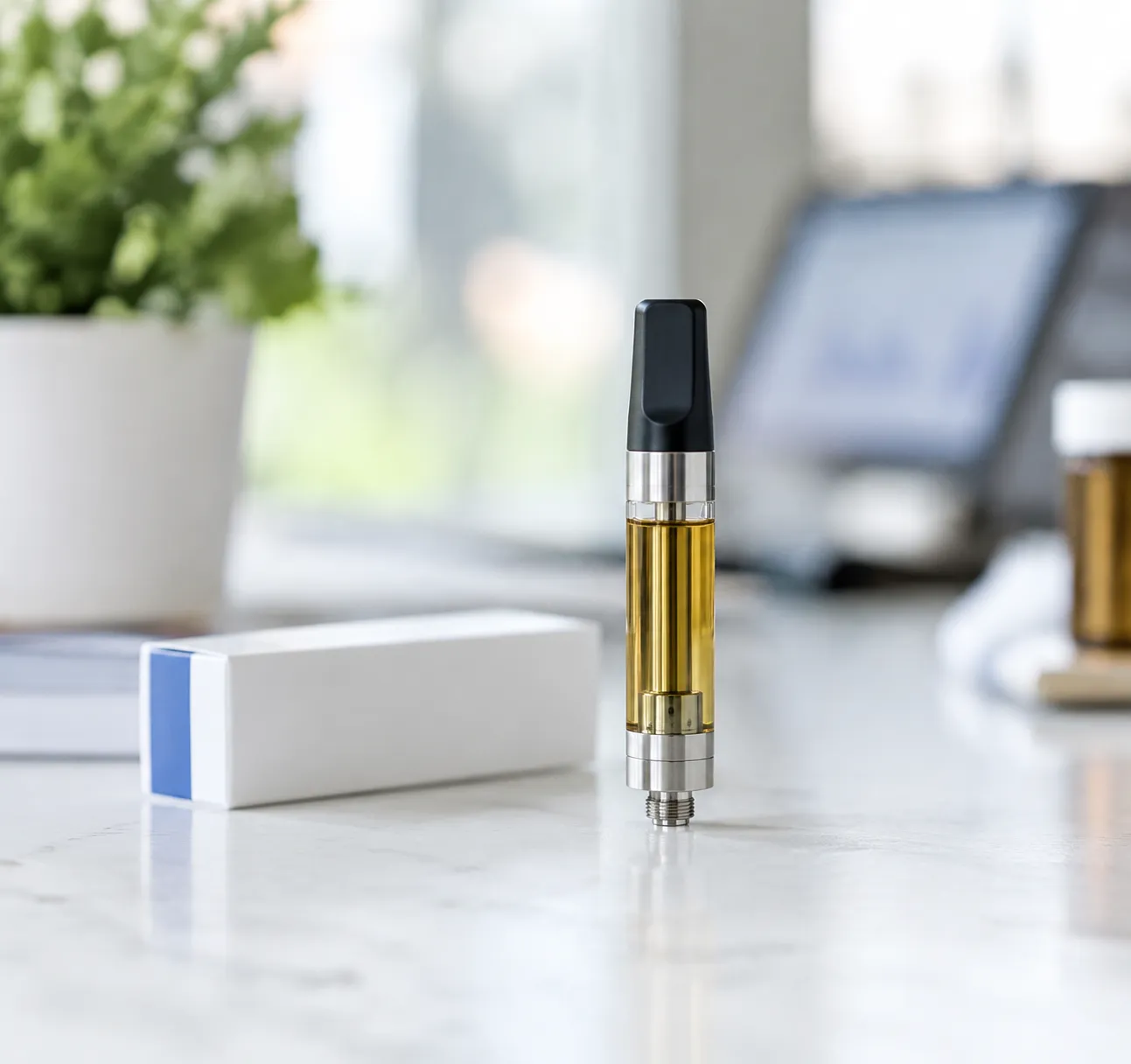
We engineer our secondary packaging for pharmaceutical cartridges with rigid dimensional tolerances and certified medical-grade polymers. Every component is built to withstand downstream sterilization cycles and run smoothly on automated high-speed fill-finish lines.
| Component / Parameter | Material Matrix | Supported Formats | Sterilization Compatibility |
|---|---|---|---|
| Tub Housing | Medical-Grade HDPE | Standard ISO / RTU footprints | EtO, Gamma |
| Nest Carrier | Medical-Grade PP, PS | 1.0 mL, 1.5 mL, 1.8 mL, 3.0 mL | EtO, Steam Autoclave, Gamma |
| Sterile Lidding | DuPont™ Tyvek® (e.g., 1073B) | Pre-cut matrix matching tub flange | EtO, Gamma, E-Beam, Steam |
| Process Trays | Thermoformed PP / PS | Custom matrix & handling layouts | EtO, Gamma |
Critical Engineering Parameters
- Dimensional Precision: We maintain tight cavity tolerances of ±0.1 mm to ensure reliable pitch alignment for robotic pick-and-place grippers and de-nesting units.
- Standard Cartridge Formats: Fully compatible with standard 1.0 mL, 1.5 mL, 1.8 mL dental carpules, and 3.0 mL pen-injector cartridges.
- Sterilization Validation: Porous Tyvek® breathability allows rapid Ethylene Oxide (EtO) gas penetration and complete degas aeration, while remaining durable under radiation or autoclave conditions.
- Surface Integrity: Non-abrasive polymer contact surfaces eliminate glass-to-glass contact, preventing friction scuffs, micro-fissures, and cosmetic rejects. For custom process handling, we also provide specialized disposable cartridge trays tailored to cleanroom workflows.
Engineering & Automation Advantages in Secondary Packaging for Pharmaceutical Cartridges
High-speed fill-finish operations require secondary packaging that eliminates mechanical jams, protects container integrity, and speeds up cycle times. We engineer our secondary packaging for pharmaceutical cartridges with exact mechanical tolerances to integrate seamlessly into modern robotic processing lines.
Key Engineering Features
- Zero Glass-to-Glass Contact: Each cartridge sits securely in an isolated, custom-formed nest cavity. This eliminates side-wall friction, scuffing, and micro-cracks during transit and bulk handling, preserving container closure integrity (CCI).
- Precision Pitch for Robotic Handling: We maintain tight dimensional tolerances across every cavity matrix. This exact center-to-center pitch alignment ensures high-speed robotic pick-and-place arms de-nest, fill, and re-nest cartridges without positional drift or line stoppages.
- Engineered Gas Circulation Ports: The bottom and sidewalls of each nest feature perforated venting geometries. These openings facilitate rapid, uniform Ethylene Oxide (EtO) gas penetration and fast aeration degassing cycles before final fill-finish.
Much like our specialized plastic vial trays for pharma lab storage and transport, our cartridge nest arrays are optimized to deliver high dimensional stability under mechanical stress, ensuring seamless compatibility with automated aseptic manufacturing environments.
Cleanroom Production & Regulatory Standards
We manufacture all secondary packaging for pharmaceutical cartridges under rigorous environmental controls to safeguard parenteral drug safety from initial molding to final fill-finish delivery.
Certified Cleanroom Manufacturing
Our injection molding and thermoforming operations run in certified ISO Class 7 and Class 8 cleanrooms. This controlled setup ensures zero foreign particulate build-up and maintains ultra-low bioburden levels across every nest, tub, and lid.
- Particulate Control: Every batch meets strict USP <788> particulate standards to prevent contamination in automated sterile suites.
- Bioburden Management: Continuous air monitoring and validated cleaning protocols prevent microbiological hazards prior to terminal sterilization.
Global Quality Compliance
Just like our precision vial box with inserts systems, our cartridge packaging is engineered to meet global pharmaceutical compliance benchmarks:
| Standard / Framework | Regulatory Scope |
|---|---|
| ISO 15378 | Primary and secondary packaging materials for medicinal products (cGMP aligned) |
| ISO 13485 | Quality management systems for medical device components |
| ISO 9001 | Standardized quality process and dimensional tolerance management |
| cGMP | Automated line-clearance protocols and full lot traceability |
Extractables & Leachables (E&L) Profiling
We provide complete pharmacopeia-compliant documentation support for all polymer resin formulations. Our engineering team assists with comprehensive extractables and leachables profiling to ensure zero harmful interactions between the packaging components, primary glass cartridges, and sensitive biologic formulations.
Application Scenarios Across Drug Delivery Platforms
Diabetes Care & Biologics
We manufacture specialized nest and tub formats designed for 3.0 mL cartridges used in multi-dose pen injectors. These systems secure critical therapies, including recombinant insulin and GLP-1 receptor agonists. Alongside specialized formats like tirzepatide vial packaging, our high-density nests prevent glass friction, maintain dimensional stability, and support seamless integration with automated pen-assembly machinery.
Dental Anesthesia Carpules
Dental carpules (standard 1.8 mL and 2.2 mL formats) require high-volume processing with zero margin for mechanical stress. Our protective packaging for dental cartridges eliminates glass-to-glass contact during bulk transit and terminal sterilization, preventing hairline fractures and minimizing reject rates on rapid dental fill-finish lines.
Emergency Medicine & Autoinjectors
Cartridges bound for pre-assembled autoinjector systems require ultra-tight pocket tolerances to ensure flawless robotic pick-and-place operation. Our rigid handling cassettes and nests maintain strict vertical alignment, protecting the glass barrel and crimped cap during high-speed secondary assembly for emergency drugs like epinephrine.
CDMO Bulk Transport & Fill-Finish Processing
For contract development and manufacturing organizations (CDMOs), our ready-to-use (RTU) nested tub configurations serve as an essential process packaging medium. They facilitate secure, particle-free transport between glass conversion facilities, contract sterilization centers, and aseptic filling suites.
| Drug Delivery Platform | Cartridge Size | Primary Packaging Challenge | Packaging Solution |
|---|---|---|---|
| GLP-1 & Insulin Pens | 3.0 mL | High cosmetic standards, automated device fitting | Precision-pitch nest arrays with zero-contact cavities |
| Dental Carpules | 1.8 mL / 2.2 mL | High-volume transport shock, glass cracking | Shock-absorbing thermoformed trays & rigid tubs |
| Autoinjector Modules | Custom / 1.0–3.0 mL | Robotic de-nesting misalignments | Tight-tolerance (±0.1 mm) indexed nests |
| CDMO Inter-facility Transit | Standard Formats | Particulate ingress and surface scuffing | Sealed Tyvek® barrier tubs with antistatic protection |
Custom Engineering & OEM/ODM Capabilities
When off-the-shelf formats do not fit your delivery device or automated fill-finish machinery, we provide custom secondary packaging for pharmaceutical cartridges tailored to exact barrel profiles, pen components, and handling requirements.
Rapid Prototyping & Precision Tooling
We shorten development cycles by translating CAD models into functional prototypes for line trials:
Rapid 3D Prototyping: Fast physical modeling to verify cartridge seating, pick-and-place clearances, and tub nested stacking.
In-House Tooling: Dedicated mold development for high-cavity thermoformed trays and injection-molded RTU nests.
Custom Nest Geometries: Optimized cavity spacing and retaining ribs to fit proprietary autoinjector assemblies and non-standard carpules.
Optical & Automation Compatibility
Automated high-speed vision systems require consistent optical properties to prevent false rejects:
Anti-Glare & Matte Finishes: Polymer surfaces engineered to minimize optical reflection during camera inspection of crimp seals and glass integrity.
Vision System Alignment: Cavity depths and pitch engineered to keep cartridge tops at uniform focal planes.
Regulatory Documentation & Validation Dossiers
Every custom run comes backed by complete technical and regulatory support to accelerate client qualification:
Dimensional Inspection Reports (DIR): Multi-point CMM verification ensuring tight manufacturing tolerances.
Sterilization Validation: Ethylene Oxide (EtO) and gamma compatibility documentation, residual data, and sterile barrier integrity testing.
Comprehensive Quality Records: Batch Certificates of Analysis (COA) and complete technical support to assist your regulatory filings.
Step-by-Step Technical Consultation & RFQ Workflow
Step 1: Cartridge Specification and Automated Filling Line Evaluation
We begin by evaluating your container geometry (e.g., 1.5 mL dental carpules, 3.0 mL insulin cartridges) and fill-finish line parameters.
Reviewing glass container tolerances, barrel outer diameters, and neck profiles.
Assessing de-nesting robotics, pitch requirements, and machine speeds.
Matching project requirements to our ready-to-use pharmaceutical cartridge packaging systems or determining custom mold needs.
Step 2: Sample Kit Dispatch and Dimensional Fit Verification
To verify compatibility before commercial tooling, we supply prototype samples and off-the-shelf formats.
Rapid dispatch of sample nests, tubs, and Tyvek® lidding configurations.
Physical line trials to check robotic pick-and-place alignment.
Testing anti-static performance, friction prevention, and dimensional fit across secondary cartridge packaging trays.
Step 3: Customized Tooling, Pilot Sampling, and Line Qualification
For proprietary pen-injector or autoinjector assemblies, we engineer custom-tailored carrier solutions.
Precision tool fabrication for thermoformed or injection-molded components.
Pilot production runs under standard ISO cleanroom conditions.
On-site or remote line qualification support, validating smooth travel through track systems without line jams or glass-to-glass contact.
Step 4: Full Commercial Production and Regulatory Documentation
Once qualified, we transition to high-volume manufacturing supported by full regulatory traceability.
Scaled production in certified cleanroom environments with rigorous particulate monitoring.
Execution of agreed sterilization protocols (EtO, Steam, or Gamma).
Delivery of complete documentation packages, including Certificates of Analysis (CoA), dimensional inspection reports, and material compliance dossiers.
| Project Stage | Focus Area | Key Deliverables |
|---|---|---|
| Phase 1: Review | Technical audit & cartridge sizing | Feasibility assessment & format proposal |
| Phase 2: Sampling | Physical integration testing | Sample kits & dimensional fit reports |
| Phase 3: Tooling | Custom molds & pilot runs | Pilot samples & qualification data |
| Phase 4: Commercial | Cleanroom volume manufacturing | Batch release docs, CoA, and sterile barrier validation |
Frequently Asked Questions (FAQs)
How does nested secondary packaging prevent glass cartridge breakage?
Our nested packaging secures each container in an individual, precision-molded cavity. By completely eliminating glass-to-glass contact during transport, handling, and processing, the nest prevents surface abrasion, hairline cracking, and cosmetic defects.
Are the nest and tub systems compatible with standard automated fill-finish lines?
Yes. We design our standardized RTU nest and tub systems with tight dimensional tolerances to match high-speed robotic de-nesting and filling equipment. The uniform cavity pitch ensures smooth robotic pick-and-place cycles without line jamming.
What sterilization methods are supported by Tyvek® sealed tubs?
Our tubs sealed with medical-grade Tyvek® lidding are fully compatible with Ethylene Oxide (EtO) gas sterilization, allowing rapid gas penetration and aeration. Formats can also be configured to support Gamma irradiation and steam sterilization depending on your process requirements.
Can you manufacture custom nest formats for proprietary cartridge dimensions?
Yes. In addition to standard 1.5 mL and 3.0 mL formats, we provide custom tooling for non-standard barrel lengths, auto-injector assemblies, and dental carpules. We engineer custom secondary packaging for pharmaceutical cartridges to match your exact device geometry.
What cleanroom standards and certifications apply to these packaging systems?
All cartridge nests, tubs, and lidding materials are produced inside certified ISO Class cleanroom facilities. Our operations comply with strict cGMP guidelines and ISO 15378 standards to ensure low particulate levels, minimal bioburden, and full regulatory traceability.
Related Sources
- https://www.usp.org/chemical-medicines/frequently-asked-questions-particulate-matter
- https://www.schott-pharma.com/en/products/adaptiq
- https://www.syntegon.com/solutions/fill-finish-pharma/processing/filling/
- https://www.gerresheimer.com/en/products/containment-solutions/cartridges
- https://store.pda.org/TableOfContents/TR43_TOC.pdf